I ordered ramen at a ticket machine in Shinjuku and pressed the wrong button and received a bowl of something I could not identify, which was delicious, and I will never know what it was. The chef bowed when I finished it. I bowed back. Neither of us spoke. That was the most complete conversation I have ever had in a restaurant.
Two days demands focus in a city designed to distract you indefinitely. Shinjuku in the morning, Shibuya in the evening, one great ramen shop, and Asakusa for the old city. Everything else is for a longer trip — and you will be back.
Buy a Suica card at the airport. Tap in, tap out. Never worry about fares again.
72 Hours: Tokyo's Layers Revealed
Three days lets you add Harajuku and Omotesandō on Day 2 — the fashion corridor that makes you understand why Tokyo is the design capital of the planet. Day 3 is Yanaka for old Tokyo, and a ryokan dinner if you can find a table.
4 Days: The Tokyo Rhythm
Four days is when Tokyo stops being overwhelming and starts being navigable. You'll find yourself choosing which ramen shop rather than which neighbourhood. Day 4 is Teamlab Borderless (or Planets) — the most extraordinary digital art experience on earth.
7 Days: Living in a Tokyo Neighbourhood
A week lets you pick a base neighbourhood and actually inhabit it. Day 5 is a day trip to Nikko or Kamakura. Day 6 is Shimokitazawa — the jazz bars and vintage shops that represent Tokyo's anti-consumer reflex. By Day 7 you will be working out how to stay longer.
Estimated budget:¥40,000–¥65,000 est. (budget–mid, incl. 1 hotel night)
Estimated budget:¥60,000–¥95,000 est. (2 hotel nights + activities)
Estimated budget:¥80,000–¥130,000 est. (3 nights + teamLab)
Estimated budget:¥140,000–¥230,000 est. (full week, mid-range Tokyo)
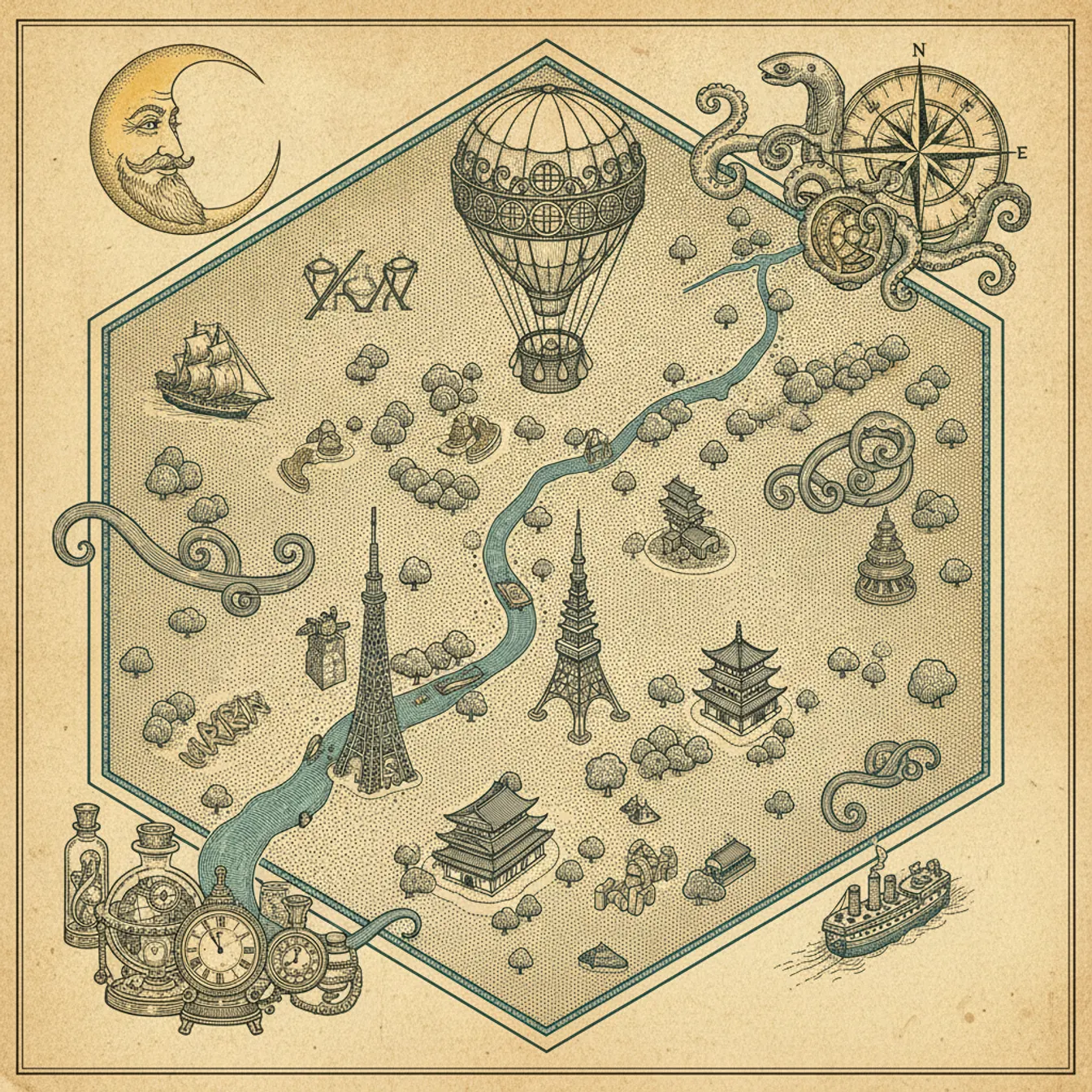
[ THE DISPATCH · FIELD MAP ]
A tilted, hand-drawn dispatch of Tokyo. Click a quarter to explode it open.
0 / 6 quarters explored
[ SHINJUKU ]
Stays up later than you do.
Shinjuku Gyoen National Garden500 cherry trees, 16 types of chrysanthemum, and a greenhouse that smells of the tropics.
Ramen lunch — Fuunji or Ichiran ShinjukuThe tonkotsu vs. tsukemen debate begins here. It will not end here.
[ SHIBUYA & HARAJUKU ]
Stays up later than you do.
Shibuya CrossingThe world's busiest pedestrian crossing, at the only time it looks like what it is.
Golden Gai — Shinjuku200 bars, each seating eight people, each with a different obsessive playlist.
[ ASAKUSA & UENO ]
Old stones, older stories.
Sensō-ji Temple — AsakusaTokyo's oldest temple, best experienced before the tourist buses arrive.
Ueno Park + Tokyo National MuseumThe world's largest collection of Japanese art. In a park full of cherry trees.
[ YANAKA & NEZU ]
Old stones, older stories.
Takeshita Street — HarajukuThe street that invented youth fashion and has been inventing it ever since.
Omotesandō — the fashion boulevardEvery major architect of the 21st century has a building here. A free architecture walk.
[ AKIHABARA & JIMBOCHO ]
Stays up later than you do.
Yanaka — old shitamachi wanderThe neighbourhood that survived the earthquakes, the bombing, and gentrification.
Dinner in Yanaka or Nezu — local izakayaThe izakaya where the menu is handwritten and they don't expect you to speak Japanese.
[ ODAIBA & TOYOSU ]
Boats, bridges and reflections.
teamLab Planets — ToyosuYou walk through rooms of water and light and lose track of where your body ends.
Toyosu Market — sushi breakfast/lunchThe market that replaced Tsukiji. The tuna auctions are at 5:30 AM, but the sushi is all day.
Day 1
Shinjuku + Shibuya + Golden Gai
Tokyo at full volume
Arrive, drop bags, eat ramen before you leave the station. Shinjuku in the afternoon, Shibuya Crossing at dusk, Golden Gai for the evening. This is Tokyo unfiltered on Day 1 — it's exactly as overwhelming as you want it to be.
Take it slow. Shinjuku Gyoen in the morning if you need the green space. Save Shibuya Crossing for sunset — it's infinitely more dramatic in the dark.
Shinjuku Gyoen National Garden
500 cherry trees, 16 types of chrysanthemum, and a greenhouse that smells of the tropics.
Shinjuku Gyoen combines Japanese, French formal, and English landscape garden styles in 144 acres. In cherry blossom season (late March–April) it is one of the most beautiful places on earth. In all other seasons it is still a magnificent park that allows you to remember that Tokyo is not just concrete. Entry is ¥500.
Ramen lunch — Fuunji or Ichiran Shinjuku
The tonkotsu vs. tsukemen debate begins here. It will not end here.
Fuunji in Shinjuku makes tsukemen (dipping ramen) that is among the best in the city — expect a short queue. Ichiran is the ramen chain with solo booths and a customisation card that lets you specify everything from broth richness to garlic levels. Both are correct Tokyo experiences. Choose based on whether you want company or not.
Shibuya Crossing
The world's busiest pedestrian crossing, at the only time it looks like what it is.
Stand on any corner of the crossing at rush hour and watch the scramble — all pedestrians, from all directions, all at once. Two thousand people per cycle. The Starbucks on the second floor of the Tsutaya building has the aerial view (usually full). The rooftop bar of the Mag's Park building opposite is better and less crowded. Stay for the full dark — the neon earns it.
Golden Gai — Shinjuku
200 bars, each seating eight people, each with a different obsessive playlist.
Golden Gai is a network of narrow alleys in Shinjuku with around 200 tiny bars, most seating fewer than ten people. Many have a cover charge (¥500–¥1,000) displayed outside. Pick the one with the music that feels right. Order whatever the bartender recommends. Stay two hours. Move to the next one.
Day 2
Asakusa + Ueno + Akihabara
Old Tokyo, then the future on a single subway line
Last day. Asakusa first — the oldest neighbourhood in Tokyo and the most legible for a short visit. Ueno at noon for the National Museum or the park. Akihabara in the afternoon for the sensory overload.
Full day — add Yanaka between Asakusa and Ueno. It's the old shitamachi neighbourhood that survived the earthquakes and the bombing and is quietly the most charming part of the city.
Sensō-ji Temple — Asakusa
Tokyo's oldest temple, best experienced before the tourist buses arrive.
Arrive by 8 AM. The Kaminarimon gate (the famous red lantern) is ten times more photographable before 9 AM. Walk Nakamise-dōri — the shopping street leading to the temple — for the ningyo-yaki (sweet red-bean cakes) and the obvious but correct souvenir shops. The Hōzō-mon gate leads into the main compound. Ring the bell. Make an offering. Buy your fortune slip.
The world's largest collection of Japanese art. In a park full of cherry trees.
Ueno Park has four major museums, a zoo, and a temple. The Tokyo National Museum (TNM) is the largest in Japan — the Honkan building has 24 rooms of Japanese art from prehistoric to the 19th century. The Hōryū-ji Treasures gallery has Buddhist art from the 7th century. Entry is ¥1,000. The park food stalls are cheap and fun on weekends.
Six floors of electronic components on top of eight floors of anime merchandise.
Akihabara is the consumer electronics and anime merchandise district. Multi-storey shops sell everything from components to complete arcade machines. The maid cafés are genuinely bizarre and worth one visit. Yodobashi Camera is the flagship electronics store — the best place to buy cameras, headphones, and gadgets you didn't know you needed. Budget an afternoon, minimum.
Omoide Yokocho — Memory Lane
Tiny yakitori stalls under the Shinjuku tracks. Smoke, beer, and the correct dinner.
Omoide Yokocho ("Memory Lane") is a narrow alley under the Shinjuku train tracks with yakitori stalls that have been here since after World War Two. Smoke billows, salarymen crowd the counters, chickens are grilled on skewers in every configuration. Find a stall with a counter seat, order yakitori assorted, order beer, repeat.
Day 3
Harajuku + Omotesandō + Yanaka
Fashion, architecture, and the Tokyo that time forgot
Morning in Harajuku (Takeshita Street before 10 AM, then Omotesandō for the architecture). Afternoon in Yanaka — the old shitamachi neighbourhood that survived everything and still has its cats.
Same plan but add Nezu Shrine between Yanaka and dinner. The vermilion torii tunnel is Fushimi Inari's less-crowded Tokyo cousin.
Harajuku on a Sunday if possible — Takeshita Street has its full teenage energy. Yanaka afternoon is perfect any day; the neighbourhood changes slowly.
Takeshita Street — Harajuku
The street that invented youth fashion and has been inventing it ever since.
Takeshita Street is the 350-metre pedestrian street that launched Harajuku's reputation. On Sunday afternoons it's a costume parade. On weekday mornings it's navigable. The crepe shops are a Tokyo institution — get a crepe with matcha ice cream and walk. The independent boutiques selling handmade fashion are the actual reason to be here.
Omotesandō — the fashion boulevard
Every major architect of the 21st century has a building here. A free architecture walk.
Omotesandō is Tokyo's Champs-Élysées and also a free architecture gallery. Prada (Herzog & de Meuron), Tod's (Toyo Ito), Louis Vuitton (Jun Aoki), Dior (SANAA), and the Omotesandō Hills complex (Tadao Ando) are all within walking distance. You don't have to buy anything. You do have to look up.
Yanaka — old shitamachi wander
The neighbourhood that survived the earthquakes, the bombing, and gentrification.
Yanaka is the best-preserved low-rise traditional neighbourhood in Tokyo. The Yanaka Ginza shopping street sells pickled vegetables and sembei crackers from tiny shops. The cemetery is lovely (strange to say, but true — tree-lined, quiet, full of cats). Nezu Shrine is a ten-minute walk — the torii tunnels are smaller than Kyoto's but longer than most people expect.
Dinner in Yanaka or Nezu — local izakaya
The izakaya where the menu is handwritten and they don't expect you to speak Japanese.
Yanaka and Nezu have small, local izakayas that don't appear on Google Maps in English. Point at the menu items that look promising. Order the edamame and the karaage (fried chicken) as defaults. Drink Sapporo or ask for the sake recommendation. This is the most authentic evening in the plan.
Day 4
teamLab Planets + Toyosu + Shiodome
The most extraordinary art experience in the world, probably
teamLab Planets in Toyosu is the headline — book tickets weeks in advance. Lunch at the Toyosu Market area. Afternoon in the futuristic Shiodome district. This is the Tokyo of the next thirty years.
Same plan. If you already have Planets from a previous visit, substitute teamLab Borderless (reopened at Azabudai Hills, 2024) — a completely different experience.
teamLab Planets — Toyosu
You walk through rooms of water and light and lose track of where your body ends.
teamLab Planets is an immersive digital art experience where you walk barefoot through interconnected rooms — through shallow water with projected koi, through mirrored infinite rooms, through a field of flowers that responds to your presence. It is more moving than it sounds. It is legitimately the best thing in Tokyo and possibly on earth. Book online weeks in advance; it sells out consistently.
The market that replaced Tsukiji. The tuna auctions are at 5:30 AM, but the sushi is all day.
Toyosu Market replaced Tsukiji as Tokyo's main fish market in 2018. The tuna auctions require advance booking months ahead. The sushi restaurants in the market building are excellent and accessible without reservation — fresh fish, reasonable prices, no atmosphere needed. The market viewing areas are free.
Shiodome — Caretta Shiodome sky lobby views
A free skyline view that most tourists don't know exists.
The Caretta Shiodome shopping complex has a free observation area on its upper floors with good views toward Rainbow Bridge and Tokyo Bay. The Shiodome district itself is a cluster of modern skyscrapers that represents the Tokyo that replaced the former freight yard — jarring, impressive, and futuristic in a slightly dated early-2000s way.
Roppongi Hills — dinner + Mori Art Museum
Contemporary art 53 floors above the city, open until 10 PM.
Roppongi Hills has the Mori Art Museum on the 53rd floor — one of the best contemporary art museums in Asia, open until 10 PM and with a viewing platform with the night skyline as backdrop. The complex has restaurants for every budget. The 360-degree night view is the best paid view in Tokyo.
The most ornate shrine complex in Japan, 90 minutes from Tokyo
Take the Tōbu Nikkō Limited Express from Asakusa. The journey is 90 minutes and the view from Nikkō Station alone tells you this is a different Japan. The Tōshō-gū shrine complex is overwhelming — more gold leaf per square metre than any building you have ever stood inside.
Tōshō-gū Shrine — Nikkō
The mausoleum of Tokugawa Ieyasu, built by people who believed more decoration was always correct.
Tōshō-gū is a complex of shrines and temples built in 1617 and expanded in 1634. The Yōmei-mon gate alone has 508 carved and painted reliefs. The three wise monkeys are here (the hear/see/speak no evil carvings). The Sleeping Cat is a famous carving over a gate. The cedar forests surrounding everything are extraordinary. Allow three hours.
One hundred metres of waterfall, one elevator down, zero preparation adequate.
Take the bus from Nikkō to Chūzenji-ko Lake (30 minutes), then the short walk to Kegon Falls. An elevator descends into the gorge for a view of the full 97-metre drop. The spray is significant even at distance. The lake above is beautiful and usually frozen in winter. The return journey to Tokyo by 6 PM is achievable.
Nikkō town lunch — yuba cuisine
Tofu skin dishes so refined they make you question every other meal.
Nikkō is known for yuba — the skin that forms on the surface of heated soy milk. It sounds unpromising. It is extraordinary: silky, delicate, served in a dozen preparations. Most restaurants near the shrine complex do set lunches with yuba as the centre. Eat at noon before the post-lunch crowd arrives.
Day 6
Shimokitazawa + Nakameguro + Daikanyama
Tokyo's anti-aesthetic aesthetic
No big landmarks today. Shimokitazawa is the neighbourhood where the jazz records live, where the vintage shops are actually vintage, where the theatre is experimental, and where nobody is performing anything for anyone. Then Nakameguro along the canal for the afternoon.
Shimokitazawa — vintage shops + jazz cafés
The neighbourhood that resisted the chain stores and won.
Shimokitazawa defies Tokyo's development logic — narrow streets, no chains, hundreds of independent vintage shops and live music venues. The jazz kissa (listening cafés) are extraordinary: you sit in a dark room with good speakers and listen to vinyl at high volume. No talking. This is considered deeply normal. Browse Flamingo or New York Joe Exchange for vintage clothing that costs a fraction of London prices.
Nakameguro — Meguro River canal walk + lunch
The canal with the cherry trees that makes Instagram overheat in March.
The Meguro River is lined with cherry trees for two kilometres. In blossom season it's the most beautiful thing in Tokyo. Out of season it's a beautiful canal walk with independent cafés and restaurants on both sides. Onibus Coffee is one of the best cafés in Tokyo. Lunch at one of the Japanese restaurants on the canal — soba or tempura, simple.
Daikanyama Tsutaya Books
A bookshop so perfectly designed it makes you want to live inside it.
Daikanyama T-Site is a complex of three linked bookshop buildings designed by Klein Dytham Architecture. The design, architecture, and magazine sections are extraordinary. There's a Starbucks inside that is oddly appropriate. The surrounding Daikanyama neighbourhood is boutique-heavy and elegant — Tokyo's answer to the Left Bank.
Day 7
Hamarikyu + Odaiba + Farewell Ramen
Tidal garden, robot city, the last bowl
Last day. Hamarikyu Gardens in the morning — a feudal tidal garden at the foot of the Shiodome towers. Water bus to Odaiba in the afternoon. Farewell ramen wherever your loyalty has landed.
Hamarikyu Gardens
A 300-year-old tidal garden surrounded by skyscrapers. Time behaves differently here.
Hamarikyu is a Edo-era feudal garden in the shadow of the Shiodome towers. The tide determines the water level in the ponds. The tea house on the central island serves matcha and wagashi sweets. The counterpoint between the ancient garden and the surrounding towers is specifically Tokyo.
Odaiba — water bus from Hamarikyu + Rainbow Bridge
A man-made island in Tokyo Bay. Futuristic malls, a replica Statue of Liberty, zero irony.
Take the Tokyo Cruise water bus from Hamarikyu to Odaiba — 25 minutes across Tokyo Bay with the Rainbow Bridge and the city skyline. Odaiba is an artificial island of futuristic buildings, including the teamLab Borderless site, Diver City Tokyo (with the life-size Gundam statue), and the Toyota Mega Web showroom. It is deeply strange and entirely Tokyo.
The last bowl is always the one you'll reconstruct for the rest of your life.
Return to the ramen shop you loved most this week. If undecided: Fuunji for tsukemen (dipping ramen, Shinjuku), Ichiran for solo tonkotsu at your own pace, Afuri for yuzu shio ramen (lighter, aromatic — Harajuku location). Order a second bowl. You will not regret this. You have a flight tomorrow.
Tokyo is the most organised chaos on earth. The subway system runs on 30-second accuracy. The queues form without instruction. The convenience stores stock things so good they win food awards. And underneath all of it, there is a city of enormous warmth and specificity that reveals itself slowly, corner by corner, ramen shop by ramen shop.
This itinerary is structured around one insight: Tokyo rewards the person who stops trying to see everything. Pick a neighbourhood, stay in it for an afternoon, let it happen to you.
The 2/3/4/7-day versions scale out from the centre. Two days is Shinjuku, Shibuya, and Asakusa. Seven days is the day trip to Nikkō, the jazz cafés of Shimokitazawa, and the bowl of ramen that you’ll be thinking about on the flight home.
Use the duration filter above to see your version of Tokyo.
Neighbourhood
Best For
Day in This Plan
Shinjuku
Crossing, Golden Gai, ramen
Day 1
Shibuya
The crossing, the energy
Day 1
Asakusa
Old Tokyo, temples, market
Day 2
Ueno
Museums, park
Day 2
Harajuku / Omotesandō
Fashion, architecture
Day 3
Yanaka
Old shitamachi, cats
Day 3
Toyosu / Odaiba
teamLab, fish market, bay
Day 4
Nikkō
UNESCO shrines, waterfall
Day 5
Shimokitazawa
Vinyl, vintage, jazz
Day 6
Nakameguro / Daikanyama
Canal, books, coffee
Day 6
This article contains affiliate links marked with rel="sponsored". We may earn a commission at no extra cost to you.