I was trying to find the Pantheon for the third time in two days — it is not where any map suggests — when a Roman nonno on a scooter stopped, looked at my phone, shook his head slowly, and pointed left. It was twenty metres away. I had walked past it twice. The Pantheon does not announce itself. Neither does the rest of Rome. That is its entire trick.
Two days in Rome means the Colosseum, the Vatican, the Pantheon, and approximately one gelato per hour. We sequence these so you're never doubling back. Every meal is within ten minutes of the next landmark. You will not see everything. You will not care.
Book the Colosseum and Vatican online — queue times without tickets can exceed 3 hours each.
72 Hours: Rome With Room to Breathe
Three days adds the Borghese Gallery, a proper Trastevere dinner, and enough time to get lost twice without losing your mind. You'll still miss things. Rome has been accumulating sights for two thousand years. Three days is a respectable start.
4 Days: The Neighbourhood Version
Four days means you get to pick a neighbourhood and call it yours. We give you Day 4 entirely in Pigneto and Testaccio — the Rome that Romans use, not the one they export. One market, one wine bar, zero queues.
7 Days: Fall in Love With a Piazza
A week in Rome and you stop being a tourist by Day 4. You have a favourite bar, a route you walk without a map, and strong opinions about where to buy supplì. The ancient city starts to feel less like a museum and more like the neighbourhood backdrop it always was for the locals.
Estimated budget:€380–€580 est. (budget–mid, 1 hotel night + timed entry tickets)
Estimated budget:€560–€900 est. (2 nights + Borghese Gallery + day trips)
Estimated budget:€720–€1,150 est. (3 nights + Ostia Antica half-day)
Estimated budget:€1,200–€2,000 est. (full week, mid-range hotels, Pompeii day trip)
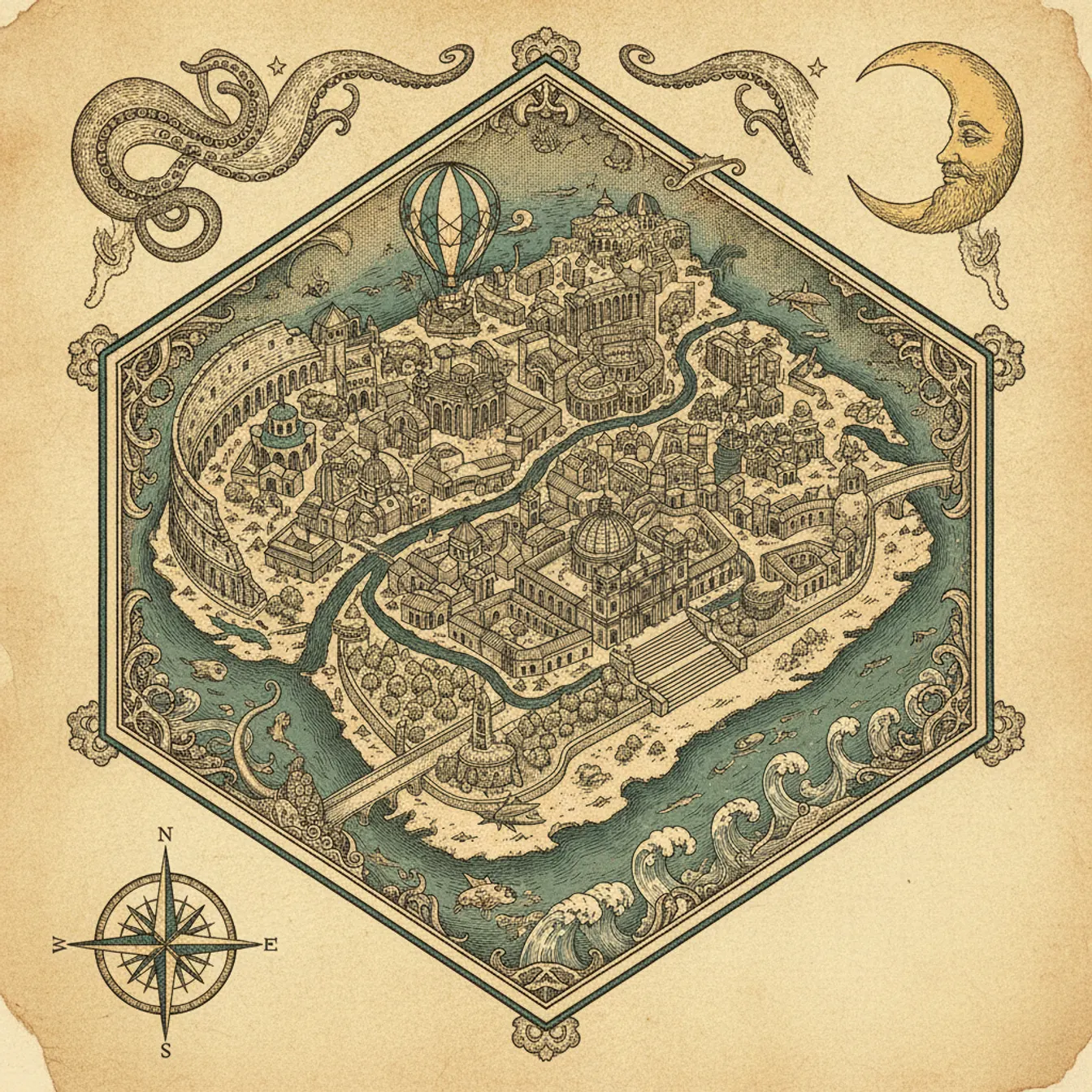
[ THE DISPATCH · FIELD MAP ]
A tilted, hand-drawn dispatch of Rome. Click a quarter to explode it open.
0 / 6 quarters explored
[ ANCIENT ROME ]
Old stones, older stories.
ColosseumThe original stadium. Still the most dramatic building you'll ever stand inside.
Roman Forum + Palatine HillThe street plan of the world's first superpower.
[ CENTRO STORICO ]
Old stones, older stories.
PantheonThe best-preserved building in Rome, which is to say the world.
Piazza Navona + Bernini's FountainRome's baroque living room, with a Bernini centrepiece.
[ VATICAN & PRATI ]
Old stones, older stories.
Vatican Museums + Sistine ChapelMichelangelo painted lying on his back for four years. The least you can do is look up.
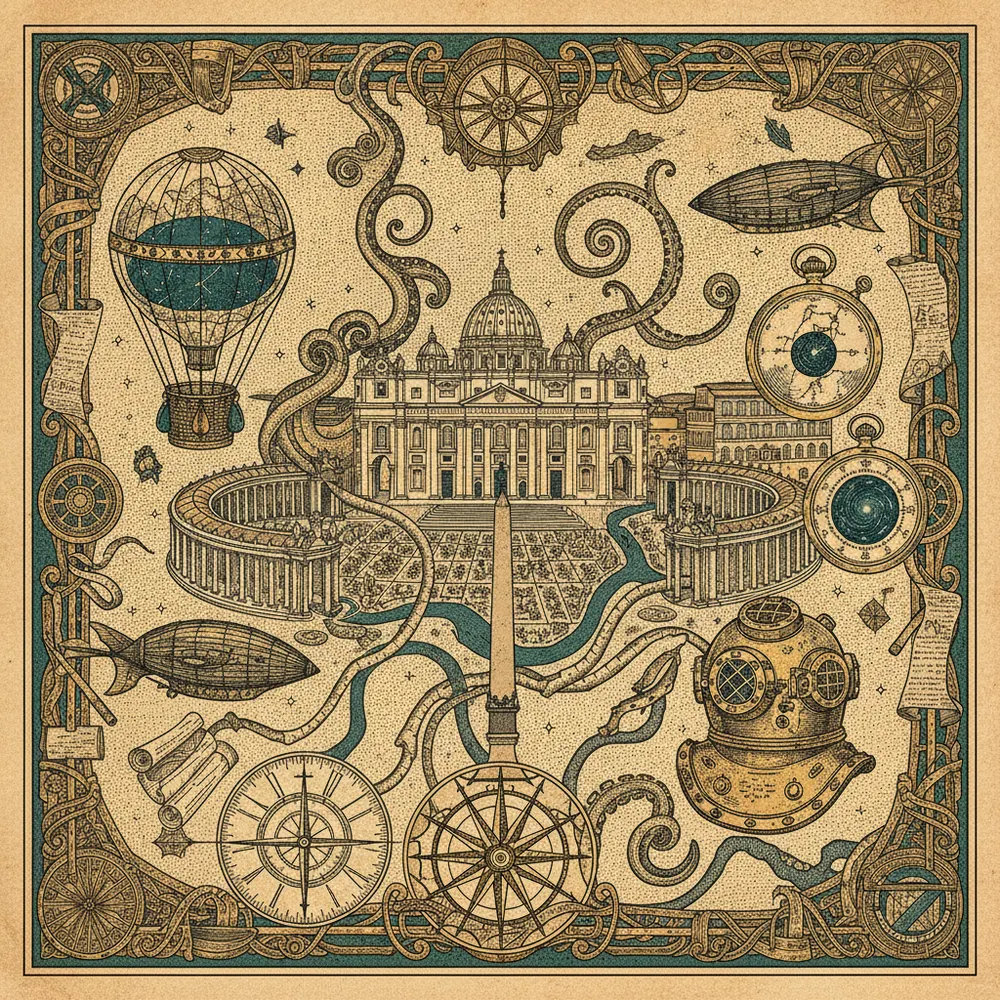
St. Peter's Basilica + Dome ClimbThe largest church in the world. The dome is the second-best view in Rome.
[ TRASTEVERE ]
Stays up later than you do.
Campo de' Fiori marketA Roman market that turns into a drinking square at sundown.
Trastevere wander + Santa Maria in TrastevThe neighbourhood that still looks like a film set because it is one.
[ BORGHESE & TRIDENTE ]
Green breathing room.
Villa Borghese GardensRome's Central Park, with better statues and worse joggers.
Borghese GalleryThe greatest private art collection in Rome, inside a villa that is itself a masterpiece.
[ TESTACCIO ]
Old stones, older stories.
Testaccio MarketOffal, artichokes, and the supplì Romans eat for breakfast.
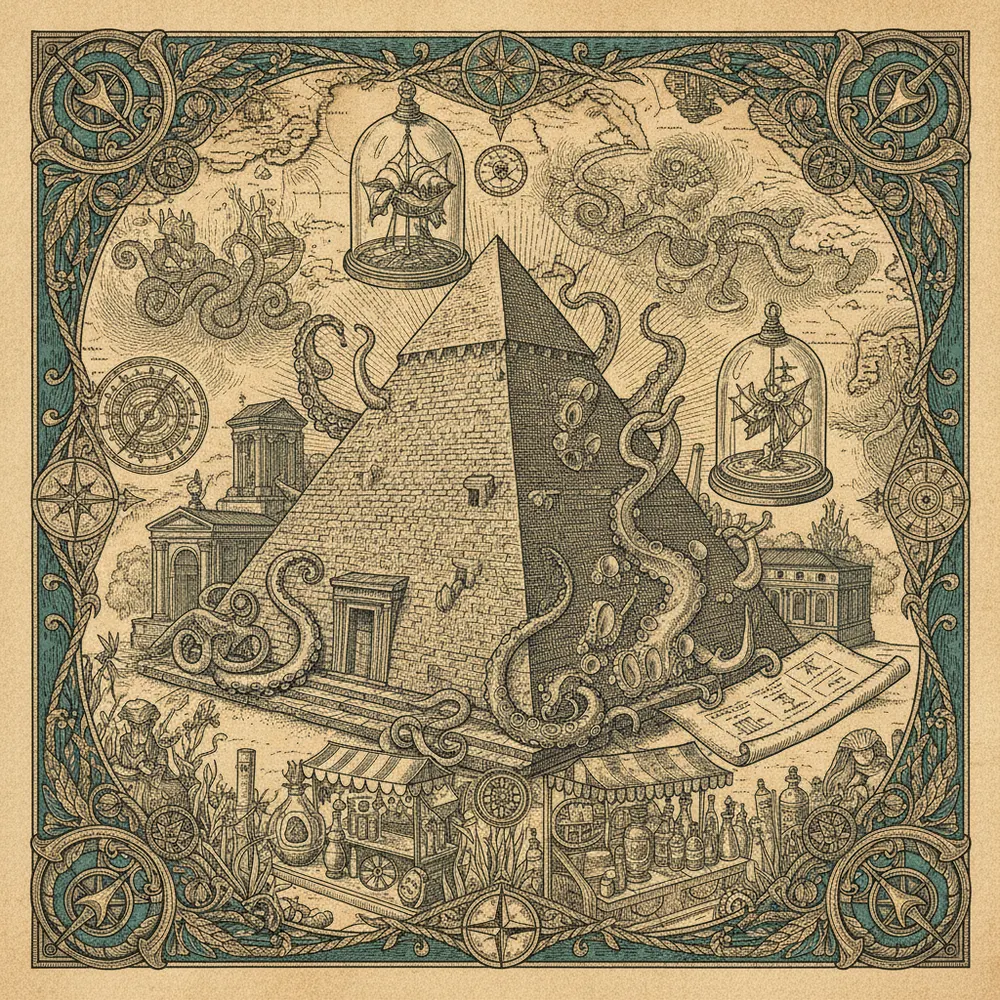
Pyramid of Cestius + Protestant CemeteryAn actual Egyptian pyramid in Rome. With Keats's grave next door.
Day 1
Ancient Rome — Colosseum, Forum, Palatine
Start where it all began
One morning for two thousand years of history. We do Colosseum first, Forum second, Palatine third — always in this order because Palatine closes earlier and the hill view of the Forum at noon is absurd.
Take the slow route. Grab a coffee at a bar near the Circus Maximus before the sites open and watch the city warm up. The Forum is empty before 9 AM.
Colosseum
The original stadium. Still the most dramatic building you'll ever stand inside.
Book the first timed-entry slot available — by 10 AM the interior is standing room only. Upgrade to the arena floor ticket if you can: standing where the gladiators stood, looking up at 50,000 imaginary Romans, is worth every extra euro. Budget 90 minutes.
Included with the Colosseum ticket. Walk the Via Sacra — the road triumphing generals paraded down — and try to visualise the temples as they were, not the stripped columns they are now. Then climb Palatine: the view of the Forum from the top is the best free vantage point in Rome, and the hill itself is where Rome was founded, allegedly, by a man raised by wolves.
Lunch near Circo Massimo
A proper Roman lunch before the afternoon push.
Walk down from Palatine and find any trattoria on Via dei Cerchi. Order cacio e pepe — Rome's signature pasta — and a quarter-litre of house red. Sit outside. Take an hour. Romans do not eat fast.
Capitoline Museums
The world's oldest public museums, and still the best collection of Roman marbles anywhere.
Atop the Capitoline Hill, with a piazza designed by Michelangelo. The equestrian statue of Marcus Aurelius, the Capitoline Venus, and a rooftop terrace with unobstructed views of the Forum you just walked through. Two hours maximum — you'll be museum-fatigued from the Forum.
The neighbourhood where Romans actually eat dinner.
Testaccio is built on an ancient rubbish tip and has been feeding Romans since the slaughterhouse era. Find a bar on the edge of the Testaccio market square for spritz hour, then stay for dinner at any osteria that has no English translation on the menu.
Day 2
Centro Storico + Trastevere
The living city above the ancient one
Last day. The Pantheon opens at 9 AM and fills up by 10 — arrive early. Then Piazza Navona for a coffee (pay standing at the bar, not seated), afternoon in Trastevere. This is the goodbye you didn't want.
Morning in the Centro Storico, afternoon free for the Borghese Gallery (Day 3 focus), evening back in Trastevere for dinner. Pace yourself.
This neighbourhood reveals itself slowly. After the Pantheon, wander without a destination. Every alley has a fountain. Every fountain has a story. You have time to read the plaque.
Pantheon
The best-preserved building in Rome, which is to say the world.
Entry now requires a timed ticket (€5). Arrive at opening — the oculus light moves across the marble floor as the morning progresses. At noon in June it hits the floor exactly at the entrance threshold. Spend 45 minutes inside, then stand in the piazza and look up at the façade: Agrippa built it in 27 BC. It has not leaked since.
Rome's baroque living room, with a Bernini centrepiece.
Built on the footprint of Domitian's stadium — the oval shape is Roman infrastructure wearing a baroque costume. The Fountain of the Four Rivers is Bernini at his most theatrical. Have a coffee standing at Bar della Pace, two minutes' walk, where the actual Romans sit.
Campo de' Fiori market
A Roman market that turns into a drinking square at sundown.
The morning market sells produce, spices, and tourist tat in roughly equal measure. Buy a blood orange, some olive oil if you have room in your bag, and the best supplì (fried rice balls) in Rome from the stall in the northwest corner. The bronze statue in the middle is Giordano Bruno, burned here for heresy in 1600. Rome has context.
Trastevere wander + Santa Maria in Trastevere
The neighbourhood that still looks like a film set because it is one.
Cross the Tiber at Ponte Sisto and walk into a neighbourhood that has resisted gentrification longer than any other in central Rome. The Basilica di Santa Maria in Trastevere is the oldest church in Rome dedicated to the Virgin — the 12th-century mosaics are some of the best in Italy. Sit in the piazza after and watch the fountain.
Dinner in Trastevere
Pick a trattoria without a QR code menu. Trust the handwritten chalkboard.
Trastevere fills up by 8 PM — arrive at 7:30 or book ahead. Look for places where the nonna is visible through the kitchen window. Order cacio e pepe or carbonara (both Roman, both better here than everywhere else you've had them), a bottle of Frascati, and tiramisu that didn't come from a fridge an hour ago.
The Vatican is a morning job — Sistine Chapel crowds peak after 11 AM. Spend the afternoon in Prati, the neighbourhood outside the Vatican walls that feeds the pilgrims and the journalists.
Same plan but skip the rush. Book the early-access Vatican tour (7:30 AM entry while the chapel is quiet) — worth every cent if this is your first time seeing the Sistine ceiling without a crowd.
Early Vatican, then the afternoon is free. Walk to Castel Sant'Angelo along the river for the view of the dome. Aperitivo somewhere on Prati's main drag, dinner wherever you feel.
Vatican Museums + Sistine Chapel
Michelangelo painted lying on his back for four years. The least you can do is look up.
Book the earliest possible entry — the Sistine Chapel before 10 AM is transformative; after noon it's a cattle pen. Take the Gallery of Maps en route (the 16th-century cartography is worth the ten minutes) and don't skip the Raphael Rooms — they're en route to the chapel and better than the chapel to most people who study painting.
The largest church in the world. The dome is the second-best view in Rome.
Entry to the basilica is free. The dome climb (€8 on foot, €10 by lift then stairs) gives you a rooftop view that the Vatican keeps criminally undersold — you look directly across Rome to the Vittoriano, with the Tiber winding below. Climb in the morning before the heat.
Castel Sant'Angelo
A mausoleum turned fortress turned prison turned museum. Rome multitasks.
Hadrian built it as his tomb in 123 AD. Various popes used it as a bolt-hole when things got difficult (often). The rooftop terrace has a view of the Tiber bend and St. Peter's dome that you'll use as your phone background for the next three years.
Where Vatican staff eat when they're off the clock.
Prati is a quietly elegant neighbourhood that tourists walk through and rarely stop in. The restaurants on Via Candia and Via Cola di Rienzo are honest Roman cooking at prices that don't reflect the proximity to the Vatican. Order abbacchio (milk-fed lamb) if it's on the menu — it's a Roman specialty that rarely travels.
Day 4
Borghese Gallery + Tridente + Spanish Steps
Rome's elegant north — and the gallery that requires planning
The Borghese Gallery only admits 360 people per two-hour slot — book three weeks ahead or you don't go. Afternoon in the Tridente: the shopping streets that run from Piazza del Popolo to the Spanish Steps, plus the best panoramic terrace in Rome.
Same structure, but take the whole morning in the Villa Borghese gardens before the gallery opens. Rent a rowboat on the lake. Be embarrassingly relaxed about it.
Villa Borghese Gardens
Rome's Central Park, with better statues and worse joggers.
The grounds around the gallery are free and enormous — 80 hectares of umbrella pines, fountains, and inexplicable deer. Rent a bike at the entrance on Viale delle Magnolie or walk through to the Pincio terrace for the best elevated view of Piazza del Popolo and the city spread below.
Borghese Gallery
The greatest private art collection in Rome, inside a villa that is itself a masterpiece.
Bernini's sculptures here — Pluto and Proserpina, Apollo and Daphne, David — are the reason people argue that sculpture is the superior art form. You cannot touch them. You will want to. The Caravaggio paintings on the ground floor are a secondary attraction and would be the headline at any lesser museum.
The Spanish Steps are best at 3 PM on a weekday — the selfie crowd peaks at noon and 6 PM. Walk down, turn right, and walk fifteen minutes to the Trevi Fountain. Throw a coin. You will come back. Have a gelato at Della Palma around the corner (not tourist trap — the Romans genuinely eat there).
Dinner near Piazza del Popolo
The northern end of Tridente, where Romans actually live above the boutiques.
The restaurants in the streets west of Piazza del Popolo (Parioli border) are excellent and overlooked by tourists. Try Dal Bolognese for old-school Roman-Bolognese fusion (the tagliatelle is worth the walk), or walk Via della Croce for enoteca-style wine and snacks.
Day 5
Testaccio + Aventine + Ostiense
Working-class Rome — the most honest version of the city
No landmarks today. Testaccio is Rome's food neighbourhood — it was the slaughterhouse district for a century and Romans still eat everything from it. The market is the morning. The afternoon is the Aventine Hill, which has the quietest view of the Colosseum in the city.
Testaccio Market
Offal, artichokes, and the supplì Romans eat for breakfast.
The market moved to a covered building in 2012 but the vendors are the same families. Box 15 does the supplì. Box 52 does the porchetta roll. Go to both. The artichoke sellers will show you how to prepare them if you ask, even if you can't take them home.
Pyramid of Cestius + Protestant Cemetery
An actual Egyptian pyramid in Rome. With Keats's grave next door.
Built in 12 BC, when the pyramid craze hit Rome after the Egyptian conquest. The Protestant Cemetery next door is the most beautiful graveyard in Rome (stiff competition) — Keats is buried here under a stone that reads 'Here lies One Whose Name was writ in Water.' The grass is that particular green that only cemeteries have.
Knights of Malta Keyhole (Aventine Hill)
A perfectly framed St. Peter's dome through a garden keyhole. No tour guide needed.
The Priory of the Knights of Malta on the Aventine has a keyhole in its door that frames St. Peter's dome in perfect alignment at the end of a garden avenue. Queue of about twelve people on any given morning. Takes thirty seconds. Genuinely one of the great small experiences in Rome.
Ostiense — street art + aperitivo
Rome's hipster industrial district, wearing it more gracefully than most.
Ostiense is Rome's answer to every city's 'creative quarter' cliché but done with more restraint — the murals on Via del Porto Fluviale are genuinely good, not just loud. Aperitivo at Doppio Malto or any of the craft beer bars on Via Ostiense, dinner at Pizzarium if you want Rome's best pizza al taglio.
Day 6
Day Trip — Ostia Antica or Tivoli
Rome before the traffic, in the ruins that tourism forgot
Choose your escape: Ostia Antica (the Pompeii-like port city, 45 minutes by metro, practically empty) or Tivoli (Hadrian's Villa + the d'Este fountains, 1 hour by bus). Both are day trips that feel like a reward for having done the hard city work first.
Ostia Antica
Pompeii without the crowds. Rome's ancient port, beautifully preserved and largely ignored.
Take the Roma–Lido train from Porta San Paolo (same station as the Pyramid). Ostia Antica is a complete Roman town — theatre, baths, forum, apartments with visible mosaics — and on a Tuesday morning you'll share it with about forty other people. The café inside the ruins is surreal and inexpensive.
Hadrian's Villa, Tivoli (alternative)
The emperor who liked to travel built a travel souvenir from everything he'd seen. It covers 120 hectares.
Hadrian spent 20 years building a private city at Tivoli using architectural references from across the empire — Greek, Egyptian, and Roman in the same complex. The Canopus (a long reflecting pool lined with Hellenistic statues) is the Instagram shot that doesn't require a filter. Villa d'Este's Renaissance gardens are 1km away and worth the walk.
Rome's most genuinely non-touristy neighbourhood, two stops on the tram.
Pigneto is where Roman film directors set their neo-realist movies. It hasn't gentrified at the same speed as every other city's equivalent. Drink at Necci dal 1924 (Pasolini drank here, there are photos), eat at any of the small restaurants on Piazza di Pigneto. No booking. No tourists.
Day 7
Slow Rome — Markets, Churches, One Last Gelato
The goodbye you've been putting off all week
Last day. Don't add anything new. Go back to the Pantheon at 9 AM when it's quiet and sit in a pew and look at the oculus for fifteen minutes. Buy olive oil and pasta to take home. Eat one more gelato at Il Gelato di San Crispino (no cones — that's policy, that's respect). Walk to your taxi through the centro storico slowly.
Pantheon (quiet morning return)
The building that gets better the second time.
You understand it now. The proportions — the sphere that fits exactly inside, the oculus letting in rain that drains through an ancient system under the floor — make sense when you're not seeing them for the first time. Stand in the middle. Look up.
Campo de' Fiori — final market + gift shopping
Olive oil, dried pasta, and the truffle salt you'll use twice before it expires.
The best edible souvenirs in Rome: extra virgin from Lazio (darker and more peppery than Tuscan), pasta from Roscioli (the deli on Via dei Giubbonari nearby), and the jarred artichoke hearts that will ruin all supermarket versions for you permanently. Buy more than you think you need.
Il Gelato di San Crispino
The gelato that has no cones because cones are beneath it.
Near the Trevi Fountain but known to Romans, not because of the location but because the gelato is genuinely the best in the city. Cups only. Natural flavours. The honey-and-ginger is obligatory. This is not a debate.
Gianicolo Terrace — last panorama
The hill that gives Rome its best overview, and almost nobody climbs.
A twenty-minute walk from Trastevere. At the top: a cannon fired at noon daily (still, since 1846), the equestrian statue of Garibaldi facing south, and a 360-degree view of the city you just spent a week in. Identify the domes you visited. Count the ones you didn't. Plan the return trip.
Rome doesn’t give you a graceful entry. It drops two thousand years of history on you the moment you surface from the metro at Colosseo and look up. The Colosseum just stands there, enormous and matter-of-fact, the way only things that have survived two millennia can afford to be.
This itinerary is built on one principle: the ancient city and the living city are layered on top of each other, and your job is to move between them deliberately rather than stumbling from queue to queue. A badly-planned Rome day means an hour in the Colosseum queue, a forty-minute detour for lunch, and arriving at the Vatican at 2 PM when the Sistine Chapel is a standing-room sweat-box. A well-planned one means Michelangelo’s ceiling in relative silence, and dinner in Trastevere at a table that only has a handwritten menu.
The 2/3/4/7-day versions are different philosophies of the same city. Two days is triage. Seven days is the beginning of understanding.
Use the filter above to see exactly which days apply to your trip length.
Where to Stay in Rome
Neighbourhood
Vibe
Best For
Walk to Colosseum
Centro Storico
Medieval lanes, piazzas, tourists everywhere
First-timers who want zero commute
25 min
Trastevere
Cobblestones, ivy, the most atmospheric
Those who want to feel like they live here
35 min
Prati
Elegant, residential, near Vatican
Vatican-focused trips, quieter evenings
45 min
Testaccio
Local, food-focused, slightly rough edges
Repeat visitors, food obsessives
15 min
Termini area
Budget hotels, excellent transit links
Budget travellers willing to commute
20 min metro
This article contains affiliate links marked with rel="sponsored". We may earn a commission at no extra cost to you.