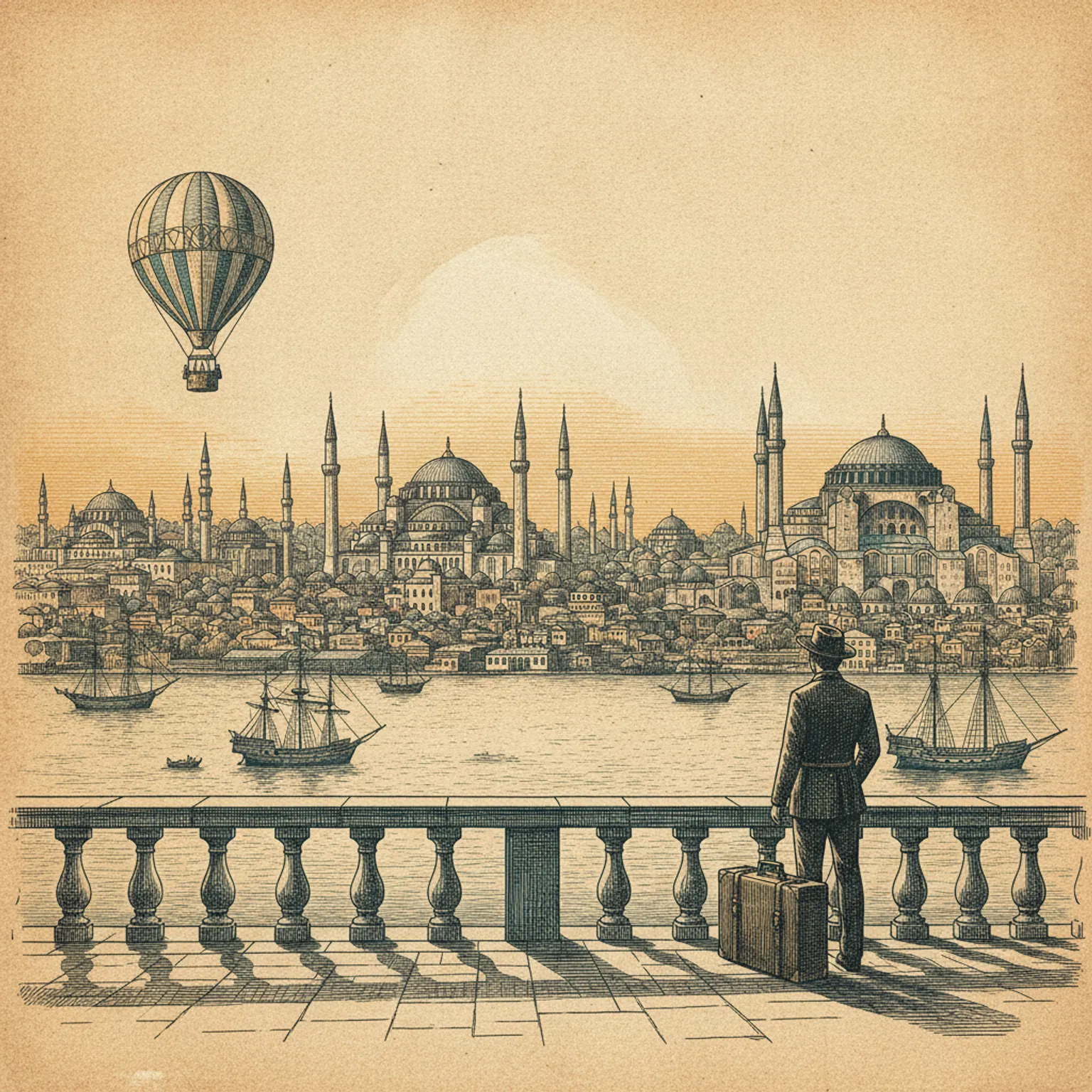
I asked a man selling simit (sesame bread rings) in Eminönü for directions to the Spice Bazaar. He didn't speak English. I didn't speak Turkish. He sold me a simit for 5 lira, handed me half of it, pointed, said something that I assume was 'follow me', and walked me to the entrance — a four-minute detour that was clearly not on his route. Then he went back. The Spice Bazaar was forty metres away. This is Istanbul's hospitality, which is apparently just how people are here.
Two days covers the top tier: Hagia Sophia, Topkapi Palace, the Grand Bazaar, the Bosphorus crossing by ferry, and one meal that makes you understand why people call Turkish cuisine one of the world's three great culinary traditions. Start early. Both big sites have queues that build by 10 AM.
The Hagia Sophia mosque requires modest dress — free scarves available at the entrance for women.
72 Hours: Istanbul on Both Continents
Three days adds the Asian side — Kadıköy's market and the ferry crossing that lets you stand in Asia for an afternoon and return by boat at sunset with the skyline ahead of you. Also the Chora Church (Istanbul's best Byzantine mosaics, undervisited).
4 Days: Neighbourhoods, Hammam, and Getting Lost
Four days means Balat and Fener — the crumbling-gorgeous Ottoman Jewish and Greek neighbourhoods — and at least one traditional hammam session that you'll initially approach with scepticism and leave extremely clean and extremely relaxed.
7 Days: Istanbul Reveals Itself
Seven days in Istanbul is when the city stops being a collection of monuments and starts being somewhere you understand. You'll have a kebab guy. You'll know which ferry to take without looking it up. You'll have walked the Theodosian Walls and watched the Bosphorus from Rumeli Fortress and understood that this city was the centre of the world for a thousand years, and in some deep structural way still acts like it.
Estimated budget:₺3,000–₺5,500 est. (budget–mid, 1 hotel night + museum entries)
Estimated budget:₺4,500–₺8,000 est. (2 nights + Asian side ferry + hammam)
Estimated budget:₺5,800–₺10,500 est. (3 nights + Bosphorus cruise)
Estimated budget:₺10,000–₺18,000 est. (full week, mid-range Beyoğlu hotels)
[ THE DISPATCH · FIELD MAP ]
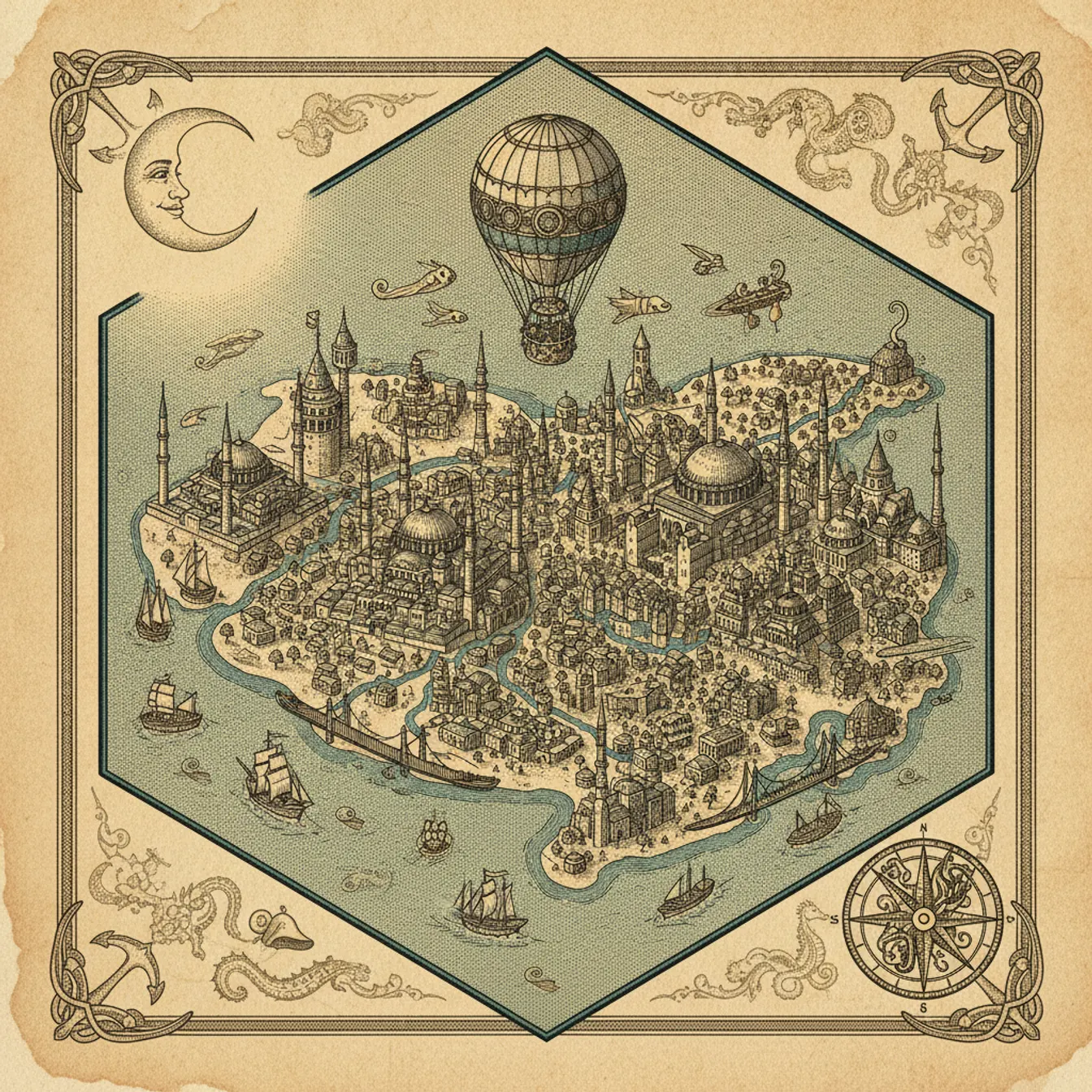
A tilted, hand-drawn dispatch of Istanbul. Click a quarter to explode it open.
0 / 6 quarters explored
[ SULTANAHMET ]
Old stones, older stories.
Hagia SophiaThe building that was the world's largest for a thousand years. Still the most astonishing.
Topkapi Palace + Harem600 years of Ottoman imperial life, including the Harem that history mostly misrepresents.
[ GRAND BAZAAR & EMINÖNÜ ]
Old stones, older stories.
Grand Bazaar (Kapalıçarşı)4,000 shops. 64 streets. The world's first shopping mall, and still the most confusing.
Spice Bazaar (Mısır Çarşısı)The smell hits before the entrance. Turkish delight, saffron, dried figs, and everything else.
[ BEYOĞLU & GALATA ]
Stays up later than you do.
Eminönü waterfront — balık ekmek (fish sanThe fish sandwich from a boat-kitchen that you'll talk about for years.
Galata TowerThe 14th-century Genoese tower with the best 360° view of Istanbul.
[ KADIKÖY (ASIAN SIDE) ]
Old stones, older stories.
Eminönü to Kadıköy ferryThe 25-minute crossing that makes Istanbul's two-continent claim legible.
Kadıköy Produce MarketThe market that Istanbul uses. Not the market Istanbul shows you.
[ BALAT & FENER ]
Old stones, older stories.
Balat neighbourhood walkThe Instagram neighbourhood that was a working-class Jewish quarter for 500 years.
Chora Church (Kariye Camii)The Byzantine mosaics that art historians consider the greatest in the world.
[ BEŞIKTAŞ & ORTAKÖY ]
Where the city meets the water.
Dolmabahçe PalaceThe palace Atatürk died in. The last Ottoman sultan left from its pier in 1922.
Bosphorus CruiseThe ferry that makes Istanbul's geography finally make sense.
Day 1
Sultanahmet — Hagia Sophia, Topkapi, Blue Mosque
Two empires in one afternoon
Start at Hagia Sophia at 8:30 AM — it opens at 9, and the queue already forms before then. Topkapi immediately after. Blue Mosque (which is free) in the afternoon when the crowd has thinned. This is the day that compresses 1,500 years of history into eight hours.
Walk from your hotel rather than taking a taxi — the approach to Sultanahmet on foot from Sirkeci or Eminönü gives you the skyline that every postcard is trying to photograph, without the fence.
Hagia Sophia
The building that was the world's largest for a thousand years. Still the most astonishing.
Built by Justinian in 537 AD, converted to a mosque by the Ottomans in 1453, made a museum in 1934, reconverted to an active mosque in 2020. Entry is now free but requires modest dress. The interior is vast — the central dome appears to float, lit by a ring of windows below it that Byzantine architects had no business engineering as successfully as they did. Arrive at opening; the light through the south-facing windows at 9 AM is exceptional.
Topkapi Palace + Harem
600 years of Ottoman imperial life, including the Harem that history mostly misrepresents.
The palace complex operated as the Ottoman imperial centre from 1453 to 1856. The Harem (separate ticket, ₺300) is not what popular culture suggests — it was a palace-within-a-palace housing hundreds of people in an elaborate hierarchy, and the architecture is extraordinary. The Treasury contains the Topkapi Dagger and the 86-carat Spoonmaker's Diamond. Budget 3 hours for the full site.
The six minarets that caused a diplomatic incident. The interior tiles justify everything.
Free entry, but the mosque closes for prayer five times daily — check times before visiting (typically 30 minutes before each prayer). The 'Blue' comes from the 20,000 hand-painted Iznik tiles covering the interior walls in blue and white — at noon when the light comes through the 260 windows, the effect is genuinely otherworldly. The Sultan Ahmed Mosque was controversial at its 1616 completion because six minarets matched Mecca; a seventh minaret had to be added to the Mecca mosque to restore the distinction.
Dinner in Sultanahmet — Bab-ı Hayat or similar
Where to eat near the sites without getting scammed.
Most Sultanahmet restaurants near the main sites are tourist traps. Walk five minutes towards Küçük Ayasofya (Little Hagia Sophia — also excellent, actually Byzantine, genuinely undervisited) and eat at any restaurant on Şehit Mehmet Paşa Yokuşu. Meze (small dishes) to start: mücver (courgette fritters), ezme (spiced tomato paste), cacık (yoghurt with cucumber). Then köfte or kuzu tandır (slow-roasted lamb).
Day 2
Grand Bazaar + Spice Bazaar + Beyoğlu
Commerce, chaos, and the hill above it all
Last morning. Grand Bazaar at 9 AM (it opens at 8:30, the serious shoppers come at 9). Spice Bazaar after. Lunch at Eminönü. Afternoon in Karaköy, then up to Galata Tower for the view. This is Istanbul's commercial soul and its 19th-century European soul in one day.
Same plan, but afternoon free. You've already decided what to do — either Galata Tower at sunset, or the Pera Museum, or you've found somewhere on İstiklal that you want to go back to.
Grand Bazaar (Kapalıçarşı)
4,000 shops. 64 streets. The world's first shopping mall, and still the most confusing.
The Grand Bazaar has been operating since 1461 and contains 4,000 shops in a labyrinth of vaulted streets. Don't buy the first price. Don't buy anything from a vendor who found you — the goods from the cul-de-sacs and the shops that don't tout are better. Best buys: Turkish tea sets (glass tulip cups and saucers), hand-painted ceramics, leather goods. The worst buys: anything involving the word 'authentic' on a handwritten sign.
Spice Bazaar (Mısır Çarşısı)
The smell hits before the entrance. Turkish delight, saffron, dried figs, and everything else.
The Spice Bazaar (1664) is smaller than the Grand Bazaar and better-scented. Buy saffron here — Turkish saffron is real and cheaper than Iranian at source. Also: the Turkish delight (not the airport version, the shop-made variety in boxes), the pomegranate molasses, and the dried mulberries. Don't negotiate on food — the prices are fair.
Eminönü waterfront — balık ekmek (fish sandwich)
The fish sandwich from a boat-kitchen that you'll talk about for years.
At the Eminönü waterfront, moored boats with small galley kitchens grill mackerel and stuff it into half-baguettes with onion, salad, and lemon. It costs ₺60. Eat it standing at the water's edge watching the ferries cross the Golden Horn. This is possibly the best ₺60 meal in Europe. Salted fish smell on your hands for the afternoon: a small price.
Galata Tower
The 14th-century Genoese tower with the best 360° view of Istanbul.
Built by the Genoese in 1348, the Galata Tower stands at the north end of the Galata Bridge and gives you a 360° panorama: the Golden Horn, Sultanahmet's minarets, the Bosphorus, and the Asian side. Book tickets online (avoid the queue). The neighbourhood below — Karaköy and Galata — is Istanbul's best café and design district.
The pedestrian street that is both too crowded and essential.
İstiklal Avenue is 1.4 kilometres of shops, restaurants, music from open doors, and the nostalgic tram that runs its length twice an hour. It's tourist-heavy and the actual Istanbul — both are true. Duck into a meyhane (traditional Turkish tavern) on the parallel streets: Çiçek Pasajı (Flower Passage) is the famous one; Nevizade Sokak behind it is where the locals eat alongside you. Order rakı, meze, and grilled fish.
Day 3
Kadıköy — The Asian Side by Ferry
Cross a strait, enter a different city
The ferry from Eminönü or Karaköy to Kadıköy takes 25 minutes and costs ₺25. You cross the Bosphorus. You are in Asia. The market district of Kadıköy is better than any equivalent on the European side for daily produce, and the Moda neighbourhood is the best neighbourhood in the city for doing nothing in particular.
Same ferry, but go early (8 AM) and spend the morning at Kadıköy market before the afternoon crowds. Return by the Haydarpaşa ferry (different dock, different view) at sunset.
Eminönü to Kadıköy ferry
The 25-minute crossing that makes Istanbul's two-continent claim legible.
Take the Şehir Hatları ferry from Eminönü pier 1. Stand on the rear deck as the European skyline recedes: the minarets of the Blue Mosque, Hagia Sophia's bulk, the Galata Tower. Then turn around as Kadıköy approaches. This crossing, done properly, costs ₺25 and is one of the great short boat journeys in the world.
Kadıköy Produce Market
The market that Istanbul uses. Not the market Istanbul shows you.
The streets around Kadıköy's main market square (Barış Manço Meydanı and the surrounding sois) have the best produce in Istanbul — tomatoes the colour of paint, fresh olives from every region, white cheese from Edirne, smoked meats, dried fruit. Buy breakfast from the vendors: simit, fresh cheese, a handful of olives. Eat on the walk between stalls.
Moda neighbourhood walk
Istanbul's most liveable waterfront neighbourhood, with better coffee than the European side.
Moda is the peninsula that juts into the Bosphorus south of Kadıköy — residential, tree-lined, with a waterfront park and the best café scene in the city. Walk the corniche south, stop at Moda Pier, look across to the Princes' Islands. The coffee at Espresso Lab or Kronotrop is excellent. The pace is unhurried in a way that no tourist neighbourhood manages.
Lunch in Kadıköy
İskender kebab or kokoreç — the two meals that define what Istanbul actually eats.
İskender kebab (döner served on bread with tomato sauce and butter) at Çiya Sofrası — the most celebrated restaurant on the Asian side, researching and serving regional Anatolian dishes. Kokoreç (spiced offal wrapped in intestines, grilled on a spit) from a street cart if you're adventurous: an acquired taste that Istanbullu eat at all hours and tourists either love or refuse entirely.
The abandoned railway terminal that makes the European skyline visible from the Asian shore.
Haydarpaşa Station (1909, a German-built railway terminus) is closed for restoration but the exterior and the waterfront in front of it are accessible and spectacular. The view of Istanbul's European skyline from this Asian promontory at sunset is what all the travel photography is trying to capture. Take the late ferry back — watching the minarets grow larger as you cross is the day's best moment.
Day 4
Balat, Fener + Chora Church + Hammam
Ottoman minority quarters and Byzantine mosaics
Balat and Fener are the crumbling-beautiful Jewish and Greek Orthodox neighbourhoods on the Golden Horn — steep streets, wooden Ottoman houses in various states of renovation, a Greek Orthodox Patriarchate that still operates. Then the Chora Church (Kariye Camii): Byzantine mosaics that rival the Hagia Sophia's upper gallery. Afternoon at a traditional hammam.
Same plan. Add the Greek Orthodox Patriarchate of Constantinople (Fener, 10 minutes from Chora Church) — still the spiritual centre of global Orthodoxy, still here, still functioning.
Balat neighbourhood walk
The Instagram neighbourhood that was a working-class Jewish quarter for 500 years.
Balat became an Instagram location in 2017 and has been gentrifying since. The coloured houses are real. The coffee shops are new. The history — Jewish community from the Spanish Inquisition expulsions of 1492, living here until the mid-20th century — is everywhere if you look at the Hebrew inscriptions on doorposts and the former synagogues repurposed into shops.
Chora Church (Kariye Camii)
The Byzantine mosaics that art historians consider the greatest in the world.
The Chora Church (14th-century mosaics, reconverted to a mosque in 2020, currently closed for restoration — check status before visiting) contains the finest surviving Byzantine mosaic programme outside of Hagia Sophia's upper gallery. The Anastasis (Christ pulling Adam and Eve from their tombs) in the pareccllesion is the image art historians use to mark the transition from medieval to Renaissance feeling in Christian art. If restoration is complete: mandatory. If not, the exterior and the neighbourhood are still worth the trip.
Theodosian Land Walls
The walls that protected Constantinople for 1,000 years. Now a garden.
The land walls of Constantinople, built in 413 AD and not breached until 1453, run for 6.5 kilometres from the Golden Horn to the Sea of Marmara. Much of the wall survives and you can walk sections of it. The Edirnekapı section near Chora Church is the best-preserved. The view from the wall towards Thrace (you're looking at Europe from a Roman fortification) is disorienting and magnificent.
Traditional Turkish Hammam
The bath ritual that Istanbul has been practising since the 15th century.
Choose Çemberlitaş Hamamı (near the Grand Bazaar, 1584, designed by Mimar Sinan) or Ayasofya Hürrem Sultan Hamamı (16th century, directly between Hagia Sophia and the Blue Mosque, more expensive but spectacular architecture). Both offer the full treatment: hot marble slab, kese scrub (removes an alarming quantity of dead skin), foam massage. You will emerge cleaner than you have been since birth.
The Greek neighbourhood and the waterfront that Istanbul kept as it was.
Fener is quieter than Balat — the Greek Orthodox community is smaller now, but the Patriarchate of Constantinople (Ekümenik Patrikane) still operates from here and is visitable. The Golden Horn waterfront path from Fener to Balat pier has been landscaped into a park — eat a döner from one of the carts, watch the fishing boats, take the ferry back rather than the tram.
Day 5
Dolmabahçe + Ortaköy + Bosphorus Cruise
The 19th-century empire and the water that divides continents
The Bosphorus is the city's defining geographic fact — a strait 18 miles long between two seas and two continents, with Istanbul on both banks. This day puts you on the water properly: Dolmabahçe Palace on the European shore, the Bosphorus cruise through the strait, and Ortaköy for dinner with the bridge lights above.
Dolmabahçe Palace
The palace Atatürk died in. The last Ottoman sultan left from its pier in 1922.
Dolmabahçe replaced Topkapi as the Ottoman court in 1856 and is everything Topkapi is not: European baroque and rococo architecture, a 14-tonne crystal chandelier in the throne room (a gift from Queen Victoria), 46,000 square metres of Hereke carpet. Atatürk died here on 10 November 1938 — all the clocks in the palace are stopped at 09:05, the time of his death.
The ferry that makes Istanbul's geography finally make sense.
The public ferry from Eminönü pier 3 (Boğaz Hattı) runs the full length of the Bosphorus to Anadolu Kavağı and back — a 6-hour return for ₺100 that passes Dolmabahçe, the Bosphorus Bridge, Rumeli Fortress, and the summer palaces on both shores. Budget tours charge 10× for the same view. Buy simit from the vendor on board and feed the seagulls.
Built in four months in 1452 to control the Bosphorus before the conquest of Constantinople.
Mehmed II built this fortress in four months in 1452 — across from the existing Anatolian fortress — to control shipping through the Bosphorus and cut off Constantinople from supply before his 1453 siege. The construction speed was remarkable; the speed of the subsequent conquest (53 days) was not. The fortress is well-preserved and the views of the strait from the towers are among the best in the city.
Ortaköy waterfront dinner
The village square under the Bosphorus Bridge, where Istanbul eats kumpir.
Ortaköy's main attraction is the 1856 mosque sitting directly below the Bosphorus Bridge with the Bosphorus and the Asian shore behind it — the classic Istanbul photograph. The waterfront square sells kumpir (loaded baked potato — the Turkish version is a meal, not a side dish) from stalls that operate until midnight. The restaurants on the waterfront are reasonable and the view from them justifies a slightly inflated price.
Day 6
Topkapi Deep Dive + Archaeological Museum + Pera Museum
The museums you skipped when you were rushing
If Topkapi on Day 1 felt rushed (it always does — there's too much), use this day to go back to the sections you missed. The Istanbul Archaeological Museum next door is one of the great classical collections in the world and has a 30-minute queue on Saturdays and a 10-minute queue every other time. Afternoon at the Pera Museum in Beyoğlu for Osman Hamdi Bey's 'The Tortoise Trainer.'
Topkapi Palace — the sections you missed
The Harem and the Circumcision Room. Yes, really.
If you went to the Harem on Day 1, revisit the fourth courtyard — the tulip garden, the Baghdad Pavilion (built in 1638 to celebrate the conquest of Baghdad), the terrace with the view of the Golden Horn. If you skipped the Harem entirely, rectify that now. The Circumcision Room (Sünnet Odası) is a separate pavilion tiled floor-to-ceiling in blue Iznik and is one of the finest tiled interiors in the world.
Istanbul Archaeological Museum
The Alexander Sarcophagus. The Treaty of Kadesh. The original Istanbul.
Three buildings, one of the world's great classical collections. The Alexander Sarcophagus is the centrepiece — not (probably) Alexander's own, but the battle-scene reliefs are among the finest Greek sculpture in existence. The original bronze serpentine column from Delphi (now in the Hippodrome as a stump) was brought here. The Treaty of Kadesh (1259 BC) — the world's oldest known peace treaty — is here in cuneiform.
Pera Museum
The 19th-century Ottoman painter who put a tortoise on a leash. The museum explains why.
The Pera Museum in Beyoğlu owns Osman Hamdi Bey's 'The Tortoise Trainer' (1906) — the most famous Turkish painting, a meditation on the slowness of reform in the late Ottoman Empire, depicting a man training tortoises carrying candles in a mosque courtyard. The painting is quieter than it sounds and hits harder. The museum also has an excellent permanent collection of Orientalist painting (which it contextualises honestly) and rotating exhibitions.
The street of fish restaurants and rakı that Istanbul has been celebrating on for 150 years.
Nevizade Sokak (behind İstiklal, off Çiçek Pasajı) is a single street of meyhane (taverns) where you order a carafe of rakı, a dozen cold meze plates, and then whatever fish the waiter recommends as the catch of the day. Loud, joyful, and occasionally featuring a wandering musician who will play something unexpectedly good. Budget two hours. Return as many times as the trip allows.
Day 7
Eyüp Sultan + Theodosian Walls + Pierre Loti Café
The holy hill, the ancient wall, and the French novelist's view
Eyüp is the most sacred district in Istanbul — the tomb of Eyüp Sultan (standard-bearer of the Prophet Muhammad) is the destination of pilgrims from across Turkey. Take the old funicular to the Pierre Loti café on the hill above for the best view of the Golden Horn. Last afternoon back in Karaköy. Final balik ekmek at Eminönü.
Eyüp Sultan Mosque + Tomb
The holiest site in Istanbul, at the head of the Golden Horn, away from every tourist.
Eyüp is not on most tourist itineraries and should be. The mosque and the tomb of Eyüp el-Ensari (standard-bearer who died at the Arab siege of Constantinople in 674 AD) are the pilgrimage centre of Turkish Islam. The surrounding cemetery climbs the hill — graves from every century of Ottoman rule. Respectful silence and modest dress required; the atmosphere is genuinely moving.
Pierre Loti Café (cable car from Eyüp)
The hilltop café named after a French novelist. The Golden Horn view is the point.
The cable car from Eyüp cemetery to the Pierre Loti Café on the hill above takes three minutes and costs almost nothing. The café is named for Julien Viaud — 'Pierre Loti' — who frequented it in the 1870s and wrote the Istanbul novel 'Aziyadé.' The view of the Golden Horn from the terrace is the best long view of Istanbul's old city, looking south down the waterway toward the Bosphorus. Order Turkish tea. Sit for thirty minutes. Do not rush.
Grand Bazaar — final purchases
The things you talked yourself out of buying on Day 2.
Return to the Grand Bazaar for the things you wanted but didn't buy. You now know where to find the coppersmiths, the calligraphy shop, the tea supplier with the best apple tea. You know not to buy from the first vendor who makes eye contact. Go back. Spend the budget you saved by not being scammed on Day 2.
Galata Bridge sunset — final Bosphorus view
The fishermen's bridge. The view that explains why empires kept this city.
The Galata Bridge lower deck has restaurants; the upper deck has fishermen from both ends. Walk the full length at sunset, looking south toward the Bosphorus mouth and north up the Golden Horn. This is the geography that made Constantinople the most strategically important city in history for a thousand years. From here it is completely legible. Take the tram back to wherever you're staying. Think about the return trip.
Istanbul is the only city on earth where you can have breakfast on one continent and lunch on another, using a ferry that costs 25 Turkish lira. This is either a geographic triviality or the most clarifying thing about the city — depending on how long you stand on the ferry deck watching the skyline shift from European to Asian and back.
The city has been at the intersection of empires for so long that it has absorbed all of them. Byzantine churches repurposed as Ottoman mosques. Ottoman hans turned into boutique hotels. Greek Orthodox neighbourhoods adjacent to Jewish quarters adjacent to Turkish mahallesi. The palimpsest is the point.
This itinerary moves through Istanbul’s layers in the order that makes the city legible: ancient first, medieval second, Ottoman third, then the 19th-century European influence, then the neighbourhoods that the tourist map ignores. By Day 3, you’ll be taking ferries without looking up the schedule.
Where to Stay in Istanbul
Neighbourhood
Vibe
Best For
Walk to Hagia Sophia
Sultanahmet
Historic, tourist-heavy, maximum convenience
First-timers who want zero commute
2 min
Beyoğlu/Galata
Lively, café-dense, excellent transport
Those who want nightlife and restaurant access
20 min tram
Karaköy
Design hotels, hip café scene, waterfront
Design-conscious travellers, shorter trips
15 min tram
Beşiktaş
Residential, local, Bosphorus views
Repeat visitors, longer stays
25 min tram
Kadıköy (Asian)
Authentic neighbourhood feel, best market
Adventurous travellers comfortable with ferries
25 min ferry
This article contains affiliate links marked with rel="sponsored". We may earn a commission at no extra cost to you.