I rented a bike on my second day in Amsterdam, felt completely confident, turned left onto a tram track, and went down immediately. A man on a bakfiets carrying what appeared to be three children and a labrador swerved around me without breaking pace. He didn't even look back. That is Amsterdam's relationship with cyclists who don't know what they're doing: polite, efficient, and utterly without mercy.
The Perfect Amsterdam Itinerary (2, 3, 4 & 7 Days)
Two days in Amsterdam means the Rijksmuseum, a canal walk, the Anne Frank House, and one brown café that you'll spend more time in than planned. Book the museums online. Walk everywhere. The city is smaller than it appears on a map.
The Anne Frank House sells out weeks in advance. Book online the moment you know your dates.
72 Hours: Amsterdam Properly
Three days adds Jordaan's hidden hofjes, the Van Gogh Museum at the right hour, and enough time to discover a neighbourhood that isn't on your original list but ends up being your favourite.
4 Days: The Slow Canal Version
Four days means you rent a bike properly (not like I did, see above), cycle to De Pijp for the Albert Cuyp market, and spend an afternoon in Amsterdam Noord across the IJ — the part of the city that feels like a different city entirely, in the best way.
7 Days: Fall in Love With a Brown Café
A week in Amsterdam and you have a regular café by Day 3. You know which bridges the tourists skip. You've been to the Concertgebouw. You've eaten rijsttafel at a proper Indonesian restaurant and understood why the colonial history and the cuisine are complicated but both real.
Estimated budget:€320–€520 est. (budget–mid, 1 hotel night + pre-booked museums)
Estimated budget:€500–€820 est. (2 nights + bike rental + Van Gogh)
Estimated budget:€660–€1,050 est. (3 nights + De Pijp day + Noord ferry)
Estimated budget:€1,100–€1,800 est. (full week, mid-range canal-house hotels)
[ THE DISPATCH · FIELD MAP ]
A tilted, hand-drawn dispatch of Amsterdam. Click a quarter to explode it open.
0 / 6 quarters explored
[ CANAL RING (GRACHTENGORDEL) ]
Where the city meets the water.
Jordaan neighbourhood walkAmsterdam's most characterful neighbourhood, best before the tourist wave.
RijksmuseumThe Night Watch in a building that matches its drama.
Van Gogh MuseumTwo hundred paintings in chronological order. The arc of a life, visible on walls.
[ JORDAAN ]
Old stones, older stories.
Anne Frank HouseOne of the most important thirty minutes you'll spend in any city.
Westerkerk towerAmsterdam's highest tower. Rembrandt is buried in the church below (somewhere).
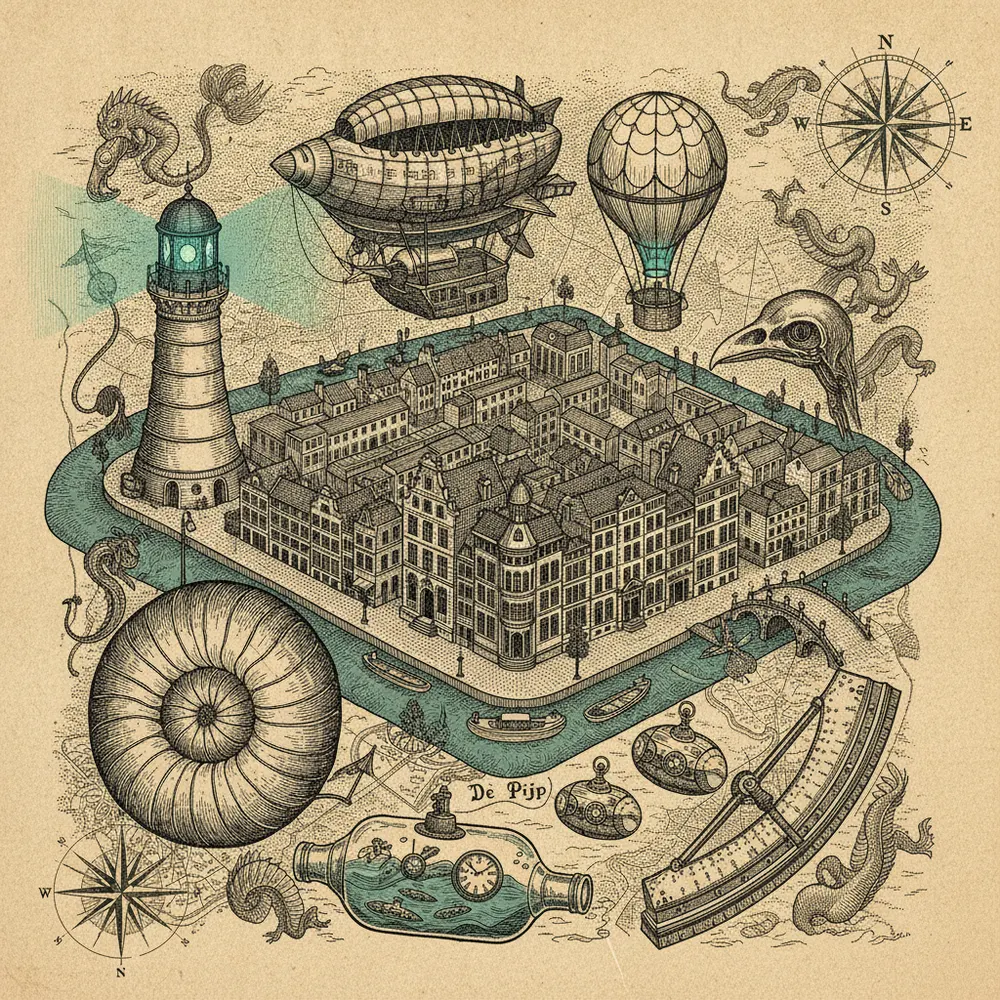
[ DE PIJP ]
Stays up later than you do.
Albert Cuyp MarketThe biggest street market in the Netherlands. The stroopwafel here is actually better.
Heineken Experience (optional)The brewery-turned-museum that's better than it has any right to be.
[ AMSTERDAM NOORD ]
Where the city meets the water.
Haarlem day tripThe Dutch city that Amsterdam was before it got famous.
Zaanse Schans (alternative)Working windmills, wooden houses, and cheese you can watch being made.
[ EASTERN DOCKLANDS ]
Where the city meets the water.
Eastern Docklands — Java Island + KNSM IslWhere Amsterdam put its most experimental architecture and no one mentions it in guides.
Scheepvaartmuseum (National Maritime MuseuThe Dutch East India Company's story, in a building it could have owned.
Day 1
Canal Ring + Jordaan + Anne Frank House
The Amsterdam everyone comes for, done in the right order
One morning to understand the canal structure — it's concentric, like rings, and once you see it you can navigate without a map. Anne Frank House in the early afternoon. Jordaan brown café in the evening. This is the essential Amsterdam.
Take it slow — get an 'uitsmijter' (fried eggs on bread) at a café on Haarlemmerdijk before the canals wake up. The Jordaan at 8 AM is completely different from 11 AM.
Jordaan neighbourhood walk
Amsterdam's most characterful neighbourhood, best before the tourist wave.
Start at Noordermarkt (Saturday for the organic market, Monday for antiques — check which day you're visiting). Walk the Prinsengracht south, then cut into the Jordaan's smaller streets: Elandsgracht, Looiersgracht, the streets named after flowers. Every third building has a gable stone telling you what it used to be. This is the city at human scale.
Hidden hofjes (Hofje van Brienen + Karthuizerhofje)
Hofjes are 17th-century almshouses — small courtyards hidden behind street-level doors that look like private residences. They're not. Push the door at Prinsengracht 89 (Hofje van Brienen). Step into a courtyard with gardens, cats, and the sound of the city completely disappearing. Karthuizerhofje on Karthuizerstraat is even better. Quiet, please — people live here.
Anne Frank House
One of the most important thirty minutes you'll spend in any city.
Book timed entry weeks in advance — this cannot be overstated. The house is exactly as small as you'd imagined from the diary. The rooms are unfurnished at the request of Otto Frank. The experience of standing in the Secret Annexe is unlike anything else on this itinerary. Give yourself time on the pavement outside afterwards.
Amsterdam's highest tower. Rembrandt is buried in the church below (somewhere).
The tower climb (€9) gives you the best view of the canal ring from above — the concentric horseshoe shape of the Grachtengordel makes perfect sense from up here. Rembrandt died broke and was buried in a pauper's grave in the church, location unknown. A plaque apologises vaguely.
Brown café aperitivo — Café 't Smalle or Café de Reiger
The pub format the Dutch invented, never improved upon, and never exported successfully.
Brown cafés (bruin kroegen) are named for the colour of the walls after centuries of tobacco smoke. Café 't Smalle on Egelantiersgracht is in a converted gin distillery from 1786. Order Amstel or Heineken (nobody orders craft beer in a brown café — it defeats the point) and a bitterballen (deep-fried beef ragù balls, always, without exception). Stay as long as the Dutch do, which is always longer than you planned.
Last morning. Rijksmuseum opens at 9 AM — arrive then, spend two hours, see the Night Watch and Vermeer's Milkmaid without the 11 AM crowd. Then Van Gogh, then Vondelpark. Airport by taxi from Leidseplein is 20 minutes.
Full morning in the Rijks, afternoon split between Van Gogh and Vondelpark. Evening back in Jordaan for dinner — you have the luxury of revisiting.
Rijksmuseum
The Night Watch in a building that matches its drama.
The Rijksmuseum's 2013 renovation by architects Cruz y Ortiz produced one of the best museum buildings in the world — and the collection inside matches it. Rembrandt's Night Watch is larger than you've imagined. Vermeer's Milkmaid is smaller. Both are better than any reproduction. Spend two hours; don't try to see everything.
Two hundred paintings in chronological order. The arc of a life, visible on walls.
The Van Gogh Museum owns more Van Gogh than anywhere else — 200 paintings and 500 drawings, spanning from the dark Dutch period to the Arles sunflowers. The chronological hang makes the psychological shift from grey to yellow to that specific fevered brushstroke viscerally clear. Don't skip the Japanese woodblock prints that influenced him — they're upstairs and usually quiet.
Amsterdam's Regent's Park — except everyone has a beer and a bike.
The park is the city's social centre from March to October: families, students, people playing chess, an outdoor theatre, dogs. Buy a stroopwafel from the stall at the Amstelveenseweg entrance and walk the main path south. The rose garden in June is excellent. This is where Amsterdammers actually spend their Saturday afternoons.
Dinner near Leidseplein
The square that never stops. Find a side street and have a better meal than on it.
Leidseplein itself is tourist central — go one street back in any direction. For Indonesian (the colonial-era cuisine that Amsterdam does better than anywhere outside Indonesia): Blauw on Amsteldijk is worth the detour. For Dutch stamppot in winter or grilled fish year-round: De Belhamel on Brouwersgracht.
Day 3
Jordaan Deep Dive + Noordermarkt + Dutch Design
The neighbourhood version of Amsterdam
Final day: revisit the Jordaan without an agenda. Noordermarkt on Saturday morning is one of Europe's great markets. Spend the afternoon at the Foam Photography Museum or the Moco Museum (Banksy and Warhol, very well presented, not as naff as it sounds).
Spend the whole day in Jordaan and Haarlemmerstraat without a single museum. The concept stores, the cheese shops, the genever (Dutch gin) distilleries — this is the Amsterdam of Dutch people, not just tourists.
Noordermarkt (Saturday only)
The organic farmers' market Amsterdam keeps a secret from TripAdvisor.
Every Saturday around Noordermarkt square: biodynamic vegetables, raw-milk cheese, sourdough, stroopwafels made in front of you, smoked eel if you're adventurous. The antique market runs Monday. Come for breakfast — the fresh stroopwafel with caramel still soft from the press is the best €2.50 you'll spend in the city.
Haarlemmerstraat + Haarlemmerdijk shopping
The street that proves Amsterdam's design credentials, one independent shop at a time.
The best shopping street in Amsterdam that tourists haven't fully discovered: independent bookshops, Dutch design objects, a proper cheese monger, a jenever (gin) shop with a tasting bar, and multiple coffee roasters. Walk the full length twice. Buy something you can't get online.
Foam Photography Museum
The photography museum that consistently beats the big institutions.
Foam is in a canal house on Keizersgracht and punches way above its size — the programme rotates every 6–8 weeks and typically includes one world-class photographer alongside two or three emerging names. Check the current show before you go. One hour maximum. Then walk the Keizersgracht back north.
Jenever tasting at Wynand Fockink
The 1679 distillery where you drink Dutch gin the Dutch way — bent double over the bar.
Wynand Fockink is a proeflokaal (tasting house) behind the Krasnapolsky hotel, unchanged since 1679. The rule is: the tulip glass is filled to the brim, you bend over the bar and take the first sip without lifting it. Then you can use your hands. Order the 'Old Amsterdam' or the 'Bridal Tears'. Three glasses maximum — these are 35%.
Dinner in Jordaan — Indonesian or Dutch
The neighbourhood that has the city's best restaurant-to-tourist ratio.
The Jordaan is full of exceptional restaurants that aren't on any obvious list. Tempo Doeloe on Utrechtsestraat does rijsttafel (Indonesian rice table) that takes two hours and is worth every minute. Brouwerij 't IJ on Funenkade does Dutch pub food with their own craft beer brewed on-site in a windmill. Both require a booking.
Day 4
De Pijp + Albert Cuyp Market + Amsterdam Noord (ferry)
The Amsterdam that runs on market food and ferry crossings
Morning in De Pijp at the Albert Cuyp market — the biggest street market in the Netherlands, and genuinely used by local residents, not primarily by tourists. Afternoon: take the free IJ ferry from behind Centraal Station to Amsterdam Noord. Cross in five minutes. Arrive in a different decade.
Same structure. Add the EYE Film Museum on the Noord side (excellent architecture, rotating film programme, great café on the waterfront). Dinner at a Noord food hall — NDSM Wharf has several good ones.
Albert Cuyp Market
The biggest street market in the Netherlands. The stroopwafel here is actually better.
Albert Cuypstraat, De Pijp — 260 stalls, one kilometre long, open Monday to Saturday. Raw herring (eat it the Dutch way — drop it into your mouth from above holding the tail), fresh stroopwafels, frites with the Dutch mayo that is not the same as anywhere else, fabrics, cheese, flowers, everything. Come hungry. Leave at capacity.
Heineken Experience (optional)
The brewery-turned-museum that's better than it has any right to be.
The original Heineken brewery in De Pijp ran until 1988 and is now a well-executed interactive museum about Dutch beer history and the brand. Include only if you drink beer — the three free Heinekens at the end are included in the ticket and served in the original stable, now a bar.
Five minutes on a free ferry and you're somewhere completely different.
The free ferry from behind Centraal Station (Pontsteiger or NDSM Werf depending on which service) crosses the IJ in five minutes and deposits you in a neighbourhood that has changed more in the last decade than the rest of Amsterdam combined. The EYE Film Museum building is the landmark, but the NDSM Wharf (a converted shipyard with street art, studios, and food) is the destination.
EYE Film Museum
The architecture is the exhibit. Then there's also a film museum inside.
The 2012 Delugan Meissl building is the best piece of contemporary architecture in Amsterdam — cantilevered over the waterfront, white angles, the interior ramps giving views of the IJ in both directions. The film collection and rotating exhibitions are good. The café terrace looking back at the city skyline is excellent.
NDSM Wharf + Noord food hall
The shipyard where Amsterdam's creative industries went when the canal houses got expensive.
NDSM is where the city's designers, musicians, and film crews relocated when Jordaan rents went lunar. The vast warehouse has studios, a climbing wall, rotating street art, and several food concepts that are significantly better than the average Amsterdam restaurant. Eat here, take the late ferry back, and walk through a quiet evening Centraal.
Day 5
Day Trip — Haarlem or Zaanse Schans
The Netherlands outside Amsterdam, within an hour
Two options: Haarlem (a proper Dutch city in its own right, 20 minutes by train, with the Frans Hals Museum and a market square that Amsterdam doesn't have anymore) or Zaanse Schans (the windmill village, genuinely beautiful, worth a half-day). Do Haarlem in the morning, Zaanse Schans in the afternoon, or pick one and take it slowly.
Haarlem day trip
The Dutch city that Amsterdam was before it got famous.
Haarlem is 20 minutes from Amsterdam Centraal. The Grote Markt (main square) has a Gothic church that dwarfs anything in Amsterdam and a Saturday market that's been running since the 13th century. The Frans Hals Museum in a converted almshouse has the best collection of Dutch Golden Age group portraits outside the Rijksmuseum. Lunch at any café on the square.
Working windmills, wooden houses, and cheese you can watch being made.
Yes, it's a tourist attraction. No, it's not fake — the windmills genuinely operate and produce mustard, paint, and lumber. The cheese farm is a demonstration, but the cheese itself is excellent and sold alongside it. Come on a weekday morning before the cruise bus groups. Half-day maximum; a full day is too much.
Return to Jordaan — favourite café
Your regular café, if you've done the week right.
By Day 5, you should have a preferred brown café. Go back to it. The bartender will recognise you. Order the same thing. This is the entire point of seven days in any city.
Day 6
Eastern Docklands + Jewish Quarter + Resistance Museum
The Amsterdam that history built most carefully
The Jewish Quarter and the Dutch Resistance Museum are the most historically important part of Amsterdam to understand — the city lost 75% of its Jewish population in World War II, and the memory is everywhere if you look for it. Morning in the Eastern Docklands for architecture; afternoon at the Resistance Museum and Hollandsche Schouwburg.
Eastern Docklands — Java Island + KNSM Island
Where Amsterdam put its most experimental architecture and no one mentions it in guides.
The 1990s Eastern Docklands development is one of the most significant urban residential architecture projects in Europe — each island (Java Island, KNSM Island, Borneo) was designed by different architects under strict guidelines. Walk Java Island's long street, look at the water on both sides, and admire what happens when a city takes housing design seriously.
Scheepvaartmuseum (National Maritime Museum)
The Dutch East India Company's story, in a building it could have owned.
The 17th-century VOC (Dutch East India Company) warehouse — the most powerful trading company in history — is now a maritime museum with a full-size replica of the VOC ship Amsterdam moored outside. The courtyard glass roof is architectural spectacle. The history of Dutch colonialism is told with more honesty here than most national maritime museums manage.
How ordinary people responded to occupation. Some choices look obvious in retrospect.
The Verzetsmuseum is one of the best museums in Amsterdam and criminally overlooked by tourists focused on the big-name collections. It traces how different groups of Dutch people — collaborators, resisters, those who hid Jews, those who handed them over — made choices under occupation. The children's wing is particularly powerful. Two hours. Bring tissues if you're built that way.
Dinner in Plantage neighbourhood
The quiet residential neighbourhood that tourism hasn't found yet.
Plantage is the neighbourhood around the zoo and the Resistance Museum — residential, quiet, lined with 19th-century apartment buildings. Restaurant De Kas in the greenhouse of the Municipal Park is the destination meal of Amsterdam (book months ahead). Alternatively, Brouwerij 't IJ in the windmill on Funenkade is twenty minutes walk and does excellent food alongside its own beer.
Last day. No museums. Take a canal boat through the Jordaan and look at the city from the water for the first time. Buy cheese at Reypenaer for the journey home. Drink one final jenever at Wynand Fockink. Miss your train if necessary.
Canal boat tour (self-paddle kayak or skipper-guided)
Amsterdam from the water is Amsterdam explained.
Rent a small electric boat from Boaty or Mokumboot and navigate the canals yourself — no licence required. Alternatively, the small open boats from the Anne Frank House dock do a Jordaan canal tour that's intimate and unhurried. Seeing the gabled canal houses from water level, looking up at the angles the architects intended, is a completely different city from the one you've been walking.
Aged Dutch cheese that is not the orange rubbery thing you've had before.
Reypenaer on Singel runs tasting sessions in their cheese cellar for groups — aged Gouda from 1 month to 2 years, with port pairings. Book ahead. If you miss the session, the shop upstairs sells the same cheeses to take home. The 2-year Reypenaer VSOP crumbles like Parmesan and has the same crystalline depth.
Final jenever at Wynand Fockink
The same bar from Day 3. Now you know how to drink it.
Return to the proeflokaal. You know the move. The tulip glass, the first sip without lifting, the nod from the bar staff who've seen exactly this — the tourist who came back on their last day because they liked it enough to repeat it. That's the entire compliment Amsterdam needs.
Amsterdam Centraal — departure
The train station that's also an architectural landmark. Even leaving is theatrical.
Amsterdam Centraal (1889, P.J.H. Cuypers) is the neo-Renaissance building that mirrors the Rijksmuseum. Walk through it rather than rushing — the painted ceiling in the main hall was recently restored. Your train to Schiphol takes 17 minutes.
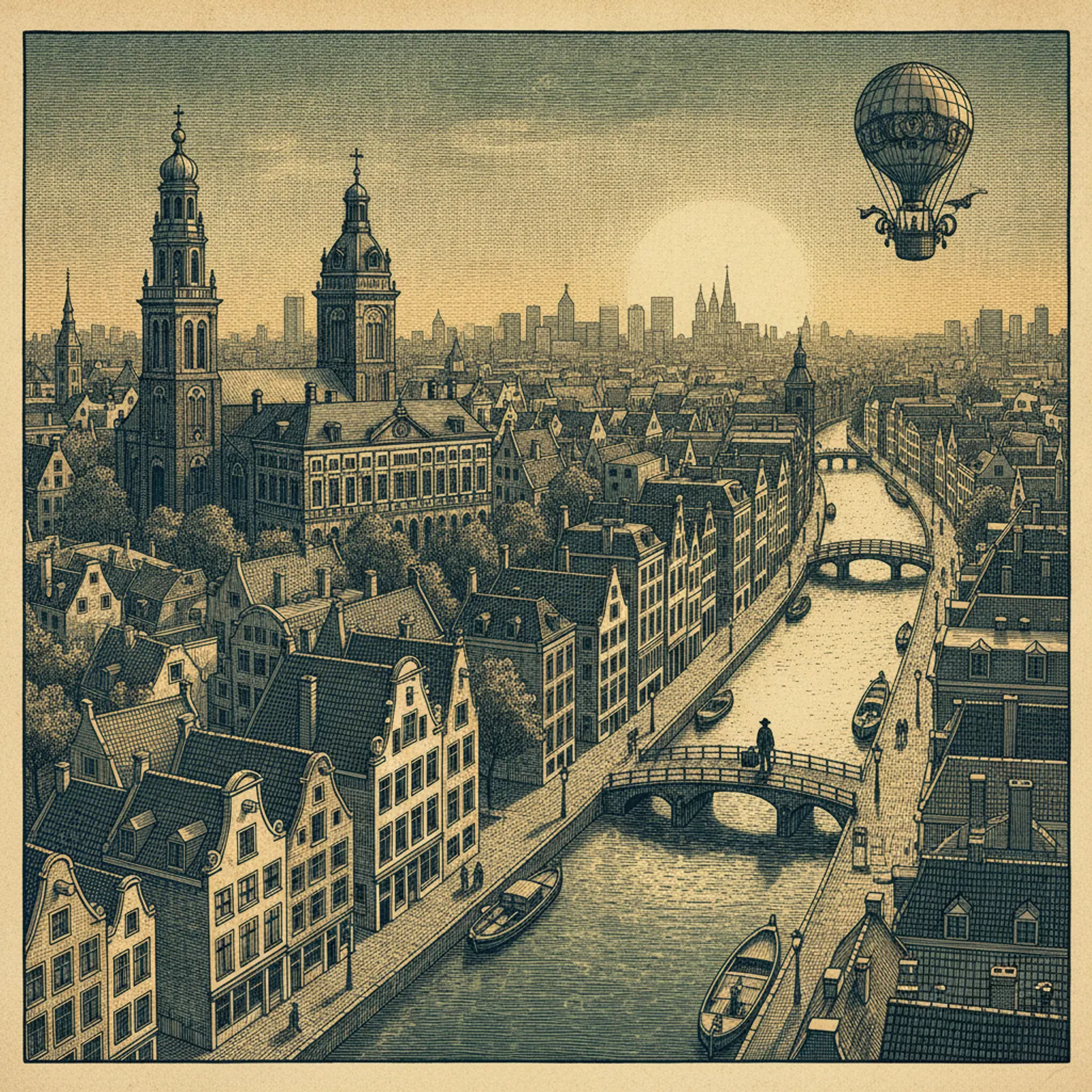
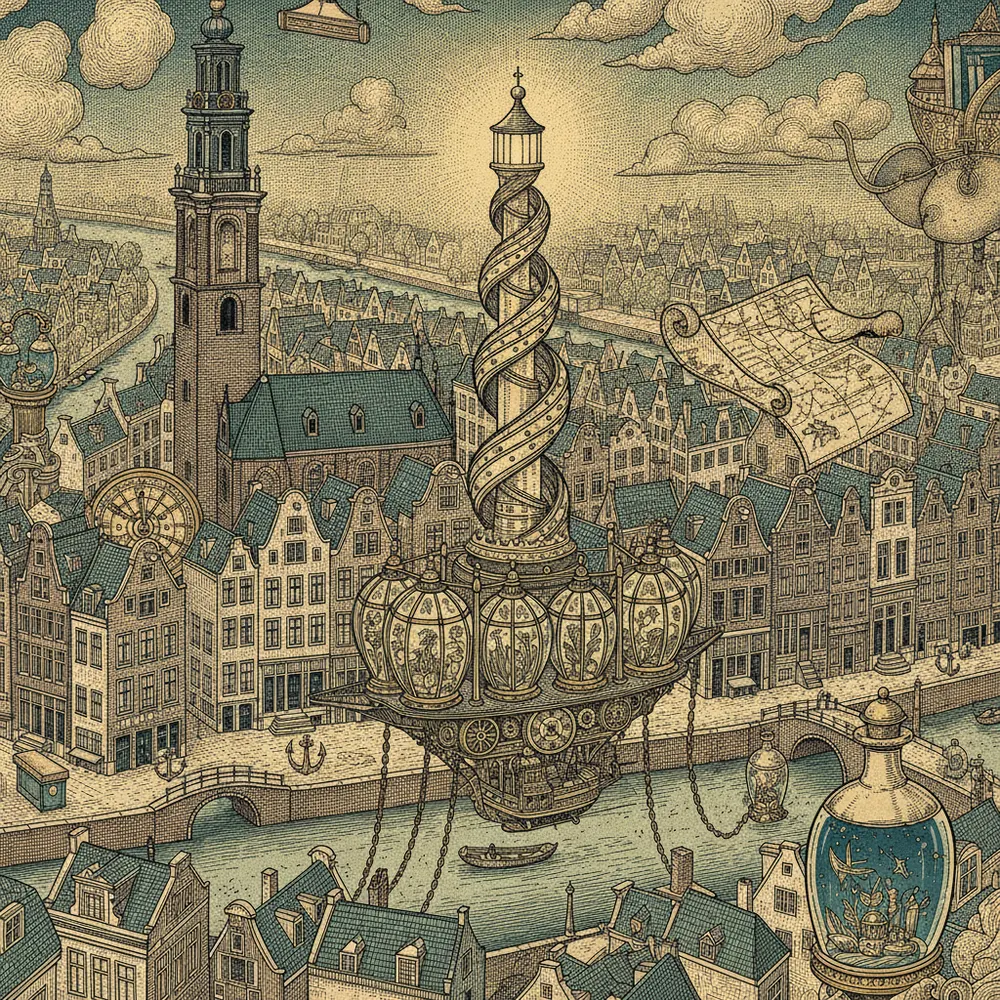
Amsterdam’s geography is a trick that takes about an hour to understand. The canals are concentric — the Singel, Herengracht, Keizersgracht, Prinsengracht, running in horseshoe arcs from Centraal Station south — and once you see the pattern on a map, you can navigate the entire canal ring without one. The north–south streets cross them perpendicularly. The Jordaan is the grid west of Prinsengracht. That’s it. That’s the city.
The trap most visitors fall into is treating Amsterdam like a museum city. It has excellent museums — the Rijksmuseum, the Van Gogh, the Anne Frank House — but the actual experience of Amsterdam is in its texture: the canal houses tilting forward by design (to hoist furniture, the doors being too narrow), the brown cafés where time works differently, the market streets where half the city does its Saturday shopping. This itinerary tries to get you to both.
The 2/3/4/7-day versions are organised around what you can reasonably experience without a bike being obligatory. If you rent one, adjust freely.
Where to Stay in Amsterdam
Neighbourhood
Vibe
Best For
Walk to Rijksmuseum
Canal Ring (9 Streets)
Gabled houses, boutiques, peak Amsterdam
First-timers who want the postcard version
15 min
Jordaan
Characterful, slightly quieter, locals and tourists mixed
Those who want neighbourhood feel
20 min
Museum Quarter
Upscale residential, next to the big museums
Museum-focused trips, quieter evenings
5 min
De Pijp
Multicultural, lively, younger crowd
Budget-conscious travellers, market enthusiasts
20 min
Amsterdam Noord
Industrial-chic, creative, ferry ride away
Design-lovers willing to commute by ferry
30 min (ferry + walk)
This article contains affiliate links marked with rel="sponsored". We may earn a commission at no extra cost to you.