My cab driver on the way from JFK told me, unprompted, that New York was "the only city where nobody is from here but everybody acts like they own it." Then he ran a red light while explaining this and nobody reacted, because nobody reacts to anything in New York and that is precisely the point.
The Perfect New York City Itinerary (2, 3, 4 & 7 Days)
Two days in New York means accepting that you will miss most of it and hitting the handful of things that actually live up to the mythology. Central Park, the High Line, Brooklyn Bridge, and one proper deli. That is a successful 48 hours.
Buy a MetroCard at the airport. Avoid taxis in midtown at rush hour.
72 Hours: Manhattan + Brooklyn
Three days is when New York starts to make sense. The island is walkable if you think in neighbourhoods rather than grid coordinates. We add Brooklyn on Day 3 — DUMBO, the bridge walk from the other direction, and dinner in Williamsburg.
4 Days: The Boroughs Start to Open Up
Four days lets you breathe past midtown. The Upper West Side on Day 4, the Museum of Natural History, and dinner in Harlem. By now you'll have an opinion about which bagel place is correct and you'll be wrong.
7 Days: New York on Its Own Schedule
A week is when the city stops performing and starts actually happening to you. You'll find a diner you go back to. You'll walk through a neighbourhood you didn't plan to visit. You'll eat a bodega sandwich standing up at midnight and understand something fundamental.
Estimated budget:$400–$650 est. (budget–mid, incl. 1 hotel night)
Estimated budget:$620–$980 est. (2 hotel nights + attractions)
Estimated budget:$840–$1,300 est. (3 nights + full programme)
Estimated budget:$1,500–$2,500 est. (full week, mid-range Manhattan)
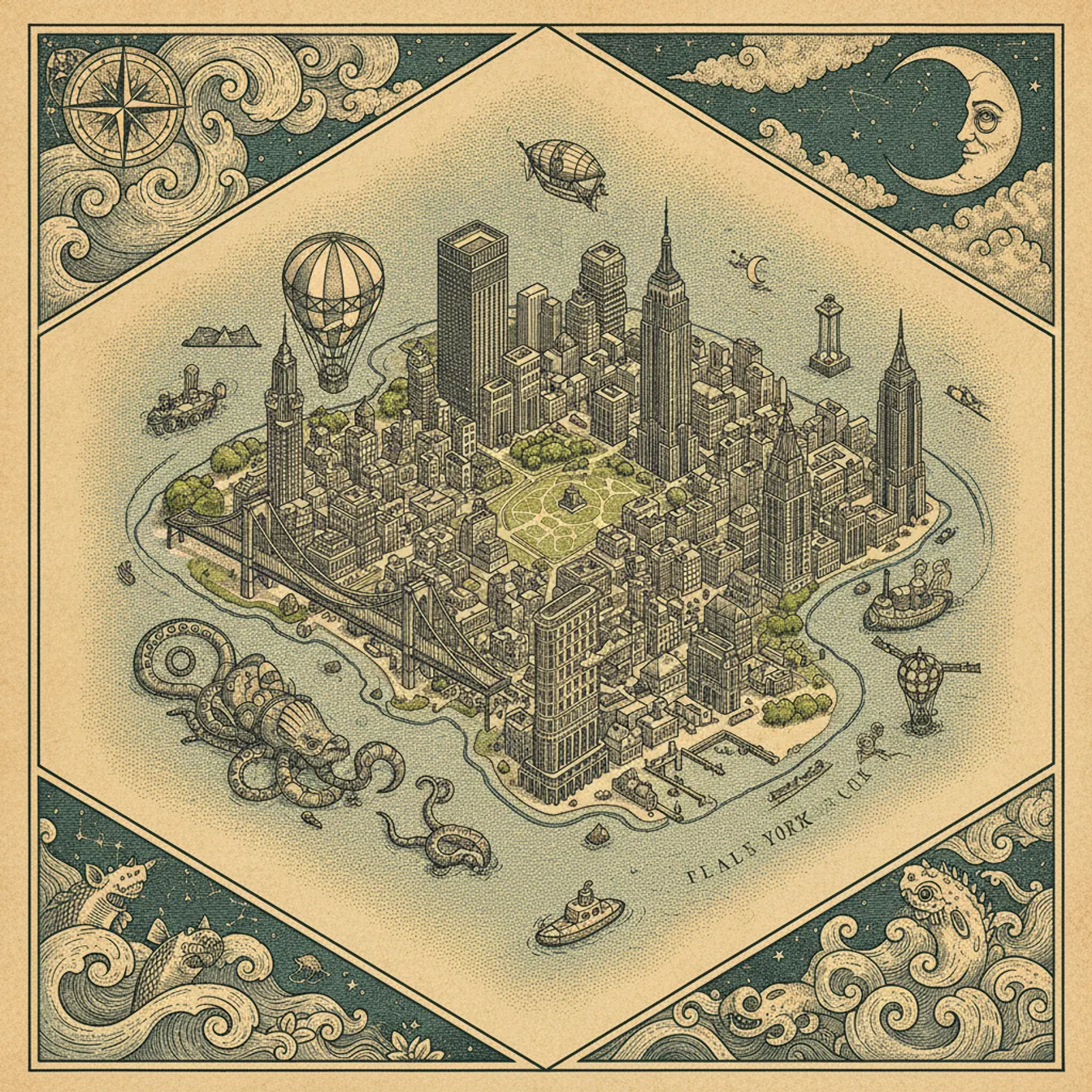
[ THE DISPATCH · FIELD MAP ]
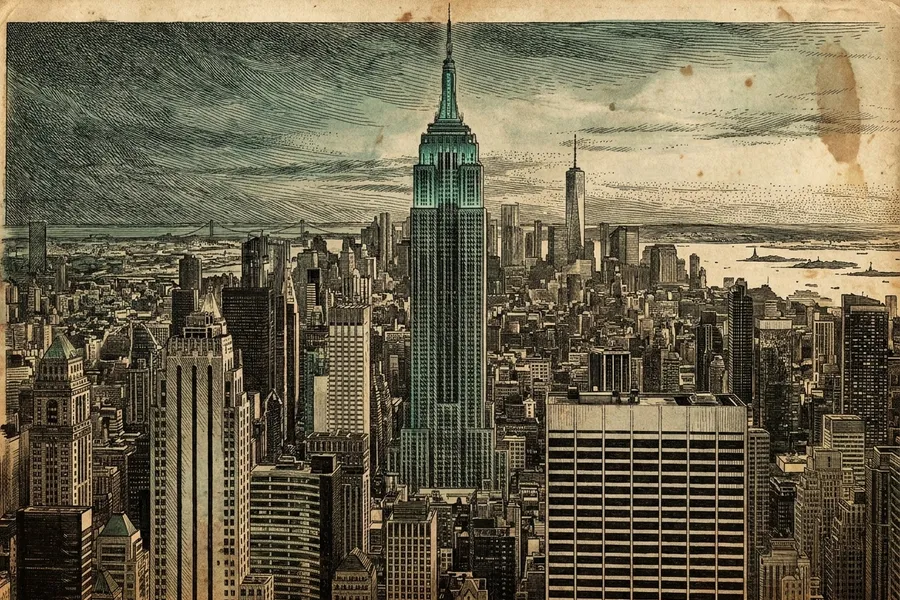
A tilted, hand-drawn dispatch of New York City. Click a quarter to explode it open.
0 / 6 quarters explored
Legend · tap to highlight
[ MIDTOWN MANHATTAN ]
Grand squares and big ideas.
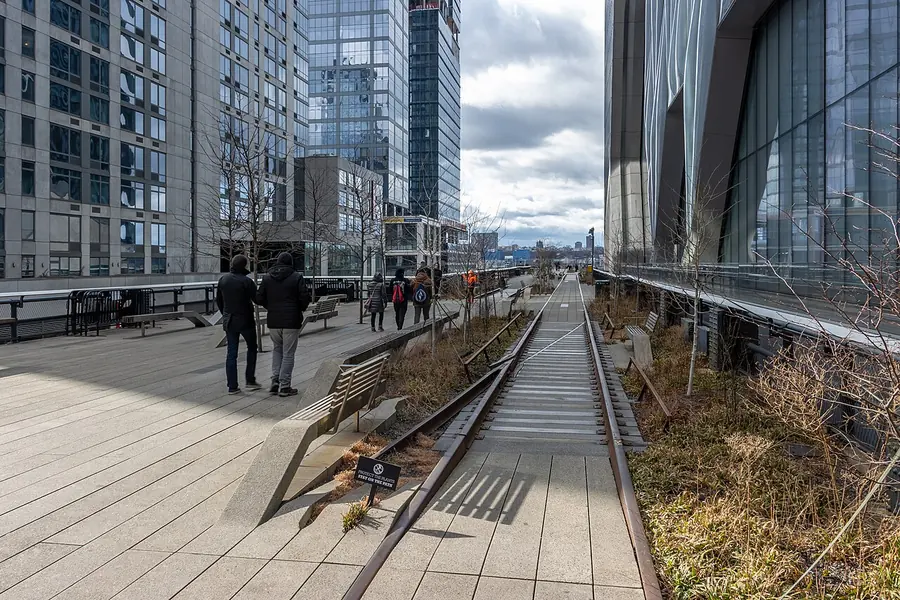
The High Line at 7 AMAn elevated park on a disused freight railway that's genuinely quiet before 8 AM. The gardens change seasonally; the view into Chelsea is excellent any month.
Chelsea MarketBuilt inside the old Nabisco factory where the Oreo was invented. Los Tacos No. 1 opens at 8 AM and is the correct breakfast decision — order two.
[ DOWNTOWN & FINANCIAL DISTRICT ]
Old stones, older stories.
9/11 Memorial Reflecting PoolsThe two footprint pools in the exact outline of the towers. Arrive when it opens — the quiet is earned by showing up before the crowds do.
Wall Street & Charging BullThe financial district is eerily empty on weekends — best time to walk it. The Charging Bull is smaller than every photo suggests and always surrounded by strangers.
[ CENTRAL PARK & UPPER EAST SIDE ]
Green breathing room.
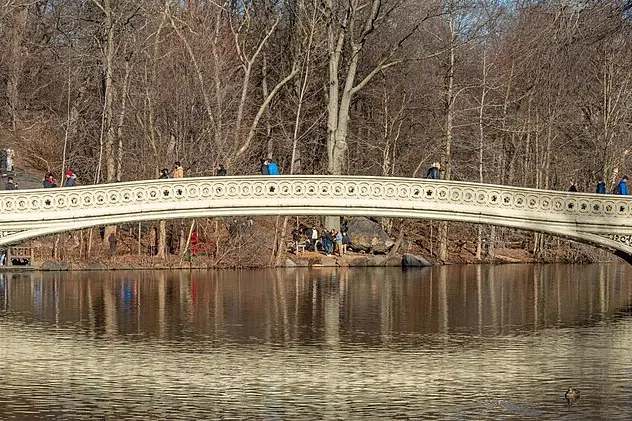
Bethesda Fountain & Strawberry FieldsEnter at 72nd and Central Park West. The Lennon mosaic says Imagine; the fountain says Olmsted and Vaux knew exactly what they were doing. Both are correct.
Metropolitan Museum of ArtStart with the Temple of Dendur — an actual Egyptian temple inside a glass room facing Central Park. Then give up trying to see everything. This is the correct strategy.
[ BROOKLYN — DUMBO & WILLIAMSBURG ]
Where the city meets the water.
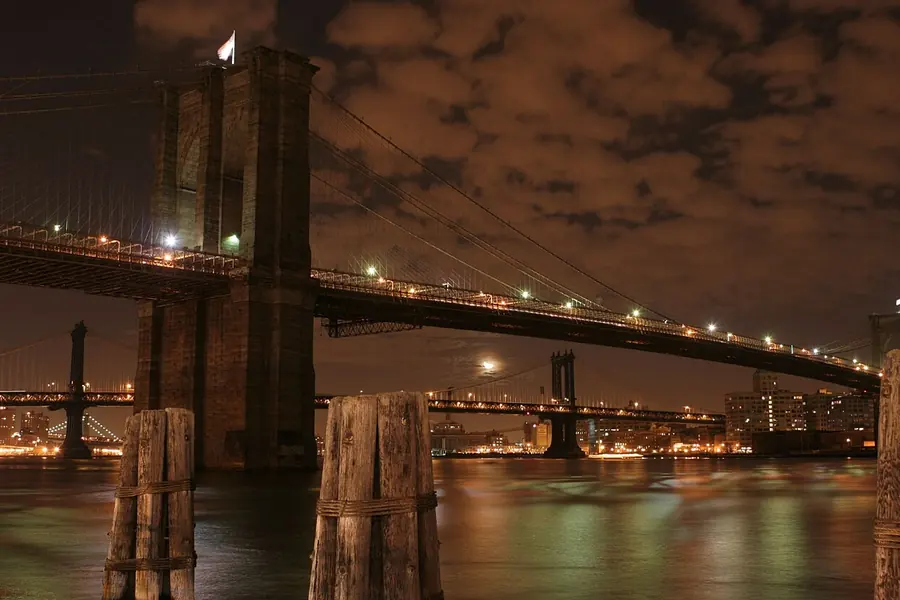
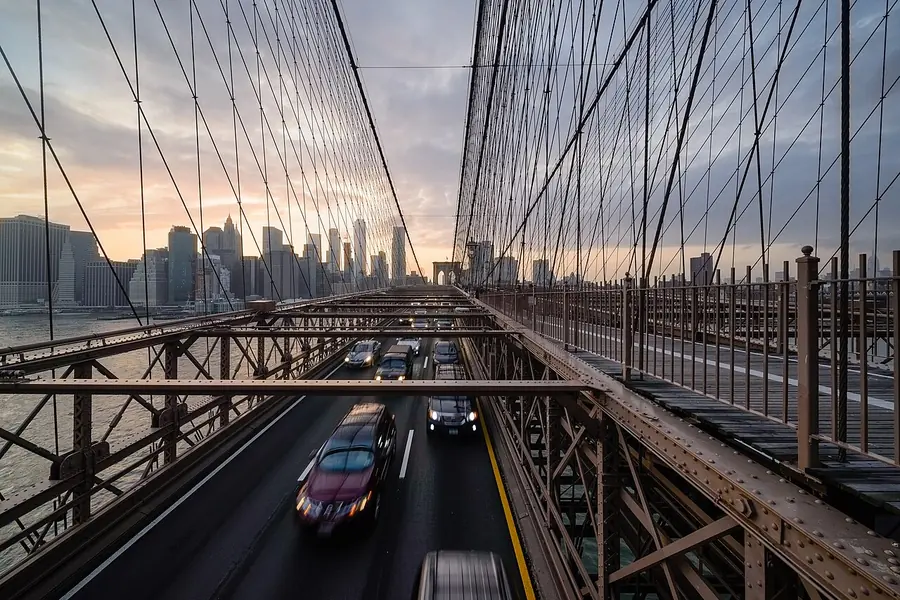
Brooklyn Bridge Pedestrian WalkEnter from Centre Street, Manhattan side. Stop in the middle: the cables frame the downtown skyline perfectly. 20-30 minutes; feel the cables vibrate. This is the city.
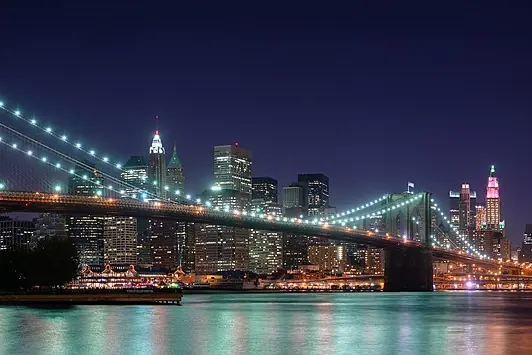
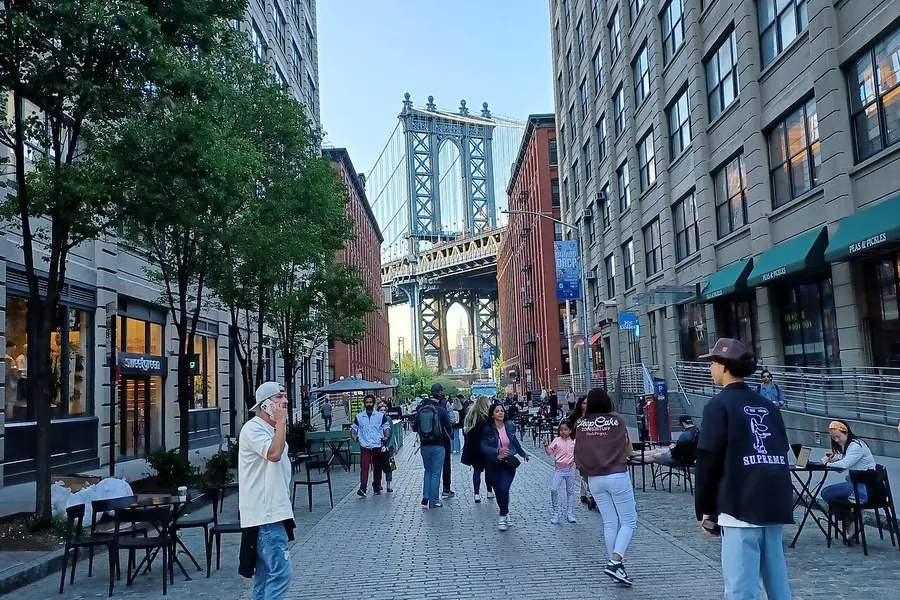
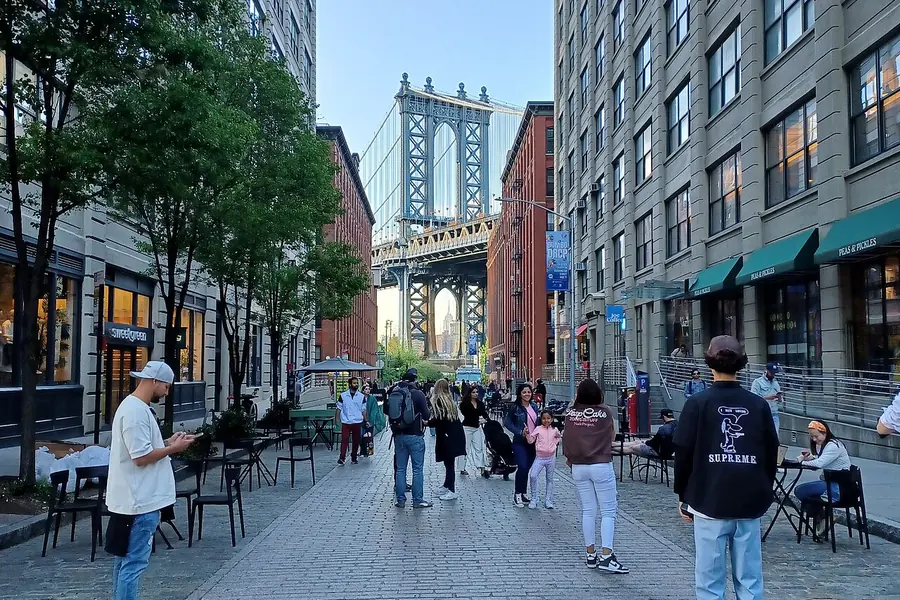
DUMBO — Washington Street ViewThe gap between the Manhattan and Brooklyn Bridges framing the Manhattan skyline is one of the most photographed spots in New York. It earns it completely.
[ UPPER WEST SIDE & HARLEM ]
Old stones, older stories.
Zabar's on Broadway at 80thA toasted everything bagel with lox and cream cheese, eaten standing at the counter since 1934. The smoked fish is a religious experience and the staff will confirm this.
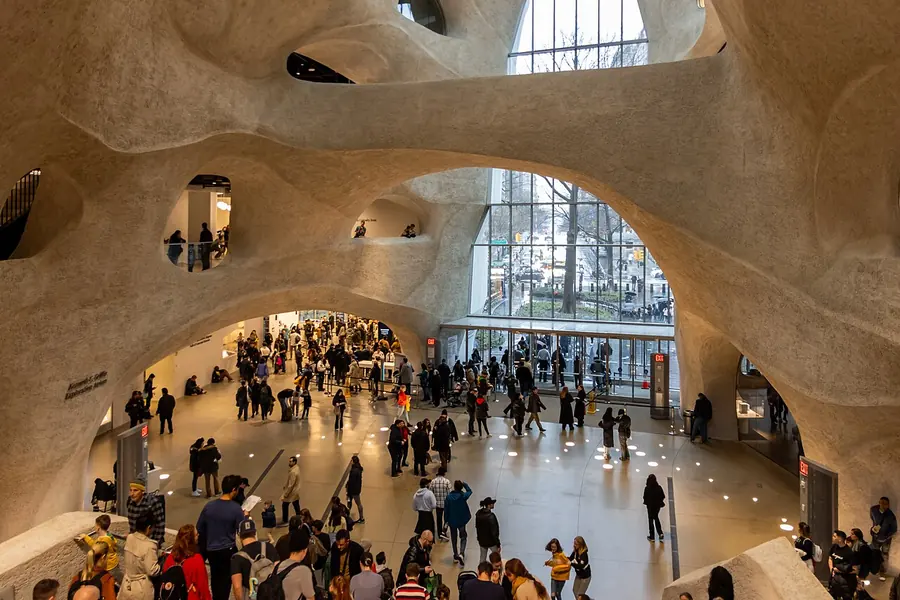
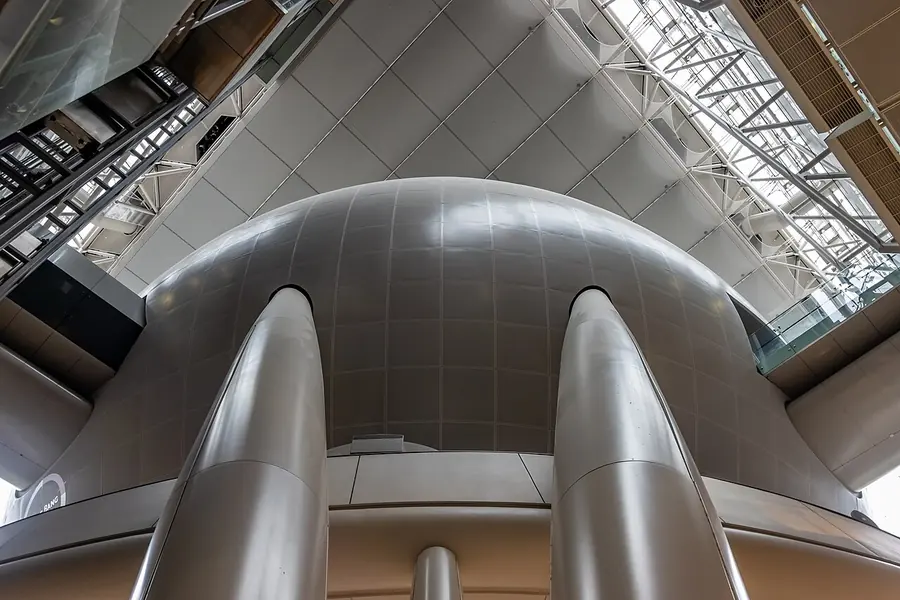
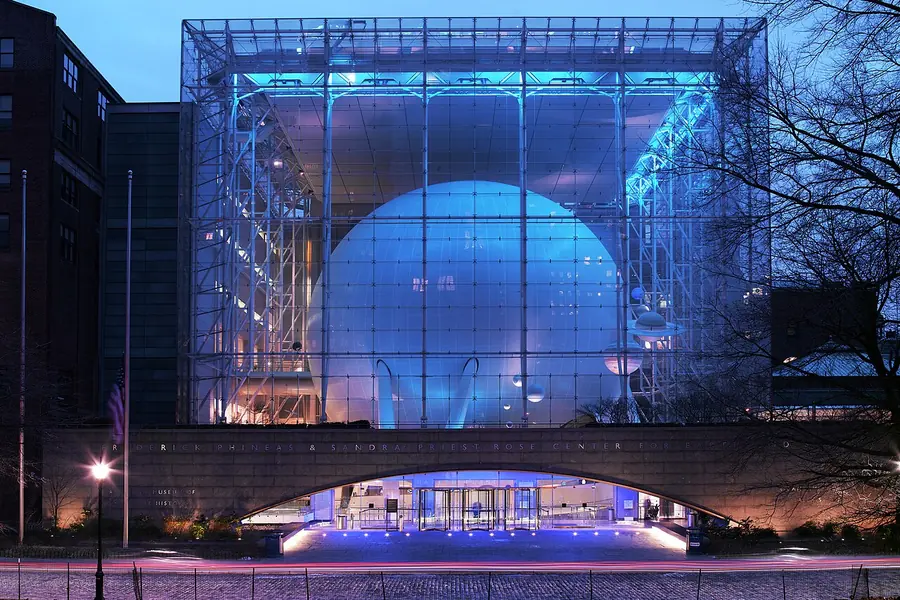
Hall of Ocean Life — AMNHA 94-foot blue whale model suspended from the ceiling. The fossil halls on the fifth floor have the best dinosaur displays anywhere. Budget three hours minimum.
[ LOWER EAST SIDE & EAST VILLAGE ]
Stays up later than you do.
Katz's DelicatessenHot pastrami on rye with mustard since 1888. Take a ticket at the door, tip your carver, and eat at the communal tables. The sign marks the When Harry Met Sally table.
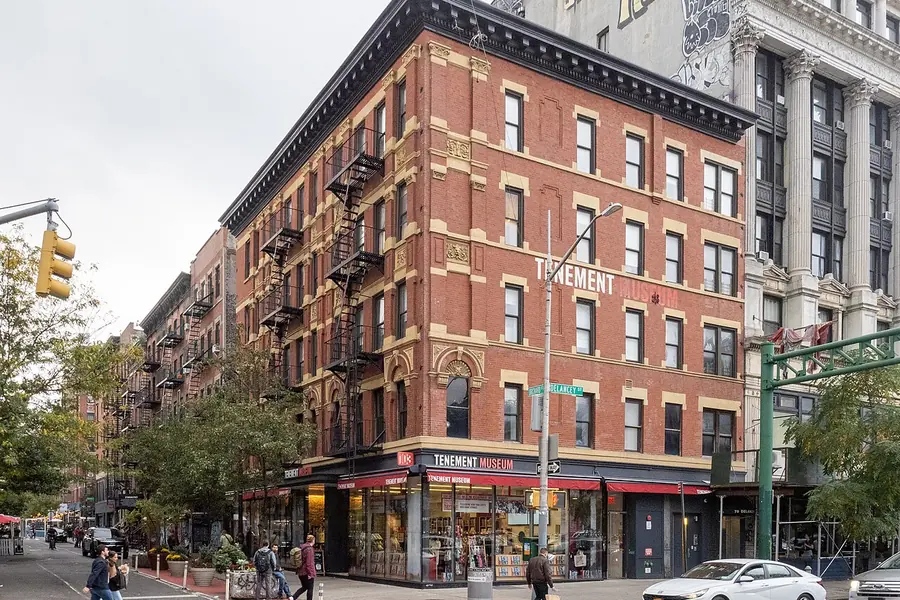
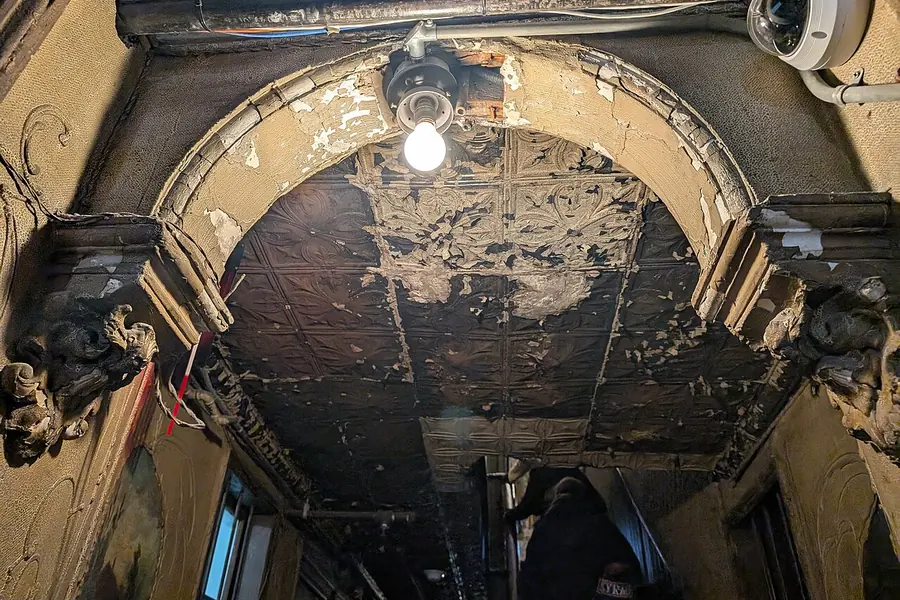
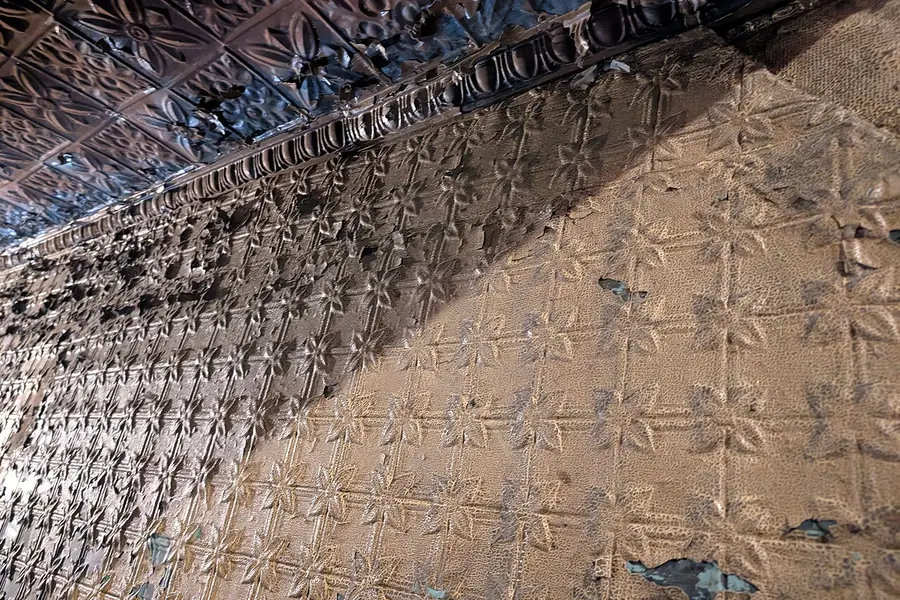
Tenement Museum, 97 Orchard StGuided tours of preserved immigrant apartments from 1863–1935. Book ahead — it sells out. The most honest building in New York and possibly the most important museum.
Day 1
The High Line + Chelsea + Midtown
New York's most photogenic mile, then the skyline
Start on the High Line at 8 AM before the crowds arrive. Chelsea Market for breakfast. Empire State at dusk. This is the compressed New York that still leaves you changed.
Start slower — the High Line at 7 AM is one of the genuinely quiet moments in this city. Stay on it longer than you think you need to.
The High Line (30th St to Gansevoort)
An elevated park on a disused freight railway that shouldn't work and absolutely does.
Walk the High Line south from the 30th Street entrance. The gardens change seasonally. The views into Chelsea's galleries and across to New Jersey are excellent. At the Meatpacking District end, stop at the Chelsea Market entrance on 16th Street — the building is a former biscuit factory and the interior is a food market that has not yet become a mall.
Breakfast inside the building where the Oreo cookie was invented.
Chelsea Market has Los Tacos No. 1 (opens at 8 AM and is the correct breakfast decision), a fishmonger, a wine shop, a bookshop, and more. It's the food hall that doesn't feel like a tourist trap because the locals actually come here. Get something from the taco stand and eat it in the corridor.
Empire State Building — 86th Floor Observatory
The view that validates the entire mythology.
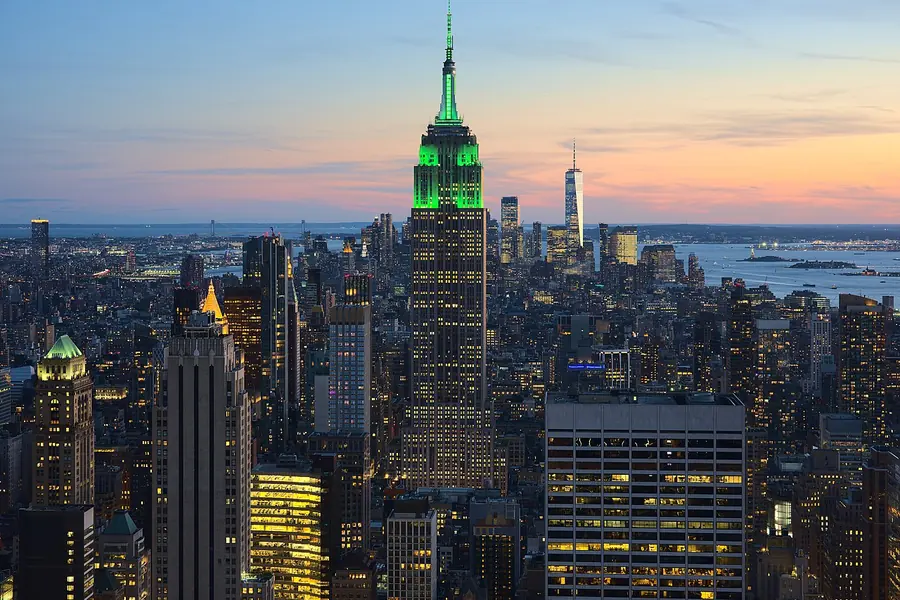
Book the 5:30–6:30 PM entry for the 86th floor. You arrive in daylight, watch the city change as the sun goes down over New Jersey, and leave with midtown lit up below you. The 102nd floor is an additional charge and is smaller and less good — the 86th floor is the right choice. Book at least a week ahead; same-day pricing is brutal.
Dinner — Joe's Pizza or a Hell's Kitchen restaurant
The $3 slice that settles the argument once and for all.
Joe's Pizza on Carmine Street is the canonical New York slice. One slice of plain, eat it folded, standing at the counter. This is the baseline against which all other pizza is measured. If you want a sit-down dinner, Hell's Kitchen (9th Avenue in the 40s–50s) has an improbable concentration of good mid-price restaurants — Thai, Turkish, Mexican, Indian, all within walking distance of each other.
Day 2
Central Park + The Met + Brooklyn Bridge
The icons that actually earn the title
Last day. Central Park in the morning, the Met if you have three hours (you should), then the Brooklyn Bridge walk at dusk. This is a perfect day.
Full day to do it properly. Central Park for two hours, then the Metropolitan Museum for a half-day, then the Brooklyn Bridge walk, then DUMBO for dinner.
Central Park — Bethesda Fountain + Strawberry Fields
843 acres of designed nature in the middle of the world's most artificial island.
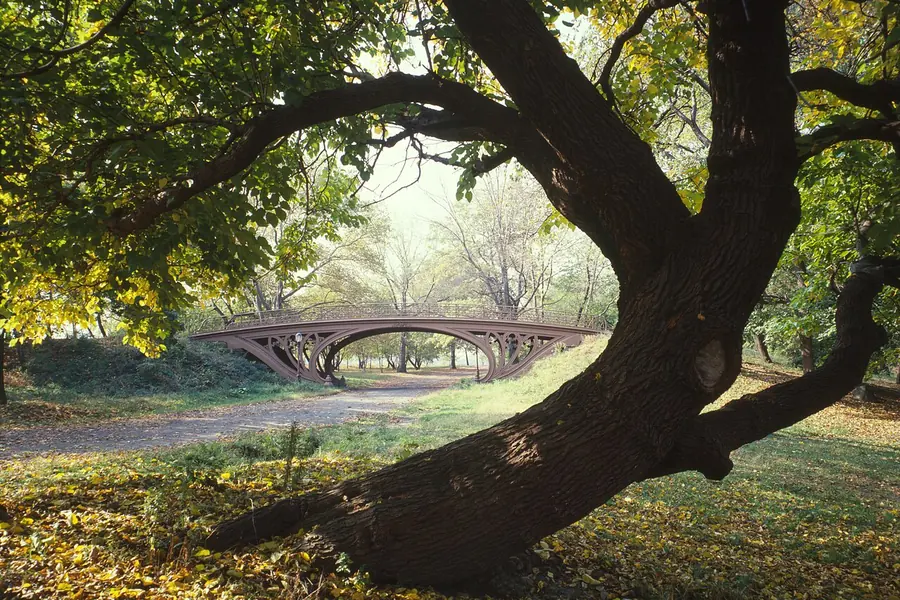
Enter at 72nd and Central Park West. Walk to Strawberry Fields (the John Lennon memorial — the mosaic says Imagine), then east to Bethesda Terrace and Fountain. The Loeb Boathouse is nearby if you want to row. Central Park is so large it rewards a map — get the free one from any park entrance.
The largest art museum in the Western Hemisphere. Don't try to see all of it.
The Met's suggested admission is actually suggested — pay what you like (New York State residents only; visitors pay the posted rate). Go to the Temple of Dendur in the Egyptian wing first (it's an actual Egyptian temple, inside a glass room facing Central Park). Then the European paintings, then the Arms & Armour if you have children or enjoy armour, then give up and sit in the café.
Walk from Manhattan to Brooklyn. Feel the cables vibrate. This is the city.
Enter the pedestrian walkway from the Manhattan side at Centre Street. The walk takes 20–30 minutes. Stop in the middle: the cables frame the downtown Manhattan skyline perfectly. Arrive at DUMBO in Brooklyn at the bottom of Washington Street — the view back up to the bridge with the Manhattan Bridge in the gap is one of the most photographed spots in New York.
The neighbourhood where every cobblestone is a film set.
DUMBO (Down Under the Manhattan Bridge Overpass) has Time Out Market New York on the waterfront — multiple food vendors in one large hall, reliable quality, great views. Or walk up to Grimaldi's under the bridge for coal-fired pizza (queue likely). Eat at the water and watch Manhattan from the wrong side for once.
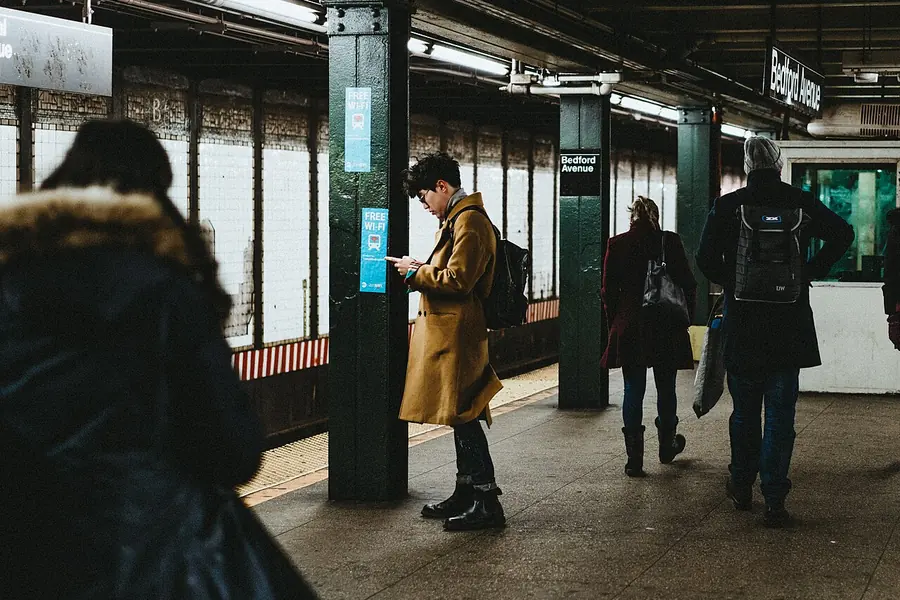
Full Brooklyn day. Williamsburg brunch (it's mandatory), then Bedford Avenue for the record shops and bookstores, then Prospect Park, then dinner back in Williamsburg.
Same plan but add the Brooklyn Museum — the Egyptian collection alone is worth the detour and admission is pay-what-you-wish on the first Saturday of the month.
Linger in Williamsburg. The Saturday flea market in McCarren Park is one of the best in the city. Take the G train to Carroll Gardens for dinner — Red Hook is the next neighbourhood over and the situation with tacos there has not been solved.
Williamsburg brunch — Marlow & Sons or Diner
The neighbourhood that invented brunch as sport.
Williamsburg is the neighbourhood where brunch became a two-hour event with a waiting list. Marlow & Sons on Broadway is a wine bar and café serving farm-to-table food that actually means something here. Diner, literally next door, is an old railway dining car that's been a Williamsburg institution for twenty years. Either is correct.
Bedford Avenue — record shops, vintage, bookstores
The high street of the borough that won't let you buy anything useful.
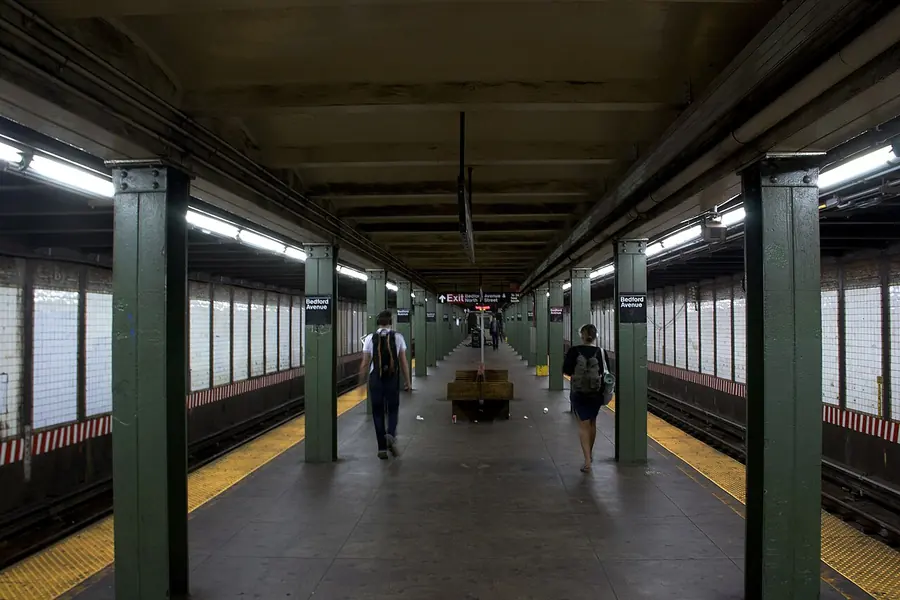
Walk Bedford Avenue from North 7th to Metropolitan Avenue. Sound Fix Records, Rough Trade NYC (large, excellent, has a stage in the back), and more vintage clothing shops than any person needs. The coffee shops are extremely serious about the coffee. This is the neighbourhood that accidentally became a cliché by being genuinely good.
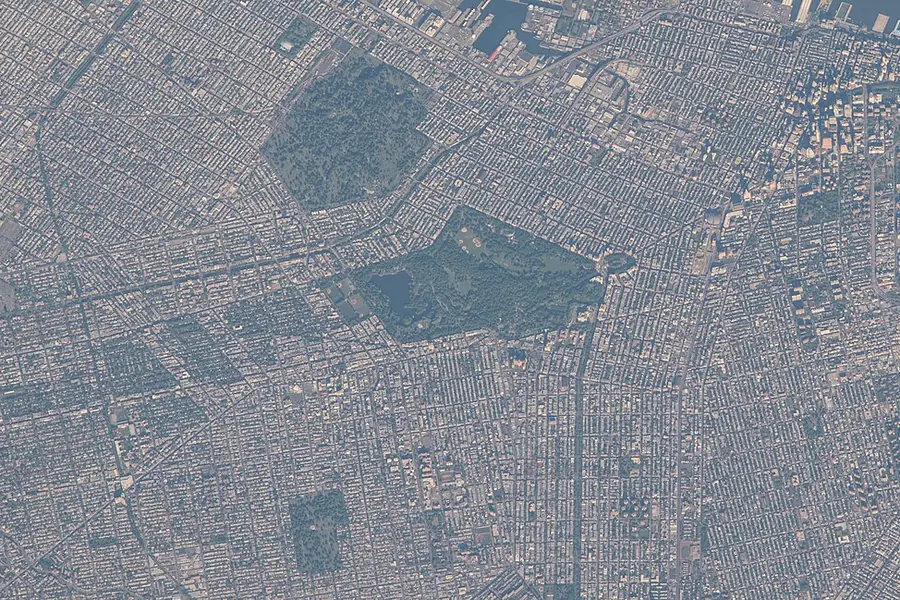
Prospect Park was designed by the same architects as Central Park (Olmsted and Vaux) and is widely considered their better work. The Boathouse, the Long Meadow, the music shell. The Brooklyn Museum is right outside the park's eastern entrance — the Egyptian wing, the American art collection, and rotating exhibitions that are consistently stronger than the Met's.
A German-American steakhouse since 1887, or the pasta restaurant with a three-month wait.
Peter Luger is the most famous steakhouse in New York — cash only, rude service, perfect steak. The porterhouse for two is the order. Make a reservation months ahead or take your chances at the bar. Lilia in Greenpoint (ten minutes by car or Lyft) is a pasta restaurant with three-month waits for a reason — book ahead or get there at 5:30 and wait at the bar.
Museum of Natural History in the morning — the Hall of Ocean Life is worth the price alone. Then Riverside Park along the Hudson for lunch. Harlem in the afternoon: the Apollo Theater, Sylvia's for soul food, and Jazz at Lincoln Center if you book ahead.
Same plan but slower. The Upper West Side delis (Zabar's, Barney Greengrass) deserve a proper stop in the morning. Walk Riverside Drive along the Hudson — it's quieter than Central Park and the brownstones are extraordinary.
Zabar's — Upper West Side deli
The deli where the smoked fish is a religious experience and the staff will tell you.
Zabar's on Broadway at 80th has been a New York institution since 1934. Get a toasted everything bagel with lox and cream cheese. Eat it standing at the counter or on the street. Buy smoked fish to eat later in the hotel room. Buy cheese you cannot explain your interest in. This is correct.
Museum of Natural History — Hall of Ocean Life
A full-size blue whale suspended from the ceiling. Scale your expectations accordingly.
The American Museum of Natural History is enormous. Prioritise: the Hall of Ocean Life (the 94-foot blue whale model is the most impressive object in any New York museum), the fossil halls (fifth floor, two halls, the best dinosaur displays anywhere), and the Rose Center for Earth and Space. Book online; the combined planetarium show is worth adding.
The park the tourists never find, where the Upper West Side actually lives.
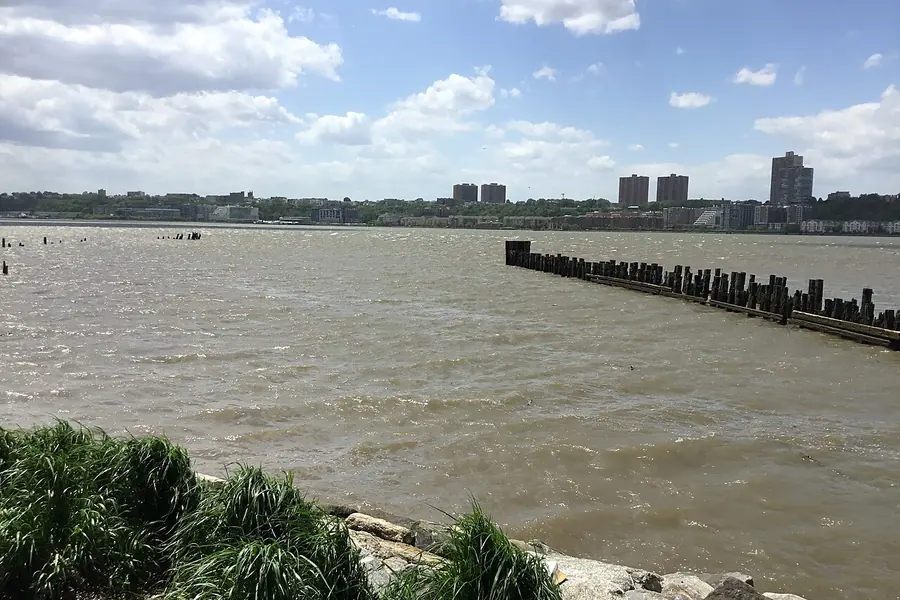
Walk west from the museum through Riverside Park to the Hudson River. Grab lunch from the boathouse café or a food truck along the path. The 79th Street Boat Basin café has outdoor seating on the water and is a genuine local secret — or was, until now.
The neighbourhood that gave the world jazz, soul food, and the Harlem Renaissance.
Walk or take the subway to 125th Street. The Apollo Theater marquee is right there — check for Amateur Night (Wednesday evenings), which has launched James Brown, Ella Fitzgerald, and Michael Jackson. Sylvia's restaurant on Lenox Avenue has been serving soul food since 1962. The fried chicken and mac-and-cheese is the lunch order. No debate.
Lower East Side + East Village + Greenwich Village
The New York that immigrants built and artists preserved
The Lower East Side is where New York's immigrant history is most tangible — Katz's Deli has been here since 1888, the Tenement Museum is one of the best historical museums in the country, and the neighbourhood is still in the middle of its own story.
Katz's Delicatessen
The pastrami sandwich that launched a thousand arguments about what a sandwich is.
Katz's Delicatessen opened in 1888 and has not significantly changed. The hot pastrami on rye with mustard is the order. Take a ticket at the door, tip your carver, and eat at the communal tables. The overhead sign marks the table from When Harry Met Sally. This is non-optional.
Tenement Museum
The apartment building that tells you what New York actually was.
The Tenement Museum at 97 Orchard Street preserves the apartments of immigrant families who lived there between 1863 and 1935. Tours are guided and must be booked ahead — the experience is extraordinary. The building is the most honest thing in New York.
East Village — St Marks Place + Tompkins Square Park
Punk rock, piercing shops, ramen bars, and a park that has seen everything.
St Marks Place (8th Street between 3rd and 1st) is the historical centre of New York's punk and counterculture scene. It's now ramen shops and vintage stores, which is the correct evolution. Tompkins Square Park at the east end has been the site of every important Lower East Side event for 150 years. Have ramen at one of ten excellent options on and around St Marks.
The neighbourhood where every building is a brownstone and everyone looks like they're in a film.
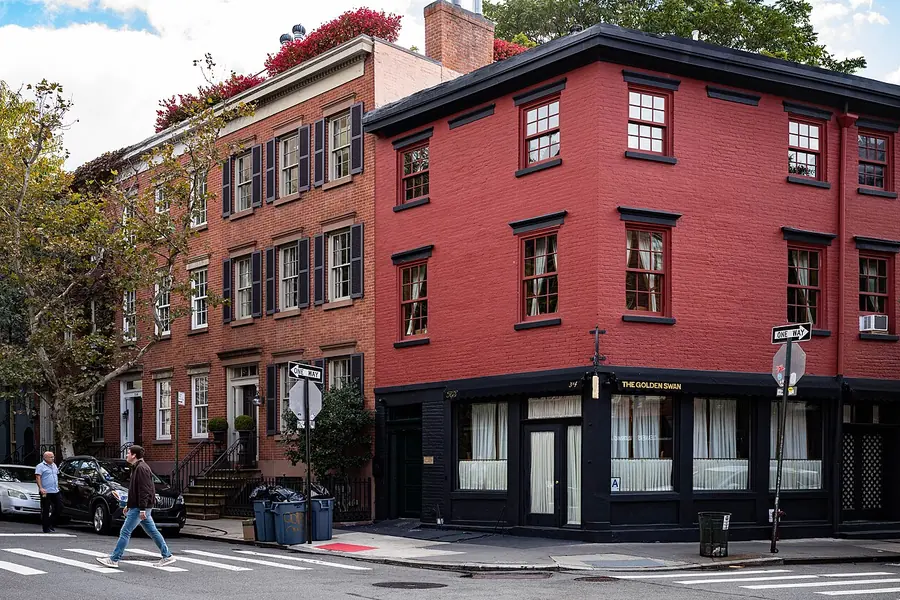
The West Village is the New York you imagine before you arrive. Narrow cobblestone streets, beautiful brownstones, impossibly charming corner bars. Walk Bleecker from 7th to Christopher. Have dinner at Commerce (American brasserie, excellent), or il Buco Alimentari & Vineria for Italian that justifies the price. Walk Washington Square Park in the evening — the arch is lit and there's always something happening.
The borough where New York's food scene actually lives
Queens is the most ethnically diverse urban area on earth and it shows in the restaurants. Jackson Heights has the best Indian food in New York. Astoria has the best Greek food. Flushing has the best Chinese food. PS1 has the best contemporary art. Pick two.
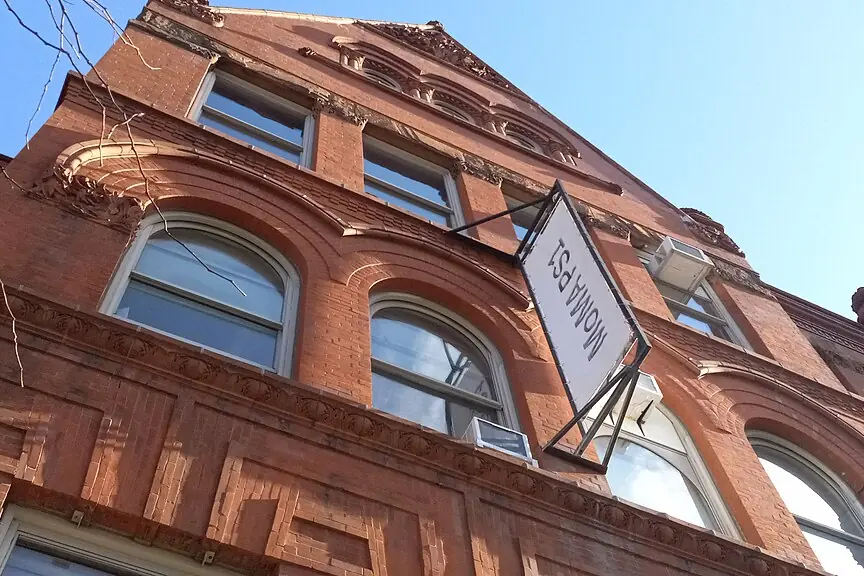
MoMA PS1 — Long Island City
The contemporary art museum in a former school that makes MoMA itself seem conservative.
MoMA PS1 is the more adventurous sibling of the Museum of Modern Art — experimental, site-specific, and housed in a converted 1890s schoolhouse in Long Island City. The Saturday Warm Up series (summer only) is a legendary outdoor DJ event in the courtyard. Even without that, the art programme is exceptional.
The food street that the Michelin Guide is finally beginning to notice.
Take the 7 train to Jackson Heights. Roosevelt Avenue between 74th and 90th is a Colombian, Ecuadorian, Mexican, Tibetan, and Bangladeshi food corridor that costs next to nothing and is extraordinary. Get the arepas at La Gran Uruguaya, the kati rolls at the Bangladeshi restaurant whose name you won't find on Google, and whatever looks best on a griddle through a kitchen window.
Astoria — Greek restaurants + waterfront
Greek food you'll be thinking about on the plane home.
Astoria has the largest Greek community outside Greece. Taverna Kyclades on Ditmars Boulevard is the standard-setter — fresh fish, mezze, exactly correct. Walk the Astoria Park waterfront for the Robert F. Kennedy Bridge views. Stay for dinner — the neighbourhood is at its best in the evening.
Day 7
SoHo + Nolita + Last Hours in Lower Manhattan
The goodbye walk through the city that doesn't do goodbyes
Last day. No schedule. Walk SoHo and Nolita without a plan. Buy the thing you've been looking at all week. Eat one more dollar slice. Do not try to do the One World Trade Tower today — you've earned a slow morning.
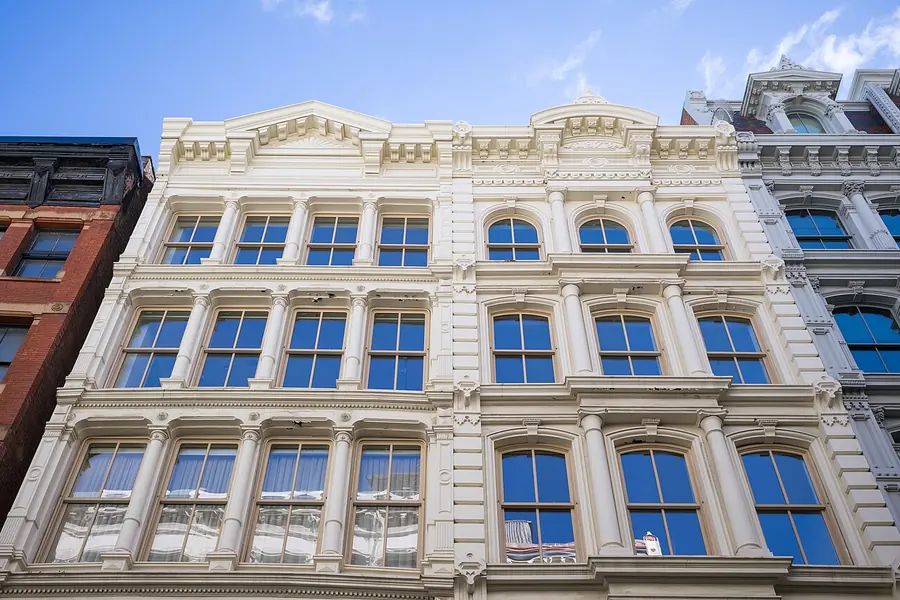
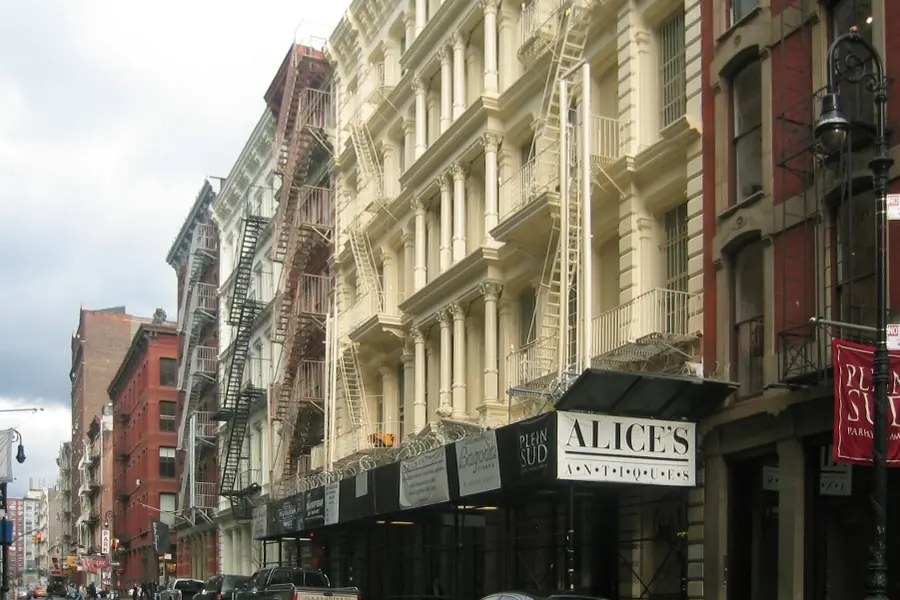
The neighbourhood where every building is a cast-iron landmark and every window is a gallery.
SoHo's cast-iron buildings from the 1870s are the most significant collection of that architecture anywhere. Walk Greene Street from Houston to Broome — the facades are extraordinary. The galleries along West Broadway have declined from the 1980s peak but enough remain. The shopping is expensive and mostly chains; the architecture is free.
The neighbourhood SoHo was before it knew it was SoHo.
Nolita (North of Little Italy) has the independent restaurants that SoHo priced out years ago. Spring Street Natural has been here since 1973 and is still exactly right. The Prince Street stretch has the best people-watching in lower Manhattan. Have a long lunch.
One World Observatory (optional) or Battery Park wander
The top of the tallest building in the Western Hemisphere — or just the waterfront.
One World Observatory at the top of One World Trade Center offers the highest views in New York — the 360-degree perspective from 1,250 feet is genuinely vertiginous and worth doing once. If heights are not your thing, Battery Park at the southern tip of Manhattan has the Statue of Liberty views from the water for free. Either is a fitting last stop.
The pizza argument has no resolution. That is the whole point.
Di Fara in Midwood, Brooklyn (cash only, the owner Dom DeMarco has been making every pizza himself for fifty years — he's in his eighties now) is the most singular pizza experience in New York. Roberta's in Bushwick is the restaurant that reinvented the conversation. Both require a trip to Brooklyn. Both are correct. New York does this — it makes you travel for the last bite.
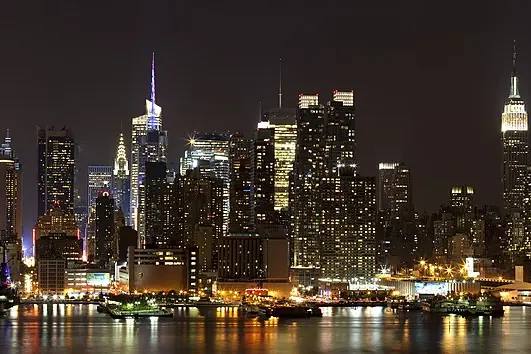
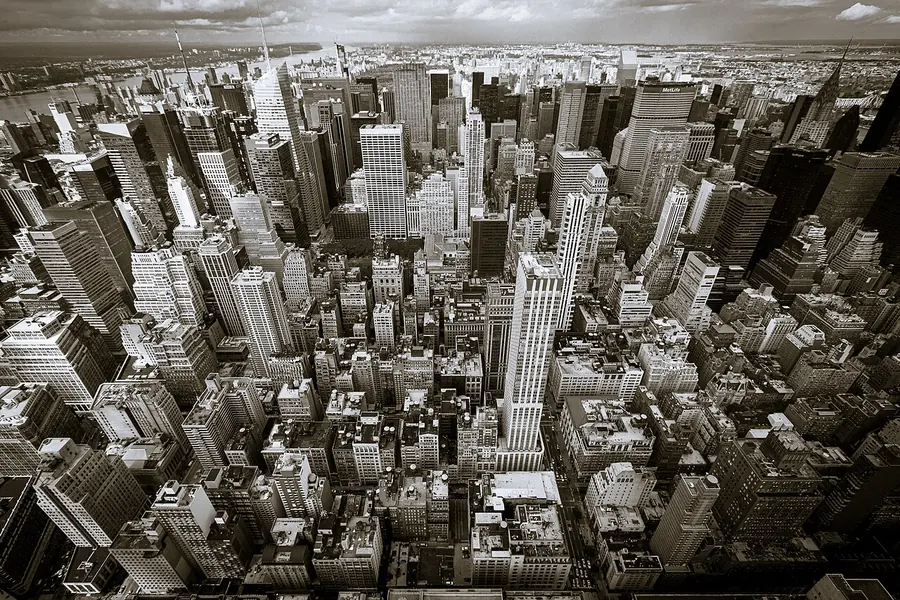
New York is not a city that needs an introduction, which is the first thing to understand about it. The introduction has already happened — via films, via television, via everyone you know who has been. The actual city is simultaneously exactly what you expected and nothing like it.
This itinerary is built around the Manhattan paradox: the city is dense enough to walk most of it but spread enough across five boroughs that you can spend a week and never get to Queens. We try to get you to Queens.
The 2/3/4/7-day versions are structured around how far you’re willing to get from the island. Two days is Manhattan only. Seven days is starting to understand why the people who live here never talk about leaving.
Use the duration filter above to see your version of New York.
Neighbourhood
Best For
Day in This Plan
Midtown / Chelsea
Icons, food halls
Day 1
Central Park / Upper East Side
Parks, world-class art
Day 2
Downtown / Brooklyn Bridge
History, views, DUMBO
Day 2
Williamsburg / Brooklyn
Brunch, independent scene
Day 3
Upper West Side / Harlem
Museums, soul food
Day 4
Lower East Side / East Village
History, immigrant food
Day 5
Queens / Astoria
Best food per dollar in NYC
Day 6
SoHo / Nolita
Architecture, last meals
Day 7
This article contains affiliate links marked with rel="sponsored". We may earn a commission at no extra cost to you.