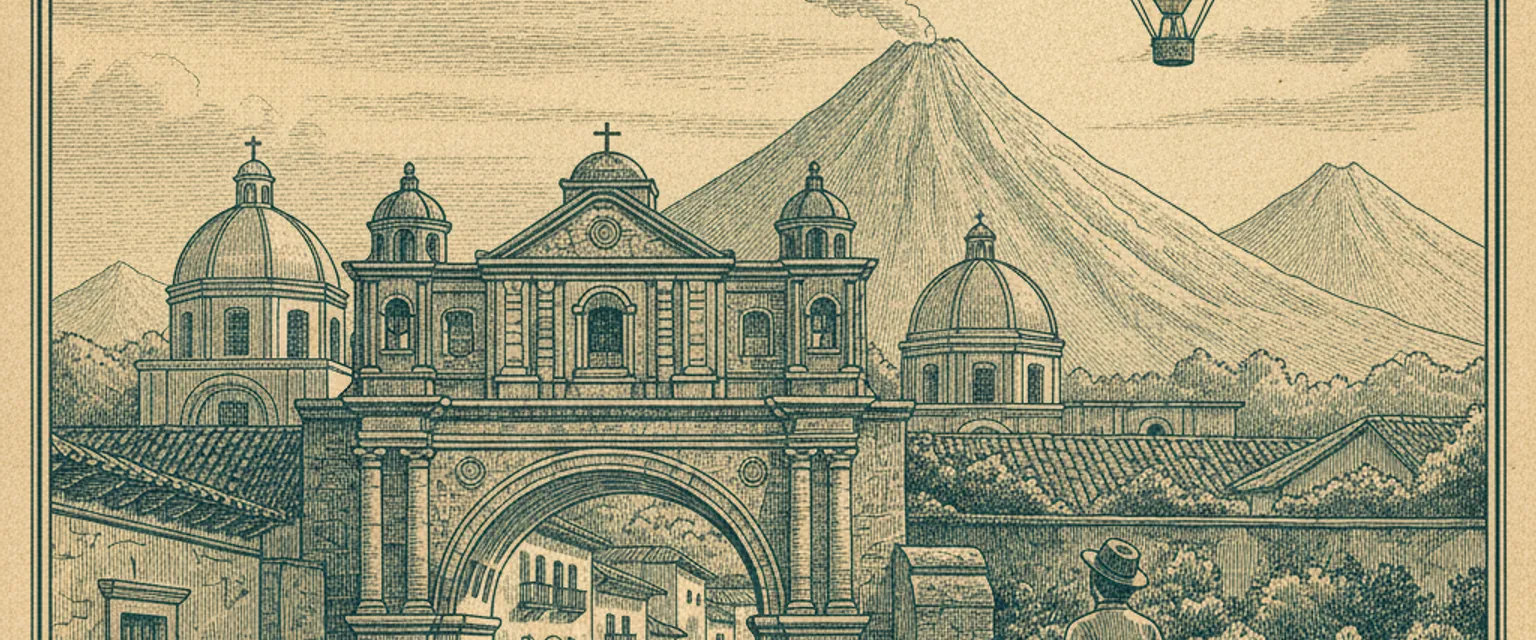
I stood under the Santa Catalina Arch at 6:30 AM because someone told me that was the only hour Volcan de Agua lines up cleanly through the arch without a crowd of phones in the way. They were right. The volcano sat there pink in the early light, a tuk-tuk rattled past on the cobbles, and a woman set up a stand selling atol de elote out of a giant pot. Antigua is a ruined city that turned its own collapse into the most beautiful town in Central America.
48 Hours: Arch, Ruins, and the Best Coffee of Your Life
Two days covers the postcard Antigua: the Santa Catalina Arch at dawn, the ruined convents and churches, Parque Central, and a serious coffee finca on the hills above town. It's a small, walkable, cobblestoned grid. You can see the core in two days and want to stay for two weeks.
Wear real shoes. The cobblestones are charming and they will destroy anything with a heel.
72 Hours: Add Cerro de la Cruz and the Markets
Three days lets you climb to Cerro de la Cruz for the classic view over the rooftops to Volcan de Agua, dig into the artisan markets and jade workshops, and do a chocolate-making class. Day 3 is when Antigua shifts from sightseeing to actually settling in.
4 Days: A Volcano Day to Pacaya
Four days buys you a volcano. Pacaya is the accessible one, an afternoon hike to active lava fields where you roast marshmallows on volcanic heat and are back for dinner. Add it and the trip gains the thing Guatemala is famous for: standing on a living volcano.
7 Days: Acatenango Overnight and Lake Atitlan
A week makes room for the big one: the overnight Acatenango trek, where you camp at 3,700 metres and watch neighbouring Fuego erupt through the night. Plus a day trip or overnight to Lake Atitlan, the volcano-ringed lake three hours away. This is the full Guatemalan highlands week.
Estimated budget:$120-$260
Estimated budget:$200-$400
Estimated budget:$300-$560
Estimated budget:$580-$1,100
Day 1
The Arch + Parque Central + Ruined Churches
The colonial core that earthquakes never let grow up
Santa Catalina Arch
The yellow arch that frames Volcan de Agua, best at dawn before the tuk-tuks and the crowds.
The Arco de Santa Catalina is Antigua's icon, a yellow colonial arch built so cloistered nuns could cross the street unseen. The reason to come at 6:30 AM is the clean line of sight to Volcan de Agua down Calle del Arco with morning light and no crowd. Get a coffee from an early stall and watch the town wake up. By 9 AM it's a phone forest.
Parque Central + Cathedral ruins
The town's living-room square, the Catedral ruins, and a fountain of suspiciously busty mermaids.
Parque Central is the heart of Antigua, anchored by the cathedral whose original 17th-century nave collapsed in earthquakes and now stands as atmospheric ruins behind the rebuilt front. The mermaid fountain in the middle is a colonial original. The square fills with shoeshine men, marimba players, and locals; it's the best people-watching in town.
La Merced + Convento de Santa Clara
A buttercup-yellow baroque church and the romantic ruins of an earthquake-felled convent.
Iglesia de La Merced is the bright yellow baroque church at the north end of Calle del Arco, its facade dripping with white plaster filigree. Pair it with the ruined Convento de Santa Clara nearby, where roofless arcades and a quiet cloister garden give the clearest sense of the city the 1773 quake destroyed. The contrast of intact and ruined is the whole story of Antigua.
Dinner around the arch
Pepian and Guatemalan highland cooking in a courtyard restaurant near Calle del Arco.
Have your first dinner near the arch, where courtyard restaurants serve Guatemalan classics. Order pepian, the rich, toasted-seed stew that's the national dish, or jocon, the green chicken stew. Places like the long-running courtyard spots off Calle del Arco do it well in candlelit colonial settings. Pair it with a local craft beer or a glass of Guatemalan rum.
Day 2
Coffee Finca + Jade + Sunset Rooftop
The volcanic soil, the green stone, and the view that earns a drink
Coffee finca tour (Filadelfia or De la Gente)
From the bean on the bush to the cup, on the volcanic slopes that make Antigua coffee famous.
Antigua's coffee is some of the best on earth thanks to volcanic soil and altitude. Tour a finca on the hills above town: Filadelfia for the polished estate experience, or the De la Gente cooperative for a farmer-led, fair-trade version that puts money straight in growers' pockets. You'll pick, process, roast, and finally drink. The difference from grocery coffee is genuinely shocking.
Jade workshop + Nim Pot crafts
Guatemalan jade, the Maya's most sacred stone, and a warehouse of highland textiles.
Guatemala was the Maya world's source of jade, and Antigua's workshops and museums (like the long-established jade factories near the centre) show how the stone is cut and carved. Pair it with Nim Pot, a cavernous shop of Guatemalan textiles, masks, and folk art, for a crash course in highland Maya craft. Buy the huipil; you will regret leaving it.
Sunset from a rooftop bar
Three volcanoes, terracotta rooftops, and a Gallo beer as the light goes gold.
Antigua's low colonial roofline means rooftop bars get an unobstructed sweep of the three volcanoes (Agua, Fuego, and Acatenango). Head up to one of the rooftop terraces around the centre for sunset, ideally with a clear evening so you can catch Fuego puffing in the distance. A cold Gallo or a Guatemalan rum cocktail and the volcano backdrop is Antigua's evening ritual.
Day 3
Cerro de la Cruz + Markets + Chocolate
The viewpoint, the market chaos, and learning where chocolate comes from
Cerro de la Cruz
A short uphill walk to the cross with the definitive view down over town to Volcan de Agua.
Cerro de la Cruz is the hill at the north edge of town, a 20-minute walk (or quick tuk-tuk) up to a large cross and the classic postcard view: Antigua's grid laid out below with Volcan de Agua looming behind. Go early for the light and the calm. There's usually tourist police presence on the trail; still, go in daylight and with company.
Mercado Municipal + artisan market
The real working market beside the polished craft one. Both worth your morning.
Antigua has two markets side by side: the sprawling Mercado Municipal where locals buy produce, flowers, and street food, and the adjacent artisan market packed with textiles, leather, and souvenirs. Eat a rellenito or a fresh tortilla from a comedor stall in the municipal market, then haggle gently for crafts next door. Mornings are busiest and best.
ChocoMuseo bean-to-bar workshop
Grind your own cacao the Maya way and learn that real chocolate barely resembles a candy bar.
Cacao was money and medicine to the Maya, and Antigua's ChocoMuseo runs a hands-on workshop where you roast, peel, and grind beans into your own chocolate. It's genuinely fun and you walk out with bars you made. Pair it with a cup of traditional Maya hot chocolate, spiced and unsweetened, to taste what the Aztecs and Maya actually drank.
Day 4
Pacaya Volcano Hike
An afternoon on a living volcano with marshmallows over the heat
Drive to Pacaya National Park
An hour's transfer to the trailhead of Guatemala's most accessible active volcano.
Pacaya is the easy volcano, about an hour from Antigua, and most people do it as a half-day afternoon trip to catch sunset at the top. Tours handle the transfer and the park fee. The hike is moderate, around two hours up through pine forest to the volcanic moonscape. Horses (caballitos) are available if the climb defeats you; the guides will offer loudly.
Pacaya lava fields + marshmallow roast
Black volcanic rock still warm underfoot, steam vents, and marshmallows toasted on the heat.
The upper reaches of Pacaya are a surreal field of black hardened lava where the ground is genuinely warm and steam vents hiss from cracks. Depending on activity you may see glowing rock; even when quiet, guides toast marshmallows over the natural heat, which is touristy and delightful. Time it for sunset over the valley before the headlamp descent. Bring layers; the top is cold.
Day 5
Acatenango Overnight Trek (Day 1)
Up to 3,700 metres to camp facing an erupting volcano
Acatenango trailhead ascent
A brutal, beautiful climb through four climate zones to base camp at altitude.
Acatenango is the iconic overnight trek and it is genuinely hard: roughly five to six hours of relentless uphill through farmland, cloud forest, and finally volcanic scree to camp around 3,700 metres. Outfitters provide gear, porters, and meals. You do not need to be an athlete, but you do need to be fit and prepared for cold and thin air. Book a reputable operator.
Base camp + Fuego eruptions
Watch neighbouring Volcan de Fuego erupt against the dark, the reason everyone does this.
From Acatenango's base camp you sit across a saddle from Volcan de Fuego, one of the most active volcanoes in the Americas, which erupts roughly every hour. After dark the eruptions glow orange and the rumble carries across the valley. It is, for most people, the single most spectacular thing they see in Central America. Dress for serious cold; nights here drop below freezing.
Day 6
Acatenango Summit + Return + Recovery
A pre-dawn summit push, then back to a hot shower and good food
Acatenango summit at sunrise
An optional pre-dawn push to 3,976 metres for sunrise above the clouds and a sea of volcanoes.
The optional summit push leaves camp around 4 AM for a steep hour to the top of Acatenango at 3,976 metres, timed for sunrise. The view, an ocean of cloud pierced by volcano cones with Fuego erupting below you, is unforgettable. It's cold, dark, and steep, and entirely worth it for those who can. Then it's the long descent and a transfer back to Antigua.
Recovery dinner in Antigua
Shower, sleep, then a proper meal to refuel after the hardest hike of your trip.
Back in town, exhausted and triumphant, you've earned a real dinner. Antigua's restaurant scene punches far above the town's size, from highland Guatemalan cooking to international spots run by the expat and backpacker community. Order something hearty, drink a celebratory rum, and go to bed early. Your legs will file a formal complaint tomorrow.
Day 7
Lake Atitlan Day Trip
Three hours west to the most beautiful lake in the world (Huxley's words)
Panajachel + boat across Atitlan
Arrive at the lakeshore gateway, then take a public lancha across the volcanic crater lake.
Lake Atitlan is a flooded volcanic crater ringed by three volcanoes and a dozen Maya villages, about three hours from Antigua. Panajachel is the main gateway; from its dock, public lanchas (small boats) zip across to the villages. Aldous Huxley called it the most beautiful lake in the world and it's hard to argue. A day trip is rushed but doable; an overnight is better if you have it.
San Juan La Laguna
The lake's textile and mural village, calmer than San Pedro, deep in Maya Tz'utujil culture.
Of the lake villages, San Juan La Laguna is the most rewarding for a short visit: a steep main street of murals climbing from the dock, women's weaving cooperatives using natural dyes, and Tz'utujil Maya culture that feels lived-in rather than staged. Visit a weaving co-op, buy a scarf, and have lunch with a lake view before the boat and bus back to Antigua.
Antigua Guatemala is a town built around its own destruction. It was the colonial capital of Central America until a series of earthquakes flattened it in the 18th century, and rather than rebuild grandly, the city was largely abandoned to the volcanoes. What’s left is a perfectly preserved colonial grid of cobblestone streets, baroque ruins, and pastel facades, all sitting in the shadow of three volcanoes, one of which is actively erupting.
That combination, a beautiful, walkable, UNESCO old town with serious volcano adventures on its doorstep, is what makes Antigua so good. You can spend the morning sipping the best coffee of your life on a finca and the same night camping at 3,700 metres watching Fuego throw lava into the dark.
How to use this plan
The 2/3/4/7-day versions scale from town to mountains. Two days is the colonial core: the Santa Catalina Arch, the ruined churches, and a coffee finca. Three days adds the viewpoints and the markets. Four days gets you onto an accessible volcano via Pacaya, and a full week makes room for the legendary overnight Acatenango trek plus a day at Lake Atitlan.
Bring proper shoes for the cobblestones and warm layers for altitude; the highland nights are genuinely cold even when the days are sunny. Use the duration filter above to see your version of Antigua, and try the pepian at least once. It’s the dish that explains the whole country.
This article contains affiliate links marked with rel="sponsored". We may earn a commission at no extra cost to you.