I booked the 9 AM Sagrada Família slot and arrived to find the basilica absolutely silent in the morning light, the stained glass throwing blue and amber columns across the nave, and approximately nobody else there. At 10 AM there were four tour groups and the magic was still completely intact. Gaudí's work is so extraordinary it survives the human element. This is not true of most art.
The Perfect Barcelona Itinerary (2, 3, 4 & 7 Days)
48 Hours: Barcelona's Best Hits, Sequenced Properly
Two days in Barcelona means Sagrada Família at 9 AM (always 9 AM), the Gothic Quarter in the afternoon, and La Barceloneta beach at sunset. Everything else is a bonus. Skip the hop-on hop-off bus. Walk.
Book Sagrada Família at least two weeks ahead. The queue without tickets is irrelevant to your life.
72 Hours: Barcelona with Gaudi and the Rest of Modernisme
Three days means you add Casa Batlló or Casa Milà (La Pedrera) on Day 2, then Montjuïc on Day 3 — the hill with the castle, the Olympic stadium, and the view that makes you understand why people retire here.
4 Days: The Catalan Version
Four days lets you go deeper into Catalan culture — a day trip to Sitges or Montserrat, the Mercat de Santa Caterina (the local alternative to La Boqueria), and at least one long lunch that runs into dinner and nobody says anything about it.
7 Days: Barcelona Proper
A week in Barcelona reveals the city's actual personality: Catalan, unhurried, convinced it's better than Madrid (it's not a competition; it is), and deeply committed to the idea that eating well at 10 PM is the right lifestyle choice. By Day 5 you'll agree.
Estimated budget:€260–€420 est. (budget–mid, incl. 1 hotel night)
Estimated budget:€390–€620 est. (2 hotel nights + Sagrada Família + Modernisme)
Estimated budget:€520–€840 est. (3 nights + Montserrat day trip)
Estimated budget:€900–$1,500 est. (full week, mid-range Barcelona)
[ THE DISPATCH · FIELD MAP ]
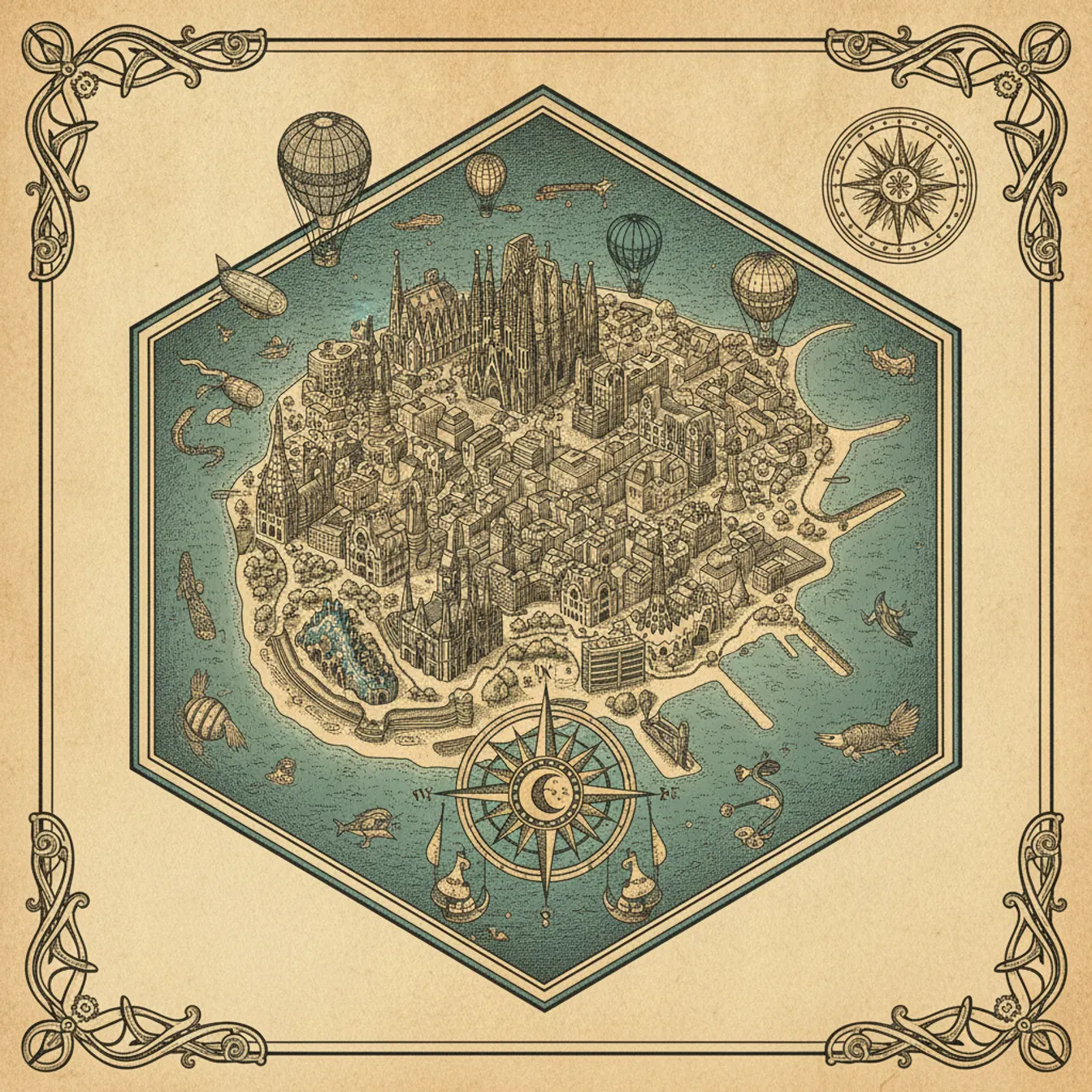
A tilted, hand-drawn dispatch of Barcelona. Click a quarter to explode it open.
0 / 6 quarters explored
[ EIXAMPLE — MODERNISME QUARTER ]
Old stones, older stories.
Sagrada FamíliaUnder construction since 1882. Completion predicted 2026. Worth every year of the wait.
Barri Gòtic — Barcelona Cathedral + Plaça 2,000 years of history layered under a medieval maze. It gets better every block.
[ BARRI GÒTIC ]
Old stones, older stories.
La Boqueria Market — lunch at a counter stThe market the tourists found, with the food stalls that survived.
Barceloneta Beach — sunset swimA working-class neighbourhood beach that the city held onto against all commercial pressure.
[ BARCELONETA & PORT OLÍMPIC ]
Where the city meets the water.
Dinner — El Born tapas barsThe neighbourhood that did tapas first and best and has not forgotten it.
Barceloneta — early morning beachBarcelona beach before the umbrellas arrive. This is the real one.
[ EL BORN & SANT PERE ]
Old stones, older stories.
Passeig de Gràcia — Block of DiscordThree rival architects' Modernista masterpieces on the same city block. One of them won.
Casa Batlló or Casa Milà (La Pedrera)A building disguised as a dragon, or a building disguised as waves. Pick your Gaudí.
[ MONTJUÏC ]
Green breathing room.
Park Güell — Monumental ZoneThe garden-city that Gaudí designed. The ceramic dragon bench that everybody photographs.
Gràcia neighbourhood — lunch at Plaça del The neighbourhood that thinks it's a village, and is right.
[ GRÀCIA & PARK GÜELL ]
Old stones, older stories.
Fundació Joan Miró — MontjuïcThe primary colours museum where Miró's work makes sense for the first time.
Castell de Montjuïc — sunset viewsThe fort above the city. The view is what colonised Barcelona's history.
Day 1
Sagrada Família + Gothic Quarter + Barceloneta
The world's longest construction project and the oldest city in Spain
Book the 9 AM Sagrada Família slot. By noon you're in the Gothic Quarter. By 5 PM you're at the beach. This is the sequence that makes Barcelona make sense on a short visit.
Same plan, slower execution. The Sagrada Família at 9 AM is non-negotiable — only the timing changes. Spend the afternoon in the Gothic Quarter without a destination.
Sagrada Família
Under construction since 1882. Completion predicted 2026. Worth every year of the wait.
The Sagrada Família is the most extraordinary building in Europe and possibly the world — a basilica that Gaudí designed knowing he would never see finished. The Nativity façade is the original (Gaudí's own work); the Passion façade is the modern interpretation. Inside, the nave columns branch like trees toward a stained-glass canopy that floods the space with coloured light. Book the 9 AM entry. Book the tower access separately for the views over Eixample.
2,000 years of history layered under a medieval maze. It gets better every block.
The Gothic Quarter is Barcelona's oldest neighbourhood — Roman walls are visible in the basement of the City History Museum, medieval streets run through Plaça de Sant Jaume, and the Barcelona Cathedral (free before noon and after 5:30 PM, paid midday) sits at the centre. Plaça del Rei is the most perfectly preserved medieval square in Spain. Walk without a map for at least 30 minutes.
La Boqueria Market — lunch at a counter stall
The market the tourists found, with the food stalls that survived.
La Boqueria on La Rambla is famous and touristy and still worth a visit for the seafood counter bars in the back — El Quim de la Boqueria and Bar Pinotxo serve excellent lunches at counter seats. Arrive by 1:30 PM before the seats fill. Avoid the fruit stalls at the front — the prices are tourist-priced; the seafood in the back is genuinely local.
Barceloneta Beach — sunset swim
A working-class neighbourhood beach that the city held onto against all commercial pressure.
Barceloneta is the beach neighbourhood that emerged from a fisherman's quarter and has managed to remain genuinely local despite the tourism. The beach is wide, the water is Mediterranean blue, and the sunset over the water from the Passeig Marítim is the reward for the day. A beach bar cerveza costs €3–4. This is the correct end to Day 1.
Dinner — El Born tapas bars
The neighbourhood that did tapas first and best and has not forgotten it.
El Born, five minutes from Barceloneta, has Barcelona's best concentration of tapas bars — Euskal Etxea (Basque pintxos, excellent and cheap), Bar del Pla (Catalan tapas, outstanding patatas bravas), and El Xampanyet (cava bar with anchovies, tiny, always busy). Walk between them. Don't book anything. Eat standing at the bar.
Day 2
Casa Batlló + La Pedrera + Passeig de Gràcia
Modernisme in the morning, Picasso in the afternoon
Last full day. Choose one of the Gaudí houses — Casa Batlló (more theatrical, LED-enhanced nights) or La Pedrera (better rooftop views, better permanent exhibition). Then El Born and the Picasso Museum.
Full morning on Passeig de Gràcia — do both houses if budget allows. Afternoon in El Born: Picasso Museum, Santa Maria del Mar, and lunch at the El Born Cultural Centre.
Passeig de Gràcia — Block of Discord
Three rival architects' Modernista masterpieces on the same city block. One of them won.
The Block of Discord (Manzana de la Discòrdia) on Passeig de Gràcia contains three competing Modernista buildings: Casa Lleó Morera (Domènech i Montaner), Casa Amatller (Puig i Cadafalch), and Casa Batlló (Gaudí). Stand on the pavement and look. Then decide which one to go inside — Casa Batlló has the theatrical interior and the immersive night experience; La Pedrera (two blocks north) has the better rooftop.
Casa Batlló or Casa Milà (La Pedrera)
A building disguised as a dragon, or a building disguised as waves. Pick your Gaudí.
Casa Batlló: the interior is a continuous organic form — no straight lines, the stairwell is a ceramic blue-tiled light well, the rooftop is a dragon's back. The Magic Nights experience (after dark) adds projection mapping. La Pedrera: the rooftop warrior-chimney landscape is Gaudí's most surreal exterior, the permanent exhibition on the top floor is excellent. Both sell out; book ahead.
The largest collection of early Picasso in the world, in five medieval palaces.
The Picasso Museum occupies five interconnected medieval palaces in the El Born neighbourhood. The collection focuses on Picasso's early work and his Las Meninas series — 58 variations on Velázquez's painting, done in 1957, the most extraordinary display in the museum. Queue or book ahead (worth it). The Gothic courtyard is beautiful.
The Gothic church built by the people, for the people, in 55 years. Perfection.
Santa Maria del Mar is arguably the most beautiful Gothic church in Spain — built by the workers of the Ribera neighbourhood in the 14th century in just 55 years, which is why it has a unity of style that most Gothic cathedrals lack. The interior is dramatically simple: three naves, octagonal columns, and stained glass in a space that doesn't feel like a cathedral because the cathedral was built by people who didn't want something intimidating.
El Born evening — cava bar + dinner
El Xampanyet has been pouring house cava since 1929. This is non-optional.
El Xampanyet on Carrer de Montcada, one of the oldest streets in Barcelona, has been a cava bar since 1929. The house cava costs €2.50 a glass. The anchovies are extraordinary. The bar is small and always full. Arrive at 7 PM or 10 PM — everything between is a queue. Dinner afterward at any tapas bar in the immediate neighbourhood.
Day 3
Montjuïc + Park Güell + Gràcia
The hill with the castle and the hill with the mosaics
Final day. Choose: Montjuïc or Park Güell — not both at full length. Montjuïc has the Miró Foundation and the castle; Park Güell has the mosaics and the views. Then Gràcia for dinner — the neighbourhood that feels like a different city.
Both, comfortably. Morning at Park Güell, afternoon at Montjuïc — the Fundació Miró first, then the cable car to the castle for sunset.
Add the Palau Nacional (Museu Nacional d'Art de Catalunya — MNAC) on Montjuïc — the Romanesque collection is one of the most significant in the world and it takes the better part of a morning.
Park Güell — Monumental Zone
The garden-city that Gaudí designed. The ceramic dragon bench that everybody photographs.
Park Güell's Monumental Zone requires a timed ticket — book well in advance. The Dragon Staircase with its ceramic salamander, the Hypostyle Room (originally planned as a market with 86 columns, now a ceremonial space), and the Gran Plaça Circular with its undulating ceramic bench and panoramic city views. The rest of the park (outside the Monumental Zone) is free and also excellent.
The neighbourhood that thinks it's a village, and is right.
Gràcia was a separate municipality until 1897 and still feels it. The streets around Plaça del Sol and Plaça de la Vila de Gràcia have neighbourhood restaurants with long lunches and no tourist menus in sight. Order the menú del día — typically €12–15 for three courses with wine included. This is the most Catalan part of the itinerary.
Fundació Joan Miró — Montjuïc
The primary colours museum where Miró's work makes sense for the first time.
The Miró Foundation was designed by Josep Lluís Sert in 1975 and is one of the best museum buildings in Europe — natural light, Mediterranean white, terraces overlooking the city. The collection is comprehensive and displays Miró's development from early realism through surrealism to the symbolic primary-colour work he's famous for. The garden sculptures are installed in the terraces.
The fort above the city. The view is what colonised Barcelona's history.
The Montjuïc cable car runs to the castle — take it up, walk down. The views from the castle walls over the port, the city, and the sea are the best panoramic views in Barcelona. The castle itself has a complex and dark history (it was a prison for Catalan political prisoners into the 20th century) that the museum inside handles honestly.
The serrated mountain monastery that Catalans treat as a pilgrimage
Take the train from Plaça d'Espanya at 8:36 AM (Ferrocarrils de la Generalitat, FGC line R5) and the rack railway up to the monastery. You're there by 10 AM. Full morning at the monastery and a hike to Sant Joan. Back in Barcelona by 5 PM.
Same plan. Take the Sant Joan funicular to the upper stations and walk the ridge trail — the views over the Catalan plain toward the sea on one side and the Pyrenees on the other are extraordinary.
Montserrat Monastery — La Moreneta
A Benedictine monastery on an impossible mountain. The Catalan national shrine.
The Monastery of Montserrat houses the Black Madonna (La Moreneta), which Catalonia regards as its patron. The basilica queue to see the Virgin is long but fast-moving. The Escolania boys' choir sings the Salve at 1 PM daily (not in July or late December) — one of the most extraordinary things you will hear in Spain. The museum below the basilica has a genuinely excellent art collection including an El Greco.
Take the funicular, hike the ridge, see the Pyrenees and the sea simultaneously.
The Sant Joan funicular runs from the monastery level to a higher station. From there, the Sant Joan trail is a 20-minute walk to the chapel at the top — the highest accessible point on the mountain. The view encompasses the entire Catalan landscape: the plain, the coast, and the Pyrenees on a clear day. Bring water; the mountain sun is serious.
Lunch at the monastery — Bar de la Plaça or packed lunch
Catalan mountain food, or just the view with a sandwich.
The monastery complex has a restaurant, a cafeteria, and a snack bar. The mountain bread with tomato and olive oil (pa amb tomàquet) is the Catalan staple and is excellent here. The sausages are locally made. Alternatively, pack a lunch from a Barcelona market — Mercat de Santa Caterina in El Born is the local alternative to La Boqueria — and eat at the viewing terrace.
Return to Barcelona — vermouth hour in Gràcia
The Catalan ritual of vermouth before dinner. Non-optional, non-negotiable.
Return to Barcelona by 6 PM and join the vermouth hour in Gràcia or El Born — la hora del vermut runs 6–9 PM and involves a glass of house vermouth (Yzaguirre or Primitivo Quiles), olives, and potato chips at a bar with no particular urgency. This is the Catalan warm-up before a dinner that won't happen before 9:30 PM.
Day 5
Barceloneta + Poblenou + Beach Day
The coast from the fishing village to the tech district
No culture today. Walk the Barceloneta fish market at 8 AM (it wraps up by 9). Swim. Eat seafood. Walk north along the coast to Poblenou — Barcelona's former industrial neighbourhood, now a creative hub. Rambla del Poblenou for the afternoon.
Barceloneta — early morning beach
Barcelona beach before the umbrellas arrive. This is the real one.
Barceloneta beach before 9 AM belongs to the morning swimmers, the dog walkers, and the old men reading newspapers on the promenade. The light is horizontal and gold. The water is cold enough to wake you completely. This is what the beach is actually for.
Barceloneta seafood — La Cova Fumada
The restaurant that invented the bombas potato croquette. Cash only, no reservations.
La Cova Fumada in Barceloneta invented the bomba — a potato croquette traditionally served with two sauces (mild and lethal). It is a local institution with no sign, no reservations, cash only, and lunch hours only until food runs out (usually by 2 PM). The grilled sardines and the calamari are also outstanding. Arrive at noon.
Poblenou — Rambla del Poblenou + Palo Alto Market
Barcelona's old factory belt, converted into studios, cafés, and one excellent design market.
Poblenou is Barcelona's 22@ technology district — old industrial warehouses converted into offices, studios, and creative spaces. The Rambla del Poblenou is a quieter, more local version of La Rambla, lined with neighbourhood restaurants. The Palo Alto Market runs the first weekend of the month and sells design objects, vintage, and food.
Day 6
MNAC + Tibidabo + Gracia Evening
The Romanesque collection and the amusement park on the mountain
The Museu Nacional d'Art de Catalunya (MNAC) on Montjuïc is the most underrated major museum in Spain. Morning there, then Tibidabo if you have energy (or children) — the amusement park on the highest hill in Barcelona, with the city and the sea below.
MNAC — Museu Nacional d'Art de Catalunya
The Romanesque collection that Spain almost let crumble. Now the finest in the world.
MNAC occupies the Palau Nacional on Montjuïc and houses the most comprehensive collection of Catalan and Romanesque art in existence — frescoes removed from Pyrenean chapels in the early 20th century and reinstalled in full-scale apse recreations. The Gothic collection and the Modernisme rooms are equally strong. The building terrace has the most theatrical view of Plaça d'Espanya and the city.
Tibidabo Amusement Park + Temple Expiatori del Sagrat Cor
A 1901 funfair on the highest hill in Barcelona. The view alone justifies the FGC ride.
Tibidabo is reachable by FGC from Plaça Catalunya and the Tramvia Blau (if running) or bus. The amusement park has vintage rides from the 1900s alongside modern ones — the Avió (a biplane ride from 1928) is the headline. The Temple above the park has the best 360-degree panorama in the city. On a clear day you can see Mallorca from the viewing terrace.
Dinner in Gràcia — La Pepita or any neighbourhood spot
The Catalan neighbourhood that refused to become a tourist destination.
Gràcia has resisted the tourist restaurants better than any central neighbourhood. La Pepita on Carrer de Còrsega does inventive Catalan tapas at honest prices. The plaza restaurants around Plaça de la Virreina and Plaça del Nord are neighbourhood places with families and couples rather than tour groups. Order the local wine — DO Penedès or DO Priorat — and eat late, the way this city requires.
Day 7
El Raval + La Rambla + Final Vermouth
The neighbourhood that changed and the street that didn't
Last day. El Raval in the morning — the MACBA (Museum of Contemporary Art), the old streets, the market of Sant Antoni. La Rambla one last time, walked properly rather than survived. Final vermouth somewhere quiet.
MACBA — Museu d'Art Contemporani de Barcelona
A Richard Meier building on a plaza where skateboarders have held their ground for 30 years.
MACBA is a Richard Meier building — gleaming white, full of natural light, opening onto a plaza that the skate community adopted immediately and has never been displaced from. The collection focuses on post-1945 Catalan and international art. The rotating exhibitions are usually excellent. The skaters outside are as much part of the experience as what's inside.
Mercat de Santa Caterina — lunch
La Boqueria without the photographers. The actual market that Barcelona uses.
Mercat de Santa Caterina in El Born was redesigned by Enric Miralles with a wildly colourful ceramic mosaic roof — it's extraordinary from outside. Inside, it operates as a real neighbourhood market: better quality, lower prices, and fewer tourists than La Boqueria. The prepared food counters in the back serve lunch. This is where locals shop.
El Call — Jewish Quarter + last Gothic Quarter wander
The medieval Jewish neighbourhood, the last stones of the oldest Barcelona.
El Call (the Jewish Quarter) is a cluster of alleys between Carrer del Call and Carrer de Banys Nous — the oldest documented neighbourhood in Barcelona, active until the 1391 pogrom. The El Call Museum is tiny and honest. Walk the alleys without a plan. Buy the thing you've been walking past all week. Find a café on Plaça de Sant Felip Neri.
Farewell vermouth — Bar Marsella or Bar del Convent
The oldest bar in Barcelona has not changed since 1820. Neither has the absinthe.
Bar Marsella in El Raval opened in 1820 and looks it — dusty bottles, antique mirrors, absinthe served the original way. The vermouth here is excellent. The atmosphere is specifically, irreplaceably Barcelonan. Alternatively, Bar del Convent in El Born serves drinks in the cloister of a former convent. Either is the right ending to a Barcelona week.
Barcelona is the city that makes you feel like a better version of yourself. The food is extraordinary. The architecture is impossible. The beach exists at the end of the Gothic Quarter, which should be impossible and isn’t.
This itinerary is built around one truth: Barcelona rewards the person who sits down. The menú del día, the vermouth hour, the beach at 4 PM — these are not tourist experiences, they are how the city actually functions and you are welcome to participate in all of them.
The 2/3/4/7-day versions are a journey from icon to neighbourhood. Two days is Gaudí and the Gothic Quarter. Seven days is the neighbourhood restaurant in Gràcia where the menu is handwritten in Catalan and you point at what looks right and it is always correct.
Use the duration filter above to see your version of Barcelona.
Neighbourhood
Best For
Day in This Plan
Eixample
Gaudí, Modernisme
Days 1–2
Barri Gòtic
Medieval history, Cathedral
Day 1
Barceloneta
Beach, seafood
Days 1, 5
El Born
Tapas, Picasso, Santa Maria
Days 1–2
Gràcia
Neighbourhood Barcelona, Park Güell
Days 3, 6
Montjuïc
Miró, castle, MNAC
Days 3, 6
Montserrat
Day trip, monastery, hiking
Day 4
Poblenou
Rambla, design, coast
Day 5
El Raval
MACBA, Bar Marsella
Day 7
This article contains affiliate links marked with rel="sponsored". We may earn a commission at no extra cost to you.