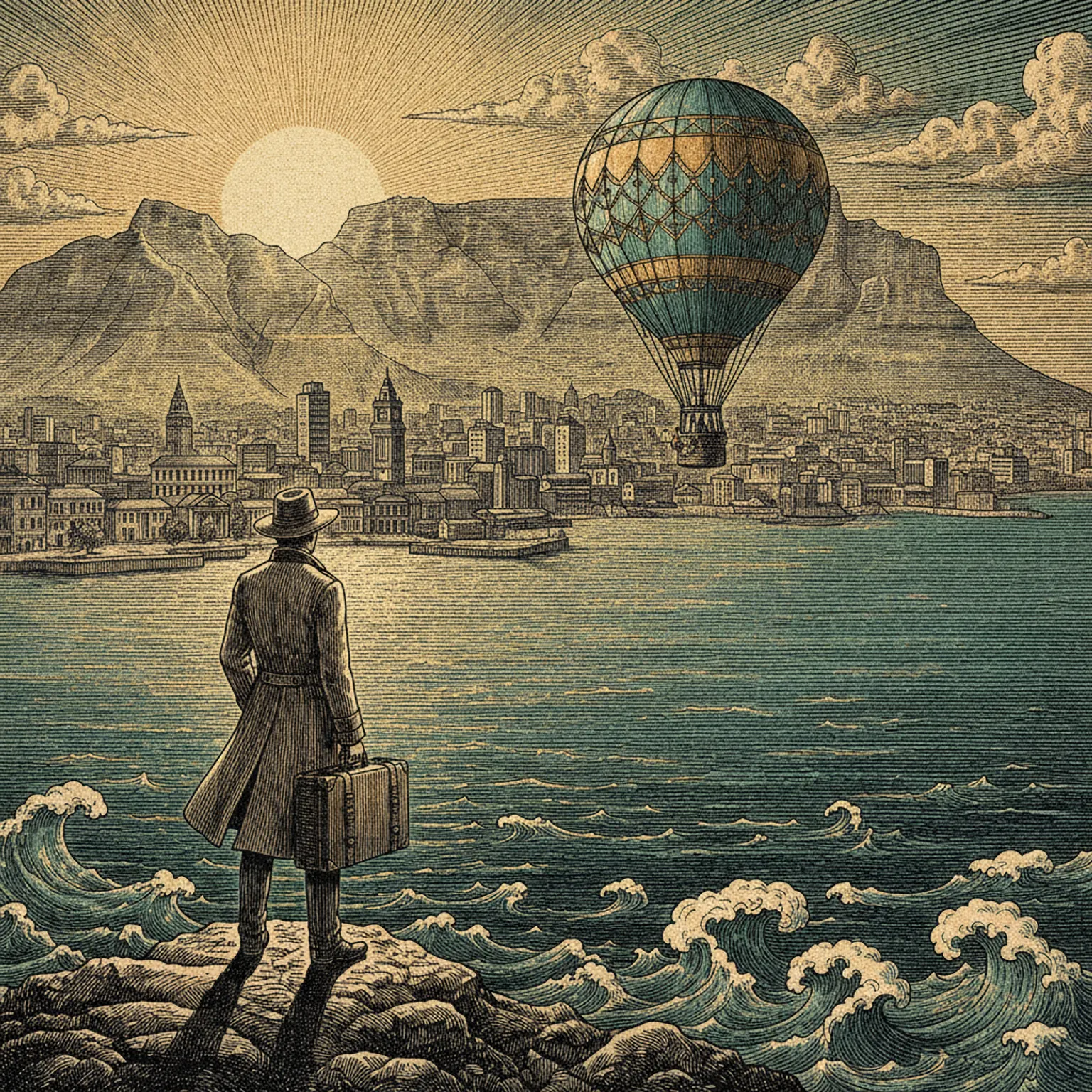
I nearly missed my cable car to the top of Table Mountain because I spent twenty minutes arguing with a street vendor in Bo-Kaap about whether his koeksisters were better than his mother's. He was right to be offended. They were spectacular. The mountain waited. It always does — it has been waiting 600 million years, so another twenty minutes is nothing.
The Perfect Cape Town Itinerary (2, 3, 4 & 7 Days)
Two days in Cape Town demands ruthlessness and rewards it. Table Mountain on Day 1. The Cape Peninsula on Day 2. Every meal in between is a bonus. You will leave having seen more of Africa than most people manage in a week.
Book the cable car and Cape Point tour before you land — both sell out.
72 Hours: The City Reveals Itself
Three days lets you add the V&A Waterfront properly, a morning in Bo-Kaap, and your first braai (if you know the right person). You'll leave with a neighbourhood you felt you understood. That neighbourhood is probably Woodstock.
4 Days: Wine Country and the Real Cape Town
Four days means Stellenbosch. It means eating at a proper Cape Malay restaurant in Bo-Kaap, not just photographing the houses. It means a sunset swim at Camps Bay that you'll be insufferable about for years.
7 Days: Slow Down, the Mountain Will Still Be There
A week in Cape Town is a dangerous thing. You'll start looking at property prices on Day 4. The Winelands deserve two full days. Kalk Bay on a Thursday morning is worth the whole trip. You have been warned.
Estimated budget:$320–$520 est. (budget–mid, incl. 1 hotel night)
Estimated budget:$480–$780 est. (2 hotel nights + peninsula day trip)
Estimated budget:$640–$1,050 est. (Winelands day trip + 3 nights)
Estimated budget:$1,100–$1,900 est. (full week, mid-range hotels)
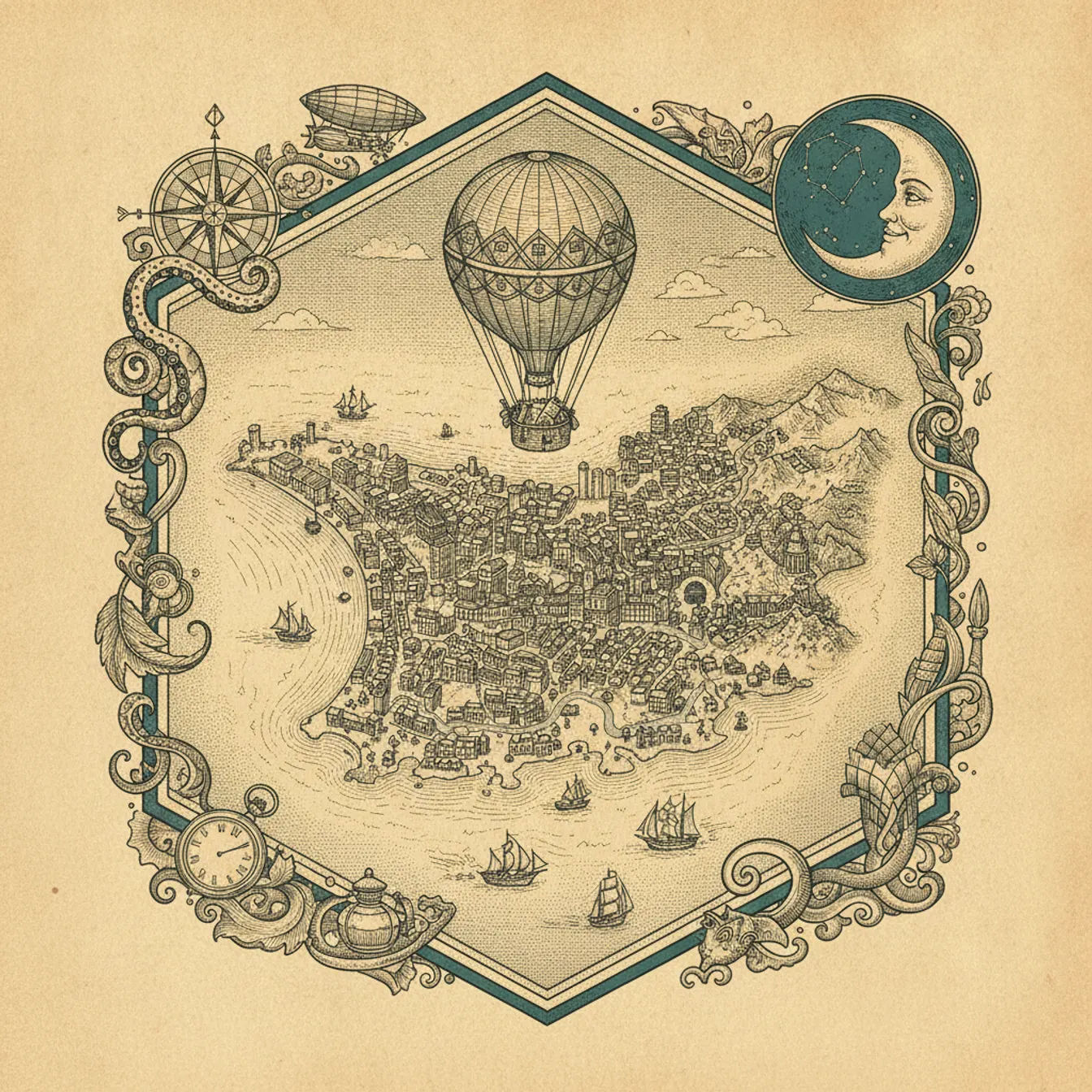
[ THE DISPATCH · FIELD MAP ]
A tilted, hand-drawn dispatch of Cape Town. Click a quarter to explode it open.
0 / 6 quarters explored
[ CITY BOWL ]
Grand squares and big ideas.
Table Mountain (cable car to summit)The view that makes every hike up look retrospectively worth it.
Company's Garden + South African MuseumThe oldest garden in sub-Saharan Africa, with an excellent café in the middle.
[ BO-KAAP ]
Old stones, older stories.
Bo-Kaap — Cape Malay QuarterThe most photographed street in Africa. Still worth it.
Zeitz Museum of Contemporary Art AfricaThe most important art museum on the continent, inside a converted grain silo.
[ V&A WATERFRONT ]
Where the city meets the water.
V&A Waterfront — harbour walk and lunchThe tourist trap that is, somehow, also where locals actually go.
Signal Hill — sundownerDrive up, park, uncork. Cape Town has a ritual for this.
[ CAPE PENINSULA ]
Green breathing room.
Chapman's Peak Drive114 curves carved into a cliff face above the Atlantic. Absolutely not for the faint-hearted.
Cape Point + Cape of Good HopeWhere the Indian Ocean meets the Atlantic and makes a fuss about it.
[ CAMPS BAY ]
Where the city meets the water.
Clifton Beach (1st, 2nd, 3rd, 4th — pick oFour beaches separated by granite boulders, each with its own personality.
Camps Bay Beach + lunch on the stripIf Clifton is the locals' beach, Camps Bay is where Cape Town performs.
[ STELLENBOSCH ]
Green breathing room.
Stellenbosch — town centre walkThe most beautiful university town in Africa, and the wine capital of the Cape.
Spier Wine Estate (or Delaire Graff / TokaPick your estate; they all have a view that makes you forget you flew economy.
Day 1
Table Mountain + City Bowl + Bree Street
The essential Cape Town opener
One day, one mountain, one street for dinner. We sequence the cable car for mid-morning (clearest skies), Company's Garden for a slow lunch, and Bree Street in the evening because that is where Cape Town eats.
Take the cable car up early before the tourist surge hits. The morning light on the Twelve Apostles from the summit is worth the alarm.
Table Mountain (cable car to summit)
The view that makes every hike up look retrospectively worth it.
Book the first cable car up and beat the queues by an hour. The summit plateau is wild — fynbos, dassies (rock hyraxes, which look like guinea pigs and are somehow related to elephants), and a 360-degree view that takes in two oceans. Allow 2 hours minimum. Check wind conditions the night before; the cable car closes in high wind and the mountain will lie to you about this.
The oldest garden in sub-Saharan Africa, with an excellent café in the middle.
The VOC planted this garden in 1652 to feed their ships. Today it is where Cape Town eats lunch on park benches next to enormous tortoises and elderly squirrels with attitude. The South African Museum next door has the best whale skeleton you've ever walked under.
The street that proves Cape Town is a serious food city.
Bree Street is Cape Town's answer to Melbourne's laneways or Copenhagen's Vesterbro — except the weather is better and the wine is cheaper. Eighty Twenty, Chefs Warehouse, Dear Me. Walk the strip, pick the one with the queue (there is always one with a queue), and order the local fish. The snoek is always the right answer.
Day 2
Bo-Kaap + V&A Waterfront + Zeitz MOCAA
Colour, history, and Africa's best contemporary art museum
Last day — Bo-Kaap in the morning (photographs, koeksisters, coffee), then the V&A for lunch and a fast lap of the Zeitz MOCAA. Flight tonight means the Waterfront is also where you grab your last South African wines from the duty-free equivalent at the market.
Full morning in Bo-Kaap and the Cape Malay Quarter, afternoon at the Waterfront, evening at a restaurant on the harbour with a glass of Chenin Blanc you will spend the next year trying to find at home.
Bo-Kaap — Cape Malay Quarter
The most photographed street in Africa. Still worth it.
Yes, you've seen the bright-painted houses in a thousand Instagram posts. In person, at 9 AM with the smell of koeksisters frying and the call to prayer from the mosque on Dorp Street, it is something different. The Bo-Kaap Museum (inside a modest terrace) explains the Cape Malay community — enslaved people brought from Malaysia and Indonesia who became the soul of Cape Town's food culture.
Zeitz Museum of Contemporary Art Africa
The most important art museum on the continent, inside a converted grain silo.
Thomas Heatherwick carved the Zeitz MOCAA from a grain silo on the V&A Waterfront, turning the cylindrical grain tubes into soaring atrium spaces. The collection is the best survey of contemporary African art anywhere — challenging, political, beautiful, and often all three simultaneously. Allow 2 hours. The café on the top floor has a view of the harbour that rewards lingering.
The tourist trap that is, somehow, also where locals actually go.
The V&A Waterfront is technically a shopping mall but it's a shopping mall where you can watch seals beg from fishing boats and see Table Mountain from every angle. The Watershed market inside has excellent South African craft and design. Lunch at Harbour House on the upper deck — order the kingklip if it is on the board.
Signal Hill — sundowner
Drive up, park, uncork. Cape Town has a ritual for this.
Drive or Uber up Signal Hill for the classic Cape Town sundowner: wine from a bottle shop, a blanket, the city turning pink below you. The Noon Gun fires from here at noon (British colonial relic, still happening). The view from the top takes in the entirety of Cape Town's stadium, the harbour, Lion's Head, and the Atlantic — all at once.
Day 3
Cape Peninsula — Cape Point to Boulders Beach
The ends of the earth, with penguins
Final day. This one requires a car (hire one or book a guided tour — the road is manageable but long). Chapman's Peak Drive in the morning, Cape Point for lunch, Boulders Beach penguins in the afternoon. You will take approximately 400 photographs of penguins. This is normal.
Same route but you can take it slower. Stop at Hout Bay on the way down. Have a proper lunch at the restaurant at Cape Point. Let the day expand.
Same route, different energy — you already have Stellenbosch and Kalk Bay to look forward to, so you can let this one breathe. Stop wherever the scenery commands it.
Chapman's Peak Drive
114 curves carved into a cliff face above the Atlantic. Absolutely not for the faint-hearted.
The toll road that wraps around Chapman's Peak is one of the great scenic drives in the world — on a par with the Amalfi Coast but with fewer mopeds. Stop at the viewpoints on the southern descent, where the drop to the Atlantic below is vertiginous and spectacular. There are baboons. Do not feed them.
Cape Point + Cape of Good Hope
Where the Indian Ocean meets the Atlantic and makes a fuss about it.
The Cape of Good Hope is not technically the southernmost point of Africa (that is Cape Agulhas, further east) but it is the dramatic one, and drama is what we are here for. The lighthouse at Cape Point involves a funicular or a steep walk. Both are worth it. The wind at the top is sincere and personal.
3,000 penguins in Simon's Town. They are not impressed by you either.
African penguins (once called jackass penguins, for reasons that become obvious when you hear their bray) colonised Boulders Beach in 1982. Now there are thousands of them, nesting in burrows between the granite boulders and waddling past your feet with magnificent indifference. The boardwalk keeps you from disturbing them; the tide pools are your reward after.
Beach day. Camps Bay is Cape Town's show-off beach — the Twelve Apostles mountain range as your backdrop, water cold enough to remind you you're in the Atlantic. Afternoon is slow and sunscreen-heavy. Evening is a braai if you've made a friend, a restaurant on the strip if you haven't.
Same structure, but with less guilt about spending the afternoon doing nothing. You've earned it. The water is cold. The view is absurd. This is fine.
Clifton Beach (1st, 2nd, 3rd, 4th — pick one)
Four beaches separated by granite boulders, each with its own personality.
Clifton's four beaches are divided by giant granite boulders and differentiated by vibe: 1st is families, 2nd is Instagram, 3rd is locals who live nearby, 4th is where everyone pretends they don't care about the other three. The water is 15°C in summer. This is the Atlantic, not the Indian Ocean side; the cold is the point.
Camps Bay Beach + lunch on the strip
If Clifton is the locals' beach, Camps Bay is where Cape Town performs.
Camps Bay's main beach is wider and busier, and the restaurant strip behind it is excellent — The Roundhouse (above, with the mountain view), Azure, the terrace places along Victoria Road. Order fish. Order wine. Marvel at the Twelve Apostles with a glass in hand. The photographs basically take themselves.
Drive fifteen minutes south of Camps Bay to Llandudno — a tiny, perfect beach that is only accessible by a steep path, which keeps the crowds honest. The boulders glow orange as the sun drops into the Atlantic. There are no restaurants. Bring a bottle and something to sit on. This is Cape Town without the performance.
Day 5
Stellenbosch + Franschhoek — Wine Country
Cape Dutch estates, Chenin Blanc, and lunch that turns into dinner
Hire a car (or book the hop-on wine tram in Franschhoek — it is genuinely excellent and removes the driving problem). The Winelands are forty-five minutes from Cape Town and feel like a different country. Oak-lined streets, whitewashed Cape Dutch gables, wine at prices that will ruin European wine lists for you permanently.
Stellenbosch — town centre walk
The most beautiful university town in Africa, and the wine capital of the Cape.
Stellenbosch's Dorp Street is lined with Cape Dutch architecture, the oldest preserved streetscape in South Africa. The village Mus museum complex covers the full history of the Cape Colony. Walk it before 11 AM before the wine-tour buses arrive. Then earn your appetite.
Spier Wine Estate (or Delaire Graff / Tokara)
Pick your estate; they all have a view that makes you forget you flew economy.
Spier is accessible, excellent value, and has a cheetah outreach programme that is both tourist-y and completely worth it. Delaire Graff is the aspirational choice — the views from the restaurant over the Banghoek Valley are some of the best in the Winelands, and the Chenin Blanc is very serious. Tokara splits the difference and has a great deli. You cannot go wrong. Taste everything.
A French village in the Cape. The terroir is better than the original.
The Franschhoek Wine Tram is an open-topped trolley that hops between estates on the valley floor — you get on and off as you please, and the €30-ish ticket covers the transport. The Huguenot Memorial Museum covers the French Protestant history (they fled Louis XIV, planted vines, and made this valley famous). La Petite Colombe and The Test Kitchen annexe are here if you're in a position to get a reservation. You are probably not. Book six months ahead.
The Cape's fishing village that became cool without knowing it
Kalk Bay is a forty-minute drive down the False Bay coast and is the single best neighbourhood in the Cape for a slow morning. Antique shops, fishermen bringing in the day's catch at the harbour, a bookshop in a cave, a bakery with a queue that wraps around the block every Saturday. Muizenberg next door has the best surf break for beginners in South Africa.
Kalk Bay Harbour — morning fish market
Buy snoek from the boat. Eat it immediately. Repeat.
The fishing fleet comes in around 7–8 AM and the harbour market sells the catch on the quayside. Snoek, yellowtail, Cape salmon. Buy something, find the nearest braai drum, and have the freshest fish of your life before 10 AM. The seals are not shy. The Cape fur seals here will look you directly in the eye and feel nothing.
Kalk Bay — antique strip and the cave bookshop
Antiquarian books in a literal cave. This is real.
The main street through Kalk Bay is three blocks of antique dealers, independent galleries, and the Kalk Bay Books shop, which is wedged into a cave in the hillside and has a cat. The Olympia Café does breakfast until noon and the cinnamon rolls are a matter of local pride. The Cape to Cuba restaurant (Cuban food in a fishing village — it works) does the best mojito on the False Bay coast.
Muizenberg Beach — surf lesson or spectate
South Africa's birthplace of surfing. The coloured beach huts are the postcard.
Muizenberg's famous pastel-painted beach huts date from the 1900s and are still in use, which is remarkable. The surf break here is long, slow, and forgiving — the best beginner break in the country. Several surf schools operate on the beach. The water on the False Bay side is warmer than Clifton by about 4°C because it comes from the Indian Ocean. This is the relevant fact.
Day 7
Woodstock + Neighbourgoods Market + Last Hours
Cape Town's creative heart, on a Saturday
If Day 7 falls on a Saturday, this is the only itinerary. The Neighbourgoods Market at the Old Biscuit Mill is the finest urban market in Africa and worth structuring your departure around. If it's not a Saturday, Woodstock is still worth it for the street art, the galleries, and the best coffee in Cape Town at Truth Coffee.
Truth Coffee Roasting
Steampunk décor, serious espresso, the queue is part of the experience.
Truth Coffee in Buitenkant Street was voted the world's best coffee shop by The Telegraph in 2015 and has not stopped being excellent since. The steampunk boiler-room fit-out should be insufferable; it is somehow not. The filter coffee is the order. The breakfast is enormous. The queue moves faster than it looks.
Neighbourgoods Market at the Old Biscuit Mill (Saturdays only)
The market that made Cape Town a food destination.
Every Saturday from 9 AM, the Old Biscuit Mill courtyard fills with Cape Town's best street food, wine, craft beer, vintage clothing, and the collective output of the city's creative class. Bao buns, Cape Malay curries, bunny chow, artisan cheese, natural wine poured with alarming generosity. Arrive by 10 AM before the queue for parking becomes philosophical.
Final lunch — Chefs Warehouse at Beau Constantia (or Bree Street)
The last meal deserves a view. This one has Table Mountain in it.
Chefs Warehouse at Beau Constantia is in the Constantia wine valley, fifteen minutes from Woodstock. It does a set tapas lunch that is among the best meals in South Africa for the price. No bookings — first come, first served — so arrive at 12:30 on the dot. If you cannot get in, head back to Bree Street and eat at whatever has a blackboard menu outside.
Cape Town is the one city that has an alibi for every crime it commits. The mountains are too dramatic. The beaches are too perfect. The wine is too good and too cheap. The food has absorbed five continents of influence and made something entirely its own. You arrive planning to tick it off a bucket list and leave with a property brochure in your bag.
This itinerary sequences Cape Town the way it needs to be done: the mountain first (because everything orients around it), then the city’s history, then the peninsula, then the longer pleasures of the Winelands and the coast. The 2-day version is a greatest hits album that somehow still hits. The 7-day version is the one where you start speaking in terms of “when I live here.”
The filter above adjusts the days and stops to your exact trip length. The truth is that however long you have, Cape Town will be over too soon.
What
Cape Town Take
Climate
Mediterranean — dry summers, wet winters. Summer (Oct–Mar) is warm and reliable.
Getting around
Hire a car for the peninsula and Winelands. Uber for the city. The MyCiti bus links the Waterfront and Sea Point.
Currency
ZAR (South African rand). Cards accepted widely; ATMs everywhere. Very affordable by US/European standards.
Language
English is widely spoken everywhere tourists go. Afrikaans and Xhosa are the other main languages.