I stood at the top of the Burj Khalifa at sunset and watched the shadow of the world's tallest building stretch across the desert toward the sea. Then I took the lift down 124 floors and ate shawarma from a wrap stall on Deira for AED 12. Dubai is simultaneously the most outrageous and most practical city on earth, often within the same hour.
Two days is enough to understand what Dubai is doing. Burj Khalifa and Downtown on Day 1, the old city and the desert on Day 2. Skip the malls — there will be time for that on the flight home layover you haven't booked yet.
The Metro is cheap, air-conditioned, and covers most of what you need.
72 Hours: Dubai Properly
Three days lets you add the Dubai Frame, Al Fahidi Historical Neighbourhood, and a sunset dhow cruise on the Creek. On Day 3 you start to understand that there are actually two Dubais and both are worth visiting.
4 Days: The Full Contrast
Four days is when you can do the desert properly — not a rushed dune bash at dusk but a morning camel ride at first light, before the tour groups arrive. Day 4 is the Palm Jumeirah, the Ain Dubai (weather permitting), and dinner at a restaurant that requires a reservation three weeks out.
7 Days: The Dubai That Locals Know
A week in Dubai lets the place make sense on its own terms. Day 5 is the Spice Souk and Gold Souk at pace. Day 6 is Alserkal Avenue — the contemporary art district in a warehouse complex that nobody put on the tourist map. Day 7 is the beach and the brunch and the admission that you've been converted.
Estimated budget:$320–$520 est. (budget–mid, incl. 1 hotel night)
Estimated budget:$480–$800 est. (2 hotel nights + Burj Khalifa)
Estimated budget:$680–$1,100 est. (3 nights + desert safari)
Estimated budget:$1,200–$2,100 est. (full week, mid-range hotels)
[ THE DISPATCH · FIELD MAP ]
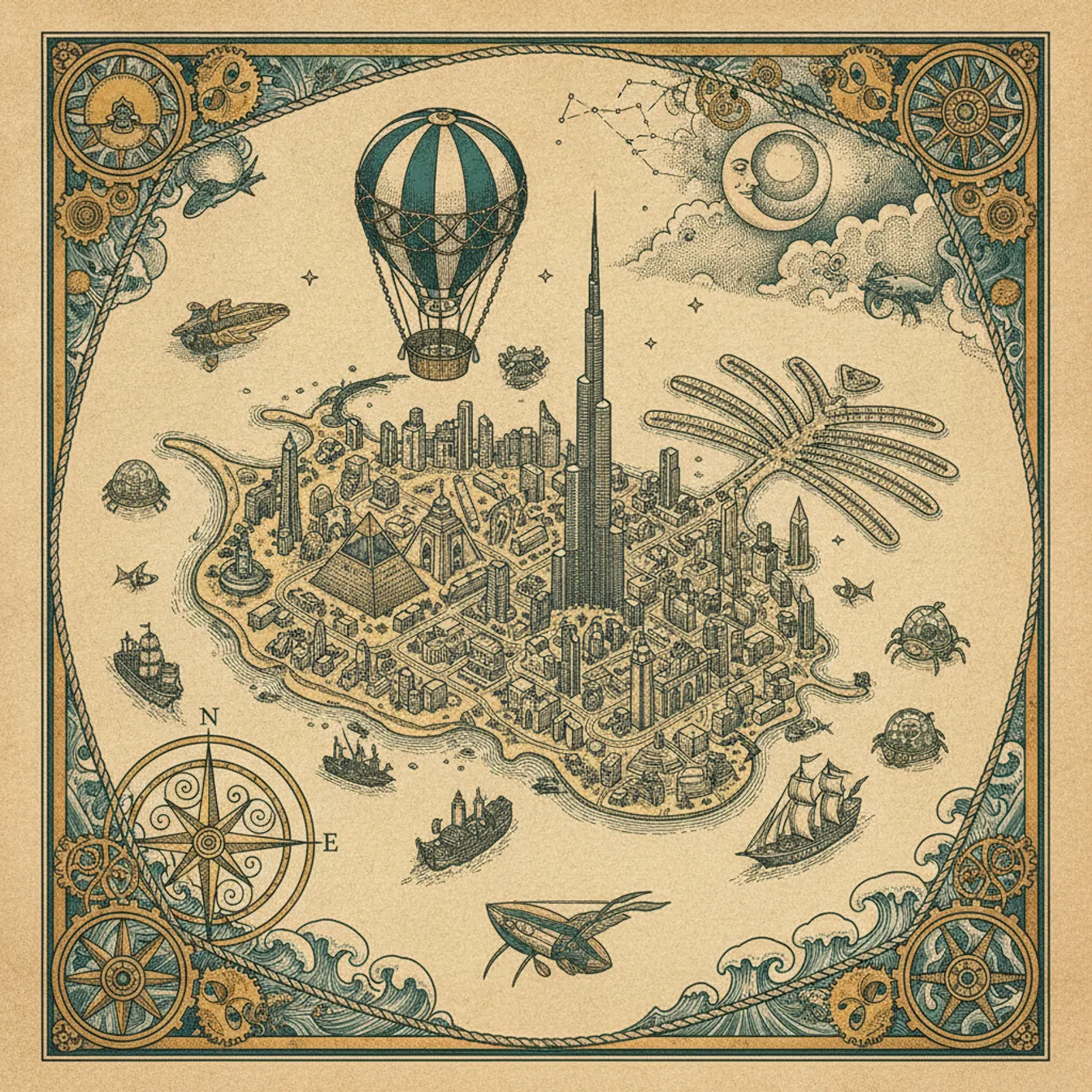
A tilted, hand-drawn dispatch of Dubai. Click a quarter to explode it open.
0 / 6 quarters explored
[ DOWNTOWN DUBAI ]
Grand squares and big ideas.
Dubai Mall — Dubai Aquarium + morning orieThe world's largest mall contains an actual aquarium visible from the food court.
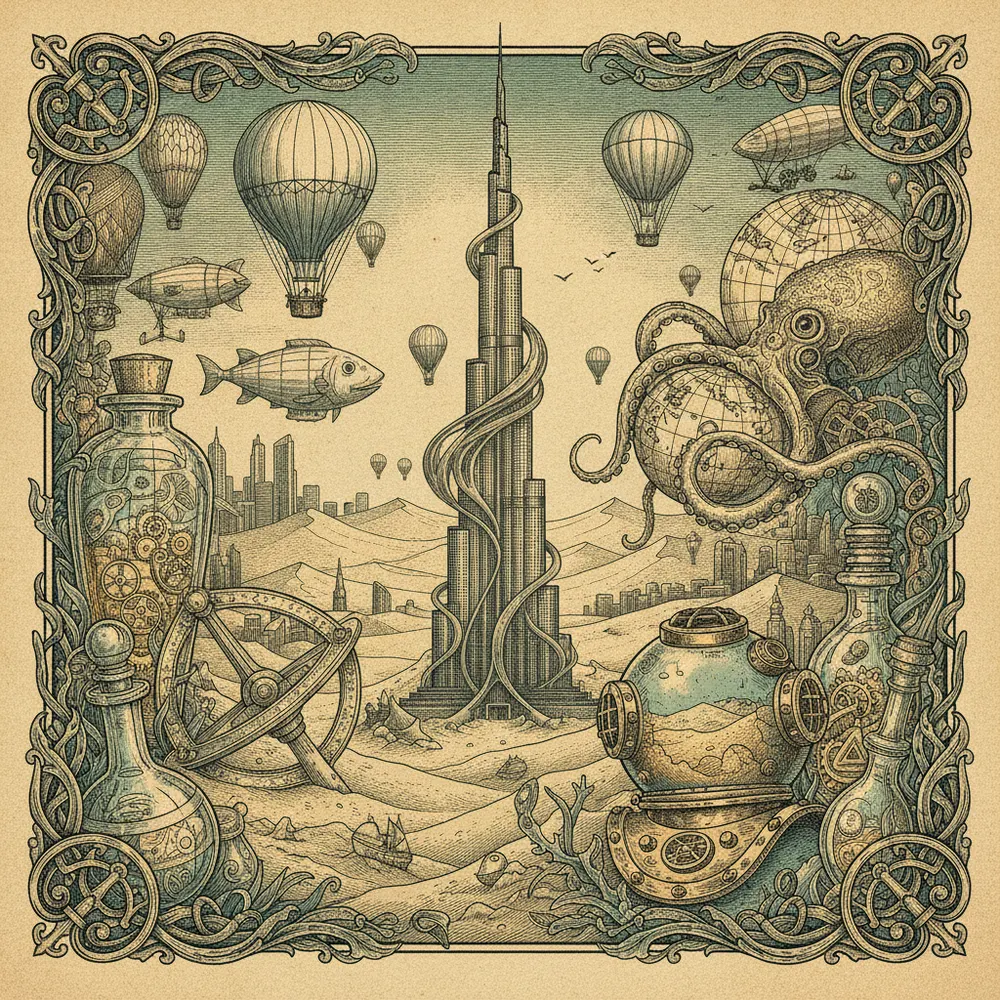
Burj Khalifa — At The Top (Level 124 or 14828 metres. The horizon curves. Everything below looks like a scale model.
[ DEIRA & DUBAI CREEK ]
Where the city meets the water.
Gold Souk — Deira250 shops selling gold jewellery in a covered arcade that has operated since 1940.
Spice Souk — DeiraTurmeric, saffron, rose water, and dried limes that smell like someone's grandmother's kitchen.
[ DUBAI DESERT ]
Green breathing room.
Al Fahidi Historical NeighbourhoodThe wind-tower district — the Gulf's ancient air-conditioning, still standing.
Desert Safari — dune bashing + Bedouin camSand dunes at 60 km/h followed by a dinner under actual stars.
[ JUMEIRAH & JBR ]
Where the city meets the water.
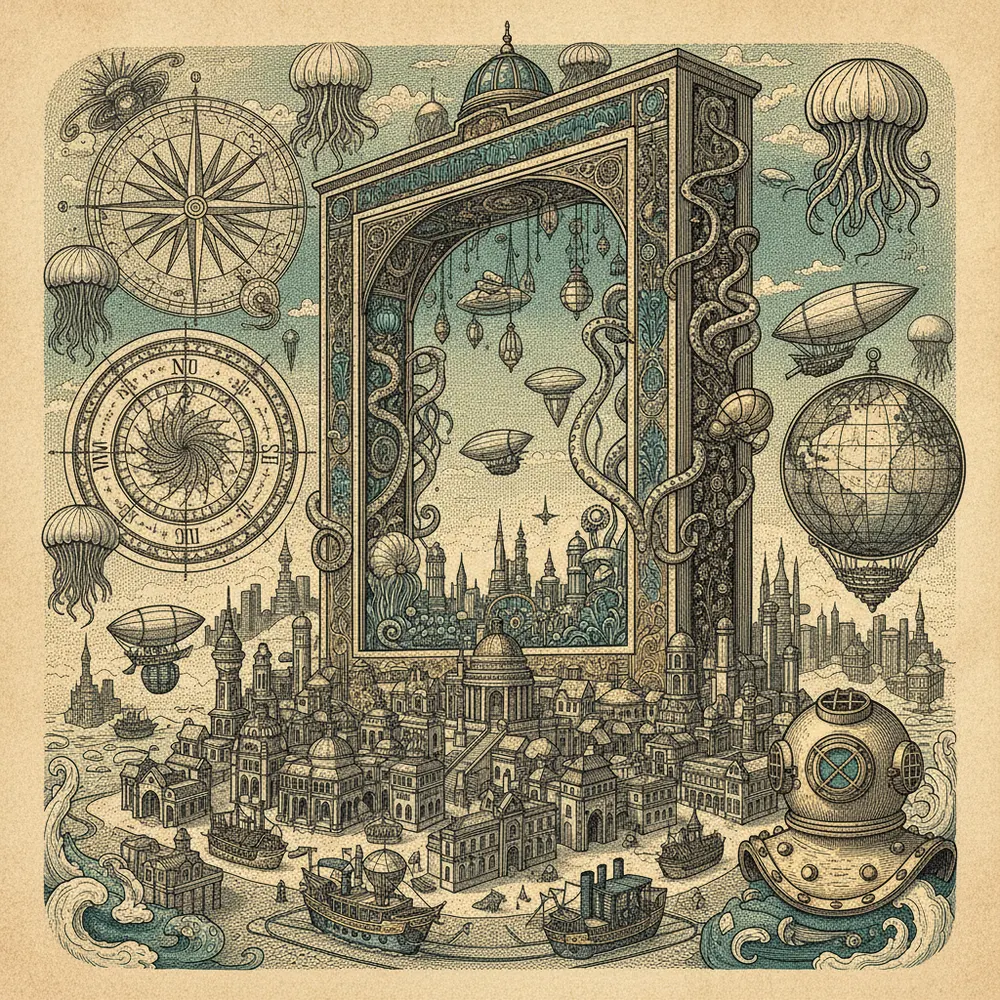
Dubai FrameA 150-metre picture frame on a city with a surprisingly interesting picture inside it.
Museum of the FutureThe most beautiful building in Dubai — a torus covered in Arabic calligraphy.
[ PALM JUMEIRAH ]
Boats, bridges and reflections.
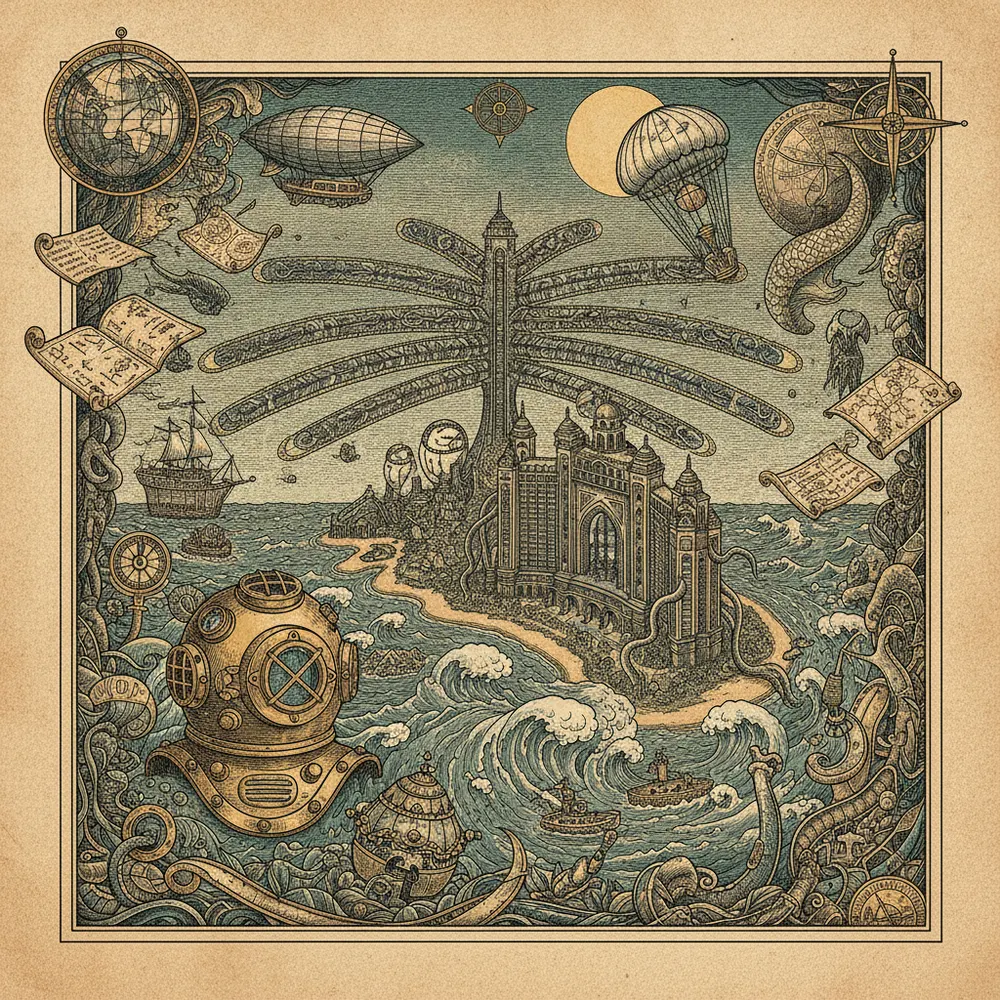
Palm Jumeirah — monorail + boardwalkThe palm-shaped island that made engineers nervous and satellite imagery famous.
Dubai Marina Walk + lunchA 3-kilometre waterway lined with superyachts and restaurants that know it.
[ DUBAI FRAME & ZABEEL ]
Grand squares and big ideas.
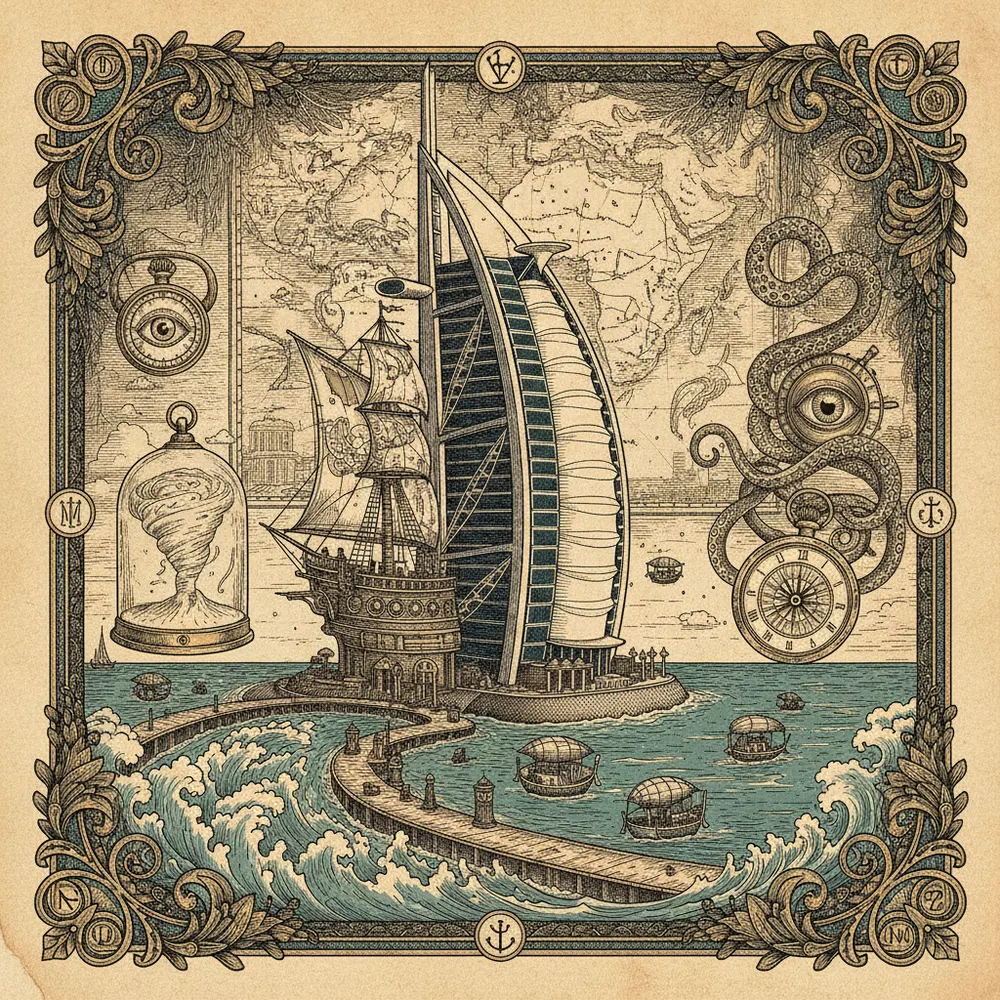
Jumeirah Beach + Burj Al Arab exteriorThe sail-shaped hotel you can't afford to stay in, photographed from the correct angle.
Dubai Creek dhow dinner cruiseA traditional wooden dhow, the Creek lit up, dinner included, and the old city from the water.
Day 1
Burj Khalifa + Downtown + Dubai Fountain
The tallest building on earth and the fountain that performs beneath it
Start the way Dubai demands: at the top of the Burj Khalifa. Book the 124th floor for the late afternoon — the desert at dusk, the Gulf to the west, the city laid out below like a circuit board. Then the Fountain show at the Dubai Mall lake.
Same itinerary, but take the morning slow — the Dubai Mall opens at 10 AM and the Aquarium is worth the detour. The Burj Khalifa at sunset is non-negotiable regardless of day count.
Dubai Mall — Dubai Aquarium + morning orientation
The world's largest mall contains an actual aquarium visible from the food court.
The Dubai Mall has more than 1,200 shops and an aquarium with a 10-million-litre tank that you can see for free from the walkway (paid experiences include shark dives and glass-bottom boat rides). The ice rink, the dinosaur skeleton, and the indoor waterfall are all visible without spending money. Orient yourself here before the Burj Khalifa.
Burj Khalifa — At The Top (Level 124 or 148)
828 metres. The horizon curves. Everything below looks like a scale model.
Book At The Top (Level 124) or At The Top Sky (Level 148) in advance — the sunset slot is the one. Level 124 is the value option; Level 148 is the premium outdoor terrace with unobstructed 360-degree views. Both are extraordinary. The view west toward the Arabian Gulf at sunset is one of the top-five views in the world without qualification.
The world's largest choreographed fountain. Free, spectacular, runs every 30 minutes.
The Dubai Fountain performs every 30 minutes after sunset on the Burj Khalifa Lake. Watch from the waterfront promenade (free) or from one of the lake-view restaurants (reservation required, worth it). The fountain shoots water 150 metres high and is choreographed to classical Arabic music and international pieces. It's genuinely moving in a way that seems unlikely for a fountain.
Dinner in Downtown — Zuma Dubai or At.mosphere
The world's highest restaurant at 442 metres, or the best Japanese in the Gulf.
At.mosphere on the 122nd floor of the Burj Khalifa is the world's highest restaurant. Book three weeks ahead. The food is excellent; the view is incomparable. Zuma Dubai is the standout Japanese restaurant in the city — the robata grill is the order. Both require reservations and are expensive by any standard.
Last full day. Old Dubai before the heat — the Gold Souk and Spice Souk by 9 AM. The Al Fahidi Historical Neighbourhood and the Creek by 11. Desert safari by 3 PM (book through your hotel or Viator). Back by 9 PM.
Same programme but slower. Add a dhow boat ride on the Creek at noon — a traditional wooden boat, thirty minutes, AED 10, genuinely the best way to see the old city from the water.
Gold Souk — Deira
250 shops selling gold jewellery in a covered arcade that has operated since 1940.
The Deira Gold Souk is the largest gold market in the world by some measures — 250 shops in a covered arcade with more gold on display than you have ever seen assembled. Prices are by weight plus workmanship; bargaining is expected. You don't have to buy — the display alone is worth the visit. Go early before the heat peaks.
Spice Souk — Deira
Turmeric, saffron, rose water, and dried limes that smell like someone's grandmother's kitchen.
Five minutes from the Gold Souk. The Spice Souk sells spices, incense, dried herbs, and traditional medicines from open sacks. The saffron is cheaper here than anywhere else you will buy it. The frankincense and oud incense are worth buying for the smell of them on the plane home. Haggling applies here too.
Al Fahidi Historical Neighbourhood
The wind-tower district — the Gulf's ancient air-conditioning, still standing.
Al Fahidi is the oldest surviving neighbourhood in Dubai, with traditional wind-tower architecture from the early 20th century. The towers caught the breeze and channelled it down into the rooms below — the Gulf's answer to air-conditioning, 100 years before electricity. The Dubai Museum is here (worth 45 minutes). The small lanes with art galleries and coffee shops are the most atmospheric part of the city.
Sand dunes at 60 km/h followed by a dinner under actual stars.
A half-day desert safari departs from the city at 3 PM and returns by 9 PM. The format: dune bashing by 4WD (properly wild if you get a good driver), then a Bedouin camp for sunset, camel riding, sandboarding, and a BBQ dinner under the stars. Touristy but genuinely fun; the quality varies — book through a reputable operator or via your hotel.
Dubai Frame in the morning — one of the world's best architectural gimmicks, executed with real skill. Jumeirah Beach in the afternoon before the heat peak. Dhow cruise on the Creek in the evening.
Same plan. If you want to add the Burj Al Arab exterior (you can't go in without a reservation, but the beach view is magnificent), take a taxi along the Jumeirah strip.
Add the Museum of the Future between the Frame and the beach — it is the most architecturally significant building in Dubai and one of the most interesting museum experiences in the Middle East.
Dubai Frame
A 150-metre picture frame on a city with a surprisingly interesting picture inside it.
The Dubai Frame is a 150-metre arch that frames the old city on one side and the new city on the other — the original concept is better than it sounds. The glass floor bridge between the two towers is predictably terrifying. The museum inside traces Dubai's transformation from 1960s fishing village to 21st-century metropolis in a way that is genuinely affecting.
The most beautiful building in Dubai — a torus covered in Arabic calligraphy.
The Museum of the Future opened in 2022 and is architecturally extraordinary — a torus-shaped building with Arabic calligraphy cut into the façade. The exhibitions inside imagine 2071: climate solutions, human evolution, space habitation. It is more thoughtful than the surrounding architecture suggests. Book in advance; it sells out.
The sail-shaped hotel you can't afford to stay in, photographed from the correct angle.
Jumeirah Public Beach (near the Burj Al Arab) is free, clean, and has the Burj Al Arab in the background of every photograph. The hotel itself requires a reservation for any visit (minimum drink spend at the bar is approximately one hundred dollars). The exterior from the beach is sufficient. Swim in the Gulf. The water temperature is warm enough to describe as bath-like from November to May.
Dubai Creek dhow dinner cruise
A traditional wooden dhow, the Creek lit up, dinner included, and the old city from the water.
A 90-minute to 2-hour dinner dhow cruise on Dubai Creek at night is one of the best value-for-experience propositions in the city. The Creek is lined with the old trading buildings; the dhow moves slowly past lit warehouses, mosques, and the Deira skyline. Dinner is buffet and reliable. Book through your hotel or Viator.
The man-made island and the world's largest observation wheel
Palm Jumeirah monorail in the morning, the Atlantis observation deck or the boardwalk, then Dubai Marina for the afternoon. Ain Dubai (the world's largest observation wheel, 250 metres) at sunset if it's operating.
Same itinerary. At night, the Marina Walk for dinner is one of the nicest evening walks in the city.
Palm Jumeirah — monorail + boardwalk
The palm-shaped island that made engineers nervous and satellite imagery famous.
Take the Palm Monorail from the gateway to the tip of the Palm — an air-conditioned ten-minute ride that gives you the best overview of the island's structure. Walk the Palm Crescent Boardwalk from the Atlantis end — the views back toward the Dubai Marina skyline and the mainland are excellent. The Atlantis waterpark is the full-day option if you have children (or a strong opinion about waterslides).
Dubai Marina Walk + lunch
A 3-kilometre waterway lined with superyachts and restaurants that know it.
Dubai Marina is an artificial canal city with a three-kilometre waterway ringed by towers. The Marina Walk has restaurants at all price points. Pier 7 is a seven-storey restaurant complex where each floor is a different cuisine — the rooftop views are worth the stairs. The walk along the water in the morning before the heat is pleasant; this is a lunch destination, not a sightseeing one.
Ain Dubai — observation wheel
250 metres, 48 gondolas, and the entire Dubai coastline in one rotation.
Ain Dubai on Bluewaters Island is the world's largest observation wheel at 250 metres — significantly taller than the London Eye. One rotation takes 38 minutes and covers the Palm Jumeirah, the Marina skyline, and the Gulf. The sunset timing puts orange light on the water for the entire circuit. Check operational status in advance — it suspended operations in 2023 and returned.
The outdoor dining street with the best after-dark people-watching in Dubai.
The Walk at JBR (Jumeirah Beach Residence) is an outdoor mall and promenade along the beach with restaurants, shisha cafés, and the kind of evening crowd that dresses like a special occasion every night. The seafood restaurants are the strongest option — Pierchic on the pier at the Jumeirah Al Qasr hotel (special occasion pricing) or the casual seafood stalls at the waterfront.
Day 5
Dubai Marina Deep Dive + Dubai Hills + La Mer
The new districts and the beach that got it right
No major sights today. Dubai Hills Park in the morning — a park that actually works in this city. La Mer in the afternoon for the best beach experience in Dubai. Dinner in the hip, less-touristy part of the city if you can find it.
Dubai Hills Park
The park that proves Dubai is getting better at making liveable spaces.
Dubai Hills Park is a large public park with running paths, cycle routes, and a lake. Early mornings before the heat have the joggers and the cyclists and none of the tourists. The scale of the surrounding Dubai Hills development — another city within the city — is visible from the park trails in a way that clarifies what Dubai actually is: a series of master-planned cities assembled into one.
La Mer — Jumeirah beachfront
The beach development that finally got the balance between facility and freedom right.
La Mer is a beachfront development in Jumeirah with a genuinely good beach (free public access), a mix of restaurants and shops, and an outdoor cinema. The beach here is cleaner and less crowded than JBR. The Laguna Water Park is for children and the competitive adult. Spend the central hours of the day in the water — by 3 PM the heat permits a return to the beach.
Boxpark Al Wasl — street food dinner
The open-air food court where Dubai's young professional class eats standing up.
Boxpark Al Wasl (not to be confused with the other Boxpark locations) is an open-air collection of independent food trucks and kiosks that operates in the evening. The shawarma and the mezze here are better than most restaurants. The atmosphere is genuinely local rather than curated for tourists. This is Dubai eating on its own terms.
Day 6
Alserkal Avenue + Al Quoz + Global Village (seasonal)
Dubai's art scene and its most improbable theme park
Alserkal Avenue in the morning — contemporary art in a converted industrial warehouse complex. Al Quoz galleries for the afternoon. Global Village in the evening if it's running (October–April only): the world's largest cultural theme park, with pavilions from 90 countries and food stalls from each.
Alserkal Avenue — Al Quoz
A converted warehouse district with 60 galleries that nobody put on the tourist map.
Alserkal Avenue is Dubai's contemporary art hub — 60 art galleries, design studios, a cinema, cafés, and production spaces in a converted Al Quoz industrial area. It operates seriously: the galleries show international contemporary art at the standard of any mid-tier European gallery. Entry to most galleries is free. The Concrete space hosts performance events. This is the part of Dubai that most tourists miss.
Coffee Museum + Al Fahidi lunch
Arabic coffee culture explained in a converted wind-tower house. Then eat.
The Coffee Museum in Al Fahidi is a small, excellent museum dedicated to the history and culture of coffee in the Arab world. The artefacts include antique roasting equipment and dallah coffee pots. After, eat lunch at one of the Al Fahidi café-restaurants — the Iranian-influenced restaurants serving slow-cooked stew are the best option in the area.
Global Village (October–April only)
90 country pavilions, 3,500 food stalls, and the world's best date selection.
Global Village runs October through April at the edge of the city. The format is pavilions for 90+ countries, each selling food, crafts, and cultural items from their nation. The Indian pavilion alone has more snack options than most food courts in the world. The dates from the Saudi Arabia pavilion are the best-value food purchase in Dubai.
Dubai Friday brunch is a cultural institution — an all-inclusive three-hour lunch with unlimited food and drinks that the city has elevated to an art form. If today is Friday, this is mandatory. If not, substitute a beach morning and a farewell meal at Ravi Restaurant.
Friday Brunch — any five-star hotel
Three hours of unlimited everything. Dubai's most honest statement about itself.
Friday Brunch at a Dubai hotel is the cultural phenomenon unique to this city. The best options: Folly by Nick and Scott (Souk Madinat Jumeirah, views of the Burj Al Arab), Asil at Al Maha Desert Resort (if you're going out of the city), or the Westin Mina Seyahi buffet on the beach. Prices range from AED 250 to AED 600+ per person inclusive. This is the meal that Dubai invented and that makes sense nowhere else.
The beach where Dubai shows up for itself. Free, wide, and correctly organized.
Kite Beach in Jumeirah is Dubai's best public beach for a final afternoon — wide, clean, with a beachside food market, fitness equipment, and a view of the Burj Al Arab in the distance. The kite surfers in the water provide entertainment. Come at 4 PM when the heat is softening and stay for the sunset.
Ravi Restaurant — farewell dinner
Pakistani curry that has cost AED 25 since 1978 and shows no signs of changing.
Ravi Restaurant in Satwa is a Dubai institution — a Pakistani curry house that has not changed its prices or its recipes in decades. The dal gosht, the murgh karahi, and the naan are outstanding. The total bill for two people with drinks is typically under AED 80. This is the most honest meal in Dubai and the correct way to end the week.
Dubai is a city that shouldn’t exist — a global hub in the desert, built on oil and maintained on ambition, managing to be simultaneously the most artificial and most functional place you’ve ever visited. The souks are real. The Burj Khalifa is real. The shawarma at the corner stall is spectacular.
This itinerary is built around Dubai’s central paradox: the city that built the world’s tallest building also preserved a 1940s gold market fifty kilometres away, and both are worth your full attention.
The 2/3/4/7-day versions move from icon to nuance. Two days is the spectacle. Seven days is the Pakistani curry house in Satwa that has served the same dishes for fifty years, unchanged, uninterested in being discovered.
Use the duration filter above to see your version of Dubai.
Neighbourhood
Best For
Day in This Plan
Downtown Dubai
Burj Khalifa, mall, fountain
Day 1
Deira / Old Dubai
Souks, creek, history
Day 2
Dubai Desert
Dunes, safari, stars
Day 2
Jumeirah / Frame
Beach, architecture
Day 3
Dubai Creek
Dhow cruise, old city
Day 3
Palm Jumeirah
The island, the views
Day 4
Dubai Marina
Walk, restaurants, wheel
Day 4
La Mer / Dubai Hills
Beach, parks
Day 5
Alserkal / Al Quoz
Contemporary art
Day 6
Satwa / Kite Beach
Local food, best beach
Day 7
This article contains affiliate links marked with rel="sponsored". We may earn a commission at no extra cost to you.