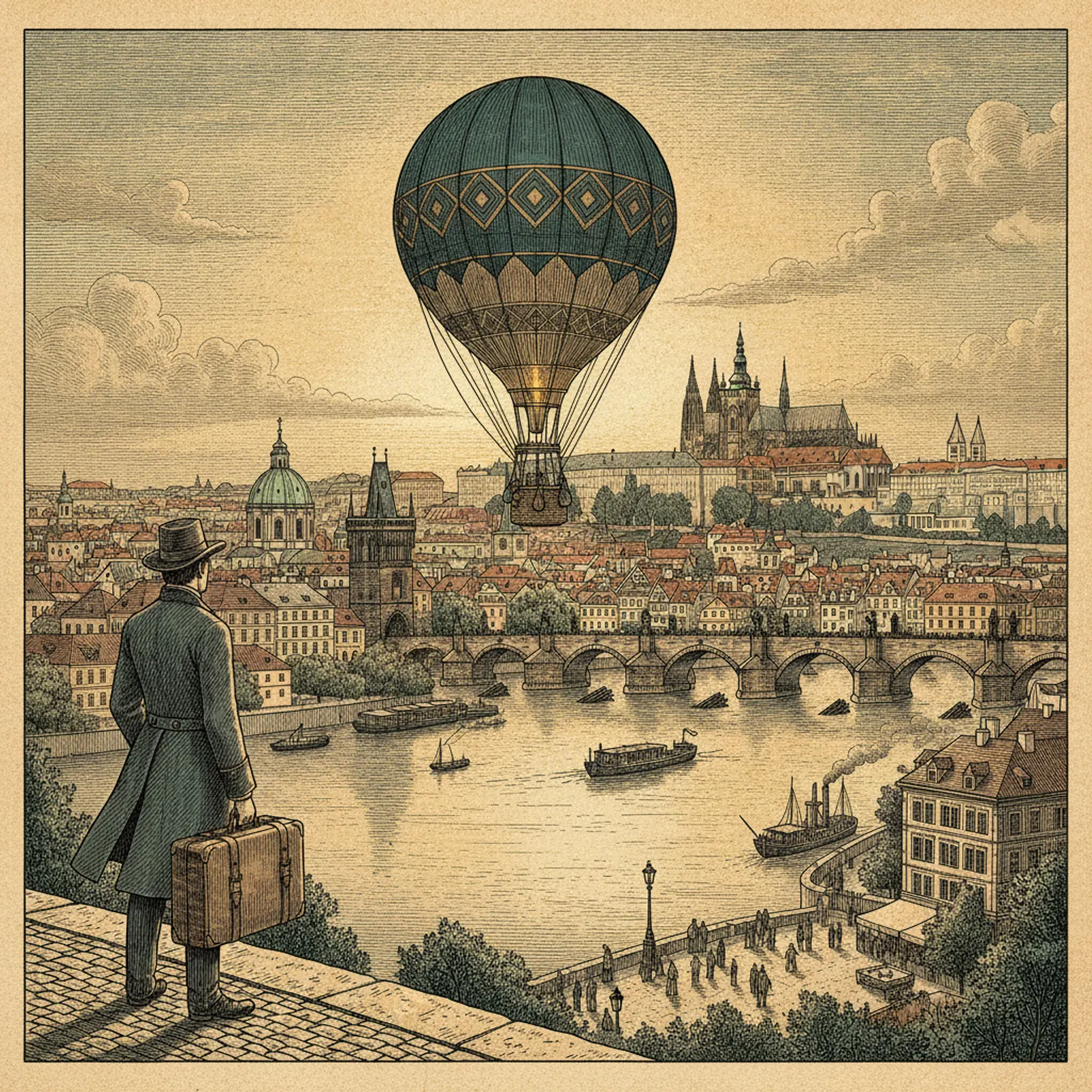
I crossed Charles Bridge at 5:30 AM on my first morning in Prague because I'd read online that it was empty before 6 AM. It was empty. There was fog on the Vltava and a single musician playing something mournful on a cello at the mid-point. I stood there in the cold and felt the medieval stones under my feet and thought: this city has no business being this cinematic. Then a pigeon landed on the cellist's bow. The moment survived it.
Two days in Prague means you are doing the Old Town and the Castle and you are doing them on foot and you will not be tired of it. Charles Bridge at dawn. Old Town Square before the Astronomical Clock crowd assembles. Prague Castle in the afternoon light. Dinner in Malá Strana with a Czech beer. This is already an excellent trip.
Cross Charles Bridge at dawn on Day 1. Set the alarm. Non-negotiable.
72 Hours: Prague with Breathing Room
Three days adds Vinohrady — the elegant neighbourhood east of the centre that Prague residents actually live in — plus a full afternoon in Žižkov, the working-class district that has the best bar scene in the city. Day 3 includes the National Museum and an evening concert in one of the baroque churches that double as concert halls every night of the week.
4 Days: The City + the Countryside
Four days adds Kutná Hora — a medieval silver-mining city 80km east, with a bone church (16,000 human skeletons arranged into decorative patterns inside a chapel) that is equal parts disturbing and extraordinary. Also: the full Jewish Quarter (Josefov) and a proper afternoon in the National Gallery.
7 Days: Prague as a Resident
A week in Prague is when the city stops being a destination and starts being a city. You find your pub. You walk to Letná Park and drink beer on the terrace watching the river. You discover that the tram system is one of the best in Europe and start using it like a local. You visit Ceský Krumlov, which is a castle town in Bohemia and one of the most beautiful places in Europe, full stop.
Estimated budget:€160–$260 est. (1 hotel night, Charles Bridge dawn, castle + dinner)
Estimated budget:€260–$420 est. (2 hotel nights, concerts, Žižkov bar crawl)
Estimated budget:€360–$580 est. (Kutná Hora day trip + 3 hotel nights)
Estimated budget:€650–$1,100 est. (full week, mix of Old Town + Vinohrady hotels)
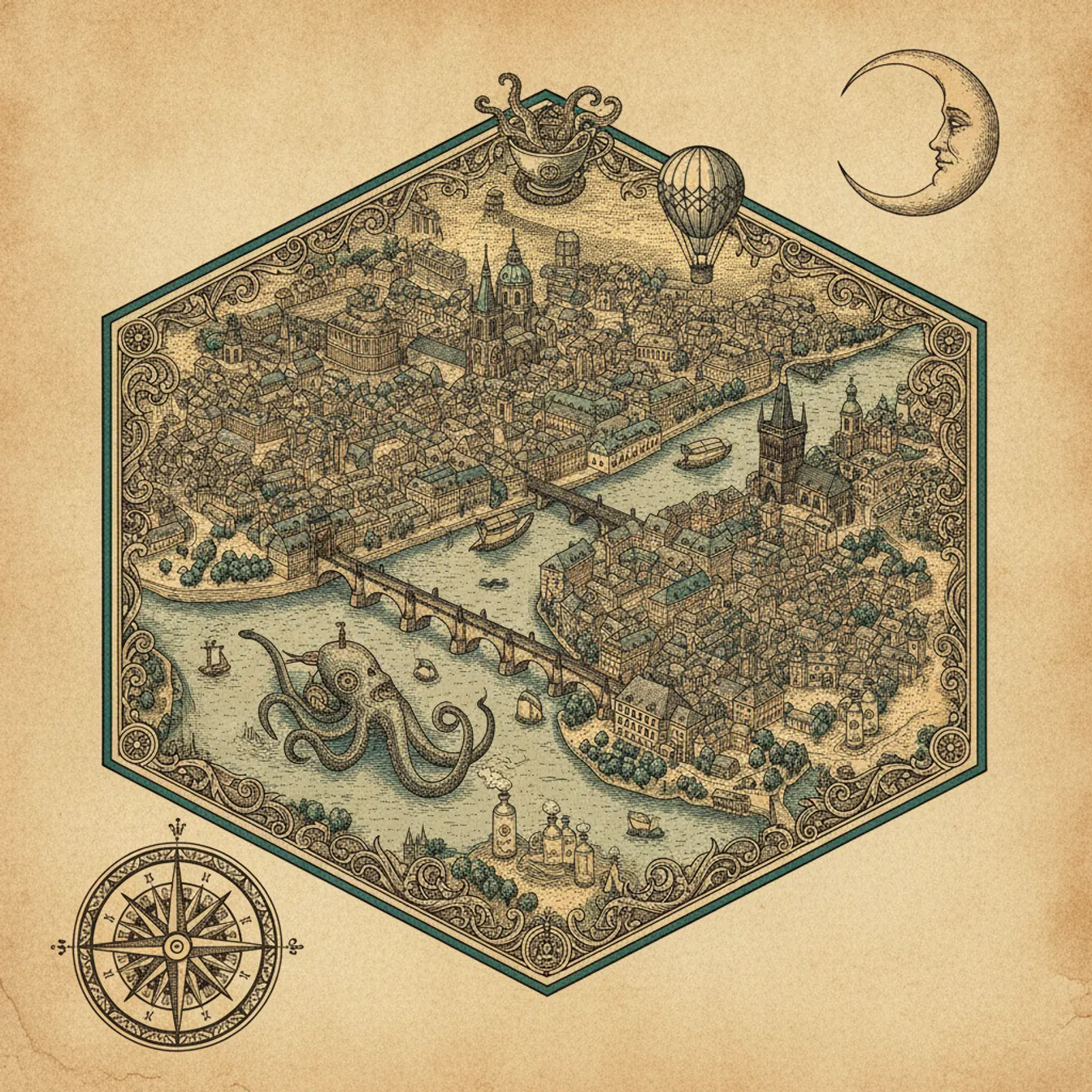
[ THE DISPATCH · FIELD MAP ]
A tilted, hand-drawn dispatch of Prague. Click a quarter to explode it open.
0 / 6 quarters explored
[ STARÉ MĚSTO (OLD TOWN) ]
Old stones, older stories.
Charles Bridge (dawn crossing)The 14th-century bridge, thirty Baroque saints, and nobody else. For about thirty minutes.
Old Town Square + Astronomical ClockThe medieval square that still functions as the city's living room.
[ HRADČANY (CASTLE DISTRICT) ]
Old stones, older stories.
Prague Castle + St Vitus CathedralThe largest ancient castle complex in the world. Size matters here.
Dinner in Malá Strana — Nerudova Street orCzech food, good beer, a cobblestone street. The evening you came for.
Kampa Island + David Cerny Crawling BabiesA mill island with a park, a contemporary art museum, and bronze babies without faces.
[ JOSEFOV (JEWISH QUARTER) ]
Old stones, older stories.
Náměstí Míru + Vinohrady morningThe square the guidebook doesn't mention. The locals are glad.
Žižkov Television Tower + David Cerny BabiThe ugliest/best building in Prague, with giant babies climbing it.
[ VINOHRADY ]
Stays up later than you do.
Žižkov pub lunch — U Sadu or Riegrovy SadyA hilltop park with a beer garden and a view of the tower. Czech beer costs less than water.
Evening concert in a baroque churchPrague has a concert in a beautiful church every single night. This is not an exaggeration.
[ KUTNÁ HORA ]
Old stones, older stories.
Sedlec Ossuary (the Bone Church)40,000–70,000 human skeletons arranged into decorative patterns. Context matters.
St Barbara's Cathedral, Kutná HoraA Gothic cathedral built by silver miners. Consecrated 600 years ago. Still standing.
Day 1
Charles Bridge at Dawn + Old Town + Castle
The classic Prague sequence, done in the right order
Set the alarm for 5 AM. Cross Charles Bridge before sunrise. Watch the Old Town come to life from the embankment. Then work systematically: Old Town Square by 9 AM, the Astronomical Clock, lunch in Malá Strana, Prague Castle in the afternoon. Dinner with a Czech beer.
Same sequence, but you have seven days, so cross the bridge again at noon if you want — it's a different thing when it's busy, not worse.
Charles Bridge (dawn crossing)
The 14th-century bridge, thirty Baroque saints, and nobody else. For about thirty minutes.
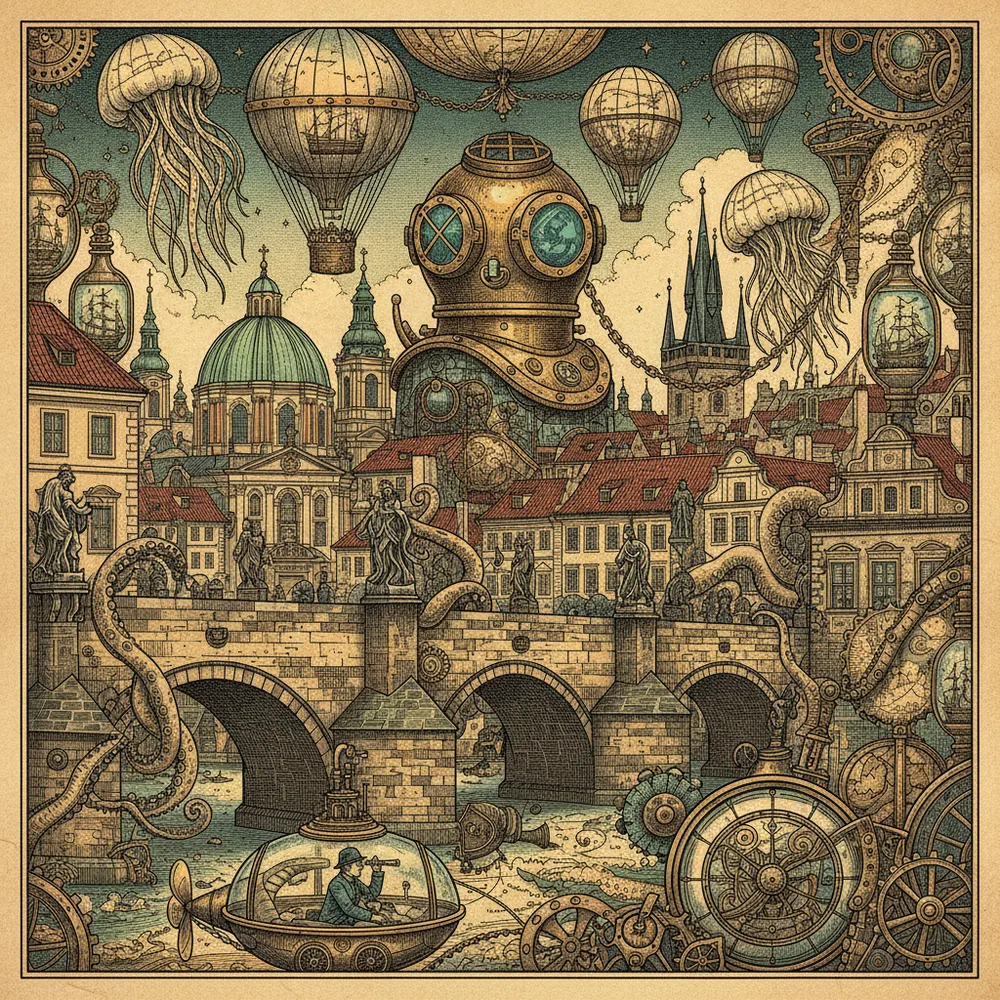
Charles Bridge connects the Old Town to Malá Strana across the Vltava and has 30 Baroque statues on its parapets, a Gothic tower at each end, and a view of Prague Castle rising on the hill above. Before 6 AM in summer, it is empty. After 8 AM, it has 200 tourists. The difference is staggering. Walk it at dawn, stop in the middle, look at the castle upstream and the Old Town bridge tower downstream, and try to understand that the bridge was finished in 1402 and has been here ever since.
Old Town Square + Astronomical Clock
The medieval square that still functions as the city's living room.
Old Town Square is one of the great public squares of Europe — Gothic church of Týn, Romanesque church of St Nicholas, a baroque plague column, and the Astronomical Clock on the Old Town Hall tower. The clock shows solar time, lunar phase, the position of the sun in the zodiac, and the time in Bohemian hours — and has been doing so since 1410. The mechanical procession of apostles runs on the hour and is considerably shorter than the crowd waiting for it expects.
Prague Castle + St Vitus Cathedral
The largest ancient castle complex in the world. Size matters here.
Prague Castle is the largest coherent castle complex in the world — 70,000 square metres of palaces, churches, gardens, and galleries. The anchor is St Vitus Cathedral, a Gothic masterpiece that took six centuries to complete (begun 1344, finished 1929). The interior has the tomb of Good King Wenceslas, the Mucha stained glass window in the third chapel, and the dimensions of a very serious cathedral. Buy the combined ticket for the Old Royal Palace and Golden Lane too.
Dinner in Malá Strana — Nerudova Street or below the castle
Czech food, good beer, a cobblestone street. The evening you came for.
Malá Strana (Little Quarter) is the baroque neighbourhood between the bridge and the castle — quieter than Old Town, better food, local pubs still intact. Hergetova Cihelna on the river has a view of the bridge and serves Czech classics alongside modern European food. For a local pub experience: U Malého Glena on Karmelitská has been the same pub for longer than most countries have existed.
Day 2
Malá Strana Deep + Kampa Island + Petřín Hill
Below the castle, above the river — the Prague tourists walk through
Last full day. Malá Strana properly — Wallenstein Garden, Kampa Island and the David Cerny crawling babies, and the Petřín Hill tower which is Prague's Eiffel Tower, in the sense that it was built the same year as the Eiffel Tower to show that Prague could. Afternoon in the Old Town.
Same day but more slowly. Add the Franz Kafka Museum on the Malá Strana embankment — polarising (either unsettling and perfect or annoying and pretentious, no middle ground), but you should form your own opinion.
Wallenstein Garden (baroque garden, free)
A seventeenth-century aristocrat's private garden. Free. Open. Peacocks.
The Wallenstein Garden behind the Wallenstein Palace (now the Czech Senate) is a formal baroque garden with geometric hedges, bronze sculptures (copies — the originals were looted by the Swedes in 1648), a grotto, a fake stalactite wall, and peacocks. It is free. It is open most of the year. It is one of the most beautiful gardens in Central Europe and nobody is there.
Kampa Island + David Cerny Crawling Babies
A mill island with a park, a contemporary art museum, and bronze babies without faces.
Kampa Island is separated from Malá Strana by the Čertovka millstream — a small island with a park, the Museum Kampa (Central European modern art, good collection), and three giant bronze babies by artist David Cerny crawling up the Žižkov TV tower. Two of the babies are also on the island itself, crawling toward the Vltava. They have no facial features. They are less alarming than the description suggests and more alarming in person.
Petřín Hill + Observation Tower
Prague's Eiffel Tower. Built in 1891. One-fifth the height. No less charming.
Petřín Hill rises 318 metres behind Malá Strana and has a funicular railway, a mirror maze (built for the 1891 Prague Jubilee Exhibition), a rose garden, and a 60-metre observation tower that on clear days gives you a view to the Krkonoše mountains north of Prague. The funicular runs from Újezd tram stop every 10 minutes. The tower is a spiral staircase of 299 steps and is entirely worth it.
Six synagogues, the oldest Jewish cemetery in Europe, and one of the city's most sobering hours.
The Jewish Quarter is a 15-minute walk from Old Town Square — six historic synagogues and the Old Jewish Cemetery, where 12,000 graves are stacked 12 layers deep because the ghetto had no space to expand. The Pinkas Synagogue has the names of 77,297 Bohemian and Moravian Jewish victims of the Holocaust written on its walls. The combined museum ticket covers all six synagogues.
Vinohrady + Žižkov + A Concert in a Baroque Church
The Prague that Prague residents live in
Vinohrady is a 19th-century residential neighbourhood east of Wenceslas Square — Art Nouveau apartment buildings, good cafes, the Náměstí Míru church, and a restaurant scene that's better than Old Town and half the price. Žižkov next door is different again: working-class, defiant, huge TV tower with the baby sculptures, and the best bars in Prague.
Same day but add a morning at the Mucha Museum in New Town — Alphonse Mucha's Art Nouveau posters are the defining aesthetic of the Czech fin-de-siècle and the museum is small, excellent, and completely unvisited.
Náměstí Míru + Vinohrady morning
The square the guidebook doesn't mention. The locals are glad.
Náměstí Míru is a large Art Nouveau square in Vinohrady anchored by the neo-Gothic Church of St Ludmila and ringed by 19th-century apartment buildings. The Saturday farmers market here is the best in Prague. The surrounding streets have the cafes and bakeries that Vinohrady residents use in place of a commute — sit down at whichever looks most lived-in.
Žižkov Television Tower + David Cerny Babies
The ugliest/best building in Prague, with giant babies climbing it.
The Žižkov TV Tower was built 1985–1992 and is either brutalist horror or brutalist joy depending on your position. Ten giant bronze babies without facial features (David Cerny again) crawl up its legs. The tower has an observation deck at 93 metres and a one-room hotel suite (One Room Hotel) that hangs off the side and books out months ahead. The view from the observation deck on a clear day covers the entire city.
Žižkov pub lunch — U Sadu or Riegrovy Sady beer garden
A hilltop park with a beer garden and a view of the tower. Czech beer costs less than water.
Riegrovy Sady park in Žižkov has a beer garden on its eastern slope with a view back to the TV tower, plastic chairs, and Pilsner Urquell on tap for about €2 a glass. It is full of local families, students, and dogs every afternoon that isn't raining. There is a screen showing football. Nobody is dressed up. This is the pub experience you came for.
Evening concert in a baroque church
Prague has a concert in a beautiful church every single night. This is not an exaggeration.
Prague runs chamber concerts in its historic churches every evening — St Vitus Cathedral, the Church of St Nicholas in Malá Strana (the best acoustics), the Spanish Synagogue in Josefov. The programmes are tourist-oriented (Mozart, Dvořák, Smetana) but the settings are extraordinary. Tickets run €15–€40 and can be booked day-of at the church entrance. Choose any church you can walk to.
The medieval silver mine city with a chapel decorated in human bones
Kutná Hora is 80km east of Prague — 1 hour by direct train from Hlavní nádraží (Central Station), running roughly hourly. The anchor is the Sedlec Ossuary (the Bone Church) — a small chapel near the station where the bones of 40,000–70,000 people have been arranged into decorative patterns: a chandelier, garlands, the Schwarzenberg coat of arms. It is deeply strange and not frightening. Then St Barbara's Cathedral in the town itself, which is as good as any Gothic cathedral in Western Europe.
Same plan, but add the Italian Court (the medieval mint where Bohemian silver coins were struck) and lunch at a proper Czech restaurant in the old town. Come back on the late train.
Sedlec Ossuary (the Bone Church)
40,000–70,000 human skeletons arranged into decorative patterns. Context matters.
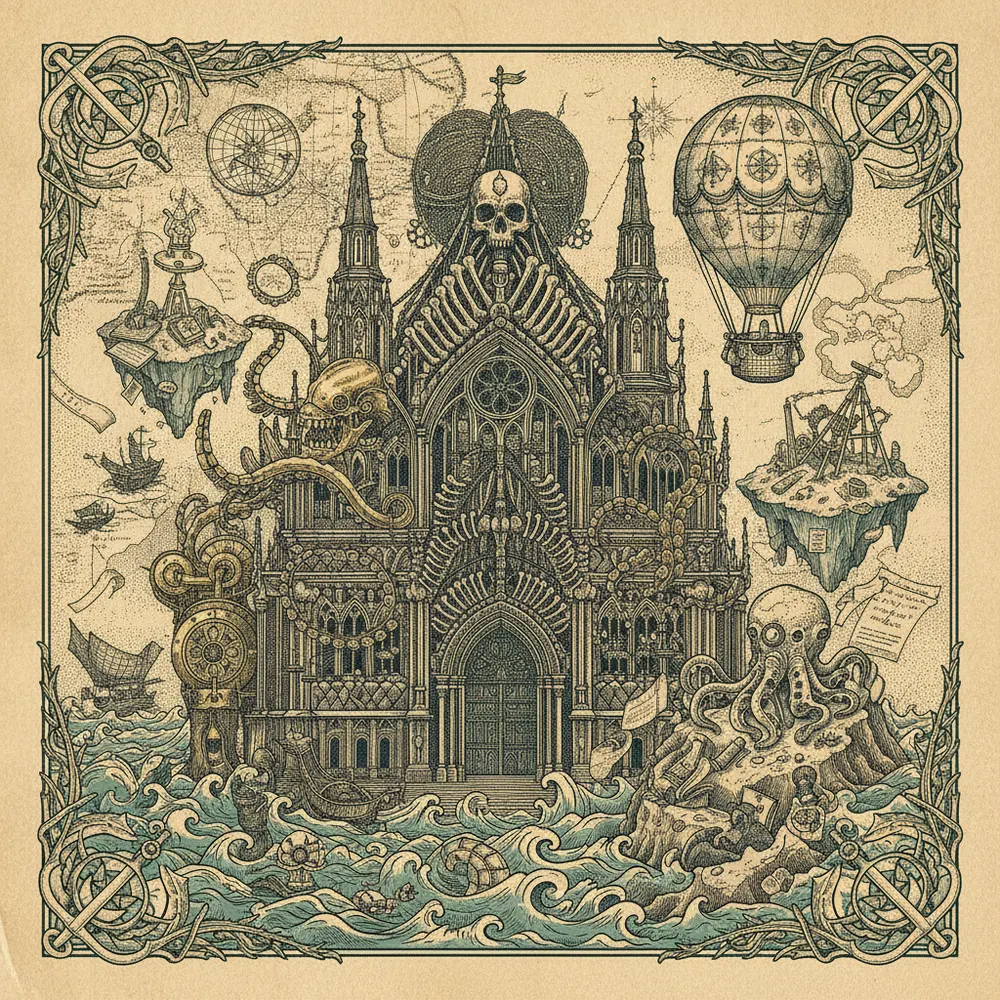
The Sedlec Ossuary is a small Roman Catholic chapel in the suburb of Sedlec, near Kutná Hora's train station. After a 14th-century plague and 15th-century Hussite Wars, the church's cemetery contained the remains of tens of thousands of people. In 1870 a woodcarver named František Rint was hired to arrange the bones. He arranged them into a chandelier (made entirely of bones), four baroque obelisks, two chalices, and the Schwarzenberg coat of arms. It is extraordinary and unsettling and the most unusual place on this itinerary.
A Gothic cathedral built by silver miners. Consecrated 600 years ago. Still standing.
St Barbara's was begun in 1388 by Kutná Hora's silver miners — the town was then one of the richest in Europe and chose to commemorate this with a Gothic cathedral that rivals Prague's St Vitus. The interior has late-Gothic frescoes of miners working in the silver shafts, a retractable net vault over the nave, and the dramatic flying buttresses on the exterior that are best seen from the terraced path below.
Kutná Hora old town + Italian Court
The medieval mint of Central Europe. The coins from here funded Bohemian kings.
The Italian Court (Vlašský dvůr) was the royal mint from the 13th to 18th centuries — the Prague groschen struck here was the hard currency of Central Europe for 200 years. The preserved mint machinery and royal apartments are the best-preserved medieval mint in the region. Lunch at any restaurant on the main square; the svíčková (beef sirloin in cream sauce) is the dish to order.
Day 5
Holešovice + DOX Gallery + Letná Park Beer
The former industrial district that became Prague's creative neighbourhood
Holešovice is north of the centre — a former industrial district on the Vltava that has become Prague's gallery and design neighbourhood. The DOX Centre for Contemporary Art is here. The Manifesto Market food trucks are here. The National Agricultural Museum has a brilliant aviation section. And Letná Park stretches along the riverside bluff with a beer garden at the end that has the best view of the city from the river.
DOX Centre for Contemporary Art
Prague's best contemporary art institution. In a converted factory. With a zeppelin.
DOX is housed in a former factory in Holešovice — multiple galleries across 4,000 square metres, with a 42-metre zeppelin-shaped reading room on the roof (the Gulliver Airship). The programming rotates but consistently shows Central European and international contemporary art at a higher level than the tourist circuit. The café downstairs is good. The bookshop is excellent.
Letná Park + Letná Beer Garden
The park above the river with the best view and the cheapest beer in the city centre.
Letná Park stretches along the bluff between Holešovice and Bubeneč, 150 metres above the Vltava. The Letná Beer Garden at the western tip has plastic chairs, Staropramen on draft for €2, and a panoramic view of the Vltava's sweep through the city — Old Town, New Town, Malá Strana, the castle on the right bank hill. It fills with locals on every afternoon that isn't raining. It fills with locals in light rain too.
Manifesto Market, Holešovice
Prague's best street food market in converted shipping containers.
Manifesto Market has two locations; the Holešovice one is the original and best. Containers converted into a food market with a rotating selection of vendors — Korean, Vietnamese, Czech-contemporary, burgers, cocktails, natural wine. It's popular with the 25–40 Holešovice resident crowd and the quality is consistently better than it needs to be.
History in the morning, the Czech Republic's main square at dusk, dinner away from tourists
A full morning in Josefov with all six synagogues and the Old Jewish Cemetery — this takes at least 3 hours and requires emotional reserves. The Pinkas Synagogue with its 77,297 inscribed names is the most significant. Afternoon at Wenceslas Square (the site of every major Czech historical event from 1918 to 1989). Evening dinner in Nusle — the unpretentious south neighbourhood that's ten minutes by tram.
Josefov Jewish Quarter (all six synagogues + cemetery)
One of the best-preserved historic Jewish districts in Europe. The names on the walls.
The combined Jewish Museum ticket covers the Old Jewish Cemetery, the Pinkas Synagogue (Holocaust memorial), the Maisel Synagogue (history of Bohemian Jews), the Spanish Synagogue (stunning Moorish interior), the Klaus Synagogue (Jewish holidays and lifecycle), and the Ceremonial Hall. Allow 3 hours. The Pinkas Synagogue is the most affecting — an entire interior covered in the handwritten names of 77,297 victims, arranged by family.
The boulevard where the Czech Republic was declared, again and again.
Wenceslas Square is a 750-metre boulevard (called a square) that has been the site of every major Czech political event: the declaration of Czechoslovakia in 1918, the Nazi occupation in 1939, the Soviet invasion in 1968 and Jan Palach's self-immolation, the Velvet Revolution in 1989. The National Museum at the top (currently partially restored after 2018 reconstruction) spans Czech natural history and history. The bronze horse statute of St Wenceslas on the square is the reference point for the whole city.
Dinner in Nusle or Vinohrady — the local standard
Ten minutes by tram from Old Town. Zero tourist menus.
Nusle and southern Vinohrady are where Prague's restaurant scene is currently interesting. Eska (Czech-Scandinavian, sourdough, fermentation, new Prague cooking) is worth the reservation. The many small wine bars on Blanická Street in Vinohrady serve natural wine from Moravian producers alongside charcuterie boards for about €15 a person. The local beer pub option: U Medvídků in New Town has been the same pub since 1466, which is extraordinary.
Day 7
Český Krumlov Day Trip
The castle town in Bohemia that makes Prague feel like a recent development
Český Krumlov is 3 hours south of Prague by bus or car — a UNESCO World Heritage medieval town with a castle that dwarfs the town below it, a baroque theatre with original 18th-century stage machinery, a river that loops around the town like a moat, and a population of 13,000 people who live a genuinely medieval townscape. Book the castle tour. Float the river on a raft if the season allows. Come back to Prague in the evening.
Český Krumlov Castle (castle + baroque theatre)
The second-largest castle complex in Bohemia. The baroque theatre is uniquely extraordinary.
Český Krumlov Castle rises above the town on a rocky promontory above a horseshoe bend in the Vltava. The castle complex — including towers, courtyards, the Bear Moat, and the Baroque Theatre — stretches for 300 metres. The Baroque Theatre (Tour II) is one of the most preserved 18th-century court theatres in Europe, with original stage machinery, backdrops, and costumes. It is rarely open and tours book out in advance. Try to get on one.
A medieval town where the river wraps around the houses. You float through it on a raft.
The old town of Český Krumlov fits inside a river meander — a compact medieval centre of painted facades, cobblestone squares, and a Church of St Vitus (a smaller, older, more intimate version of Prague's). In summer you can rent a raft or rubber dinghy and float the Vltava loop around the castle — about 2 hours, completely peaceful. Lunch at any restaurant in the old town; the svíčková in South Bohemia is made with cream from local cattle, which makes a noticeable difference.
Eggenberg Brewery (castle brewery, free to wander)
The castle has its own brewery. It has been brewing since 1560.
The Eggenberg Brewery has operated continuously in the Český Krumlov Castle complex since 1560. The brewery restaurant at the castle serves Eggenberg beer (smooth, dark, locally loved) with Czech plates — pork knee, goulash, roast duck. The beer garden overlooks the castle ditch. Take the bus back to Prague from the town square at 5 PM.
Prague is one of those cities that seems designed specifically to make you question why you live where you live. The medieval stones, the baroque curves, the Gothic towers, the Vltava winding through all of it — and you can rent a decent apartment in Vinohrady for less than the equivalent in any Western European capital. This is either the city’s best-kept secret or the one the rest of Europe has failed to tell you about.
This itinerary is built around one structural truth: Prague’s Old Town is worth one full day — maybe two if you’re slow — and then it’s time to go elsewhere. The visitors who stay only in Old Town miss Vinohrady, where the city actually lives. They miss Holešovice, where it creates things. They miss Kutná Hora, which is extraordinary. They also, critically, miss crossing Charles Bridge at dawn.
The 2/3/4/7-day versions are genuinely different trips. Two days is the medieval icons and Czech beer. Seven days is when Prague becomes familiar, which is when it becomes magnificent.
Use the filter above to see which days apply to your trip.
This article contains affiliate links marked with rel="sponsored". We may earn a commission at no extra cost to you.