
[ GUIDE · THE DISPATCH ]
Where to Eat in Bilbao and San Sebastian: The Pintxos Crawl, Done Right
Pintxos are not tapas, you don't sit down, and you definitely don't overpay. Here's where to eat pintxos in San Sebastian and Bilbao the way Basques do it — including the txikiteo order locals follow.
If you want the whole thing mapped out, see the perfect 3-day San Sebastian itinerary.
I’ll start with the thing that’ll save you the most money and embarrassment: pintxos are not tapas. Don’t call them tapas in the Basque Country — you’ll get a look. And don’t do what every confused first-timer does, which is walk into one pretty bar, sit at a table, and order eight pintxos like a tasting menu. That’s not how this works. If you want to know where to eat pintxos in San Sebastian (or Bilbao, which is unfairly overlooked), the first lesson isn’t a bar name. It’s the rhythm.
I learned mine from a retired fisherman in a Gros bar who watched me pile a plate, sighed, and physically walked me to the next bar. Best food lesson of my life. Let me pass it on.
The txikiteo: how Basques actually do it
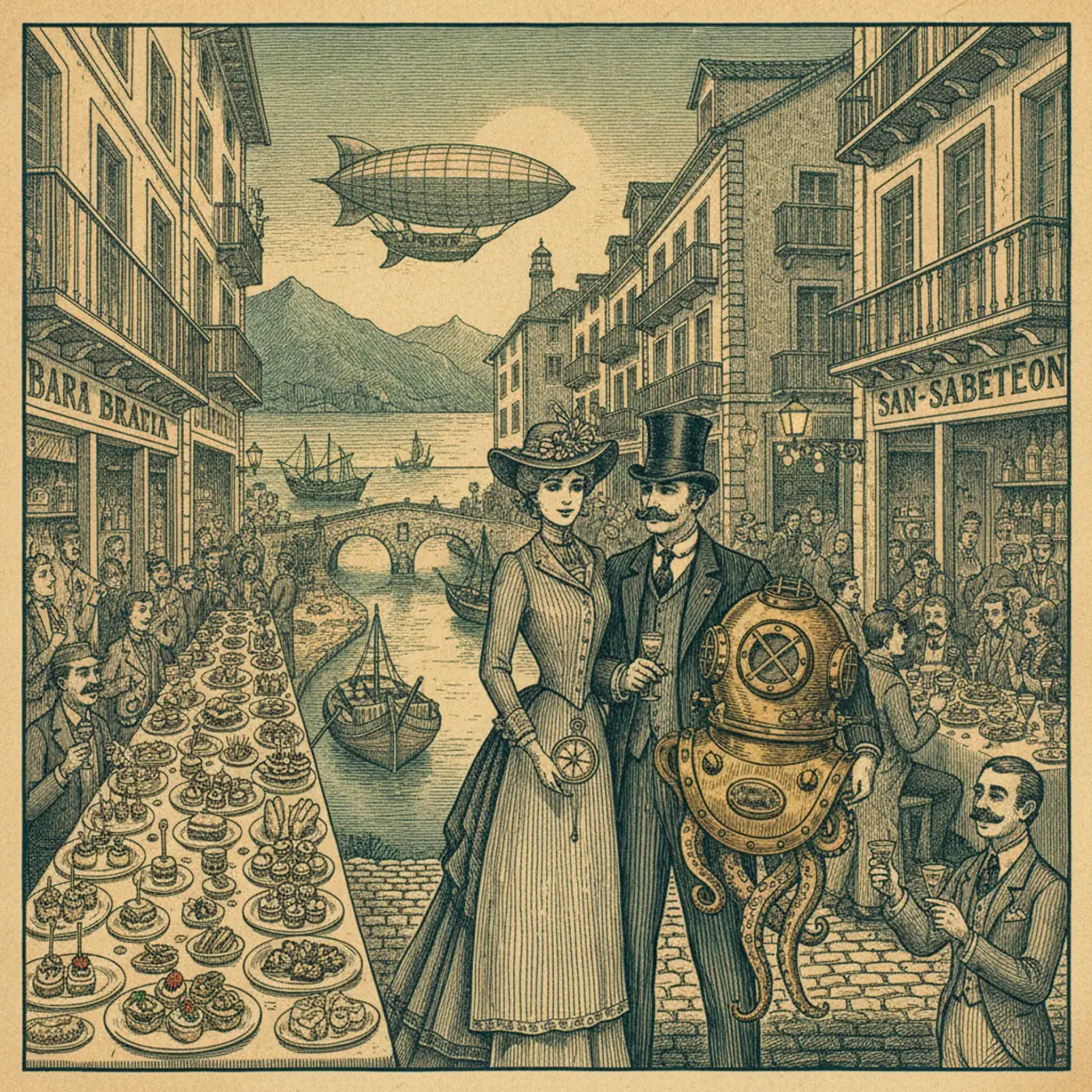
The crawl has a name — txikiteo (roughly “chee-kee-TAY-oh”), from txikito, a small glass of wine. The whole philosophy is movement. You go to a bar, you order ONE pintxo and ONE small drink — a txikito of wine, or a zurito (a tiny beer), or a glass of txakoli (the local fizzy white, poured from a height). You stand, you eat, you drink, you pay, you leave. Then you do it again at the next bar. And the next.
The genius of this: each bar has one or two things it’s famous for, so by crawling you eat the best dish at six bars instead of six mediocre dishes at one. You stay (relatively) sober because the drinks are tiny. And it stays cheap — most pintxos run €2–4, drinks €1.50–2.50. A proper night of this might cost you €25 and you’ll have eaten like a king.
The two pintxo types: the ones laid out on the bar (cold, point and grab) and the ones you order hot from a little menu (cooked to order, usually the better ones). Rookie move is only eating the displayed ones. Ask what’s hot from the kitchen — “¿qué hay caliente?” — and order that.
San Sebastian: skip the obvious, cross the river
The Parte Vieja (Old Town) is where everyone crawls and it IS spectacular — but it’s also packed shoulder-to-shoulder with tourists in summer, and prices have crept up. The famous ones are famous for a reason: Bar Néstor for the once-a-day tomato salad and the txuleta (you have to put your name down hours ahead for the steak — go at 1 p.m. to list yourself for the evening), Gandarias for the solomillo, La Cuchara de San Telmo for the hot, cooked-to-order pintxos like the braised veal cheek in red wine, which is genuinely one of the best single bites in Spain.
But here’s the local secret: cross the river to the Gros neighborhood. Same quality, half the tourists, more Basques. Bar Bergara and La Hueca around the Gros plazas do beautiful pintxos to a crowd that actually lives there. Start your night in Gros, end in the Old Town — that way you eat the local version first and hit the famous bars before they’re rammed.
Bilbao: the underrated one
Everyone fixates on San Sebastian and forgets Bilbao, which is a mistake. It’s bigger, grittier, less precious, and the pintxos are arguably better value. The crawl here happens in the Casco Viejo (old town) and around Plaza Nueva — the grand arcaded square where a dozen bars spill out under the columns. Sunday morning there’s a market in the square and the bars are full by noon; it’s one of my favourite eating mornings anywhere.
Gure Toki on Plaza Nueva does inventive, modern pintxos. Café Bar Bilbao is the classic. And the Ledesma street a short walk away is the local after-work crawl — less tourist, more workers loosening their ties over a zurito. Bilbao is where you go to do the txikiteo without elbowing other foreigners, and the Guggenheim is right there to walk off lunch.
The rookie mistakes to skip
A few hard-won rules. Don’t crawl on an empty wallet’s worth of one-bar commitment — spread it. Don’t over-order at any single stop; you’ll regret the bar you didn’t get to. Don’t ignore txakoli — it’s the perfect crisp counter to all that fried, rich food, and watching the bartender pour it from arm’s length into a wide glass is half the fun. And don’t eat dinner first; the pintxos ARE dinner, you just eat them across six rooms.
Timing matters too. The crawl peaks around 1–2:30 p.m. for lunch and 8–10 p.m. for the evening. Show up at 7 and it’s dead; show up at 9 and it’s alive. The Basques eat late and so should you.
One more thing. The best pintxo I ever had was an off-menu thing a bartender in Gros made me because I’d asked, genuinely, what HE would eat. So ask that. “¿Qué tomas tú?” Sometimes the answer isn’t on the counter at all.
Stand up, order one, move on. Six bars beats one every single time — that’s the whole secret.
This article contains affiliate links marked rel="sponsored". We may earn a commission at no extra cost to you.