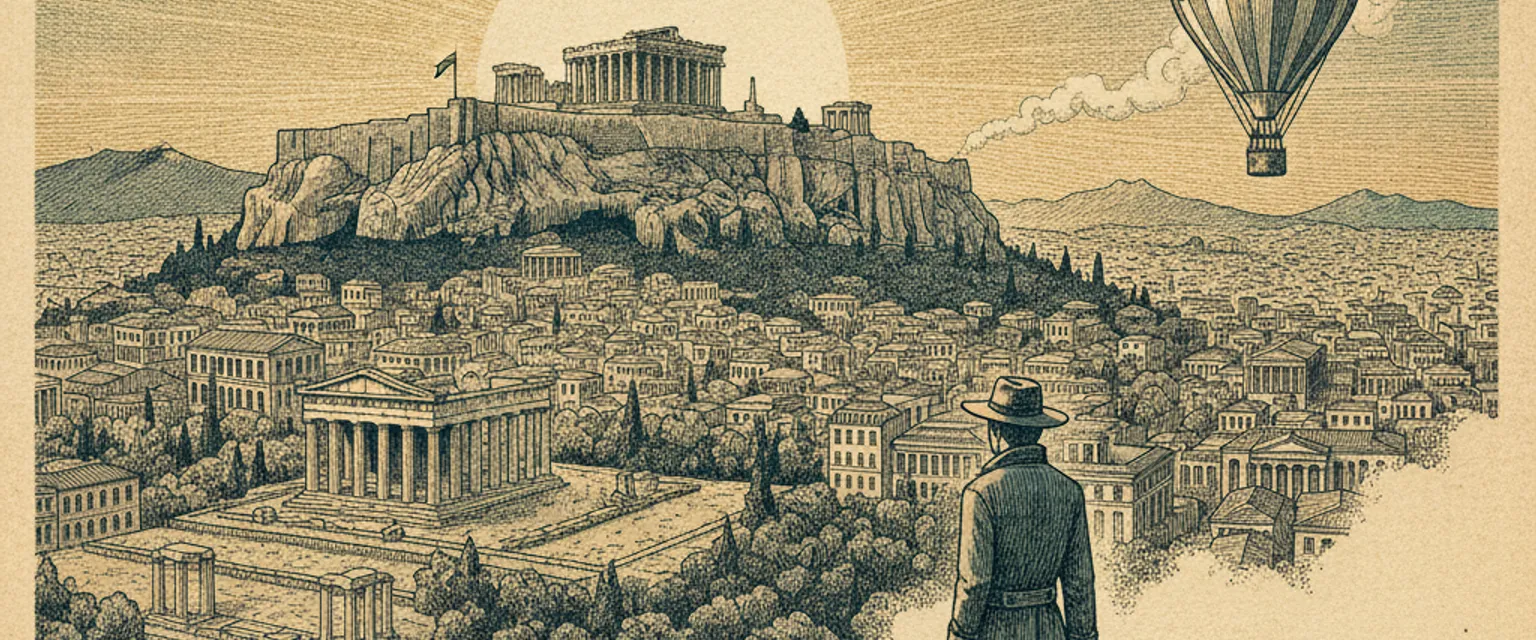
I climbed up to the Acropolis at opening time on my first morning in Athens, slightly hungover, fully expecting to be underwhelmed by something I'd seen on ten thousand mugs. Then I rounded the Propylaea and the Parthenon just stood there, 2,500 years old and absurdly enormous, the marble glowing pink in the early sun, and I actually stopped breathing for a second. Athens sneaks up on you like that. It looks scruffy and chaotic at street level, and then it casually produces the foundations of Western civilisation. Give it a chance and it won't let you go.
The Perfect Athens Itinerary (2, 3, 4 & 7 Days)
📅 Planning your dates? See the best time to visit Athens — season-by-season weather, crowds, and prices.
Two days nails the essentials: the Acropolis at opening, the superb Acropolis Museum, the ancient Agora, and a night out in Plaka and Monastiraki. You'll see why Athens stopped being a one-day stopover years ago. It's enough to fall for the city's mix of ruins and rough charm.
Do this one thing: be at the Acropolis gate when it opens, before the heat and the cruise crowds.
Ancient sites plus the modern city
A third day adds the National Archaeological Museum (world-class) and the buzzing neighbourhoods of Exarcheia and Koukaki, where Athens actually lives. You move beyond the ruins into a real, caffeinated, opinionated city.
Athens plus the sea
Four days lets you escape to the coast: Cape Sounion's temple at sunset or the Athens Riviera beaches. You balance marble and saltwater, and stop feeling like you're only ticking off antiquity. My recommended length for a first visit.
Athens as a base for Attica and beyond
A week turns Athens into a launchpad: a day trip to ancient Delphi, an island hop to Hydra or Aegina, and time to dig into the food, the markets, and the hill-top sunsets. Seven days is for travellers who want Greece, not just its capital.
Estimated budget:$300-$600
Estimated budget:$450-$900
Estimated budget:$600-$1200
Estimated budget:$1100-$2400
Day 1
The Acropolis and Ancient Athens
The big one, done early and done right
The Acropolis
The Parthenon and the symbolic heart of the ancient world.
Buy a timed ticket online and be at the gate for opening. By mid-morning the heat is brutal and the crowds suffocating, but at 8am you can almost have the Parthenon, Erechtheion, and Temple of Athena Nike to yourself. Wear grippy shoes — the marble path is famously slippery.
Acropolis Museum
A glass masterpiece built over the ruins it explains.
One of the best museums in Europe. The top floor recreates the Parthenon frieze at full scale, aligned with the real thing visible through the glass. The cafe terrace has a knockout Acropolis view and a good, cheap lunch. Go straight after the rock while it's all fresh.
Ancient Agora
Where Socrates argued and democracy got its workout.
The marketplace and civic centre of classical Athens, with the beautifully preserved Temple of Hephaestus crowning it. Go late afternoon when it cools and empties. It's included in the combined Acropolis ticket, so there's no excuse to skip it.
Day 2
Plaka, Monastiraki, and the Night
Wander the old town and eat extremely well
Plaka
The old town's tangle of neoclassical lanes under the Acropolis.
Athens's oldest neighbourhood is touristy but genuinely lovely in the quiet upper lanes of Anafiotika, a pocket of Cycladic-island whitewash clinging to the Acropolis slope. Wander without a goal. Skip the tourist-trap tavernas on the main drags and climb higher.
Monastiraki Flea Market
A chaotic sprawl of antiques, junk, and excellent souvlaki.
The flea market square is the city's noisy crossroads. Grab a souvlaki at Kostas, a tiny institution that's been grilling since 1950, and browse the antique and vintage shops. The view of the Acropolis from Monastiraki square is one of the best free ones in town.
A Plaka Rooftop Bar
Cold drink, warm night, floodlit Parthenon on the skyline.
Athens does rooftop bars better than almost anywhere because of what's on the skyline. A Couple of Drinks or the Galaxy Bar at the Hilton put the lit Acropolis right in front of you. Book ahead in summer. This is the city at its most seductive.
Day 3
The Modern City
World-class antiquities and the neighbourhoods locals love
National Archaeological Museum
The greatest collection of ancient Greek art on earth.
Often skipped because it's a 20-minute walk north of the centre, which is a mistake — this is the museum. The Mask of Agamemnon, the Antikythera mechanism, the bronze of Poseidon (or Zeus). Give it half a day. It puts everything you saw on the Acropolis into context.
Koukaki & Exarcheia
Athens's most caffeinated, creative, real-life quarters.
Koukaki, below the Acropolis, is full of stylish cafes and small tavernas. Exarcheia is the gritty, political, street-art heart of the city, with the best independent bookshops and bars. Together they show you the Athens that isn't 2,500 years old, and it's terrific.
Day 4
Temple by the Sea
The Athens Riviera and a sunset at Sounion
Athens Riviera
City beaches and seafood along the Saronic coast.
Hop the tram or drive south to the coast for an afternoon swim. Vouliagmeni and the organised beaches around Glyfada are easy; the freshwater Lake Vouliagmeni is a warm, mineral-rich novelty. Lunch on grilled fish by the water before the evening drive on.
Cape Sounion & Temple of Poseidon
A marble temple on a cliff edge at sunset, an hour from town.
The 5th-century-BC Temple of Poseidon sits on a headland over the Aegean, and watching the sun drop into the sea behind those columns is one of Greece's great free spectacles. Lord Byron carved his name here. Take an organised tour or drive the coast road for the timing.
Day 5
Delphi Day Trip
The navel of the ancient world, up in the mountains
Ancient Delphi
Where Greeks came to consult the Oracle, on the slopes of Parnassus.
Two and a half hours from Athens, Delphi is worth the drive: the Temple of Apollo, the theatre, and the stadium climb up a mountainside with eagle's-eye valley views. The site museum holds the bronze Charioteer, one of antiquity's finest statues. A guided day tour handles the logistics.
Arachova
A stone mountain village for lunch on the way back.
Just above Delphi, this handsome ski-and-shepherd town clings to the Parnassus slopes. Stop for a long lunch of mountain food — formaela cheese grilled in olive oil, hilopites pasta — at a taverna with valley views. The perfect counterweight to the ruins.
Day 6
Island Escape
A Saronic island and the smell of the sea
Hydra
A car-free island of stone mansions and donkey-only lanes.
Ninety minutes by fast ferry from Piraeus, Hydra bans cars entirely — transport is by donkey and water taxi. The horseshoe harbour, the cliff-diving spots, and the artists' history (Leonard Cohen lived here) make it the most characterful day-trip island. Swim off the rocks at Spilia.
Mikrolimano, Piraeus
A pretty harbour of fish tavernas back on the mainland.
On the way back from the islands, eat where Athenians eat seafood: the yacht-lined Mikrolimano marina in Piraeus. Order whatever was caught that day, grilled simply, with a carafe of white. A salt-air dinner to cap an island day.
Day 7
Hills and Farewell
One last climb, one last view, one last meal
Lycabettus Hill
The highest point in Athens, with the whole city at your feet.
Walk or take the funicular up the city's tallest hill for a 360-degree panorama: the Acropolis below you, the sea beyond, the mountains behind. Go in the cool of the morning. The little chapel of St George at the top is a serene last stop before you head down.
Varvakios Central Market
The roaring, fragrant heart of how Athens eats.
The central meat and fish market is loud, messy, and completely alive — vendors shouting, cooks slinging tripe soup at dawn-shift workers. Even if you don't buy, the surrounding spice and olive shops are a feast for the senses. A vivid, unvarnished goodbye to the real city.
For years people treated Athens as a one-night airport stop on the way to the islands, and for years they were wrong. The city has quietly become one of the most rewarding in Europe: world-historic ruins, sure, but also a brilliant food scene, the best rooftop bars on the continent, and neighbourhoods buzzing with art and argument. It’s scruffy in places and gloriously so. You come for the marble and you stay for the souvlaki.
How to use this plan
The non-negotiable rule for every version of this itinerary: do the Acropolis first thing in the morning. The combination of summer heat and cruise-ship crowds makes a mid-day visit genuinely miserable, and the same site at opening is sublime. Two days covers the ancient core and the old-town nights. Three adds the magnificent National Archaeological Museum and the neighbourhoods where Athens actually lives. Four — the length I’d suggest most — gets you to the sea, with a temple-at-sunset finale at Cape Sounion.
The 7-day plan uses Athens as a base for Attica and beyond: a mountain day trip to ancient Delphi, a car-free island escape to Hydra, and enough time to climb the city’s hills at golden hour and eat your way through its markets. With a week you get a proper slice of Greece, not just its capital.
A few honest notes
Athens is hot — punishingly so from June through August. Front-load outdoor sites to the morning and retreat to museums or rooftops in the afternoon. The metro is cheap, clean, and the smart way to move; taxis are fine but insist on the meter. And don’t rush the food: a long, late dinner over many small plates is the local rhythm, and leaning into it is half the pleasure of the place.
This article contains affiliate links marked with rel="sponsored". We may earn a commission at no extra cost to you.