
[ GUIDE · THE DISPATCH ]
Cartagena's Walled City vs Getsemaní: Which Neighborhood Actually Fits You
Everyone defaults to the Walled City. Here's the honest breakdown of what you actually get in each neighborhood — and which one fits your budget, vibe, and safety tolerance.
Short on time? The plan your Cartagena trip day by day turns all of this into a route you can actually walk.
Let me tell you what the travel blogs don’t. When I landed in Cartagena for the first time, I did what everyone does: I booked a boutique hotel inside the Walled City, paid about $140 a night for a room with exposed brick and a ceiling fan that rattled like a jalopy, and spent my first evening eating a $22 ceviche thirty meters from a guy who’d have sold me the same portion for $5 if I’d walked three blocks outside the walls.
By night two I was eating on plastic chairs in Getsemaní, paying $8 for a bandeja paisa, watching kids play football under string lights. By night three I understood the actual choice you’re making here.
This isn’t a “both neighborhoods are magical!” piece. It’s the breakdown I wish I’d had before booking.

The Walled City: What You’re Actually Paying For
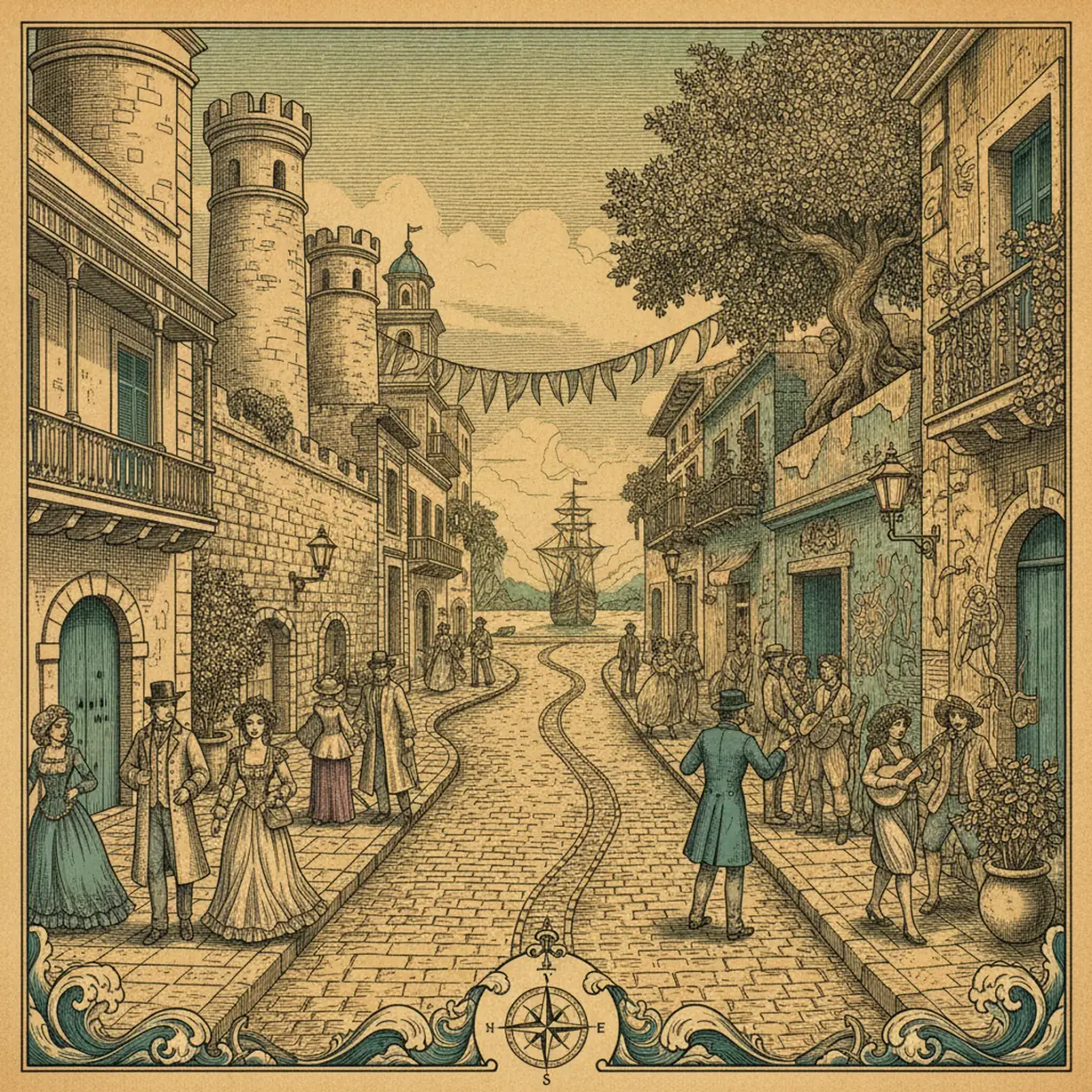
The Ciudad Amurallada is genuinely one of the most beautiful urban spaces in the Western Hemisphere. I don’t want to undercut that. The Spanish colonial architecture — pastel facades, wrought-iron balconies, bougainvillea spilling over stone — is not overstated. Walking through the Puerta del Reloj at dusk while the Caribbean breeze comes in off the bay is the kind of thing that justifies a flight to Colombia.
But you’re paying for it. Heavily.
Accommodation: Mid-range boutique hotels inside the walls run $80–$200/night. I’ve seen rooms I’d call “adequate” going for $120. If you find something under $70 that isn’t a converted closet, book it immediately and tell no one.
Food: The closer you are to Plaza de Bolívar or the Clock Tower, the more you’re paying for location, not quality. A sit-down lunch near the cathedral can run $15–$25 per person without drinks. The corrientazo (set lunch) exists inside the walls but you have to hunt for it — look toward the quieter residential pocket near Calle del Cuartel.
Noise: The party scene is loud, especially on weekends. Chiva buses (those open-air party trucks) circle the walls blasting vallenato until 2 a.m. Romantic, the first time. Less so at 1 a.m. on a Tuesday when you have an early tour.
Who the Walled City is actually for:
- Couples on a splurge trip who want the fantasy, full stop
- Travelers who want to be walking distance from the major sights without any logistical thinking
- Anyone who’d feel uncomfortable navigating an unfamiliar city at night
If you’re building a multi-day plan, my full Cartagena itinerary covers exactly which sights are genuinely worth your time versus which ones you walk past and move on.

Getsemaní: The Real Neighborhood
Getsemaní sits just outside the walls, a five-minute walk from the main entrance. Ten years ago, the guidebooks flagged it with cautious language. Today it’s still gritty in places, but it’s also one of the most alive neighborhoods I’ve encountered in Latin America.
The street murals are extraordinary — large-scale, politically charged, technically brilliant. The parche (hangout) culture on Plaza de la Trinidad is real: locals actually gather there in the evenings, not just tourists photographing each other. Fruit carts, arepas, patacones, cold Club Colombia — this is where the food makes sense pricewise.
Accommodation: Guesthouses and small hostels run $25–$60 for a private room. There are some genuinely charming spots — look for places on or just off Calle de la Sierpe and Calle 25. The price difference from the Walled City is not marginal. It’s meaningful.
Food: A full lunch at a neighborhood comedor costs $4–$7. Street food is excellent and cheap. Café Demente (if it’s still running when you visit) is worth a stop for coffee. Several good cocktail bars have opened over the past few years, some of them very good, none of them charging Walled City prices.
The safety question, answered honestly: Yes, you should stay aware in Getsemaní. Pickpocketing happens, mostly in distracted-tourist situations — don’t walk while staring at your phone, don’t flash expensive gear, and after midnight stick to the lit streets around the plaza rather than the quieter side streets. That’s it. I’ve walked Getsemaní at night without incident. So have most travelers who exercise the same basic awareness they’d use in any city. The neighborhood is not the warning zone it once was.
Who Getsemaní is actually for:
- Solo travelers and budget travelers who want to stretch their dollars without sacrificing quality
- Anyone who prefers eating where locals eat over eating where tourists expect to eat
- Photographers — the murals and neighborhood light are spectacular
- Travelers who’ve done a city or two in Latin America and aren’t navigating the unfamiliarity for the first time

The Practical Comparison Nobody Puts in a Table
| Walled City | Getsemaní | |
|---|---|---|
| Budget (hotel/night) | $80–$200 | $25–$60 |
| Lunch cost | $12–$25 | $4–$10 |
| Nighttime noise | High (party buses, bars) | Moderate (plaza, music) |
| Walk to main sights | 0–5 min | 5–10 min |
| Local food scene | Limited, expensive | Strong, affordable |
| Evening vibe | Polished, touristy | Neighborhood, lived-in |
The “safety tolerance” framing that circulates online often codes a simple preference as a risk assessment. Getsemaní requires the same street awareness as any urban neighborhood in a tourist city. If you’ve traveled in Mexico City, Bogotá’s Chapinero, or Lisbon’s Intendente, you know the calibration.

The Accommodation Play I Actually Recommend
Book one or two nights in the Walled City at the start of your trip if budget allows — it’s a good way to orient yourself and wake up inside the fantasy. Then move to Getsemaní for the remainder. You get the best of both at a price that doesn’t define the whole trip.
If budget is your primary constraint from the jump, skip the Walled City entirely and don’t feel guilty about it. You can walk there in ten minutes, see everything worth seeing, and walk back. You don’t have to sleep there to experience it.
This same logic — the one where location premium is real but the overnight price is optional — is something I keep coming back to in how I book. If you want to read more about that mindset, my take on booking the ugly hotel explains it better than I can summarize here.

A Note on Airbnb in Both Neighborhoods
Airbnb has a solid presence in Cartagena, particularly in the Walled City where whole apartments in colonial buildings can feel incredible — until the fees hit at checkout. A $65/night listing becomes $110 with cleaning and guest fees, which often blows past a comparable guesthouse in Getsemaní. I’ve written about how I still make Airbnb work when the fees are brutal, but in Cartagena specifically, the guesthouse/boutique hotel market is strong enough that Airbnb rarely wins on value.
How Cartagena Fits the Bigger Picture
One more thing worth saying: Cartagena is a shoulder-season gem. The high season (December–March) brings heat, crowds, and prices that push the Walled City even further out of reach for budget travelers. If you can come in April–June or September–November, you’ll find better rates, fewer tour groups at the sights, and a city that breathes a little easier. (Speaking of shoulder-season logic, this piece on European cities where off-peak beats peak applies the same thinking to a totally different context, if that framework interests you.)
Cartagena rewards the traveler who resists the default. The Walled City is beautiful and it’s also definitely the path of least resistance. Getsemaní takes about fifteen minutes to get comfortable with, and then it’s where you’ll actually want to be.
For the full city breakdown with day-by-day logistics, see the Cartagena travel hub — it covers day trips to the Rosario Islands, the Castillo San Felipe timing question, and where to eat across both neighborhoods.
Bottom line: if money is a genuine concern, stay in Getsemaní without apology — it’s the better neighborhood anyway.
This article contains affiliate links marked rel="sponsored". We may earn a commission at no extra cost to you.