
[ GUIDE · THE DISPATCH ]
Where to Eat in Seville: Tapas Hours, Tabernas, and Why You're Eating Too Early
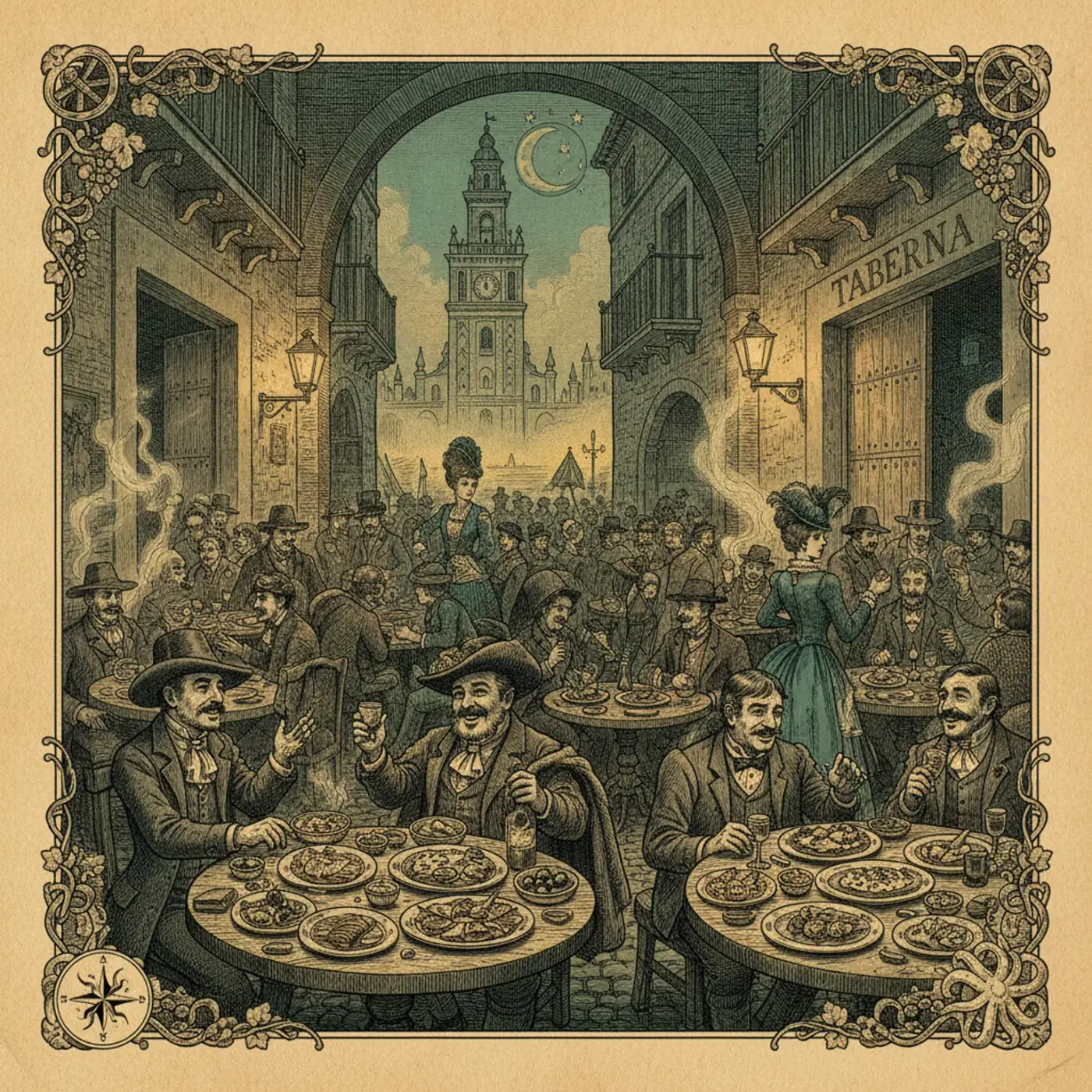
Figuring out where to eat in Seville is easy. The hard part is convincing your stomach that 9pm is, in fact, dinner — and that the empty taberna at 7 isn't a sign, it's just the rules.
Planning the trip? Start with the perfect 3-day Seville itinerary — it lays out exactly where to go, and when.
The first thing you need to know about where to eat in Seville is that you are, almost certainly, eating too early. I learned this the hard way my first night, when I walked into a place at 7:30, sat at a table like a sensible northern European, and got a look from the waiter that I can only describe as gentle, pitying confusion. The kitchen wasn’t even warm yet. He brought me an olive. One olive. As if to say: settle down, friend, we have hours.
So let’s fix your clock first. Then we’ll talk food.

Why your timing is the whole game
Sevillanos don’t really “go to dinner.” They go out, and food happens along the way. Tapas here are a verb. You stand at the bar, you order two or three little things, you have a beer or a glass of cold fino, and then — this is the part people miss — you leave. You go somewhere else. The bill at each stop is tiny, like 6 to 9 euros, and the whole night is a chain of these.
Lunch is the big meal, by the way. If you want one proper sit-down feed a day without it costing much, do it at lunch and order the menú del día — a set two-or-three-course thing with bread and a drink, usually 12 to 15 euros, and it’s how locals actually eat midweek. Most kitchens fire up around 1:30 and you’ll feel slightly insane eating at noon, because you will be the only one there.
Evenings? Don’t even think about wandering out before 9. I know. It feels deranged the first night. By night three you’ll be ordering your second round at 11pm wondering what you ever did with all those wasted early evenings back home.
The neighbourhoods I actually send people to
Triana, across the river, is where I’d start. It’s the old potters’ and flamenco quarter, less polished than Santa Cruz, and the tapas are better and cheaper for it. Walk Calle San Jacinto and the little streets off it. The covered Mercado de Triana does cheap fresh stuff at lunch and there are bar stools tucked between the stalls where you can eat fried fish that was swimming embarrassingly recently.
In the centre, the trick is to get off the cathedral plaza. Anything with a laminated menu in four languages and a guy outside waving you in — keep walking. Honestly, just go three streets inland and the prices halve and the food doubles. The Alfalfa area is good for this. Buzzy, young, real.
What to actually order
Order the espinacas con garbanzos — spinach with chickpeas, a Moorish leftover dish, cumin-heavy, served as a little brown lump that looks like nothing and tastes like everything. This is the one tapa I’d cross town for. Get it.
Then: carrillada, slow-braised pork cheek, falls apart, perfect over bread. Salmorejo, which is gazpacho’s thicker, richer cousin, topped with egg and ham — way better than gazpacho, fight me. And if you see pescaíto frito, the mixed fried fish, get a plate to share. Triana does it best.
Drink the fino or the manzanilla, the dry sherry, served cold in a small glass. It’s about 2.50 and it cuts the fried stuff like nothing else does. If sherry isn’t your thing, a small beer is a caña, and the answer to “how many” is always “one more.”
A couple of names worth knowing. Las Golondrinas in Triana (there are two branches, both good) for the grilled mushrooms with garlic, the champiñones, which somehow taste of more garlic than seems physically possible. Bodega Santa Cruz, known to everyone as Las Columnas, near the cathedral but somehow still real, jammed and loud and cheap. And Eslava, in the San Lorenzo area, which is the one place I’ll tell you to actually try to arrive early for — like 8:30, which here counts as early — because the slow-cooked egg over mushroom cake won a national tapas prize and the place fills up fast. It’s not a secret, but it earns the queue.
A few honest warnings
Sundays a lot of the good family-run places shut, or only do lunch. Plan around it. Mondays some kitchens take their day off too. And in summer — Seville in July is a furnace, I’m not exaggerating, it hits the low 40s — nobody eats outside until very late, so the whole timing thing shifts even later. You adapt or you melt.
One scam to dodge: the “free” tapa. In Granada tapas come free with your drink. In Seville, mostly, they do not, and a few tourist bars will plonk down a plate of something you didn’t order and charge you for it. Just ask. “¿Esto es gratis?” Costs you nothing to check, saves you the the annoyance.
And don’t overplan. The best meal I had in Seville was a plate of tomatoes — just sliced tomatoes, good oil, salt — at a nothing-looking bar I ducked into because it started raining. A waiter named Curro kept refilling my fino and refused to let me leave until I’d tried the cheese. I had no agenda. That’s kind of the point.
So loosen the schedule, eat late, stand up, hop around. Seville feeds you best when you stop trying to control it.
Eat lunch big, eat dinner late, and never, ever sit down at the first place with a picture menu. That’s the whole guide, really — the rest is just gravy. Buen provecho.
This article contains affiliate links marked rel="sponsored". We may earn a commission at no extra cost to you.