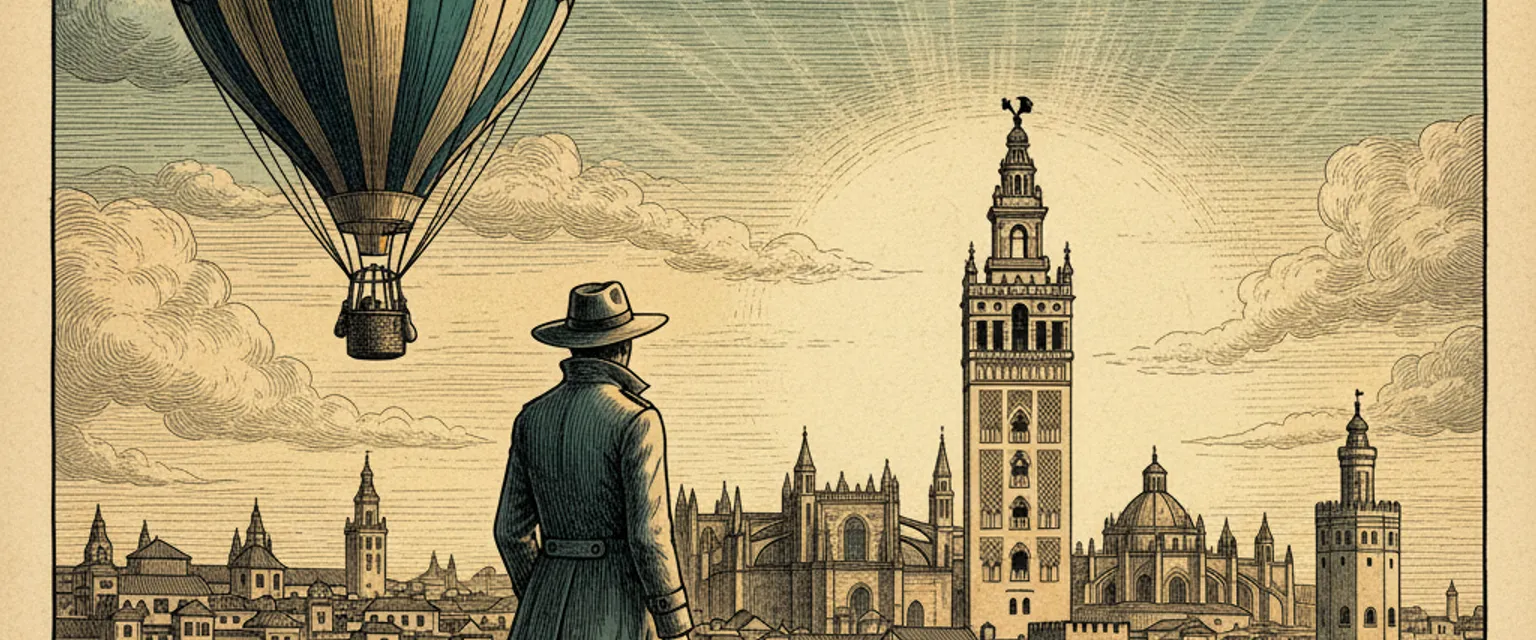
I walked into the Real Alcázar at opening time and within five minutes was standing in a tiled courtyard so beautiful I forgot to take a photo, which for me is unheard of. Water trickled in a channel, the orange trees smelled like the entire south of Spain, and a peacock walked past as if it owned the place, which it clearly did. I have been to a lot of palaces. This is the one I think about when I cannot sleep.
Two days is the Real Alcázar at opening time on Day 1, the Cathedral and Giralda after, then flamenco across the river in Triana. Day 2 is the Plaza de España and tapas in Santa Cruz. Book the Alcázar online; the walk-up queue in the heat is a punishment.
Visit the Alcázar at 9:30 AM or in the last slot before close. Midday in summer is genuinely dangerous heat — 40C is normal.
72 Hours: Add the Metropol and the Markets
Three days adds the Metropol Parasol (the giant wooden mushrooms), the Triana ceramics and market, and a proper deep dive into tapas culture. Day 3 is when Seville stops being a list of monuments and becomes a place you want to move to.
4 Days: Córdoba or Cádiz Day Trip
Four days means a day trip — Córdoba and its incomparable Mezquita is 45 minutes by high-speed train, or Cádiz and the Atlantic beach is just over an hour. Either makes Seville the perfect base for the whole of western Andalusia.
7 Days: Andalusia from a Seville Base
A week lets Seville breathe and lets you reach the whole region — Córdoba, Cádiz, the white village of Carmona, maybe Granada. But it also gives you the slow Seville: the long lunch, the evening paseo, the flamenco that starts late and never feels like a show. By Day 5 the heat stops being an enemy and becomes a rhythm.
Estimated budget:$200-$380
Estimated budget:$290-$560
Estimated budget:$390-$760
Estimated budget:$680-$1,350
Day 1
Real Alcázar + Cathedral + Triana
The Moorish palace, the Gothic giant, and flamenco across the river
Real Alcázar
A living royal palace of Moorish courtyards and gardens, still used by the Spanish crown today.
The Real Alcázar is the oldest royal palace still in use in Europe and the single best thing in Seville — a layered masterpiece of Mudéjar tilework, the Patio de las Doncellas, and gardens of orange trees, fountains, and peacocks. Game of Thrones used it as the Water Gardens of Dorne. Book the first slot online and go straight to the upper royal apartments before the crowds. Budget at least two hours.
Seville Cathedral + Giralda
The largest Gothic cathedral on earth, built to make people think the builders were mad.
Seville Cathedral is the world's largest Gothic church, built on the site of the great mosque to a brief that the builders be thought insane. Columbus is buried inside, held aloft by four kings. The Giralda bell tower is the converted mosque minaret — you climb it not by stairs but by 35 ramps built so a horseman could ride up. The view over the rooftops and the Alcázar gardens is the reward.
Triana + flamenco
Cross the river to the gypsy quarter that birthed flamenco, and see it where it lives.
Triana, across the Guadalquivir, is the working-class barrio that gave flamenco much of its soul. Casa Anselma is the legendary, unpredictable place where locals dance late and there is no set programme; Casa de la Memoria in the centre offers a more reliable intimate show. Eat tapas along Calle Betis with the cathedral lit up across the water first. Real flamenco starts late and feels nothing like a tourist show.
Day 2
Plaza de España + Santa Cruz
The grandest square in Spain and the old Jewish quarter
Plaza de España + María Luisa Park
A semicircular fantasy of tiled bridges and ceramic alcoves, with a shaded park beside it.
Built for the 1929 Ibero-American Exposition, the Plaza de España is an enormous semicircular palace of brick and tile, with a moat you can row on and ceramic alcoves for each Spanish province. Go early before the heat and the tour groups. It flows straight into the María Luisa Park, a shaded refuge of fountains, ponds, and tiled benches that is the best place in the city to escape the sun.
Barrio Santa Cruz
The old Jewish quarter — a maze of whitewashed lanes, hidden plazas, and orange trees.
Santa Cruz is the former Jewish quarter and the most atmospheric corner of the old city — a tangle of narrow whitewashed alleys designed to keep out the sun, opening onto tiny plazas with orange trees and tiled fountains. It is touristy but irresistibly beautiful, especially in the quiet of early afternoon. Get deliberately lost; the streets are short and you cannot stay lost for long.
Tapas crawl in the centre
Spinach with chickpeas, jamón, and a cold fino — the Seville tapas ritual done properly.
Seville is a tapas city and the way to do it is a crawl — one or two plates and a drink at each bar, then move on. El Rinconcillo (founded 1670, the oldest bar in the city) does espinacas con garbanzos and jamón standing at the marble counter; Bodega Santa Cruz Las Columnas is busy and cheap. Order a fino or manzanilla sherry, the local drink, and eat standing the way the sevillanos do.
Day 3
Metropol + Triana Market + Macarena
Modern Seville, ceramics, and the city's beating local heart
Metropol Parasol (Las Setas)
A giant undulating wooden canopy over the old city — locals call it the mushrooms.
The Metropol Parasol, known to everyone as Las Setas (the mushrooms), is the largest wooden structure in the world — a vast undulating canopy over the Plaza de la Encarnación. There are Roman ruins in the basement museum and a walkway across the top with sweeping views and, at night, a projection show. It divides opinion violently, which is the best reason to go and form your own.
Triana Market + ceramics
The food market over a buried castle, and the workshops that tiled half of Spain.
The Mercado de Triana sits over the ruins of the Castillo de San Jorge (once the seat of the Inquisition, now a small museum below). It is a proper neighbourhood food market with tapas counters for lunch. Triana has been Seville's ceramics quarter for centuries — the workshops along Calle Alfarería and Calle San Jorge still sell the hand-painted azulejo tiles you have been admiring all over the city.
Basílica de la Macarena + city walls
The weeping Virgin who is the soul of Seville's Holy Week, and a stretch of Moorish wall.
The Basílica de la Macarena houses La Esperanza Macarena, the famous weeping Virgin who is paraded through the streets at the climax of Seville's astonishing Holy Week (Semana Santa). The basilica is free and the figure, with her crystal tears, is genuinely moving even to the non-religious. The surviving stretch of 12th-century Almohad city wall runs alongside. This is the local, less touristed north of the centre.
Day 4
Córdoba Day Trip
The greatest mosque-cathedral in the world, 45 minutes away
AVE train to Córdoba
Forty-five minutes on the high-speed train to one of the oldest cities in Spain.
The AVE high-speed train from Santa Justa reaches Córdoba in 45 minutes, making it an easy day trip. Book ahead for the cheap fares. Córdoba was the capital of Moorish Spain and once the largest city in Europe; the old town is a UNESCO site of whitewashed lanes, flower-filled patios, and the Roman bridge over the Guadalquivir. Arrive early to beat both the crowds and the brutal Andalusian heat.
The Mezquita-Catedral
A forest of 850 candy-striped arches with a cathedral grown impossibly inside it.
The Mezquita is one of the most extraordinary buildings on earth — a vast hall of 850 red-and-white double arches built as a mosque, with a full Renaissance cathedral later constructed bizarrely in its centre. The effect is dreamlike and unrepeatable. Go at opening (free entry early morning Mon to Sat for a window, otherwise ticketed) and simply walk among the columns. Nothing else in Spain feels like it.
La Judería + patios + lunch
The old Jewish quarter of flower-draped patios, plus salmorejo for lunch.
Wander the Judería, Córdoba's old Jewish quarter — narrow lanes, the tiny medieval synagogue, and the famous flower-filled patios (at their peak during the May patio festival). For lunch, salmorejo, the thick cold tomato soup that is Córdoba's gift to Spanish cuisine, topped with jamón and egg. Back to Seville on an evening train, in time for a late tapas dinner.
Day 5
Galleries + the Long Lunch
Murillo, the river, and learning to eat like a sevillano
Museo de Bellas Artes
Spain's second-best art museum after the Prado, in a glorious old convent.
The Museo de Bellas Artes, housed in a former convent around tiled courtyards, holds the finest collection of Spanish painting outside Madrid — especially the Seville masters Murillo, Zurbarán, and Valdés Leal. It is calm, beautiful, and rarely crowded. On Sunday mornings the square outside hosts an open-air painting and antiques market that is worth timing your visit around.
Torre del Oro + a river lunch
The golden Moorish watchtower on the river, then a long shaded lunch by the water.
The Torre del Oro is the 13th-century Almohad watchtower that once helped guard the river harbour; it now holds a small maritime museum and gives a fine view from the top. Below it, the Guadalquivir promenade is the place for a long, unhurried Andalusian lunch — pescaíto frito (fried fish), a salad, and a cold beer, eaten slowly while the afternoon heat passes. This is the meal that teaches you the local pace.
Alameda de Hércules at night
The bohemian square where young Seville drinks, eats, and stays out till dawn.
The Alameda de Hércules is the city's most relaxed, bohemian nightlife hub — a long tree-lined plaza ringed with bars, terraces, and small live-music venues, busy with locals rather than tour groups. Bar-hop along the edges, eat as you go, and feel the rhythm of a Spanish night that starts late and ends later. It is the antidote to monument fatigue.
Day 6
Cádiz + the Atlantic
The oldest city in Western Europe and an ocean beach
Train to Cádiz
Just over an hour to a sea-girt city founded by the Phoenicians 3,000 years ago.
Cádiz is just over an hour from Seville by train and a complete change of scene — a salt-bleached old city on a near-island, founded by the Phoenicians and arguably the oldest continuously inhabited city in Western Europe. The old town is a tight grid of sun-faded streets, watchtowers, and squares opening suddenly onto the Atlantic. The light is different here; everything feels washed clean.
Cádiz old town + Cathedral
Golden-domed cathedral, ancient ramparts, and a covered market for the best fried fish.
Climb the Torre Tavira camera obscura for the view over the rooftops, visit the golden-domed Cathedral, and walk the seafront ramparts of the Campo del Sur. The Mercado Central is one of the best food markets in Andalusia — head to the gastro-stalls for fresh tuna, prawns, and a cone of fried fish. Cádiz invented pescaíto frito and still does it best.
La Caleta beach + sunset
A perfect little crescent beach between two castles, then sunset over the Atlantic.
La Caleta is the small, beloved city beach framed by two castles and the spit where James Bond filmed Die Another Day. Swim in the Atlantic, dry off on the sand, and stay for the sunset over the water — a thing land-locked Seville cannot offer. Catch a late train back, salt still in your hair, in time for a final Seville dinner.
Day 7
Carmona + a Slow Farewell
A white hilltop town and a last Sevillian evening
Carmona day half-trip
A Roman-and-Moorish hill town 40 minutes away, with a necropolis and endless views.
Carmona is a half-day escape 40 minutes east by bus — a fortified white town on a ridge above the plain, with Roman gates, a startling Roman necropolis you can climb down into, and a Moorish alcázar (now a parador hotel) with a terrace view over the entire Vega countryside. It is the quintessential Andalusian pueblo blanco and far less visited than it deserves. Lunch on the plaza, then back to Seville.
A rooftop terrace sundowner
A drink high above the city with the Giralda glowing gold in the last light.
For your last evening, find a rooftop terrace — several hotels in the centre open theirs to non-guests for a drink. The view of the Giralda and the cathedral catching the low gold light, with the tiled roofs of the old city below, is the image of Seville you will keep. Order a tinto de verano and watch the swifts wheel over the towers.
Farewell tapas + a final fino
One last crawl through Santa Cruz, ending with sherry and the certainty you will return.
End with one more tapas crawl through the lanes you now know — a plate of jamón, some carrillada (slow-cooked pork cheek), espinacas con garbanzos, and a final glass of manzanilla. By now you eat standing, you drink sherry without flinching, and you have learned the unhurried Sevillian rhythm. The heat has become a rhythm too. Raise the last glass; Andalusia does not let you leave for good.
Seville is the city that taught me to stop fighting the heat and start living around it. You move early, you hide at midday, you come alive again at dusk, and somehow you see more this way than you ever would charging through at noon. It is the most theatrical city in Spain — orange trees, flamenco, a cathedral built by people who wanted future generations to think them mad — and it performs for you without ever feeling fake.
This itinerary is built around two truths. First: book the Real Alcázar online and go at opening, because it is the best thing here and deserves you fresh and unhurried. Second: Seville is a tapas city, and the way to eat is to crawl — a plate and a glass at each bar, standing up, then on to the next.
The 2/3/4/7-day versions move from the icons outward into the region. Two days is the Alcázar, the Cathedral, and flamenco in Triana. Seven days uses Seville as a base for the whole of western Andalusia — Córdoba’s impossible Mezquita, the Atlantic at Cádiz, the white hill town of Carmona.
A practical warning: summer here is genuinely extreme, 40C and beyond. Visit in spring or autumn if you can. Use the duration filter above to see your version of Seville.
This article contains affiliate links marked with rel="sponsored". We may earn a commission at no extra cost to you.