
[ GUIDE · THE DISPATCH ]
Where to Eat in Marrakech: Tagine, Street Snails & the Djemaa el-Fna Truth
Which Djemaa el-Fna stalls are tourist traps and which ones the locals actually queue for. Plus where to find real tagine and tanjia in the medina without getting fleeced.
Short on time? The perfect 3-day Marrakech itinerary turns all of this into a route you can actually walk.
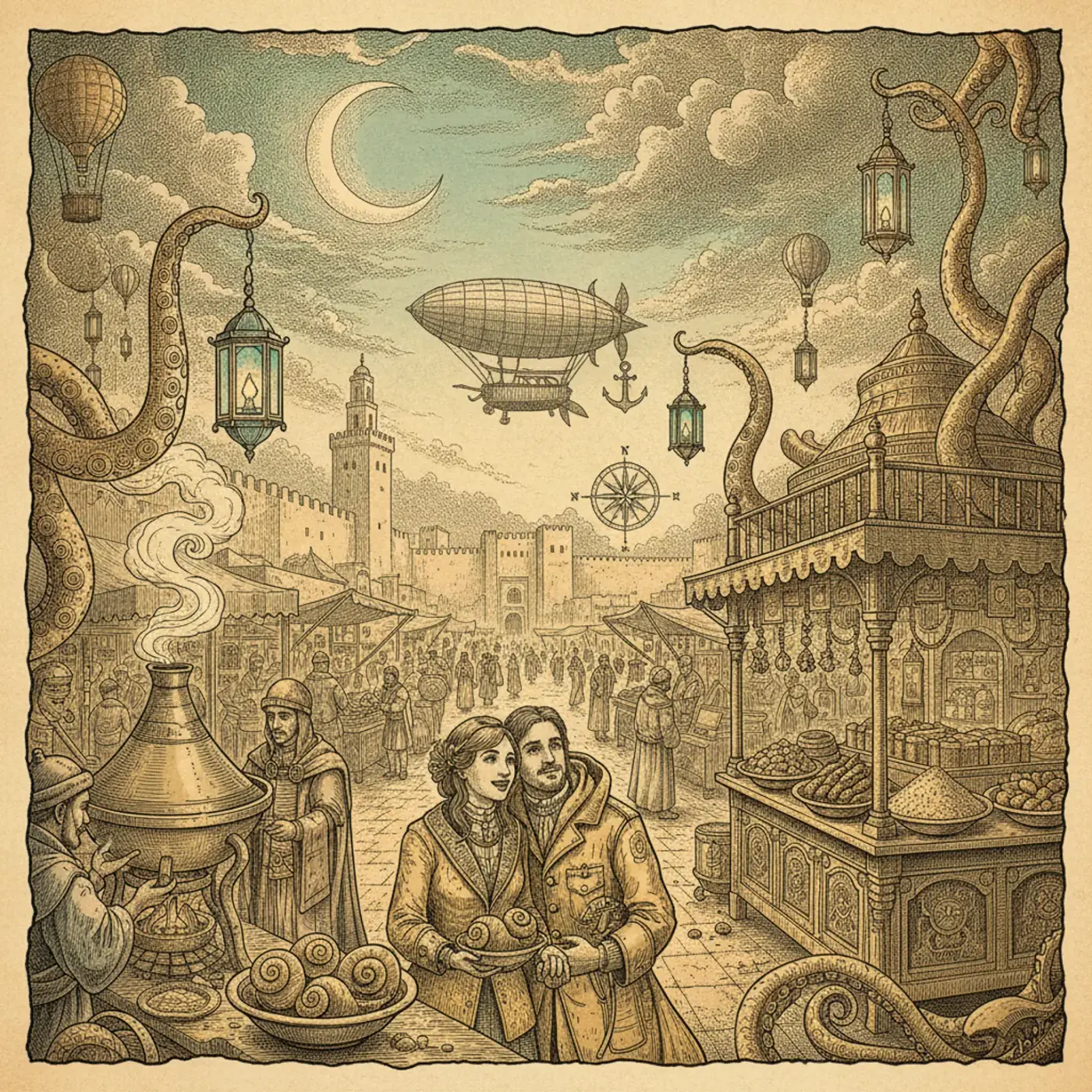
Where to eat in Marrakech is a question with a trap built into it, and the trap is the most famous place to eat in the whole city. So let’s start there, because I watched a couple get talked into a 600-dirham dinner of mediocre brochettes on Djemaa el-Fna while a stall thirty feet away was serving Moroccan families for a fifth of the price.
Don’t be that couple. I almost was, once.

Djemaa el-Fna — reading the stalls
Every night the big square fills with numbered food stalls, white tents, hissing grills, smoke everywhere. It’s pure theatre and you should absolutely eat there at least once. But the stalls are not equal, and the ones that try hardest to get you are the ones you want least.
Here’s the rule I learned from a guy named Hassan who ran a juice cart: if a host is standing out front in English, waving a laminated menu, grabbing arms, shouting “Asian food! Italian! anything you want!” — keep walking. The good ones don’t need to. Look instead for stalls where Moroccans are crammed onto the benches, where the menu is short, where someone’s just ladling out harira soup and grilling merguez without a sales pitch. Stall 14 and the ones clustered near it had a reputation when I was last there, but honestly the better tell is the crowd, not the number.
Order harira (the lentil-tomato soup, maybe 5 dirham a bowl), a plate of merguez sausage, some grilled vegetables, bread. Eat shoulder to shoulder with strangers. Agree the price before they cook anything. That last bit is non-negotiable.

The real Marrakech dish is tanjia, not tagine
Everyone comes for tagine, the cone-lidded stew, and tagine is great — lamb with prunes and almonds, chicken with preserved lemon and olives, the works. But the dish that actually belongs to Marrakech is tanjia, and most tourists never even hear about it.
Tanjia is a “bachelor’s dish” — meat (usually lamb or beef) packed into a tall clay urn with garlic, preserved lemon, cumin, smen (fermented butter), and slow-cooked for hours, traditionally buried in the embers of the neighbourhood hammam furnace. It falls apart. It’s deeply savory and unphotogenic and you usually have to order it a few hours ahead or find a place that makes it daily.
Ask at a small medina restaurant — many in the Mellah and around Rue Riad Zitoun do it. Mechoui Alley (Souk Ablueh, just off the square) is the other carnivore stop: slow-roasted lamb shoulder pulled straight from a pit oven, sold by weight, eaten with cumin and salt and bread. Around 100–150 dirham for a generous portion. Get there by 1pm before it sells out, because it sells out.
Sitting down properly
When you want a tablecloth and a roof, the medina has gorgeous riad restaurants but they vary wildly. Le Jardin and Nomad (rooftop, modern Moroccan, book ahead) are reliable for the prettier sit-down meal — expect 150–250 dirham a head. Café des Épices is a solid spot to recover with mint tea and a view over the spice square.
And the mint tea. Order it everywhere. They pour it from a height to froth it and it’ll be sweeter than your dentist would like and that’s correct, that’s how it’s meant to be. Refuse the sugar and a Moroccan will look at you with genuine concern.
One scam to dodge: the “free” guide. A friendly young man will offer to show you to a tannery or a “special” restaurant for nothing. There is no nothing. He gets a cut, you get marked up, and you end up somewhere you didn’t choose. Just say la, shukran — no, thanks — and keep moving. Politely. Firmly. They’re not dangerous, just persistent.
Breakfast and the in-between meals
Moroccan breakfast is a quiet glory that most tourists sleep through, literally. Find a café or a riad that does the full spread: msemen and baghrir (the spongy “thousand-hole” pancake), khlea (preserved cured beef) with eggs, fresh bread, olives, jams, and a glass of fresh orange juice that on Djemaa el-Fna costs about 4–5 dirham and tastes like sunshine. The juice stalls on the square are one of the genuinely fair-priced things there, so drink your fill.
Midday, the move is harira soup with a few dates and a chebakia (sesame-honey pastry) on the side — that’s the traditional Ramadan break-fast combo and it’s available year-round at any decent local spot. And the pastries. Oh, the pastries. Cornes de gazelle (almond-stuffed crescents), briouats (fried sweet or savory triangles), the whole sticky-sweet Moroccan repertoire. Buy them by weight from a proper patisserie, not a tourist stall, and you’ll pay a fraction.
For something cool and modern in between all the rich stuff, the Ville Nouvelle (the new town, Gueliz) has the cafés and the air-con and a more relaxed pace — good if the medina’s heat and hustle have wrung you out. It’s where Marrakchis go on a date, and the coffee and the people-watching are both excellent.
I got hopelessly lost in the souks my second day, took a wrong turn near the dyers’ quarter, and ended up at a hole-in-the-wall where an older woman was frying msemen (flaky square pancakes) on a griddle. Two dirham each. Honey and butter. I ate four standing up. That’s the Marrakech meal I’d trade any rooftop dinner for.
Eat where the locals sit, agree the price before the grill fires, and for the love of everything, try the snails — you can thank me with the empty bowl.
This article contains affiliate links marked rel="sponsored". We may earn a commission at no extra cost to you.