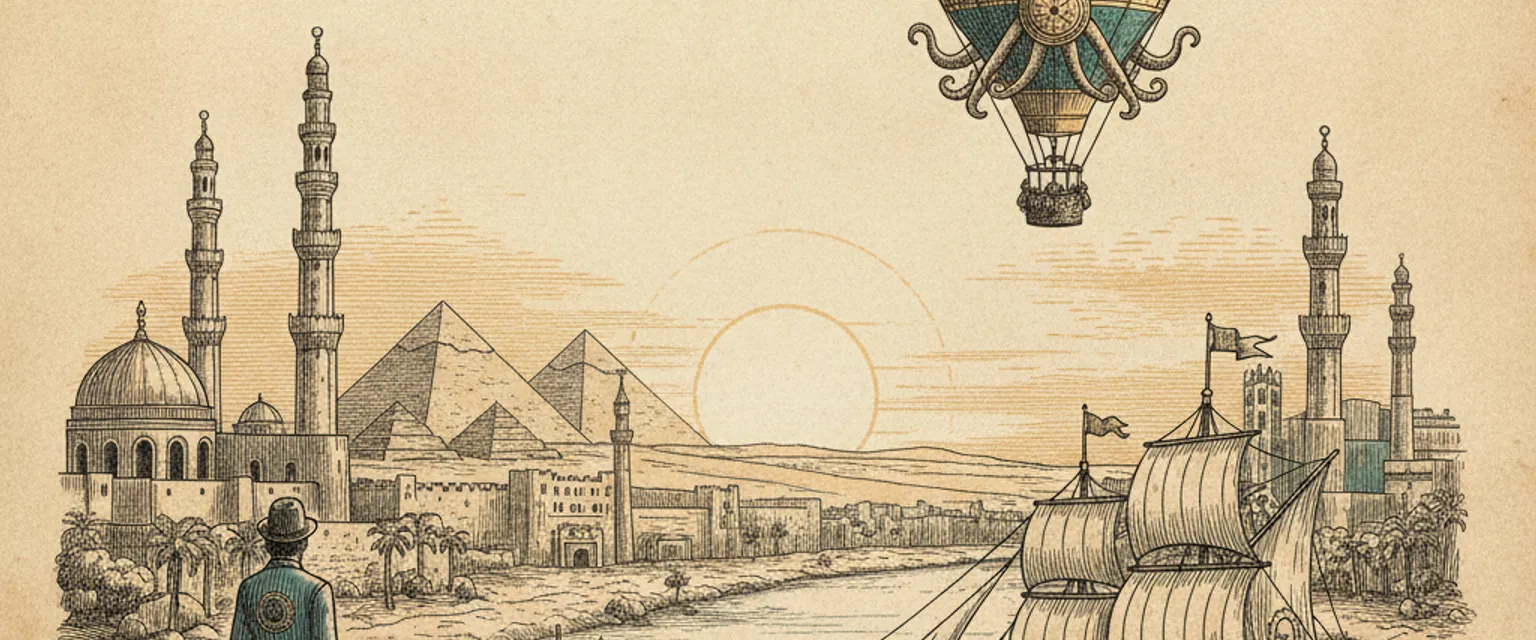
I had braced for the Pyramids to be a letdown — too famous, too photographed, ringed by a city that now laps right up to the plateau. Then the taxi crested a flyover and there they were, impossibly large above the rooftops, and I actually laughed out loud. A man selling scarves immediately materialised. I bought one I did not need, climbed up onto the sand, and stood in the shadow of the only Ancient Wonder still standing. The scarf was a fair price for the view.
Two days is the essentials: the Giza Pyramids and Sphinx at opening, the Grand Egyptian Museum, and one wander through Islamic Cairo or Khan el-Khalili. Hire a vetted guide or driver for the day — Cairo's traffic and touts make solo logistics a tax on your time. Start early; the heat and the crowds both build.
Agree taxi and camel prices before you set off, and ignore anyone at the Pyramids gate offering to be your 'official' guide. Book guides through your hotel instead.
72 Hours: Add Islamic & Coptic Cairo
Three days lets you give the Pyramids and the museum the time they deserve and adds a full morning in Islamic Cairo — the Citadel, the great mosques, and the Khan el-Khalili bazaar — plus Coptic Cairo's ancient churches. The city's layers start to make sense at this length.
4 Days: Saqqara, Memphis & Dahshur
Four days buys the older pyramids most visitors skip — the Step Pyramid at Saqqara, the Bent and Red Pyramids at Dahshur, and ancient Memphis. They are quieter, older, and tell the story of how pyramid-building was figured out before Giza perfected it. A rewarding half-day archaeology crawl.
7 Days: Cairo, the Nile & Alexandria
A week lets Cairo breathe and reaches beyond it — a felucca on the Nile, a day trip to Alexandria's coast and catacombs, and time to eat properly, shop the bazaar without rushing, and settle into the city's chaotic rhythm. You will stop flinching at the traffic and start to love the place.
Estimated budget:$120-$420
Estimated budget:$190-$620
Estimated budget:$280-$880
Estimated budget:$520-$1,700
Day 1
The Pyramids of Giza & the Sphinx
The only Ancient Wonder still standing, before the heat peaks
Great Pyramids of Giza
4,500 years old and still the largest stone monuments ever built.
Arrive at the 08:00 opening to beat the heat and the tour buses. The Great Pyramid of Khufu is the headline — you can pay extra to climb into the cramped interior chamber, which is claustrophobic and largely empty but a story worth having. Walk out to the panorama point for the three-pyramid line-up, and fix camel and horse prices firmly in advance.
A lion's body, a pharaoh's face, and a nose nobody can fully explain.
The Sphinx sits below the plateau beside the Valley Temple, smaller in person than the photos suggest but no less strange — a 73-metre limestone lion with a human head, carved from a single bedrock outcrop. The viewing terrace gives the classic head-on shot with a pyramid behind. Visit straight after the pyramids while you are still on-site.
Koshary lunch
Egypt's national comfort dish — carbs on carbs, and glorious for it.
Koshary is the dish Cairo runs on: rice, lentils, macaroni, and chickpeas under a spiced tomato sauce, fried onions, and a garlic- vinegar kick. Abou Tarek is the famous downtown temple to it, but any busy koshary shop delivers. Cheap, filling, vegetarian by default, and the perfect refuel after a hot morning on the plateau.
Day 2
Grand Egyptian Museum
The world's largest archaeological museum, and all of Tutankhamun
Grand Egyptian Museum (GEM)
The full Tutankhamun collection under one roof for the first time.
The GEM, near the Giza plateau, is the largest archaeological museum on earth and the new home of the complete Tutankhamun treasure — over 5,000 objects, the golden mask among them — shown together for the first time. The grand staircase of colossal statues alone is worth the ticket. Budget at least half a day; you will still rush it.
The reassembled 4,600-year-old solar boat, intact.
The museum complex also houses the Khufu solar boat — a full-size cedar vessel buried beside the Great Pyramid and reassembled from over a thousand pieces, astonishingly preserved. Wander the grounds and the plaza, which frame the pyramids in the distance. A good place to slow down after the intensity of the galleries.
Sunset felucca on the Nile
A traditional sailboat, no engine, the city sliding past in gold light.
As the heat eases, hire a felucca — a lateen-sailed wooden boat — from the Garden City or Zamalek banks for an hour on the river. There is no better way to feel the city's scale and calm at once than drifting past the skyline as the call to prayer rolls across the water. Agree the price and duration before boarding.
Day 3
Islamic & Coptic Cairo
The medieval city, its great mosques, and the oldest churches in Egypt
Citadel of Saladin & Mosque of Muhammad Ali
A 12th-century fortress crowned by Cairo's alabaster mosque.
Saladin's hilltop citadel commanded Cairo for 700 years, and the 19th-century Mosque of Muhammad Ali at its centre — domes, slim Ottoman minarets, an alabaster-clad courtyard — is the city's most photographed Islamic monument. The terrace gives a hazy panorama across the medieval skyline to the Pyramids on a clear day. Dress modestly; women should carry a scarf.
Khan el-Khalili bazaar
A 14th-century market maze of spice, brass, and relentless charm.
Khan el-Khalili has been Cairo's great bazaar since the 1300s — alleys of lanterns, spices, brass, perfume oils, and souvenirs, with haggling as the price of entry. Stop for mint tea at El Fishawy, the centuries- old cafe in the heart of the maze. Buy what you love and walk away from what you do not; the second price is always lower.
Coptic Cairo & the Hanging Church
Egypt's Christian quarter, with churches older than most of Europe's.
South of the centre, Coptic Cairo holds the Hanging Church (built over a Roman gatehouse), the ancient Church of St Sergius, and the Ben Ezra Synagogue, all clustered in a quiet walled lane. It is a different, older Cairo — a reminder that the city was a centre of early Christianity. The Coptic Museum next door is excellent and uncrowded.
Day 4
Saqqara, Memphis & Dahshur
The pyramids before the Pyramids
Step Pyramid of Djoser, Saqqara
The oldest large stone building on earth — the prototype for all pyramids.
Saqqara's Step Pyramid, built around 2670 BC by the architect Imhotep, is the world's oldest monumental stone structure and the ancestor of every pyramid that followed. The site sprawls — nobles' tombs with vivid painted reliefs, the underground Serapeum bull burials — and sees a fraction of Giza's crowds. A guide turns the rubble into a story.
Ancient Memphis open-air museum
The ruined capital of the Old Kingdom, and a colossal fallen Ramesses.
Memphis was Egypt's first capital, now mostly vanished beneath palm groves, but the open-air museum holds a colossal limestone statue of Ramesses II — too large to stand, displayed lying down — and a fine alabaster sphinx. A short, sobering stop on the difference between what endures and what does not. Easy to combine with Saqqara.
Bent & Red Pyramids, Dahshur
Watch pyramid-building get figured out in real time.
Dahshur tells the engineering story: the Bent Pyramid, whose angle was changed mid-build when it started to fail, and the Red Pyramid beside it, the first successful true pyramid. Both are almost deserted, and you can usually climb into the Red Pyramid's chamber with no queue at all. The most rewarding pyramids most tourists never see.
Day 5
Downtown Cairo & the Nile by Day
Belle-epoque boulevards, markets, and the river's east bank
Downtown (Wust el-Balad) walking tour
Faded Parisian-style boulevards from Cairo's khedival heyday.
Khedive Ismail rebuilt central Cairo in the 1860s to look like Paris, and the bones survive — grand if peeling apartment blocks, old cafes, and Talaat Harb Square. Walk it slowly: the Yacoubian-era architecture, the bookshops, the street life. Stop at a historic ahwa (coffeehouse) for Turkish coffee and a shisha among locals.
Cairo Tower & Zamalek
The whole sprawling city from 187 metres up, on the river island.
On the Nile island of Zamalek, the lotus-shaped Cairo Tower gives the best overview of the city's scale — the river splitting it, the desert and Pyramids on the western horizon on a clear day. Zamalek itself is Cairo's leafy, embassy-lined district, good for a relaxed lunch and a gallery or two away from the downtown crush.
Zamalek riverside dinner
Grilled kofta, mezze, and the Nile breeze on the island.
Zamalek and the Nile corniche have the city's best concentration of riverside restaurants — order a spread of mezze, grilled kofta and kebab, and fresh bread, and eat with the water in view. It is a calmer, greener Cairo than the day's downtown chaos, and a fine place to plan the rest of the week.
Day 6
Alexandria Day Trip
Egypt's Mediterranean city — sea air, catacombs, and a library reborn
Bibliotheca Alexandrina
A modern monument to the greatest library of the ancient world.
Two and a half hours from Cairo by fast train, Alexandria opens onto the Mediterranean. The Bibliotheca Alexandrina — a vast tilted glass disc rising toward the sea — revives the legendary ancient library destroyed millennia ago. The reading room is breathtaking, and the museums inside are worth an hour. A complete change of climate and mood from Cairo.
Catacombs of Kom el Shoqafa
A Roman-era underground necropolis blending Egyptian and Greek death.
These 2nd-century catacombs spiral down through three levels of rock-cut tombs where Roman, Greek, and Egyptian funerary styles collide — Anubis in a Roman tunic is the unforgettable image. One of the strangest and most atmospheric sites in Egypt, and a reminder of how many cultures Alexandria absorbed. Photography is limited inside.
Alexandria seafood corniche lunch
Pick your fish off the ice and eat it with the sea in your face.
Alexandria's seafood is the best in Egypt — at corniche restaurants you choose your catch from the ice and it is grilled or fried to order, served with tahini, salads, and bread. Eat late and unhurried before the train back. The sea breeze alone justifies the day trip from land-locked Cairo.
Day 7
Bazaar, Last Bites & Departure
One more lap of the market, then the long way home
Final Khan el-Khalili shopping
Round two of the bazaar, now that you know how to haggle.
Go back to Khan el-Khalili for the souvenirs you talked yourself out of — hand-blown perfume bottles, inlaid boxes, spices, and a brass lantern if you can pack it. Mornings are calmer than evenings. You will haggle better the second time, and El Fishawy's mint tea is the perfect send-off.
Farewell feteer meshaltet
Egyptian layered pastry, sweet or savoury, flaky beyond reason.
End on feteer meshaltet — a paper-thin, many-layered pastry served either savoury with cheese and pastrami or sweet with honey and nuts. A neighbourhood feteer shop does it best, folded and baked to order. Rich, cheap, and quintessentially Egyptian — the last taste to carry home.
Transfer to Cairo International Airport
Leave a big buffer — Cairo traffic answers to no schedule.
Cairo International is northeast of the centre, and the drive can take anywhere from 45 minutes to two hours depending on the city's legendary traffic. Arrange a hotel car or a metered ride app rather than flagging a street taxi, and leave far earlier than feels necessary. Security at the airport has multiple layers; budget the time.
Cairo does not do gentle introductions. It is enormous, loud, and gridlocked, with twenty-odd million people pressing right up against monuments that predate almost everything else humans have built. The first day can feel like a fight — the traffic, the touts at the Pyramids gate, the sheer scale of it. Then something clicks, usually around the moment you are standing in the shadow of the Great Pyramid or watching the Nile turn gold from a felucca, and you understand why this city has held travellers spellbound for thousands of years.
The headline sights genuinely live up to the hype. The Pyramids and Sphinx are the only Ancient Wonder still standing and they do not disappoint in person. The new Grand Egyptian Museum has finally united the entire Tutankhamun treasure under one roof, and it is overwhelming in the best way. But Cairo rewards those who go past the postcard — Islamic Cairo’s mosques and bazaars, the older pyramids at Saqqara and Dahshur, the Christian churches of Coptic Cairo, and a Mediterranean day in Alexandria.
How to use this plan
The first two days are the essentials everyone comes for: Giza and the Grand Egyptian Museum, each deserving the better part of a day. From day three the plan goes deeper into the city’s layers, and a full week reaches out to the older pyramids and the coast. Treat the days as modular and front-load the outdoor sites to the cooler mornings.
A few honest pointers. Cairo’s logistics are the real challenge, not the sights — hire a vetted guide or driver through your hotel for the Pyramids and the day trips, and you will reclaim hours otherwise lost to traffic and negotiation. Agree every taxi, camel, and felucca price before you commit, dress modestly for the mosques, carry small cash for tips and bathrooms, and leave a generous buffer for the airport run. Get those right and Cairo, for all its chaos, becomes one of the great travel cities on earth.
This article contains affiliate links marked with rel="sponsored". We may earn a commission at no extra cost to you.