
[ ITINERARY · THE DISPATCH ]
Two Days in Gyeongju: Royal Tombs, Buddhist Grottoes, and Korea's Open Museum
A Gyeongju 2 day itinerary for a city that buried its kings in grassy hills and left the rest lying around in the open. Tombs, a hilltop Buddha, and the country's prettiest temple.
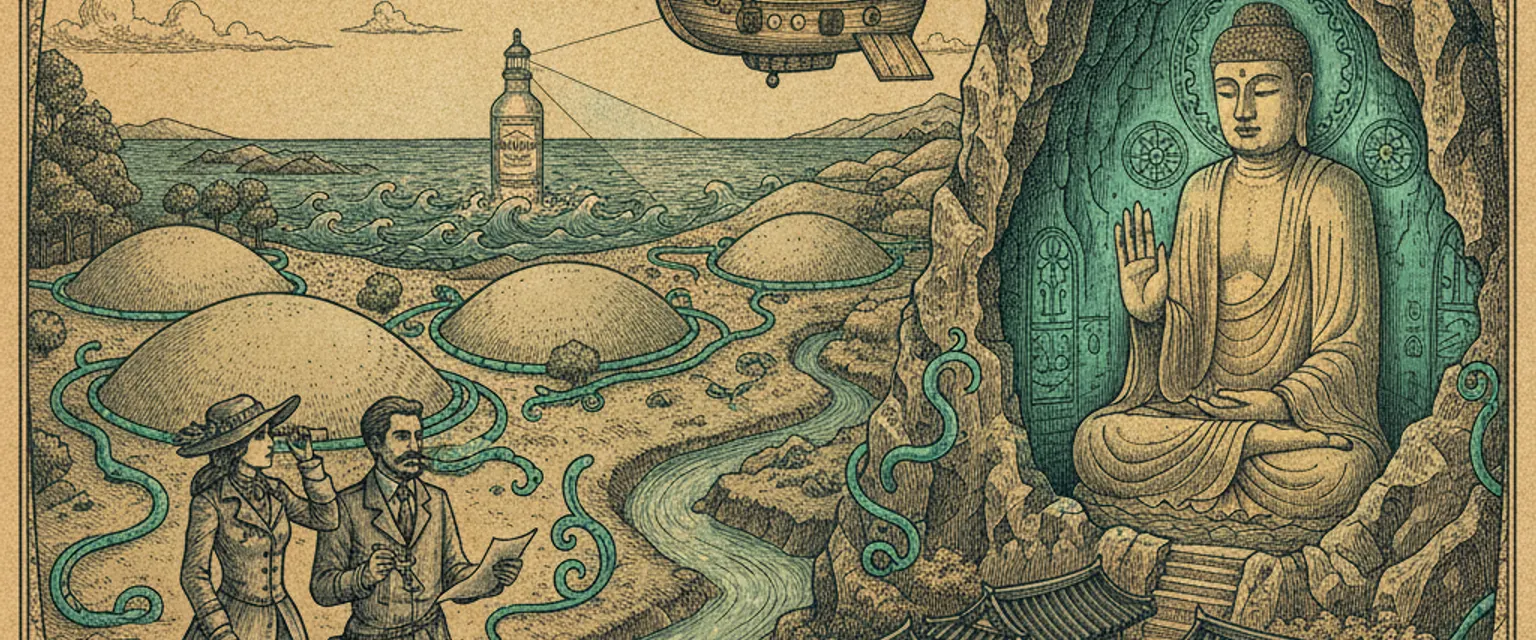
Here’s the thing about a Gyeongju 2 day itinerary that no guidebook quite says out loud: the whole city is the museum. There’s a building called the National Museum, sure, and it’s good, but the actual exhibits are scattered across the parks and hills — a thousand-year-old observatory standing in a field, kings buried under grassy mounds you can walk right up to, temple steps worn smooth by fourteen centuries of feet. This was the capital of the Silla kingdom for nearly a thousand years, and instead of tearing it down, Korea just sort of… left it lying around.
I’ll be honest, I almost didn’t come. Two days felt thin. It was plenty, and also not nearly enough, which is the only complaint worth having about a place.
Day 1: The Old Core on Foot (and a Bike)
Start at Daereungwon, the tomb park. It’s the postcard: enormous green mounds, each one a Silla royal, mowed and rounded like something a giant left behind. One of them, Cheonmachong, is opened up so you can walk inside and see the burial layout and the gold crown they pulled out. The crown is delicate and slightly bonkers, all dangling jade and gold curls. I stood there longer than I planned.
A short walk away is Cheomseongdae, a squat stone bottle of a tower that’s the oldest surviving astronomical observatory in East Asia. Built in the 600s. It doesn’t look like much from a distance and then you do the maths on that date and it rearranges your face a bit.
Grab a bike — there are rental stands all over the centre, dirt cheap — and just ride between things. The flat old-town area is made for it, and you cover ground without the tour-bus shuffle. Lunch should be ssambap, the wrap-it-yourself spread of grilled meat, rice, and about twenty little side dishes you bundle into lettuce leaves. There’s a row of ssambap places near the tombs and honestly they’re all good.
In between, buy Hwangnam bread from the original shop on the street it’s named for — small red-bean cakes, made fresh, slightly addictive. I bought a box “for later” and ate the entire thing on a bench within the hour. No regrets. Few regrets.
Day 2: The Mountain, the Grotto, the Temple
Up early again. Today’s the big one — Seokguram, a stone grotto near the top of Mount Toham holding a single white granite Buddha that faces east, out toward the sea, so the morning sun hits its face. It was carved in the 700s and it is, no exaggeration, one of the most serene things I’ve ever stood in front of. You can’t photograph it (glass screen now, to protect it) and weirdly that made the moment better. You just look. The Buddha looks back, sort of.
Get there for opening to beat the crowds and to catch that east light. There’s a short uphill walk from the car park, ten minutes through pines, and the smell of the forest in the cool morning is half the experience.
Then drop down the mountain to Bulguksa, the temple Seokguram belongs to, and the most beautiful temple I saw in Korea, full stop. The stone staircases — the “bridges” — are original Silla work, and the two pagodas in the main courtyard, Dabotap and Seokgatap, are so good one of them is on the ten-won coin. Go slow. Sit in the courtyard. The painted woodwork up close is incredible, all faded teal and red, repainted and repainted over centuries.
Bulguksa gets busy by mid-morning with school trips and tour groups, so the dawn-grotto-then-temple order really matters. Do it backwards and you’ll be fighting crowds at both.
By afternoon you’ll have done a lot of stairs and a lot of years. Reward yourself with gukbap, the rice-and-broth soup that’s the local comfort food — there’s a famous haejangguk-style place near the bus terminal that locals swear cures everything, hangovers included. It mostly worked.
Two days, and I left genuinely moved, which I did not expect from a place I’d half-written off as “the historical one.” Gyeongju doesn’t shout. It just sits there, a whole vanished kingdom spread out in the open air, and lets you walk through it like it’s the most normal thing in the world. Which, for a thousand years, it was.
Come for the gold crown, leave thinking about the Buddha on the mountain — and don’t you dare skip the pond after dark.
This article contains affiliate links marked rel="sponsored". We may earn a commission at no extra cost to you.