
[ ITINERARY · THE DISPATCH ]
3 Days in Chiang Rai: The White Temple, Hill Tribes, and a Black House of Bones
A Chiang Rai 3 day itinerary with the art-temple trio everyone comes for, the hill tribe villages worth visiting (and the ones to avoid), and where to eat khao soi that beats Chiang Mai's.
A Chiang Rai 3 Day Itinerary Built Around Three Wild Temples
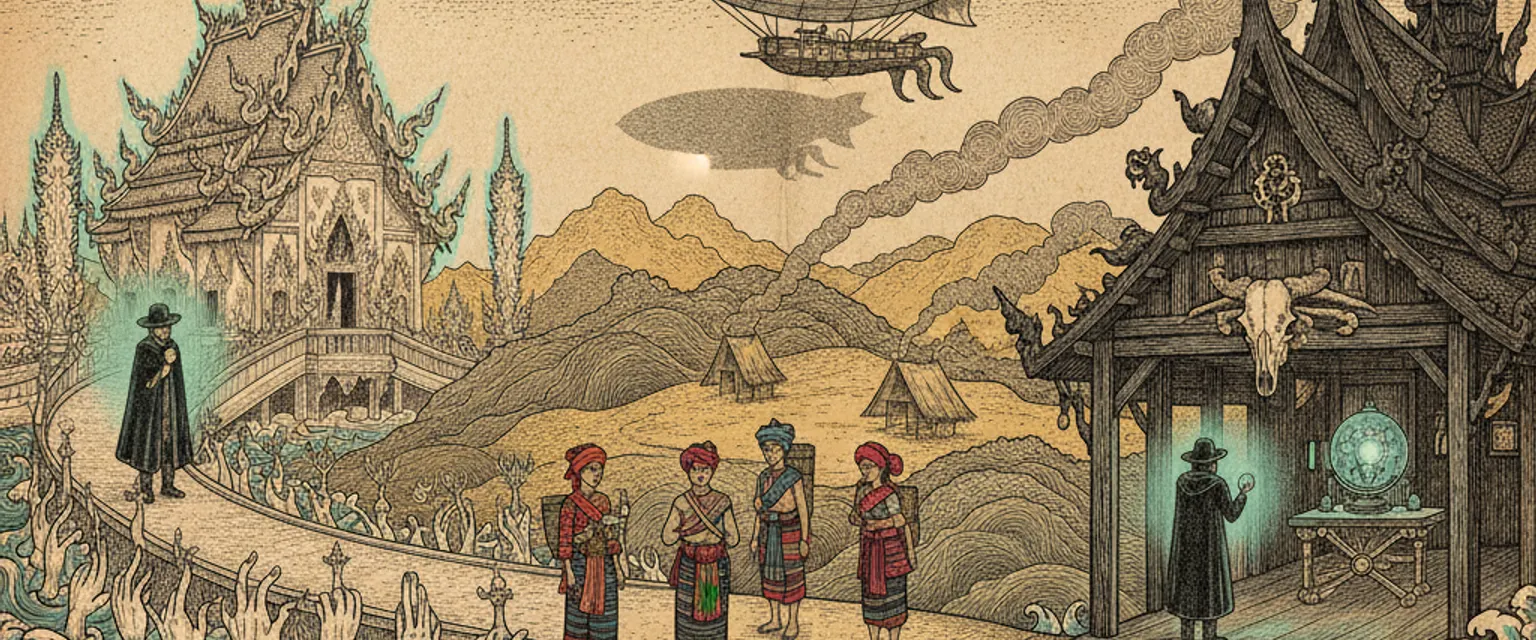
Right, let me sell you on Chiang Rai before you default to Chiang Mai like everyone else does. This Chiang Rai 3 day itinerary is built around three of the strangest pieces of art-architecture in Thailand — a temple that’s pure white, one that’s electric blue, and a “house” that’s all black and full of bones. Genuinely bones. And the crowds are a fraction of what you’ll fight down south.
I came up here meaning to stay one night and ended up rebooking twice. The town’s small, the food is northern Thai which means it’s better than you’ve been led to believe, and the surrounding hills are properly gorgeous once you get out of the centre.
Day 1 — White Temple, Blue Temple, and beating the bus mob
The White Temple. Wat Rong Khun. You’ve seen the photos and they don’t quite prepare you — it’s this dazzling white, encrusted with mirror fragments that throw light everywhere, and the closer you get the weirder it is. The bridge to the entrance crosses a pit of hundreds of sculpted hands reaching up, hell basically, and inside there are murals with Spider-Man and burning skyscrapers mixed in with the Buddhist stuff. It’s bonkers. I loved every second.
Go at opening, 8am. By 10 the day-trip buses from Chiang Mai roll in and the hand-pit bridge becomes a selfie scrum. Entry’s cheap, 100 baht for foreigners. It’s a few km out of town so grab a songthaew (the red shared trucks) or a Grab.
Then the Blue Temple, Wat Rong Suea Ten, back nearer town. Smaller, totally different mood — deep sapphire blue with gold trim and a big white Buddha inside that glows. It’s free, takes half an hour, and the contrast with the white one is the whole point of doing both same morning.
Lunch: khao soi. The northern coconut curry noodle soup, crispy noodles on top, soft underneath, pickled mustard greens and a lime on the side. There’s a stall at the back of the morning market that does a bowl for 50 baht and I’d put it above anything I had in Chiang Mai. Fight me.
Day 2 — The Black House and a slow town day
Day two is the Black House, or Baan Dam, and it’s the dark twin to the White Temple — same region, rival artist, completely opposite energy. It’s not really a temple, it’s a sprawling compound of black wooden buildings full of animal skulls, hides, horns, bones, snakeskins. Sounds grim, but it’s strangely beautiful and a bit funny and deeply odd. The main hall has a long table laid with bones like some last supper. 80 baht entry. Give it a couple hours, it’s bigger than it looks.
After that, ease off. Chiang Rai rewards a slow afternoon. There’s a clock tower in the centre, also designed by the White Temple guy, that does a light-and-sound show at 7, 8, and 9pm — it turns gold and the music plays and the locals just… stop and watch. Sweetly small-town.
Dinner at the night bazaar. Skip the souvenir stalls, head straight for the central food court with the live music. Get sai ua (the northern herby sausage), sticky rice, a som tam, and a Chang beer. There’s a second, less touristy night market — the Saturday walking street on Thanalai Road if your day two lands on a Saturday — which is where I actually preferred eating.
Day 3 — Into the hills, tea, and the Golden Triangle
This is the day you get out of town, and it’s the one I’d insist on.
Two routes. One, the tea-and-mountains route up to the Doi Mae Salong area, an old Chinese-Yunnanese settlement in the hills where the descendants of a nationalist army settled and started growing tea. The drive up is all switchbacks and tea terraces and it’s gorgeous. You can do tastings, the oolong is excellent, and it’s cool up there, a relief from the heat.
Two, the Golden Triangle route — where Thailand, Laos and Myanmar meet at the Mekong. Honest opinion? The actual “triangle” viewpoint is a bit of a tourist trap now, big golden Buddha, boat touts, and the famed opium history is mostly a museum (which, the Hall of Opium museum, is genuinely good and worth the stop). I’d only do this route if the history pulls you.
About hill tribe villages, since people always ask. Some of the “long-neck Karen” villages set up near the tourist routes feel like human zoos and I left one feeling pretty uncomfortable, so I won’t point you to those. If you want to meet hill communities, go with a small ethical trekking outfit that pays the villages directly and spends a night, not a drive-through photo stop. That’s a different kind of trip though, more than a day.
To do day three properly you want wheels — rent a scooter (250 baht) only if you’re confident on mountain roads, otherwise hire a driver for the day, around 1,800-2,500 baht split between a few people. Worth it.
Quick gripes so you’re prepared. The burning season, roughly Feb to April, blankets the whole north in agricultural smoke haze and the air gets genuinely bad — check before you book those months. And things close earlier than you’d think for a tourist town.
But three temples, three colours, hills full of tea, and food that quietly outdoes its famous neighbour. Chiang Rai punches well above its weight.
Do the white, the blue, and the black, in that order — and tell the Chiang Mai crowd nothing. Let them keep missing it.
This article contains affiliate links marked rel="sponsored". We may earn a commission at no extra cost to you.