
[ ITINERARY · THE DISPATCH ]
Four Days in Chiang Mai: Temples, Tuk-tuks, and the Best Khao Soi of Your Life
Chiang Mai runs slower than Bangkok, hits harder in the food department, and has more temples per square kilometre than any reasonable city should. Four days is enough to eat everything and see most of it.
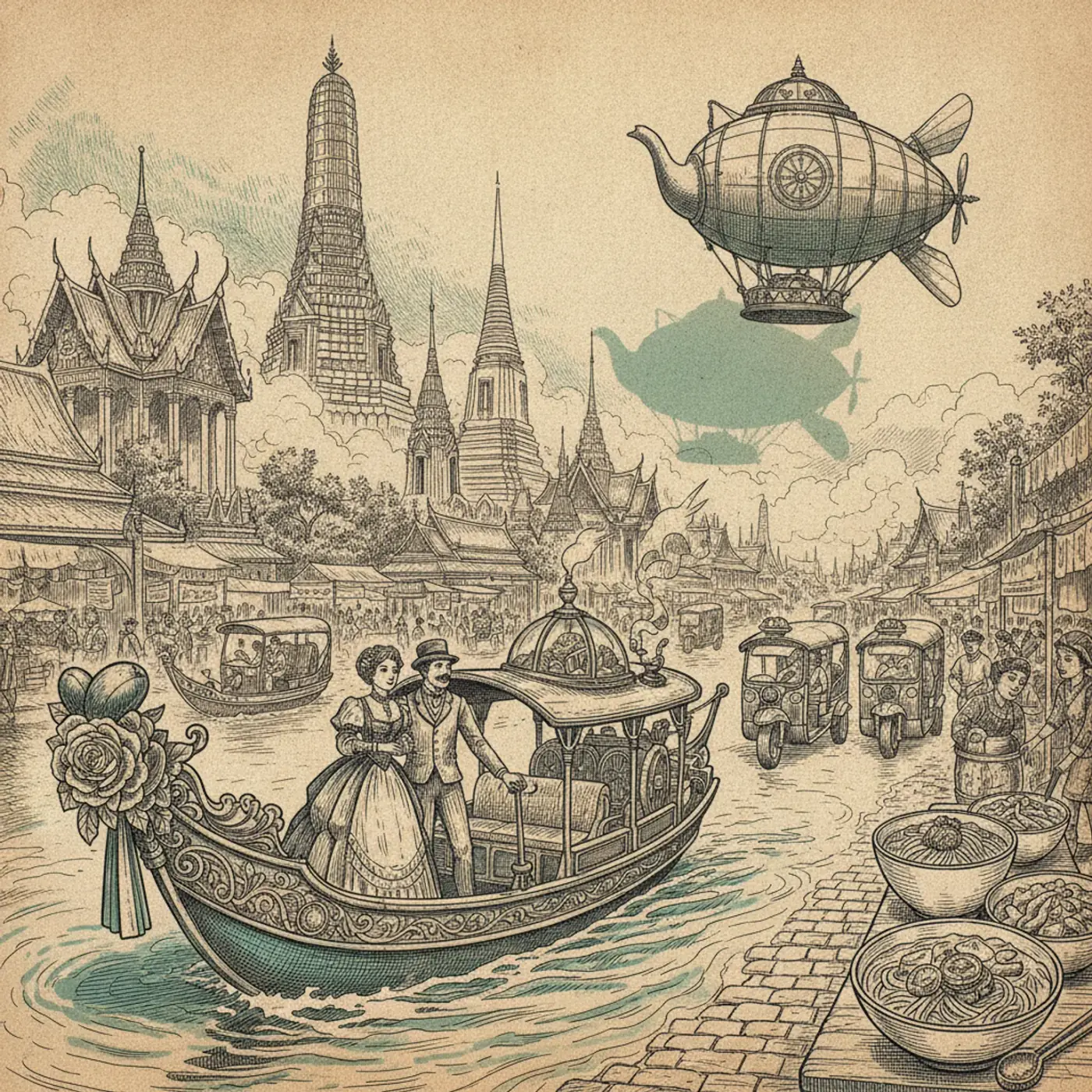
I asked my tuk-tuk driver if he had a favourite restaurant. This is something you should always do, and the instructions to always ignore the driver’s recommendation for his cousin’s restaurant do not apply in Chiang Mai, where the food is so uniformly good that even an enthusiastic conflict of interest can’t steer you wrong. His cousin’s restaurant served me a bowl of khao soi — the northern Thai curry noodle soup with crispy egg noodles on top — that has reorganised my feelings about soup as a category. This is what Chiang Mai does: it recalibrates your expectations of northern Thai food so completely that Bangkok feels like a disappointment, briefly, before you remember that Bangkok has its own entirely different claim on your loyalty.
Day 1: Old City Temples & the Night Bazaar
The Old City is a walled square moat-encircled district packed with more than three hundred temples. You cannot visit them all in four days and should not try. Start with Wat Phra Singh — the most important temple in the city, housing the revered Phra Singh Buddha image — and Wat Chedi Luang, whose massive sixteenth-century chedi (stupa) was partially destroyed by an earthquake in 1545 and has been in this spectacular state of collapse ever since.
Evening: the Night Bazaar on Chang Klan Road is a sprawling market running every night — mixed quality on souvenirs but consistently good on street food. The nearby Anusarn Night Market is smaller and higher quality for both.
Day 2: Doi Suthep & the Mountain
Doi Suthep temple sits at 1,676 metres above the city, a 30-minute songthaew (red truck taxi, ~100 baht from the university) up a mountain road. The 309-step naga-flanked staircase to the top is a pilgrimage, and at the top, on a clear day, you can see Chiang Mai spread below like a map someone made beautiful. Go at 7 a.m. before the tour buses.
| What to know | |
|---|---|
| Opening hours | 06:00–20:00 daily |
| Dress code | Knees and shoulders covered (sarongs available to borrow) |
| Entry fee | 30 baht foreigners |
| Getting there | Red songthaew from Chiang Mai University (~30 min) |
| Best time | 7–9 a.m. for light and crowd avoidance |
| Also visit | Bhubing Palace gardens (500m further, seasonal) |
Afternoon: Doi Pui Hmong village is nearby and worth a stop if you want a glimpse of hill tribe culture, though the more authentic experience is at the Chiang Rai border villages (a different trip).

Day 3: Cooking Class, Nimman, & Sunday Market
A half-day cooking class is the correct use of a Chiang Mai morning — you’ll go to a market to buy ingredients, cook five dishes, eat them all, and emerge three hours later a slightly better person. Dozens of schools run these; Asia Scenic Thai Cooking School has been reliably excellent for years.
Nimman Road (Nimmanhaemin) is Chiang Mai’s creative district: cafés, independent boutiques, design studios, and the Maya Mall complex for the things you actually need. It’s more expensive than the Old City and deliberately so.

Day 4: Elephant Sanctuary & Departure
The elephant sanctuaries north of Chiang Mai — where rescued working elephants live in something approaching their natural environment — are one of the most genuinely moving wildlife experiences in Southeast Asia. Elephant Nature Park is the most established and most ethically rigorous. You’ll walk with the herd, feed them watermelons, and watch them do what elephants do when nobody needs anything from them. Book weeks ahead.
Which is better: Chiang Mai or Bangkok? Different cities, different things. Bangkok for scale, nightlife, and palaces. Chiang Mai for temples, food, nature access, and a pace that doesn’t exhaust you by 6 p.m.
Is Chiang Mai safe? Yes. The city is considered one of Thailand’s safest tourist destinations. The main concern is traffic; use a reputable transport option and cross roads with intent.
When should I visit? November–February for cool, dry weather and the best air quality. March–May can have serious air pollution from agricultural burning — check the AQI before booking for those months.
This article contains affiliate links marked rel="sponsored". We may earn a commission at no extra cost to you.