
[ GUIDE · THE DISPATCH ]
Where to Eat in Bangkok's Old Town: Rattanakosin Beyond the Temples
Everyone eats badly in Rattanakosin — wilting pad thai between temples, paying triple. Here's where I actually eat in Bangkok's old town, with prices and hours.
Short on time? The plan your Bangkok trip day by day turns all of this into a route you can actually walk.
Let me tell you where to eat in Rattanakosin, Bangkok, because almost nobody does it right. I didn’t, the first time. I came out of Wat Pho sweat-soaked and starving, grabbed the nearest plastic stool under a faded umbrella, and paid 180 baht for a pad thai that tasted like ketchup and regret. The guy next to me — a Thai office worker on his lunch — was eating something glorious from a cart I hadn’t even noticed. That was the lesson. The food in the old town is incredible. It’s just never the stall waving the laminated English menu at you.
Rattanakosin is the historic core. Grand Palace, Wat Pho, Wat Arun across the river. It’s where the tour buses go, which means it’s where the bad food lives — the food calibrated for people who’ll be gone in three hours and never come back. But walk two streets inland, away from the temple gates, and you’re in a different city. A working one. People who eat here every day, who’d revolt if the quality slipped.
The one rule that saves your trip
Distance from a temple gate is inversely proportional to food quality. Memorize that. The closer you are to the Grand Palace entrance, the more you’re paying for proximity and the less you’re paying for cooking.
So. Walk. Five minutes inland and you’re past the markup zone. Around Thanon Tanao and the lanes behind Tha Tien pier, the prices drop to local rates — a plate of something good is 40 to 70 baht, not 180 — and the cooks have repeat customers to answer to.

The places I actually go back to
Thip Samai on Thanon Maha Chai. Yes, it’s famous. Yes, there’s a queue. It earns it — the pad thai wrapped in a thin egg crepe is the version every other stall is failing to imitate, and it’s still around 80–120 baht. Go when they open (around 5pm) or you’ll wait forty minutes. Get the orange juice too, it’s weirdly good.
Jay Fai, if you want the Michelin pilgrimage. The crab omelette is genuinely a thing of beauty and the woman cooks in ski goggles over a charcoal fire and it’s a whole show. But — and I’ll be honest — it’s 1,000 baht plus and the wait can be hours. Worth doing once. Not worth building a trip around. I’d rather eat three times elsewhere.
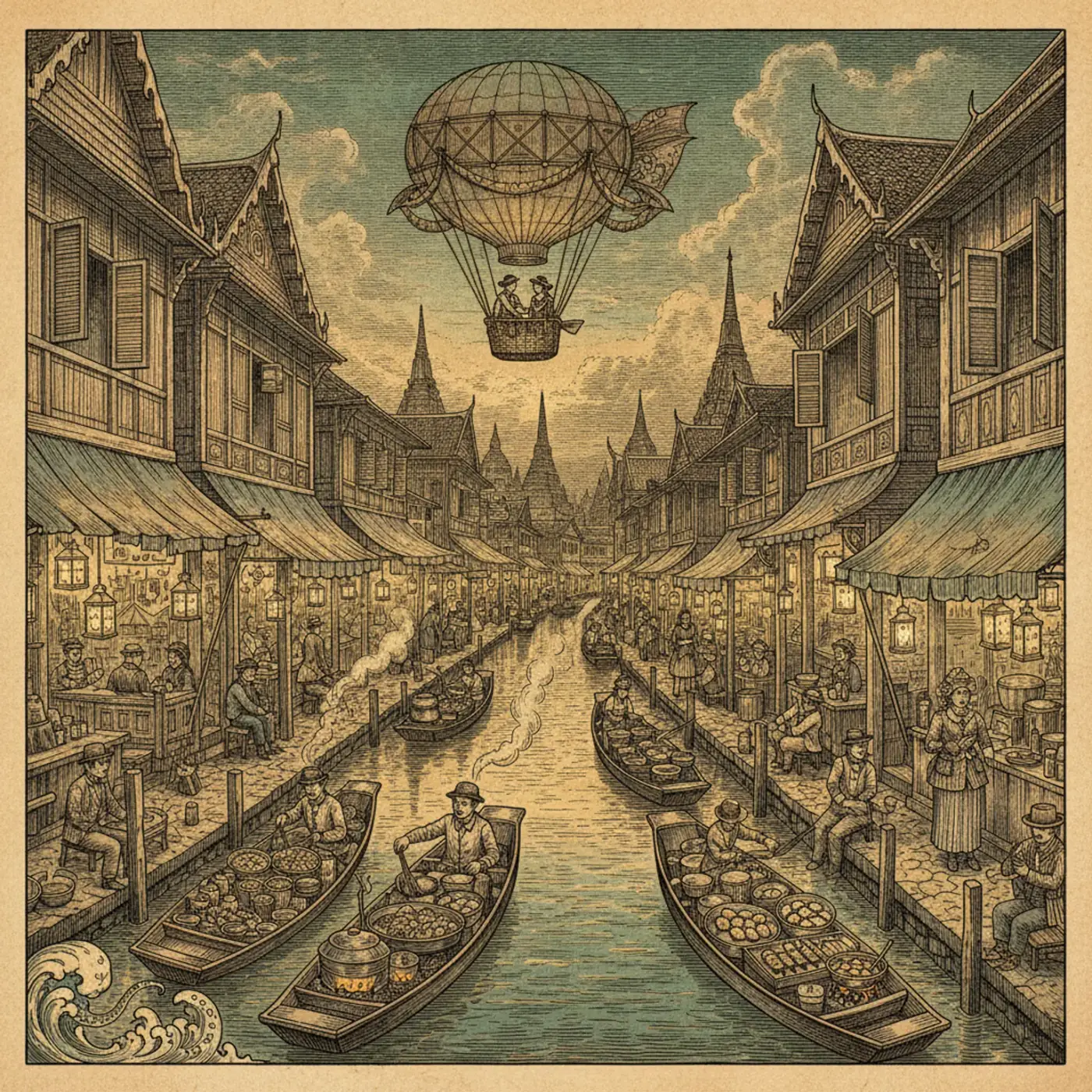
Now the stuff nobody tells you. There’s a boat noodle counter near Tha Tien, narrow tin shophouse, no English sign, little bowls of dark beef broth for about 50 baht each — you order three or four because the bowls are tiny on purpose. It’s the best 200 baht I spend in the old town, full stop. Look for the stack of empty bowls on the table; that’s how Thais signal they’re winning.
For mango sticky rice, skip the carts by the palace charging 150 and find the lady who sets up near Pak Khlong Talat, the flower market, in the late afternoon. Same dish, 60 baht, mango that actually tastes of mango. The flower market itself is worth the wander — it goes all night, and after dark its less chaotic and smells unreal.
And Krua Apsorn on Dinso Road. Sit-down, a bit smarter, still cheap-ish (mains 150–250). Their crab with yellow chili is the dish I think about on the flight home. A waitress there once corrected my order — “no, you want it less sweet, trust me” — and she was completely right. Trust the waitress.
What to skip, bluntly
The carts directly outside the Grand Palace. The “famous” floating-market food if your floating market is the staged one for tour groups — it’s fine, it’s just not where I’d spend a meal. And anything where a man with a clipboard ushers you toward a half-empty restaurant. Empty at lunch in this neighborhood means something.
Also: be a little careful with raw stuff and ice in the deep-budget stalls if your stomach’s new to Thailand. Not because the food’s dirty — it’s mostly fresher than what you get at home — but your gut needs a day or two. Cooked-to-order and piping hot is your friend on day one. By day three eat whatever you want.

A loose plan for one food day
Early breakfast of jok (rice porridge) from a cart near your guesthouse, maybe 40 baht. Wat Pho at opening. Mid-morning, a kanom (snack) and a coffee from one of the old-school shophouse cafés on Tanao. Lunch is boat noodles near Tha Tien. Afternoon at Wat Arun across the river — the 5-baht ferry is one of the great cheap thrills in Bangkok, by the way. Back for mango sticky rice at the flower market. Then Thip Samai for dinner, queue and all. You’ll spend maybe 600 baht on food the whole day and eat better than people dropping that on one hotel buffet.
That’s the secret of Rattanakosin. The temples are the headline. The food two streets back is the actual story, and almost everyone walks right past it on their way to a sad ketchup noodle.
Eat where the bowls are stacking up, ignore the laminated menus, and you’ll never have a bad meal in the old town. Promise.
This article contains affiliate links marked rel="sponsored". We may earn a commission at no extra cost to you.