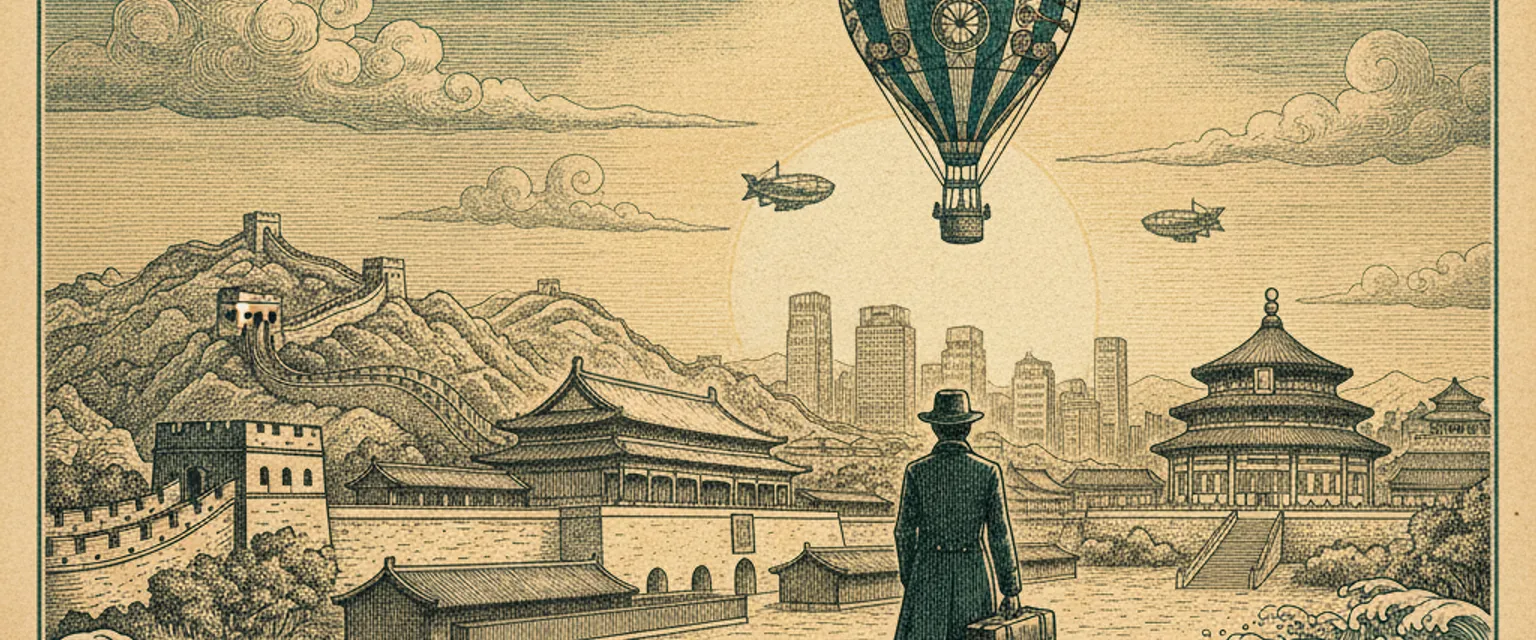
My phone died on day one in Beijing, which in a cashless, app-gated city is roughly the equivalent of losing a limb. No WeChat Pay, no Didi, no translation app. So I did it the old way: pointed at characters, got hopelessly lost in a hutong, and was rescued by a grandmother who walked me three blocks to a dumpling shop and refused to let me leave hungry. Best meal of the trip. Charge your power bank. Then maybe let it die once.
The Perfect Beijing Itinerary (2, 3, 4 & 7 Days)
📅 Planning your dates? See the best time to visit Beijing — season-by-season weather, crowds, and prices.
Two days in Beijing is a forced-choice exercise: the Forbidden City and Tiananmen one day, the Great Wall the next. That is the irreducible core, and it is enough to understand why this city has held the centre of Chinese power for six hundred years. Set up mobile payments and a VPN before you arrive — both are non-negotiable.
You must reserve Forbidden City tickets online days ahead with your passport — walk-ups are not sold. Do this first, before booking anything else.
72 Hours: Add the Temple of Heaven and the Hutongs
Three days lets the city breathe. You add the Temple of Heaven's vast park (where Beijing actually relaxes), a slow afternoon in the hutong lanes around the Drum and Bell Towers, and a proper Peking duck dinner instead of a rushed one.
4 Days: The Summer Palace and the Art Districts
Four days adds the Summer Palace — the imperial lakeside retreat that is the most beautiful thing in the city — and 798 Art District, the Bauhaus factory complex turned contemporary art zone that shows you the Beijing of right now rather than the dynasties.
7 Days: A Wilder Wall and the City's Quiet Corners
A week gives you a remote, unrestored section of the Great Wall, the Lama Temple and Confucius Temple, a day trip option, and enough time in the hutongs that the city stops being a list of monuments and becomes a place with a rhythm you start to follow.
Estimated budget:$130-$340
Estimated budget:$210-$540
Estimated budget:$300-$760
Estimated budget:$560-$1,500
Day 1
Tiananmen Square + Forbidden City
The ceremonial heart of imperial and modern China
Tiananmen Square
The largest public square in the world, and the symbolic centre of the country.
Tiananmen is vast, flat, and heavily monitored — bring your passport for the airport-style security at every entrance. Mao's Mausoleum sits at the centre (free, but queues are long and bag rules strict). The square is the formal threshold to the Forbidden City; cross under the giant portrait of Mao on the Gate of Heavenly Peace to enter.
The Forbidden City (Palace Museum)
Five hundred years of emperors, 980 surviving buildings, one unbroken central axis.
The Forbidden City is the world's largest palace complex and the single must-see of any Beijing trip. Walk the central axis through the great ceremonial halls, then escape the crowds into the side courtyards and the Treasure Gallery in the northeast. You must book a timed ticket online with your passport days in advance. Allow at least three hours; rent the audio guide.
Jingshan Park
Climb the hill behind the palace for the view that explains the whole city.
Jingshan is the artificial hill directly north of the Forbidden City, built from the earth dug for the palace moat. The pavilion at the top gives the definitive photograph: the golden roofs of the palace laid out along the central axis, with the modern city rising beyond. Twenty minutes of stairs, and the best perspective in Beijing. Entry is a few yuan.
Day 2
The Great Wall (Mutianyu)
The wonder of the world on Beijing's doorstep
Transfer to Mutianyu
The restored, less-crowded Wall section, about 90 minutes from the city.
Mutianyu is the right Great Wall choice for most visitors: well restored, dramatically set in forested mountains, and far less mobbed than Badaling. Take a private driver, a Didi, or a day-tour transfer — about 70 to 90 minutes each way. Avoid the tours that include jade-factory shopping detours; book a transport-only option.
Walk the Wall at Mutianyu
Watchtowers, ridgelines, and the toboggan back down.
Take the cable car up, then walk the ramparts between watchtowers — towers 14 to 20 are the most scenic and the climb is genuinely steep in places. The Wall rides the mountain spine in both directions as far as you can see. Come down via the cable car, or do what every visitor secretly wants and take the alpine toboggan slide back to the base.
Late lunch in the Wall village
Farmhouse food after the climb earns its keep.
The villages below Mutianyu have farmhouse restaurants serving hearty northern food — rainbow trout from the local streams, stir-fried wild vegetables, and hand-pulled noodles. The Schoolhouse at Mutianyu is the upscale option with Wall views; the small family places at the base are cheaper and just as satisfying after a morning of stairs.
Day 3
Temple of Heaven + Hutongs + Peking Duck
Imperial ritual by day, old-Beijing lanes by night
Temple of Heaven
Where emperors prayed for good harvests, and where Beijing now does tai chi.
The Hall of Prayer for Good Harvests — a triple-eaved circular temple of blue tile built without a single nail — is one of the most perfect structures in China. The surrounding park is where the city comes alive at dawn: tai chi, ballroom dancing, choirs, and aggressive games of jianzi. Arrive early to see the locals before the tour groups arrive.
Drum & Bell Tower hutongs
The grey-brick courtyard lanes that are the real old Beijing.
The hutongs around the Drum and Bell Towers and Nanluoguxiang are the surviving fabric of old Beijing — narrow lanes of single-storey courtyard homes, some now cafes and boutiques, many still lived in. Climb the Drum Tower for the drumming performance and the rooftop view across the grey-tiled maze. Wander on foot and get deliberately lost.
Peking duck dinner
The dish the city is named for, carved tableside.
Beijing's signature dish is roast duck, lacquer-skinned and carved at your table, wrapped in thin pancakes with scallion, cucumber, and sweet bean sauce. Siji Minfu near the Forbidden City is the local favourite (expect a wait); Da Dong is the upscale, crispier-skin version. Order the duck soup made from the carcass to finish.
Day 4
Summer Palace + 798 Art District
Imperial leisure and contemporary edge
The Summer Palace
The lakeside imperial garden that is the loveliest place in the city.
The Summer Palace is the Qing emperors' lakeside retreat — Kunming Lake, the Long Corridor of painted beams, Longevity Hill, and the famous Marble Boat. It is large; budget half a day and walk the full lakeshore, or take the dragon-boat ferry across. In summer the lotus blooms; in autumn the light off the water is the reason to come.
798 Art District
Bauhaus factories turned into China's leading contemporary art zone.
798 is a complex of disused East German-built munitions factories in the Dashanzi area, now full of galleries, studios, design shops, and cafes. The UCCA Center for Contemporary Art is the anchor institution. It is the clearest window in Beijing into the country's living art scene, and a complete tonal shift from the dynastic sights. Most galleries close Mondays.
Sanlitun for dinner and drinks
Beijing's most cosmopolitan night-out district.
Sanlitun is the embassy-district nightlife and shopping zone — rooftop bars, international restaurants, and the crowds of young, fashionable Beijing. It is where to come for a cocktail and a change from regional Chinese food. The hidden bars in the side lanes off Taikoo Li are better than the obvious main-strip venues.
Day 5
Lama Temple + Confucius Temple + Houhai
Beijing's living religion and its lakeside evenings
Lama Temple (Yonghe Temple)
Beijing's grandest Tibetan Buddhist temple, fragrant with incense.
The Lama Temple is the city's most important and atmospheric working temple — Tibetan Buddhist, thick with incense smoke and devotees. The final hall holds an 18-metre standing Buddha carved from a single sandalwood trunk, listed in Guinness World Records. It is genuinely active rather than a museum. Free incense is handed out at the entrance; arrive at opening for the calm.
Confucius Temple & Imperial College
Quiet courtyards of ancient cypresses and stone scholar steles.
A short walk from the Lama Temple, the Confucius Temple and the adjacent Imperial College are a haven of calm — courtyards of 800-year-old cypresses, and forests of stone steles carved with the names of every imperial-exam graduate over centuries. It is one of the most peaceful corners in central Beijing and rarely crowded.
Houhai Lake evening
Lakeside bars, rowing boats, and the hutongs lit up at night.
Houhai is the largest of the Shichahai lakes, ringed by bars, restaurants, and willow-lined hutong lanes. Hire a rowing boat in the late afternoon, then settle into a lakeside spot as the lights come on. It is touristy but genuinely pretty, and the surrounding courtyard lanes reward a wander away from the main drag.
Day 6
A Wilder Wall — Jinshanling
The Great Wall without the crowds or the restoration
Transfer to Jinshanling
A longer drive for a far wilder stretch of Wall.
Jinshanling is about two hours northeast of Beijing and worth the extra distance — long stretches are partly unrestored, the watchtowers are original, and on a weekday you can walk for an hour seeing almost no one. Arrange a private driver for the day; public transport here is awkward and slow.
Hike the Jinshanling Wall
Crumbling ramparts, dramatic ridgelines, and solitude.
The Jinshanling hike runs along a switchbacking mountain ridge with dozens of original watchtowers in varying states of handsome decay. It is more strenuous than Mutianyu — uneven steps, steep sections, no railings in places — but the reward is the Great Wall the way photographers dream it, snaking empty into the haze. Wear proper shoes and carry water.
Lunch near the Wall
Simple northern food at the base before the long drive back.
The base area at Jinshanling has a few basic restaurants serving the standard hearty northern fare — noodles, dumplings, stir-fried greens, and braised meats. It is fuel rather than fine dining, but earned after the ridge hike. Eat, then sleep on the drive home; you will have walked a serious distance.
Day 7
Markets, Parks & Departure
A last taste of the city before the airport
Beihai Park
An imperial lake-and-island garden in the heart of the old city.
Beihai is one of the oldest and best-preserved imperial gardens in China, centred on a lake with a white Tibetan-style dagoba crowning Jade Island. It is where Beijingers come to row boats, practise calligraphy on the paving with water brushes, and sing. A calm, green final morning a short walk from the Forbidden City.
Lunch near Wangfujing
Final dumplings on the city's most famous shopping street.
Wangfujing is the central shopping boulevard; skip the gimmicky scorpion-on-a-stick snack street and instead find a proper dumpling or noodle house in the surrounding lanes for a last real meal. Pick up tea or souvenirs here if you need them — it is convenient, central, and an easy final stop before heading out.
Departure (Capital or Daxing Airport)
Allow a generous buffer — both airports are far and security is slow.
Beijing has two airports: Capital (PEK) in the northeast and Daxing (PKX) far to the south — check which yours is, they are an hour apart. The Airport Express train and the Daxing line are the reliable ways in; allow extra time for the layered security checks. Confirm your departure airport the night before to avoid a costly mix-up.
Beijing is two cities wearing the same coat. One is the imperial capital of golden palace roofs, temple incense, and a Great Wall that still genuinely stops you mid-sentence. The other is a hyper-modern megacity that runs on apps, where cash is nearly extinct and a foreigner without WeChat Pay and a working VPN is half-paralysed. Get the logistics right and the wonders take care of themselves.
Do the boring prep before you fly. Reserve Forbidden City tickets online with your passport days ahead — there are no walk-up sales. Set up mobile payments linked to a foreign card, install a reliable VPN while you still can, and download offline maps. Carry your passport everywhere; you will need it for square entrances, train stations, and ticket gates.
How to Use This Plan
Two days is the unavoidable core: the Forbidden City and the Wall, full stop. Three adds the Temple of Heaven and the hutongs, and lets the duck dinner be unhurried. Four brings in the lovely Summer Palace and the 798 art scene. The full week earns you a wilder, emptier stretch of Wall at Jinshanling and the quiet temples most visitors never reach.
The weather makes the calendar. Aim for April-May or September-October — mild, clearer skies, and the city at its best. Summer is hot, humid, and thunderstormy; deep winter is bitterly cold but crowd-free if you can take it. Whenever you come, build in buffer time: distances are large, security is layered, and Beijing rewards the traveller who is not in a hurry.
This article contains affiliate links marked with rel="sponsored". We may earn a commission at no extra cost to you.