
[ ITINERARY · THE DISPATCH ]
3 Days in Nara: Bowing Deer, Giant Buddhas, and Japan's First Capital
A Nara 3 day itinerary that goes past the deer selfies. The world's biggest bronze Buddha, a temple on stilts, and Japan's very first capital — slow, and on foot.
Most people do Nara in three hours. They train in from Kyoto, feed a deer a cracker, photograph the big Buddha, and leave by lunch. And honestly? They miss the whole point. A proper Nara 3 day itinerary lets the place breathe — because before Kyoto, before Tokyo, this scruffy little city WAS Japan. Its first permanent capital, back in 710. The deer are great. The deer are not the story.
The first deer I met bowed at me. Lowered its head, deliberate, waiting. I bowed back, gave it a cracker, and it immediately tried to eat my map. So. Mixed feelings on the bowing thing. But that little exchange sort of set the tone for the whole trip — Nara is reverent and ridiculous in roughly equal measure.

Day 1: The Park, the Buddha, the Lanterns
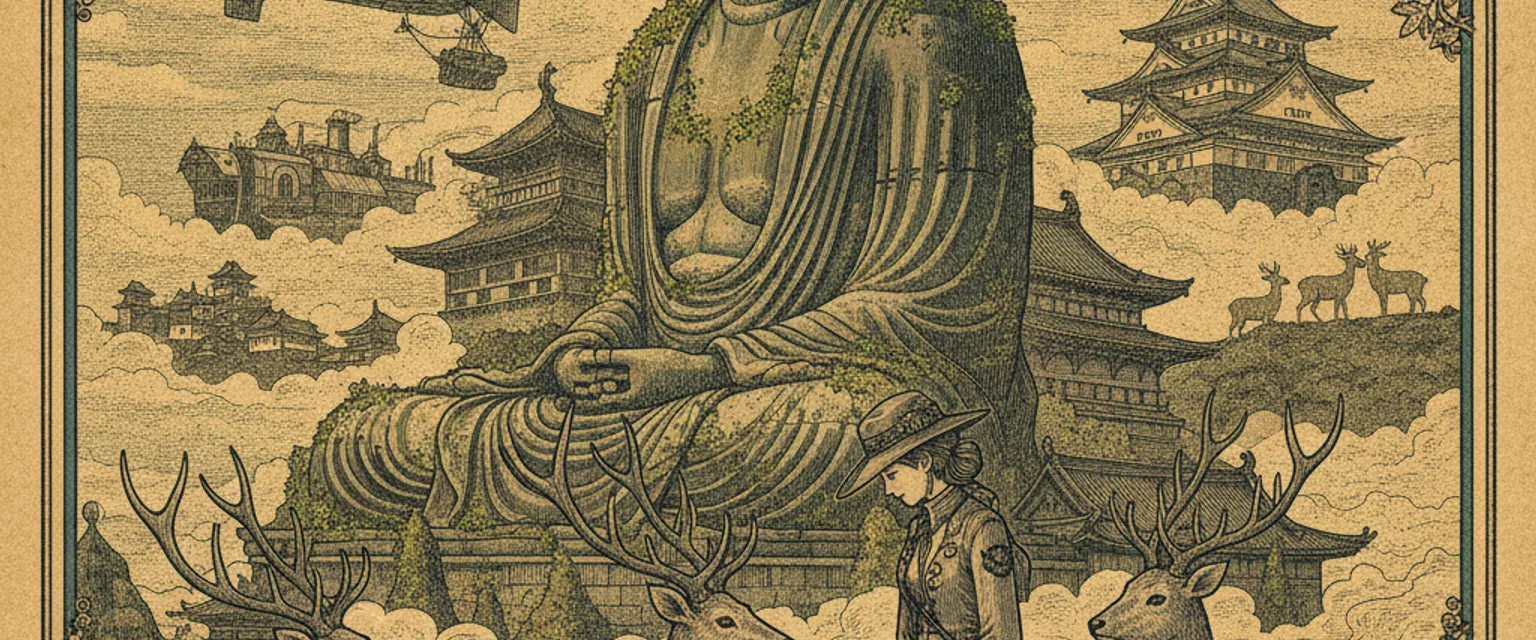
Nara Park is enormous and most of the big sights sit inside it, so you can do a lot on foot. Head straight for Todai-ji first thing, before the day-trippers land. The Great Buddha Hall is one of the largest wooden buildings in the world, and inside sits the Daibutsu — a bronze Buddha 15 metres tall, cast in the 700s, so big the photos genuinely don’t prepare you. You walk in, look up, and just go quiet.
Behind one of the great pillars there’s a hole said to be the size of the Buddha’s nostril. Kids (and limber adults) crawl through it for luck. I watched a businessman in a full suit get halfway and stick. Best ten minutes of my morning.
The deer roam free across the whole park — they’re sika deer, considered messengers of the gods, which is why they’ve had the run of the place for over a thousand years. Buy the “shika senbei” crackers from a stall (about ¥200 a bundle) and you’ll be mobbed. Hold them above your head and the deer get pushy. You’ve been warned.
Late afternoon, walk up to Kasuga Taisha, a shrine half-swallowed by forest and lined with thousands of stone and bronze lanterns. In the dim under the trees, with the moss and the lanterns and the deer slipping between the cedars, it’s the most atmospheric corner of the city. Go near closing when the light goes gold.
Day 2: The High Path and the Old Town
Climb up behind Todai-ji to Nigatsu-do, a hall on stilts cut into the hillside. Hardly anyone bothers with the short uphill, which is exactly why you should — the wooden veranda gives you the best view in Nara, the whole city laid flat below with the Buddha hall’s roof poking up out of the trees. I sat up there with a vending-machine coffee for an hour and it was the calmest I felt all week.
Come down into Naramachi, the old merchant district — narrow lanes, dark wooden townhouses, little shops in buildings that have been there for centuries. It’s where Nara stops being temples and becomes a lived-in town again. There are tiny cafés, a couple of sake places, and craft shops selling the local ink and brushes (Nara’s been making ink for monks for ages).
Eat kakinoha-zushi here — sushi wrapped in persimmon leaves, a local thing born before refrigeration, when the leaves helped preserve the fish. Sounds like a gimmick. It’s delicious, and it travels, so buy extra. For something hot, find a place doing chagayu, the tea-rice porridge the monks have eaten for breakfast for a thousand-odd years. Plain, warming, weirdly comforting.

Day 3: Horyu-ji and the Oldest Wood on Earth
Today you leave the deer behind. Horyu-ji is a short train ride southwest, and it holds the oldest surviving wooden buildings ON THE PLANET — the central pagoda and main hall date to around 700, and parts of the timber may be older. Let that sit for a second. Wood. Standing. For thirteen centuries.
It’s quieter out here, fewer crowds, more space to actually look. The proportions of the pagoda are perfect, and the old halls are full of early Buddhist statues, some of the finest in Japan. The whole complex is calm and a bit solemn and you don’t have to fight anyone for a photo. I spent a slow morning here and it was, I think, my favourite day.
Get back to Nara for a last walk through the park at dusk. The deer will still be there, doing their thing, slightly menacing about crackers. By now you’ll have made your peace with them.
Three days, and Nara went from “the deer place” to somewhere I’d genuinely go back to. It’s small, it’s old, it doesn’t try very hard, and that’s the whole charm. The first capital, just sitting there, getting on with it. With deer. Always the deer.
Stay the night, climb to Nigatsu-do, and remember the Buddha was here a thousand years before anyone thought to build Tokyo.
This article contains affiliate links marked rel="sponsored". We may earn a commission at no extra cost to you.