
[ ITINERARY · THE DISPATCH ]
Three Days in Gdańsk: Amber, Shipyards, and the Baltic's Prettiest Facades
Three days in Gdańsk: the absurdly handsome Long Market, the shipyard where Solidarity cracked the Eastern Bloc open, amber stalls down every lane, and a tram to Sopot when you want the sea. Here's my actual plan.
People sleep on Gdańsk. I did too, for years, filing it away as “that Polish port with the shipyard” until a friend who’d lived there told me, flatly, that it was the best-looking city in Poland and I’d been an idiot to skip it. She was right and I told her so. Planning 3 days in Gdansk itinerary-style is genuinely easy because the centre is small, walkable, and packed — but the depth surprised me. It’s beautiful and it’s serious, both at once.
Here’s how I’d carve up three days.

Day 1 — The Royal Route and the waterfront
The thing to understand: most of old Gdańsk was flattened in 1945. What you see was rebuilt, painstakingly, from old paintings and photographs — so it’s a reconstruction, technically, but a reconstruction done with such care that it doesn’t feel like one.
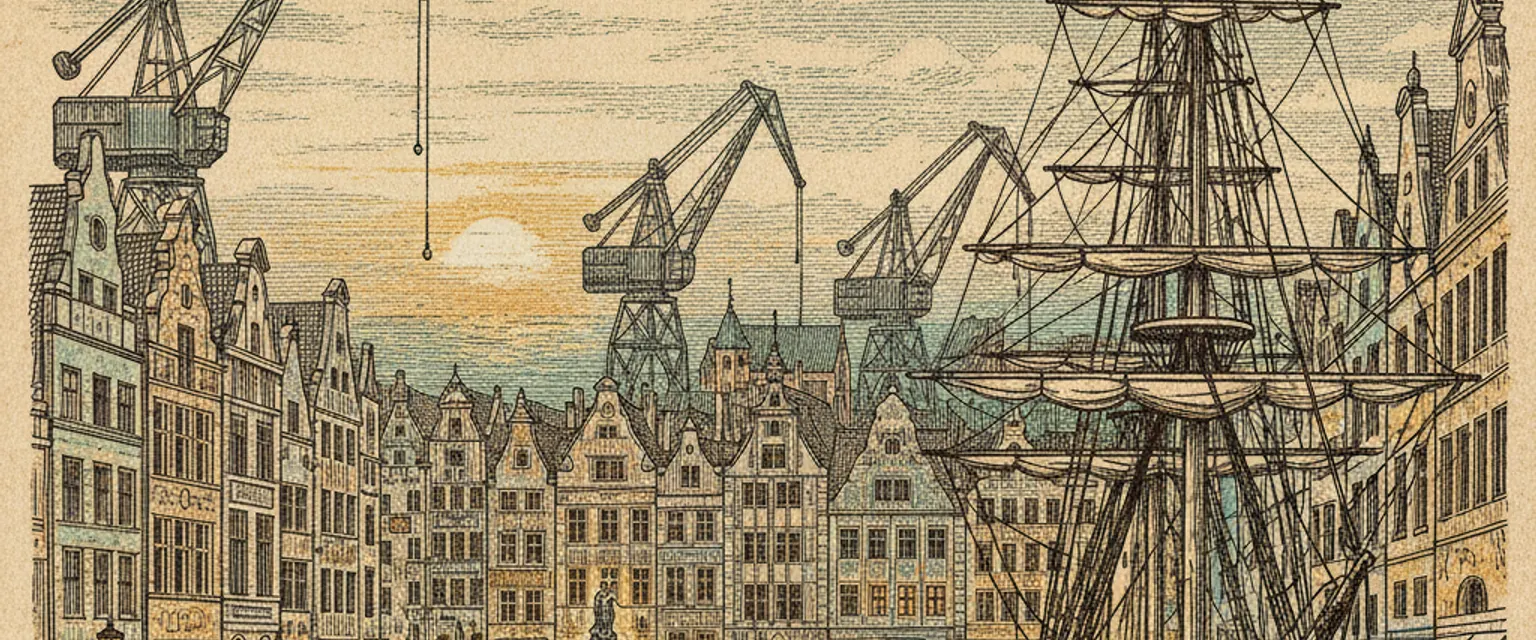
Walk the Royal Route (Droga Królewska) from the Golden Gate through to the Green Gate. The street it runs along, Długi Targ (the Long Market), is the showpiece — tall narrow merchant houses with stepped gables and facades in mustard, oxblood, sea-green, each one a slightly different flavour of show-off. Stop at Neptune’s Fountain, the bronze sea-god everyone photographs, and the Artus Court beside it.
Then drop down to the Motława river waterfront. The big wooden thing leaning over the water is the Żuraw, a medieval port crane — once the largest in Europe, used to load ships and step masts. Have a coffee on the embankment and watch the little tourist boats putter past.
For amber: it’s everywhere here (Gdańsk is the amber capital, the Baltic coast is where the stuff washes up), and Mariacka street is the prettiest place to browse it. Gargoyle waterspouts overhead, stone terraces out front, little stalls of honey-coloured stones. Haggle gently. And learn the rub-test — real amber warms and smells faintly of pine when you rub it; plastic stays cold.
Day 2 — Solidarity, and the weight of the place
Today’s the serious one. Walk or tram up to the old shipyard and the European Solidarity Centre (ECS). This is where, in 1980, an electrician named Lech Wałęsa climbed a fence into a striking shipyard and helped start the trade-union movement that, a decade later, helped bring down communism across the whole bloc.
The museum is extraordinary — built right by the historic Gate No. 2, with the towering monument to fallen shipyard workers outside (three steel crosses, very stark). Inside, the exhibition walks you through the strikes, the martial law, the underground years, the eventual collapse. Give it a morning. Properly. I went in thinking I knew the broad strokes and came out a bit wrecked, in the good way.
When you need air, the rooftop has a garden and a view over the cranes. Lunch nearby — the area’s gentrified into cafes and a couple of decent breweries.
Afternoon, lighten up. Wander back south and just get lost in the side streets. Find a milk bar (bar mleczny) for cheap, no-nonsense Polish food — żurek, the sour rye soup with sausage and egg, is the move. And the pierogi, obviously.
Day 3 — Sopot and the sea
Three days in Gdańsk and you’d be daft not to use one of them for the coast. The city’s part of the “Tricity” — Gdańsk, Sopot, Gdynia, strung along the bay — and Sopot is the easy, glamorous one.
Take the SKM commuter train (or a tram) — it’s roughly twenty minutes and costs almost nothing. Sopot is a faded-elegant seaside resort with a long sandy beach and the Molo, the longest wooden pier in Europe, stretching way out into the Baltic. Walk to the end. The water’s cold but people swim it in summer; I waded in to my knees and called that brave.
The main drag, Monte Cassino street (everyone calls it Monciak), runs from the station down to the pier and is lined with cafes, ice cream, and the wonky Krzywy Domek — the “Crooked House,” a building that looks like it’s melting, a proper photo magnet. Have an early dinner of fresh fish, watch the light go long over the bay.
Train back to Gdańsk in the evening, and if you’ve any energy left, the Motława waterfront at night with the Żuraw lit up is a lovely last image to leave on.
That’s three days. A handsome rebuilt old town, a museum that earns its emotion, a pocketful of amber, and a beach. Gdańsk gives you more than its reputation promises, and I’m a bit annoyed I waited so long.
Don’t be the person who skips Gdańsk — go, and bring an empty bag for the amber.
This article contains affiliate links marked rel="sponsored". We may earn a commission at no extra cost to you.