
[ ITINERARY · THE DISPATCH ]
The 3-Day Wrocław Itinerary: Hunt the Gnomes, Cross the Bridges
Three days in Wrocław: a candy-coloured market square, 600-odd bronze gnomes hiding at ankle height, and a tangle of canals and islands that nobody outside Poland seems to talk about. My exact plan, with the dumpling places that matter.
I’ll be honest, I almost didn’t go. Wrocław wasn’t on anyone’s list I trusted, and I’d planned 3 days in Wroclaw itinerary-style mostly as a cheap filler between Kraków and Berlin. Big mistake to underrate it. By the second afternoon I was crouched on a kerb photographing a thumb-sized bronze gnome pushing a tiny bronze ball, grinning like a child, and a Polish grandmother gave me a look that said: yes, we know, they get everyone.
So. Here’s how I’d spend three days here, having got it slightly wrong the first time so you don’t have to.
Day 1 — The Rynek, and learning to look down
Start in the Rynek, the main market square, which is one of the largest medieval squares in Europe and far prettier than that dry fact suggests. The townhouses are painted in sherbet colours — pistachio, salmon, a blue I can only describe as “Tuesday sky” — and the old Town Hall in the middle is a Gothic show-off with an astronomical clock. Get a coffee, sit, let your eyes adjust.
Then buy a gnome map. They’re sold at the tourist office on the square for a few złoty, and honestly it changes the whole trip. There are something like 600 of these little bronze fellows around the city (the count keeps growing, the locals keep commissioning new ones), and they started as a sly political joke in the 1980s — the anti-communist Orange Alternative movement used to paint gnomes over the spots where authorities had covered up protest graffiti. Now there’s a gnome firefighter, a gnome with an ATM card, sleeping gnomes, a gnome in a wheelchair. You’ll walk twice as far as you meant to because you spotted one across the street.
For lunch, skip the square-facing restaurants (you pay for the view, the pierogi suffer) and walk two minutes to Kurna Chata or any of the small milk-bar-ish places nearby. Pierogi ruskie — potato and twaróg cheese — should cost you almost nothing and arrive in a bowl that defeats most people. Get them fried, not boiled. Trust me on this.
Evening: climb the Town Hall area, find a bar in one of the cellar vaults. The thing about Wrocław is it’s a proper student city, big universities, so the nightlife isn’t tourist-priced. A beer costs about what a coffee costs at home.

Day 2 — Ostrów Tumski and the islands
This is the day Wrocław stopped being “nice” and became a place I’d come back to.
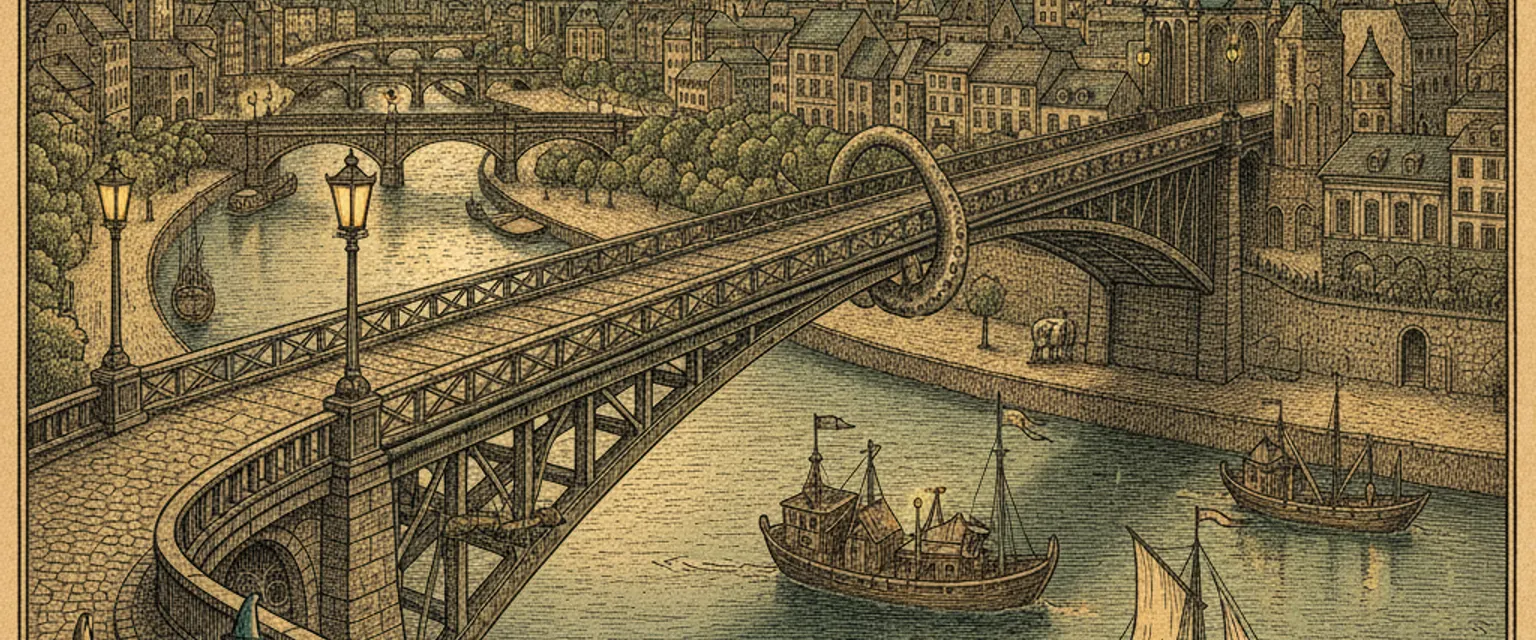
Wrocław sits on the Oder and a web of smaller channels, and the city counts twelve islands and somewhere north of a hundred bridges, which earns it the slightly grand nickname “the Venice of Poland.” It is not Venice. It’s better in one specific way: it’s empty. You can stand on a bridge at golden hour and have it more or less to yourself.
Walk out to Ostrów Tumski (Cathedral Island), the oldest part of the city, where it all began over a thousand years ago. The Cathedral of St John the Baptist has two towers you can take a lift up for the view — do it, the river map below makes the whole “islands” thing click. And the lanes here are cobbled, leaning, quiet.
Now here’s the bespoke bit, the thing I’d tell a friend. Come back to Ostrów Tumski at dusk. There’s a lamplighter — a real one, in a long coat — who walks the island every evening as the sun drops and lights the gas lamps by hand, one by one, with a long pole. It’s not a show put on for tourists; it’s just maintained, because the island still runs on gas lamps. I stood there with maybe four other people and watched a man light a street the slow way, and it was the most quietly moving thing I did in Poland. Time it for blue hour.
Earlier in the day, if you’ve got the legs, walk up to the Centennial Hall (Hala Stulecia), a vast early concrete dome that’s a UNESCO site, with the Japanese Garden and the Pergola fountain nearby. The fountain does a music-and-light thing in summer evenings. It’s a bit naff and I loved it.
Day 3 — Markets, panorama, and slow time
Day three is for the things that don’t fit a category. Go to the Hala Targowa, the old covered market hall near Ostrów Tumski — fruit, flowers, pickles, cheese, and old women who’ve sold there for decades. Buy lunch ingredients and eat by the river.
Then the Racławice Panorama: a colossal 360-degree painting of an 18th-century battle, housed in a purpose-built rotunda. You stand on a central platform and the painted scene curves all the way around with real terrain built into the foreground so you can’t tell where canvas ends and floor begins. It’s strange and old-fashioned and completely absorbing. Book ahead in summer, the timed slots fill.
Spend whatever’s left wandering. Find the gnomes you missed. Have one more bowl of pierogi. Buy a paczek (a Polish doughnut, jam-filled, slightly heavier than it looks) from a bakery, not a chain.
And that’s the trip. Three days, two long lunches, one lamplighter, and roughly forty photos of tiny bronze men. Wrocław doesn’t shout. That’s exactly why I’d send you.
Go before everyone figures it out — and yes, you’ll spend more time hunched over gnomes than you’d ever admit at a dinner party.
This article contains affiliate links marked rel="sponsored". We may earn a commission at no extra cost to you.