
[ ITINERARY · THE DISPATCH ]
3 Days in Krakow: Old Town, the Hard History, and Pierogi You'll Dream About
Krakow packs a fairy-tale square, a wrenching day at Auschwitz, and some of the cheapest, best food in Europe into three days. Here's how to give the hard history its weight and still leave full and happy.
Krakow is two trips wearing one coat. There’s the storybook one — Europe’s biggest medieval square, a dragon legend, pierogi for the price of a coffee back home. And there’s the heavy one — Auschwitz-Birkenau an hour away, and a Jewish quarter still reckoning with what happened to it. A good three days holds both without flinching from either or letting the grief swallow the whole trip.
Here’s how to pace it so the hard day lands properly and you still go home talking about the food.
Day 1: The old town and Wawel
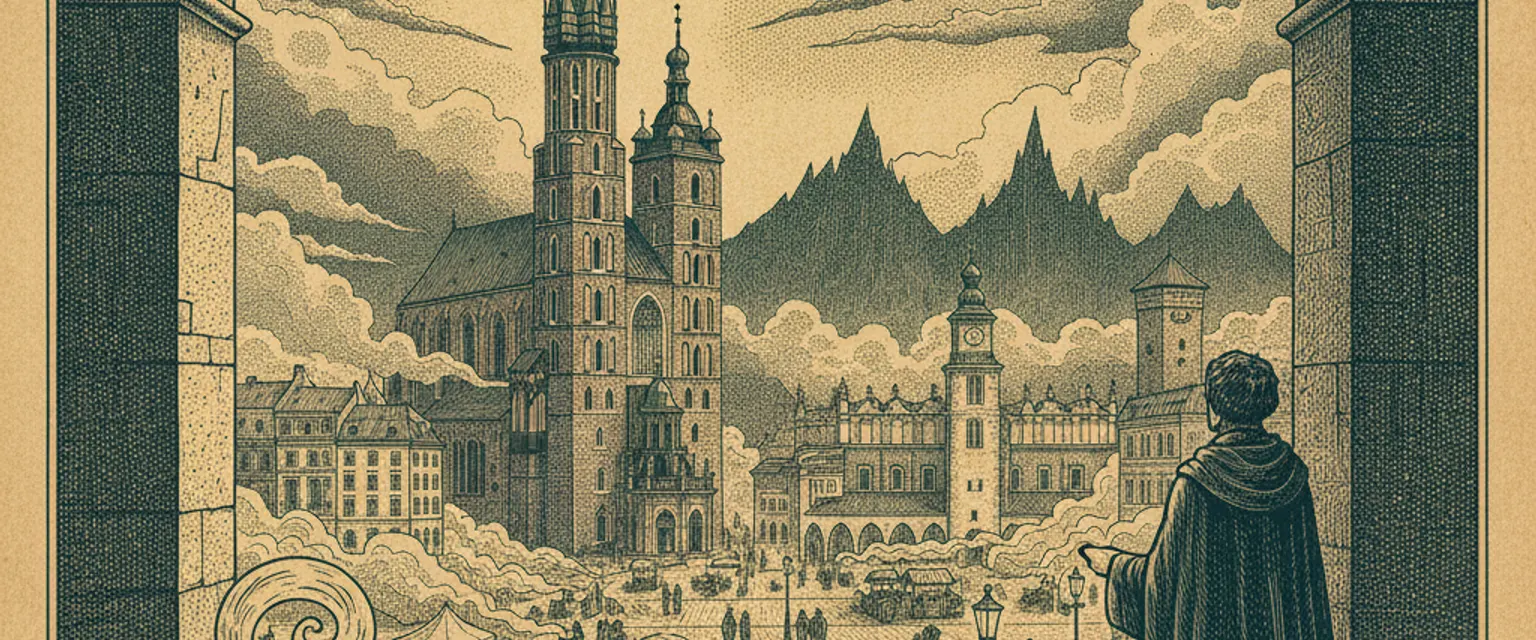
Start in the Rynek Główny, the vast main market square that’s been the city’s beating heart since the 13th century and, crucially, survived the war almost untouched. The Cloth Hall runs down the middle, a Renaissance trading hall still full of stalls. On the hour, listen for the hejnał, a trumpet call from the tower of St. Mary’s Basilica that cuts off mid-note to mark a trumpeter shot during a Mongol siege. Go inside St. Mary’s for the staggering blue-and-gold Veit Stoss altarpiece.
Walk south to Wawel, the castle-and-cathedral complex on the hill where Polish kings were crowned and buried. Then find the dragon statue by the river that breathes actual fire every few minutes, because Krakow contains multitudes.
For dinner, your first pierogi — pick a milk-bar-style spot, order the ruskie (potato and cheese) and a meat variety, and marvel that the bill is barely double digits.
Day 2: Auschwitz-Birkenau
Give this a full day and the seriousness it demands. Auschwitz-Birkenau is roughly 90 minutes from Krakow; the cleanest way is a booked tour with transport, or a public bus plus a pre-reserved entry slot. Tickets disappear weeks ahead in summer, so plan this before you fly.
A guide walks you through Auschwitz I, the brick barracks now holding the exhibitions, and then the vast, silent expanse of Birkenau, where the scale of it lands in a way no book prepares you for. It is quiet, exhausting, and necessary. Eat beforehand, bring water, and don’t schedule anything demanding for the evening.
Back in Krakow, keep the night low-key. A simple dinner, an early bed. You’ll need it.
Day 3: Kazimierz and the lighter notes
Spend your last day in Kazimierz, the historic Jewish quarter that fell silent after the war and has slowly come back as the city’s best neighborhood for food, vintage shops, and bars in crumbling courtyards. See the Old Synagogue and the small, moving Remuh cemetery, then cross the river to the Schindler’s Factory museum, which tells the wartime occupation of the whole city, not just the film.
Reward yourself in the evening. Grab a zapiekanka, the open-faced toasted baguette piled with mushrooms and cheese, from the round kiosk in Plac Nowy, and a glass of cheap, good Polish vodka somewhere with mismatched furniture. It’s the right way to end a trip that asked a lot of you.
Three days in Krakow makes you feel something real, then feeds you well enough to sit with it.
Should I visit Auschwitz on a Krakow trip? Yes — give it a respectful full day, book ahead, and don’t try to pair it with anything else that afternoon.
This article contains affiliate links marked rel="sponsored". We may earn a commission at no extra cost to you.