
[ ITINERARY · THE DISPATCH ]
4 Days in Xi'an: Terracotta Warriors, City Walls, and the End of the Silk Road
An honest 4-day Xi'an itinerary: the 8,000-strong terracotta army, a bike ride round the old city walls, and a Muslim Quarter that smells incredible. Real prices, real timing, the bits to skip.
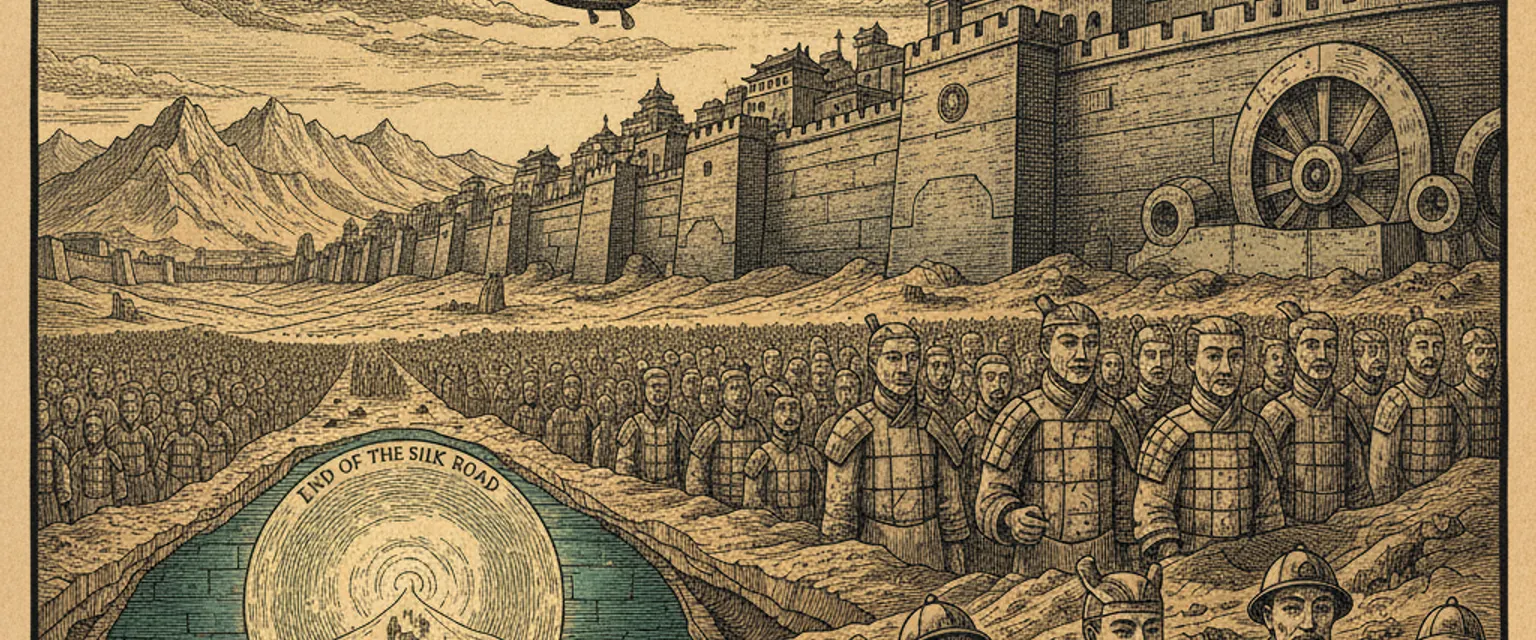
Here’s the thing nobody quite prepares you for in Xi’an: the terracotta warriors aren’t the best bit. They’re astonishing, don’t get me wrong, an 8,000-strong clay army that some farmers found while digging a well in 1974 — but my favourite memory of this Xi’an 4 day itinerary is hammering round the top of the old city walls on a rented bike at sunset with the smell of cumin lamb drifting up from the streets below. That’s the city. Ancient, walled, and absolutely ruled by its food.
Xi’an was the eastern end of the Silk Road, the capital of dynasty after dynasty, and the place where camel caravans dumped spices and traders dumped, well, themselves. You can still taste all of that. Four days does it justice.
Day 1: the city walls by bike, the Muslim Quarter by night
Ease in. The Ming-era city walls are the best-preserved in China — a full 14km rectangle, wide enough to cycle the top. Rent a bike at the South Gate (about 45 yuan for the loop, plus a deposit) and ride the whole circuit. It takes roughly two hours if you dawdle and stop for photos, which you will. Go late afternoon so you finish as the lanterns come on. The wall surface is bumpy old brick, so your backside will know about it, but it’s the single best orientation to the city you’ll get.
Then dinner in the Muslim Quarter (Beiyuanmen). This is the heart of Xi’an’s Hui community, and the smell hits you a street before you arrive — cumin, charcoal, frying. Eat your way down it. Roujiamo, the “Chinese hamburger,” shredded spiced meat in a crisp flatbread, is the thing to start with. Then yangrou paomo, mutton soup you crumble flatbread into yourself. Skewers of cumin lamb. Persimmon doughnuts for pudding. It’s loud, packed, gloriously greasy.

Day 2: the Terracotta Warriors, early or not at all
The Terracotta Army is about an hour east of the city. Get there for opening. I mean it. By mid-morning it’s a wall of tour flags and you’ll be photographing the back of someone’s head, but in the first hour you can actually stand at the rail of Pit 1 — the big one, rows and rows of warriors stretching back into the gloom — and feel the scale of it land. No two faces are the same. Whole regiments, archers, horses, a clay army built to guard a dead emperor for eternity. It got to me, honestly, more than I expected.
Take the public bus (Line 5/306 from near the train station, a few yuan) over a tour if you can — it’s cheap and easy and you go at your own pace. Visit the pits in reverse order, 3 then 2 then 1, so you build up to the showstopper instead of being underwhelmed by the small ones after.
Back in the city, rest your legs. You earned it.
Day 3: the Great Mosque, the Bell Tower, the Silk Road
Tucked in the back lanes of the Muslim Quarter is the Great Mosque of Xi’an, and it’s one of the loveliest, strangest places in the country — a working mosque built like a Chinese temple, all courtyards and carved wood and calligraphy, founded over a thousand years ago. Quiet, shaded, a total contrast to the food chaos outside. Small entry fee. Go in the morning when it’s calm.
Then the Bell Tower and Drum Tower at the city’s centre, lit beautifully at night. And if you’ve any appetite for it, the Shaanxi History Museum is genuinely brilliant for understanding the Silk Road trade that made this place rich — but it’s free and madly popular, so you must book a timed ticket online a day or two ahead or you simply won’t get in. People learn that the hard way alot.

Day 4: dumplings, the Pagoda, a slow goodbye
Last day, take it gently. Have a proper dumpling banquet if you can — Xi’an does a thing where you get dozens of tiny dumplings shaped like the animals or vegetables they’re filled with. It’s a bit of theatre but it’s fun, and the duck ones are great.
Then head out to the Big Wild Goose Pagoda, a 7th-century brick pagoda built to house Buddhist scriptures a monk hauled back from India. The square in front has a big musical fountain show in the evenings — cheesy, sure, but the locals love it and the pagoda glows behind it. A nice last image of the city.
A few honest notes. Xi’an’s air can be rough in winter, so check it. The high-speed rail connects it brilliantly to Beijing, Luoyang, Chengdu — it’s a natural hub, so build it into a bigger China loop. Set up mobile pay before you arrive. And whatever you do, don’t fill up before the Muslim Quarter; that street is the reason to come back.
Four days and I left genuinely moved — by the army, yes, but also by a city that’s been the centre of the world before, knows it, and just keeps frying lamb skewers about it. There’s something deeply reassuring in that.
See the warriors at dawn and the walls at dusk — but if you only do one thing in Xi’an, eat your way down Beiyuanmen until you can’t move.
This article contains affiliate links marked rel="sponsored". We may earn a commission at no extra cost to you.