
[ DISCOVERY · THE DISPATCH ]
The Tidal Islands You Walk To, If You Read the Tide Table Right
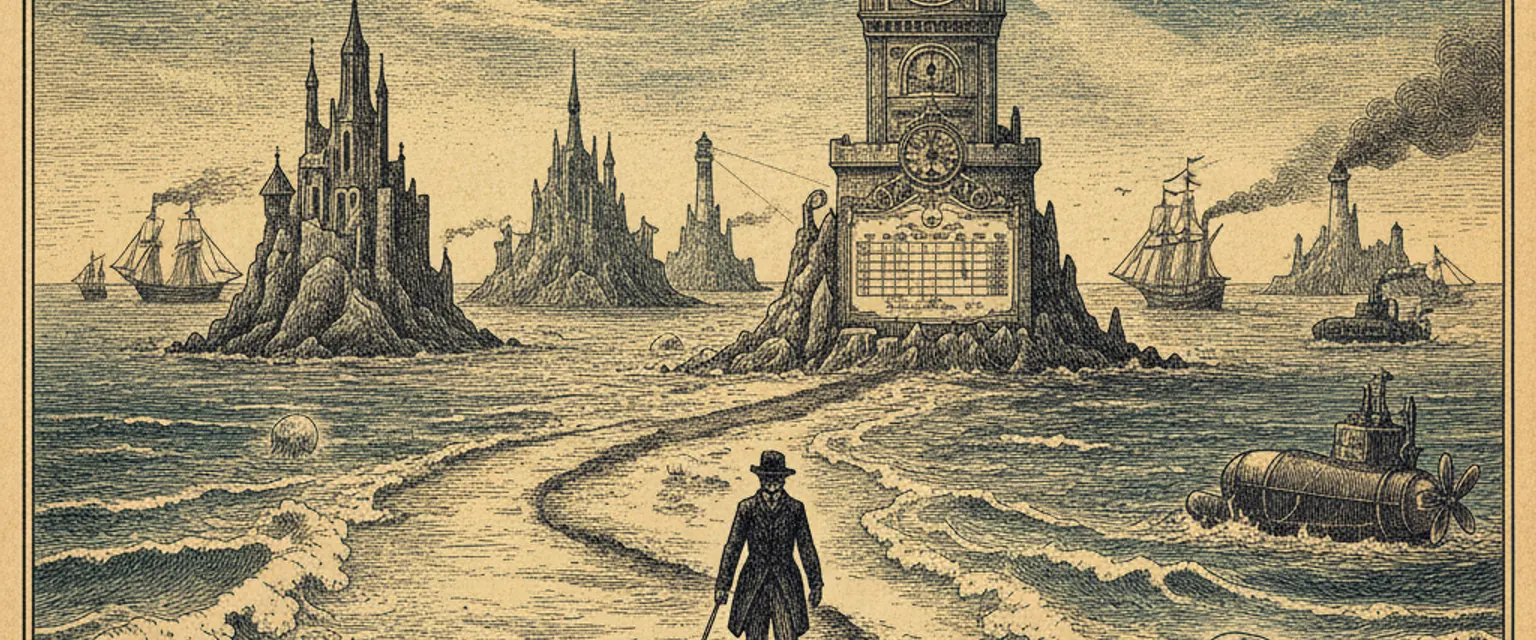
Twice a day the sea pulls back and hands you a road to an island — then takes it away again. Here are the tidal islands you can walk to, how to read the tide table so you don't get stranded, and the ones worth timing a whole trip around.
The first of the tidal islands you can walk to that I ever crossed, I nearly got it badly wrong. Lindisfarne, off the Northumberland coast, and I’d done the breezy tourist thing of glancing at a tide table, deciding I had “loads of time,” and ambling out onto the causeway with a coffee. Halfway across I noticed the water at the edges wasn’t where it had been. Not dramatically. Just… closer. Creeping in from both sides like it had somewhere to be.
I did not finish the coffee. I’ll put it that way.
Nobody drowned, nothing happened, I just walked faster than I’m proud of. But it taught me the one thing these islands demand and most visitors underestimate: the sea is not negotiating with you.

Lindisfarne (Holy Island): monks, a castle, and a wall of water
Lindisfarne, also called Holy Island, sits off the Northumberland coast in north-east England, joined to the mainland by a causeway that vanishes under the tide twice a day. It’s a cracking little island — a ruined priory where some of the earliest English Christianity took root, a tiny castle on a crag, a mead distillery, seal-dotted mudflats, and a population in the low hundreds who deal with being cut off from the world twice daily like it’s the weather. Because to them it is.
Here’s the crucial bit and I will keep saying it: there’s a published set of “safe crossing times,” and they are not the same as low tide. They give you a window, with a margin built in, and you must cross inside it. People ignore this constantly. There’s a famous refuge box on stilts in the middle of the causeway for idiots whose cars stalled or who misjudged it, and the local rescue teams pull someone off the roof of a flooded car with depressing regularity. Don’t be a roof person.

Mont-Saint-Michel: the one that looks fake and isn’t
Mont-Saint-Michel, off the coast of Normandy in France, is the headliner, and yes it’s busy, and yes it’s worth every bit of the hype. A medieval abbey stacked up a granite cone in the middle of a bay with some of the most extreme tides in Europe — the water famously rushes in “at the speed of a galloping horse,” which is the kind of line that sounds like marketing until you watch it happen and realise it’s just true.
These days a raised bridge means the abbey itself doesn’t get cut off the way it once did, so access is easier than it sounds. But the real experience — the one I’d push you toward — is a guided walk out across the bay sands at low tide with a proper licensed guide. The sands have quicksand and fast-moving channels and you genuinely should not freelance it, but with a guide you walk barefoot across the bay toward this floating fairy-tale, feeling the ground try to swallow your feet, and it reframes the whole place. Book the guided bay crossing. It’s the version most people never do.
St Michael’s Mount: Cornwall’s quieter twin
England has its own little Mont-Saint-Michel — St Michael’s Mount, off Marazion in Cornwall, a castle-topped island you reach by a cobbled causeway at low tide and by short boat when the sea covers it. It’s smaller, gentler, less of a circus, and there’s a real family who actually live in the castle, which I love. Tide’s in? Take the boat. Tide’s out? Walk the cobbles like a medieval pilgrim and pretend the gift shop isn’t there. Check the crossing times on the official site before you drive down; the the causeway’s underwater for a good chunk of the day.

A few more to time your trip around
Île Tristan, Brittany — a small wooded tidal island off Douarnenez, open to walk across only at low tide and only on certain days, which keeps it quiet and a bit secret-feeling.
Jindo, South Korea — once a year (sometimes twice) an unusually low tide opens a long “Moses” land path across the sea between two islands, and there’s a whole festival around walking it. Wildly atmospheric, wildly crowded, properly special if you catch the date.
Chapel Island / various Scottish tidal isles — Scotland’s coast is littered with these, often with a ruined chapel or a single house, and most get almost no visitors. A tide table and a sense of caution unlock a lot of them.
How to walk to an island and back
The whole skill here is one thing: respect the tide table, and then add a margin. Use the official safe-crossing guidance for the specific causeway, not a generic tide app, because the safe window accounts for how fast that particular crossing floods. Cross early in the window, return early in the next one, and if a single thing feels off — water creeping, weather turning, a wave of doubt — wait for the next cycle. The island isn’t going anywhere. The road is.
Wear shoes you can lose to mud and salt, bring a layer because the wind off open water is brutal, and take a photo of the times before you lose phone signal out there. And savour the genuinely odd feeling of it: walking a road the sea will erase behind you in a few hours, onto a place that’s only sometimes a place. There’s nothing else quite like it. Definately worth getting the timing right for.
Read the official safe-crossing times, cross early, leave early — get that one discipline right and the sea will hand you an island, then politely show you the door.
This article contains affiliate links marked rel="sponsored". We may earn a commission at no extra cost to you.