
[ ITINERARY · THE DISPATCH ]
3 Days in Cape Town for the Outdoorsy: Table Mountain, Penguins, and a Windy Lesson
Three active days in Cape Town, planned around the one thing nobody warns you about: the wind. Hike Table Mountain, meet the penguins, and learn why you watch the forecast like a hawk.
Short on time? The our full Cape Town itinerary, with maps turns all of this into a route you can actually walk.
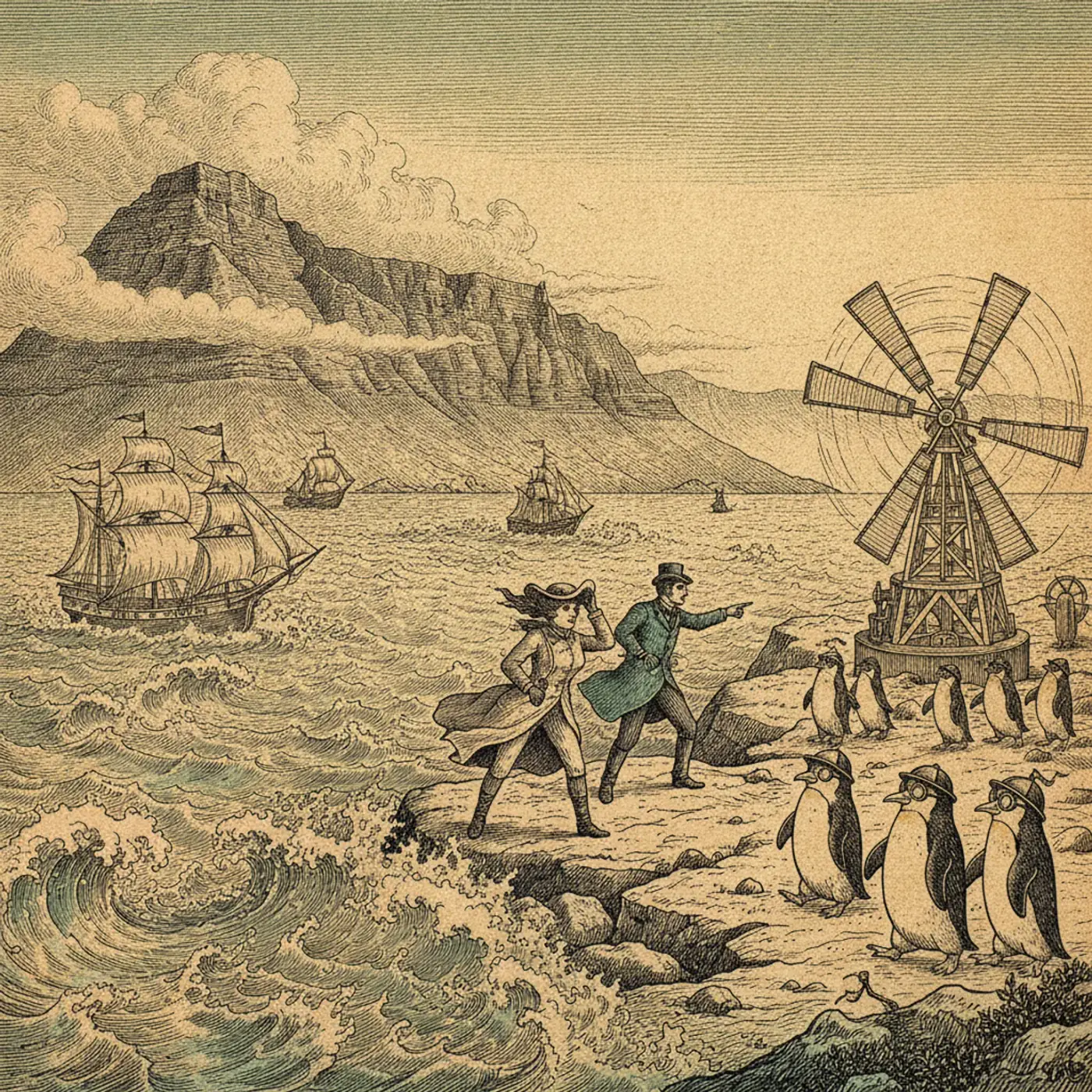
If you’re doing 3 days in Cape Town and you actually like being outside, you’re in for one of the great city-and-nature combos anywhere. Mountain, ocean, penguins, wine country, all within an hour. But there’s one thing the glossy brochures bury, and it nearly ruined my first morning: the wind. Cape Town’s southeaster — locals call it the Cape Doctor — can shut the whole show down. So this plan is built around it.
Lesson learned the hard way: I showed up day one ready to take the cable car up Table Mountain, got to the lower station, and found it closed. Wind too strong. Cars swinging. No go. Spent the morning sulking in a car park. Don’t be me. Check the wind, and keep your mountain day flexible.

Day 1: Table Mountain — but watch the forecast
Table Mountain is the whole reason the skyline looks like that — a flat-topped massif right over the city, often with a “tablecloth” of cloud pouring over the edge. You get up two ways: the rotating cable car (around R420 return, book online to skip the queue) or you hike it.
The classic hike is Platteklip Gorge — straight up the front face, about 2-3 hours, brutal on the legs, no shade, but no special skill needed. Start by 7-8am before the heat. Take way more water than you think (2 litres minimum), and you can cable-car back down if your legs are done. That’s the move I’d recommend: hike up, ride down.
The catch, again: high wind closes the cable car, which strands hikers up top. So if it’s blowing, either commit to hiking both ways or pick a sheltered hike instead — Lion’s Head is a brilliant shorter alternative (under 2 hours, a bit of chain-and-ladder scrambling near the top, 360 views) and it’s more wind-tolerant.
Day 2: The southern peninsula — penguins and Cape Point
Rent a car for this one, you’ll want the freedom. The drive down the Cape Peninsula is one of the best coastal roads on the planet.
First stop, Boulders Beach near Simon’s Town — yes, the penguins. A whole colony of African penguins waddling around granite boulders and a sheltered swimming beach. Entry’s around R190 (it’s a national park) and worth every cent. Go early, before the tour buses. They are absurdly close and absurdly charming.
Then carry on to the Cape of Good Hope and Cape Point at the tip of the peninsula — dramatic cliffs, the old lighthouse, baboons (keep your car windows up and don’t, do NOT, feed them, they’re cheeky thieves). There’s a funicular up to the lighthouse or a short steep walk. The whole southern point feels like the edge of the world, and on a clear day it nearly is.
Loop back up the Atlantic side via Chapman’s Peak Drive if it’s open — a toll road carved into the cliffs, genuinely jaw-dropping. Stop at Noordhoek or Hout Bay for fish and chips by the water.

Day 3: Coast, wine, or one more climb
Your call on the last day, based on legs and weather. Three good options.
If your legs survived: do Lion’s Head at sunrise (people hike it with headtorches to catch the sun — magic) or, if you didn’t get the mountain on day one, this is your backup Table Mountain morning.
If you want to slow down: the Cape Winelands are 45 minutes inland. Stellenbosch and Franschhoek do tastings for a few hundred rand and the setting — vines under jagged mountains — is unreal. Get a driver or do it as a tour if you’ll be drinking, obviously.
If you want beach and town: spend the morning at Camps Bay (gorgeous, but the water is shockingly cold — that’s the Atlantic, it’ll take your breath), then wander the V&A Waterfront or the Bo-Kaap, the brightly painted Cape Malay quarter, for the colour and the koeksisters (sweet spiced doughnuts).
A few honest safety notes, because Cape Town’s a real city with real inequality. Don’t hike alone or at dusk; trailheads have had muggings, so go in a group or on busy trails. Don’t flash phones and watches. Use a car or e-hailing after dark rather than walking unfamiliar areas. Common-sense stuff, but worth saying plainly.
A practical note on when to come, since it ties straight back to the wind. Cape Town’s summer (December to February) is gorgeous and warm but it’s also peak southeaster season — the wind is at its most relentless. Autumn, around March to May, is my pick: warm enough to swim, the wind eases off, the crowds thin, and the light goes golden in the late afternoon in a way that makes the whole peninsula glow. Winter (June to August) is green and dramatic and cheap but properly wet, so pack for it.
Three days barely scratches it — there’s diving, kloofing, kitesurfing (the wind that wrecks the cable car is a gift to kitesurfers, ha), so much more. But mountain, penguins, and one perfect coastal drive? That’s a brilliant first taste.
Watch the wind like your trip depends on it — because the mountain day does. Stay flexible, start early, and let Cape Town’s weather pick your itinerary as much as you do.
This article contains affiliate links marked rel="sponsored". We may earn a commission at no extra cost to you.