
[ DISCOVERY · THE DISPATCH ]
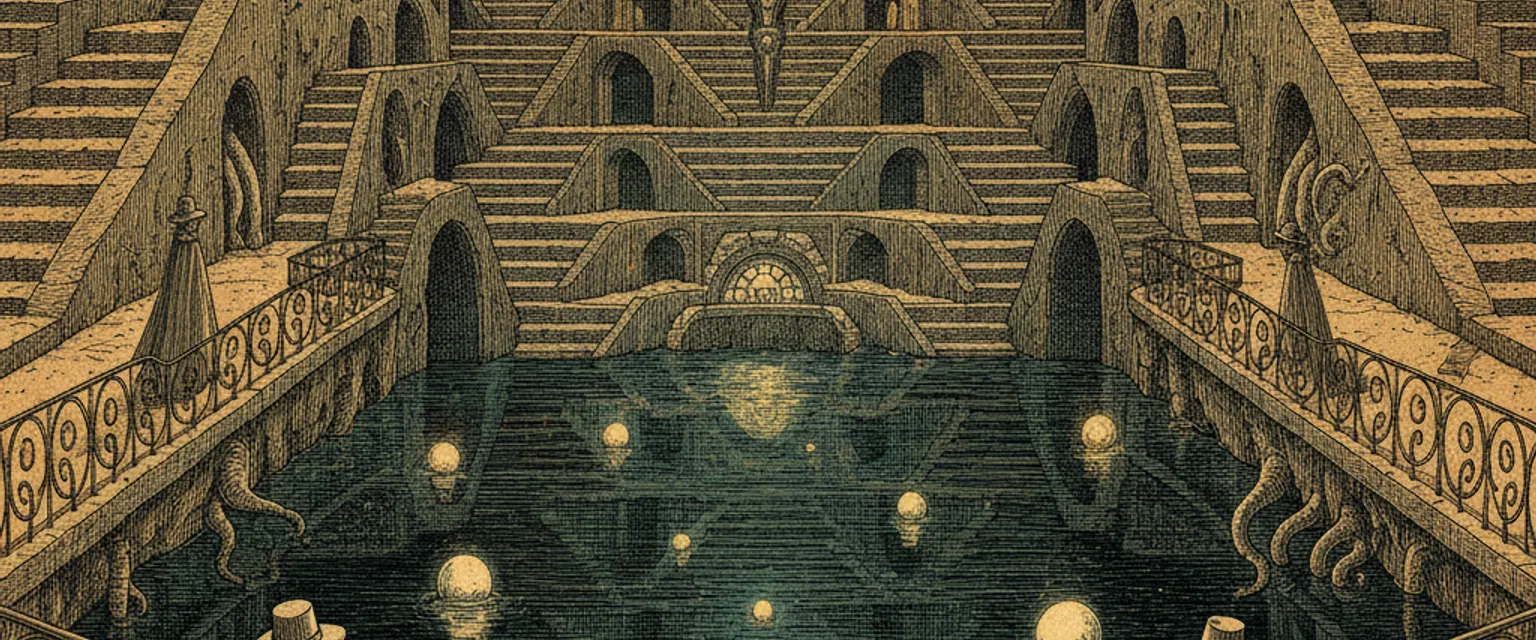
The Step Wells and Underground Reservoirs That Are Upside-Down Cathedrals
Staircases that plunge down instead of up, into cool subterranean dark older than most cathedrals. Here are the step wells and underground cisterns to visit, and the one in Gujarat that genuinely made me sit down on a step and stop talking.
The step wells and underground cisterns to visit, the buildings that go down
Most great architecture wants you to look up. Spires, domes, ceilings painted with heaven. Step wells do the opposite — and the first time I stood at the lip of one, in Gujarat, looking down into seven storeys of carved stone descending into cool blue shade, I genuinely felt my stomach do the same flip it does at the top of a tall building. Except I was looking down at a building. An upside-down one.
That’s the only way I can describe the step wells and underground cisterns to visit across India and beyond. They’re cathedrals built downward. People dug them centuries ago not for prayer but for water — to reach the falling water table in dry months — and then, because humans cannot leave a hole alone, they carved every surface into something so beautiful it stops being practical and starts being holy.
I’ve been chasing them ever since. Here are the ones that earned it.

Rani ki Vav, Patan — the one that shut me up
This is the one. Rani ki Vav in Patan, Gujarat, is an 11th-century step well built as a memorial by a queen for her king, and it’s so absurdly intricate that UNESCO listed it and India put it on the 100-rupee note. Seven levels of stairs descend toward the water, and the walls are lined with over 500 large sculptures — Vishnu in his various forms, apsaras doing their hair, a whole stone population frozen mid-life.
I went in the late morning when the light angles in, and I’ll admit it, I sat down on a step about halfway down and just stopped talking for a while. My guide, a man named Bhupendra who had clearly seen tourists go quiet before, just let me. Then he said, “Now you understand why the queen did it,” and walked off. Show-off.
It’s about 125km from Ahmedabad. Pair it with the Sun Temple at Modhera nearby and you’ve got a day that punches far above its weight.

Chand Baori, Abhaneri — the one in every film
If Rani ki Vav is the emotional one, Chand Baori near Jaipur is the dizzying one. 3,500 narrow steps in a perfect, vertiginous geometric lattice, plunging 13 storeys down. You’ve seen it even if you don’t know it — it gets used in films constantly because it looks computer-generated and isn’t. The symmetry is almost too much. It does a thing to your eyes.
You can’t walk down into it anymore (they’ve fenced the steps, sensibly, because 13 storeys of ankle-snapping stone with no railing is a lawsuit waiting to happen) but you don’t need to. The view from the top is the point. Go early. The tour buses from Jaipur roll in around 11 and it’s a smallish space.
Adalaj ni Vav, near Ahmedabad — the atmospheric one
Adalaj is my dark-horse pick. Five storeys, octagonal, and crucially much less visited than the famous two, so you can actually stand in the cool dark at the bottom in something close to silence. It’s noticeably colder down there — locals used to come down to escape the heat, and you feel exactly why. The carving mixes Hindu and Islamic motifs in a way that tells you something quiet and true about who built it and when. And alot of the time you’ll share the bottom level with maybe two other people.
And the ones that aren’t in India at all
Step wells are mostly an Indian genius, but underground water architecture goes global. The Basilica Cistern in Istanbul — the “Sunken Palace” — is an underground reservoir from the 6th century, 336 columns standing in shallow water, lit so the reflections double everything. There are two Medusa heads at the base of two columns, one sideways, one upside-down, and nobody’s entirely sure why, which is exactly the kind of thing I want from a 1,500-year-old building. Go right at opening or you’ll queue forever, it’s central and busy.
And in Iran, the qanat systems and the gorgeous Sardar-e Bozorg cisterns are a whole other world of subterranean water architecture, with these tall wind-catcher towers that ventilate the cool air below. Harder to reach, fewer crowds, deeply rewarding if you make the effort.

How to actually do these well
Step wells reward slowness, which is the opposite of how most people travel India. Don’t tick three in a day. Sit in one. Listen to how the sound changes as you descend — the traffic and the heat and the noise of the world above just… drop away, level by level, until at the bottom there’s this thick cool quiet. That’s the experience. The carvings are the excuse.
Bring a torch for the lower levels of the less-developed wells. Wear shoes you can grip in (the steps are worn smooth by centuries of bare feet and they’re slick). And go in the cooler months, roughly November to February, because Gujarat and Rajasthan in May will end you.
The thing I keep coming back to is that someone, hundreds of years ago, decided that fetching water — the most ordinary chore there is — deserved a cathedral. They were right.
Go down. The most beautiful buildings in the world aren’t always the ones reaching up.
This article contains affiliate links marked rel="sponsored". We may earn a commission at no extra cost to you.