
[ ITINERARY · THE DISPATCH ]
I Did New Orleans Without Jazz Clubs: A 3-Day Architecture and Cemetery Tour
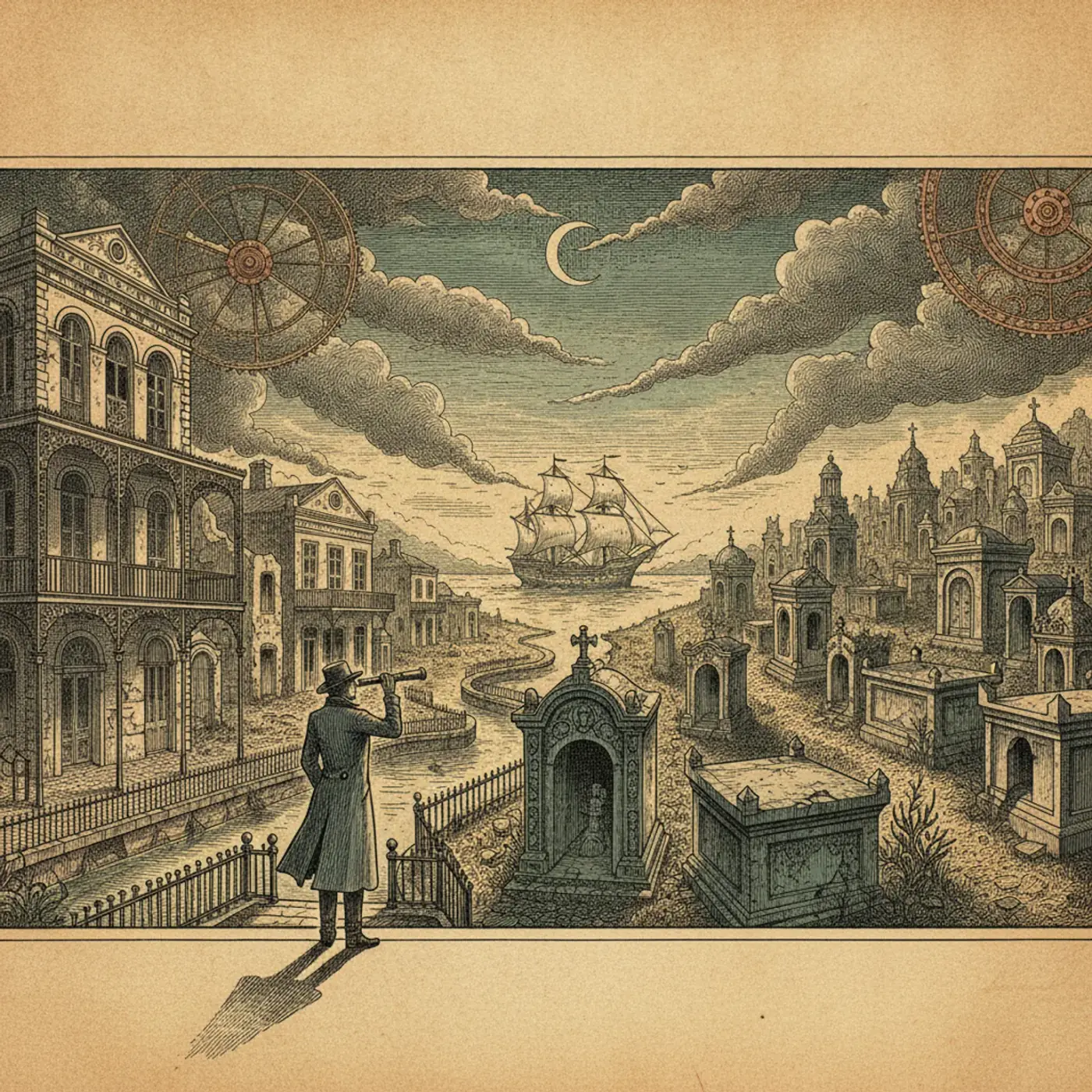
Skip Bourbon Street. New Orleans' real soul lives in its cast-iron balconies, above-ground tombs, and crumbling Creole cottages — and three days is exactly enough to feel it.
For the full day-by-day version of everything below, read the New Orleans itinerary with an interactive map.
I have a confession: I booked a trip to New Orleans and deliberately avoided every jazz club on every list. Not because I dislike jazz — I love it — but because I’d read the same five Frenchmen Street recommendations seventeen times and wanted to find out what the city looked like when you peeled that layer back.
What’s underneath is extraordinary. New Orleans is arguably the most architecturally distinctive city in North America, and its above-ground cemeteries are unlike anything outside of Havana or Genoa. If you’re the kind of traveler who feels vaguely over-sold on Bourbon Street before you even arrive, this itinerary is for you. For the full picture of what three days here can look like, my New Orleans trip planning hub covers the logistics side in depth.

Day 1: The French Quarter (Without the Hangover Crowd)
Get there early. I mean it — leave your hotel by 8:15am. The Quarter before 9am belongs to the delivery trucks, the locals walking dogs, and the odd tourist with a coffee. The architecture hits differently when no one is shouting.
What to actually look at: The cast-iron galleries on Royal Street between St. Peter and St. Louis are the dense heart of it — Lace ironwork, fern-filled balconies, and façades in that particular New Orleans shade of faded mustard. The Pontalba Buildings on Jackson Square (built 1849, still residential) are the oldest apartment buildings in the US and often get ignored in favor of the square itself. Look up at the monogram “AP” worked into the ironwork — that’s Micaela Almonester de Pontalba, who built them herself after a genuinely dramatic life involving a bad marriage and a gunshot wound.
The Hermann-Grima House on St. Louis Street (tours around $15, about 45 minutes) is worth every minute. It’s one of the few American Federal-style houses in the Quarter, which makes it architecturally odd in the best way. The docents know their stuff and won’t rush you.
Lunch: Café Maspero on Decatur. Cheap, cash-preferred, po’boys that actually justify the hype. Under $15 for a full meal.
Afternoon — the Tremé: Walk north from the Quarter into the Tremé neighborhood, which is older than the French Quarter and far less visited. St. Augustine Church (1841) on Gov. Nicholls Street is a landmark — it hosts the Tomb of the Unknown Slave in its side yard, which is one of the most quietly affecting memorials I’ve encountered anywhere in the Americas. The shotgun houses along St. Claude Avenue show you the vernacular architecture that shaped everything the Garden District later refined.

Day 2: The Garden District and Lafayette Cemetery No. 1
The Garden District is a thirty-minute streetcar ride from Canal Street on the St. Charles line ($1.25 each way, exact change or a Jazzy Pass). The cars are the real 1923 Perley Thomas originals — they are themselves a heritage object.
Get off at Washington Avenue. Lafayette Cemetery No. 1 is right there and it’s free, open 7am–3pm on weekdays. Unlike St. Louis Cemetery No. 1 (more on that tomorrow), Lafayette does not require a guide. You can wander the brick-vaulted society tombs and the family plots on your own. Anne Rice set scenes from Interview with the Vampire here; the cemetery society tombs for the German and Irish immigrant groups date to the 1830s and are genuinely beautiful in a crumbling, subtropical way.
Then walk. The blocks between Prytania, Coliseum, First, and Fourth Streets contain the highest concentration of antebellum mansion architecture outside of Natchez. The Brevard House (1857, 1239 First Street) is where Anne Rice actually lived for years. The Robinson House on Third Street has an Italianate tower that looks transplanted from a Tuscan hill town. None of these are regularly open to the public — but this is a walking itinerary and the exteriors are the point.
For dinner, stay in the neighborhood. Commander’s Palace (tip: jacket preferred at dinner, lunch is more relaxed and 25-cent martinis on weekdays) is the obvious splurge — but I’d argue the architecture of the building itself, a Victorian turquoise wedding cake of a structure, is worth the price of a cocktail even if you eat elsewhere.
Day 3: St. Louis Cemetery No. 1 and the Bywater
St. Louis Cemetery No. 1 is the most important thing on this itinerary. It is the oldest extant cemetery in New Orleans (1789), it contains the most elaborate above-ground tomb architecture in the city, and it definitley requires a licensed guide since the Archdiocese of New Orleans imposed the rule in 2015 after vandalism. Tours run about $25 and depart from the entrance on Basin Street. Save Our Cemeteries is the most reputable operator — book online at least a day ahead.
The tombs here are arranged like a city of the dead, with family crypts that have been continuously reused for 200+ years (New Orleans’ climate means a year entombed is enough for decomposition; the remains are then interred deeper in the vault). The most visited site is Marie Laveau’s tomb, which you should absolutely see — and the guides will contextualize her actual history rather than the tourist mythology. The Elizabeth Winn tomb (a beautiful Greek Revival example from the 1850s) is the one I keep thinking about.
After the cemetery, take the Canal Street streetcar to the river and walk or bike into the Bywater neighborhood. This is where New Orleans’ architectural history is still actively happening — shotgun doubles painted in colors that would be aggressive anywhere else but somehow work here, camelback houses with second-story additions built over back kitchens, and an increasing number of adaptive-reuse projects converting warehouses into studios.
The Holy Cross Historic District at the far end of Bywater has some of the most intact 19th-century working-class housing stock in the city. It’s unglamorous and genuinely worth an hour.

Practical Notes
Heat and timing: June through September in New Orleans is brutal. Start every day before 9am. By 1pm, retreat to air conditioning. The cemeteries and the Garden District offer almost no shade.
What this itinerary skips by design: Bourbon Street, Frenchmen Street, swamp tours, haunted pub crawls, beignets at Café Du Monde (fine, get one beignet — but don’t make it the point). If you want a different kind of intensive city experience, I’ve found similar depth in Bogota’s historic La Candelaria neighborhood and in Mexico City’s lesser-known colonias — the traveler who likes one tends to like all three.
Getting around: Streetcar for the Garden District, walking for the Quarter and Tremé, bike for Bywater. Rideshare fills the gaps. A car is unnecessary and parking is miserable.
Budget: This itinerary runs about $80–120/day including accommodation mid-range, meals at local spots, transit, and paid tours. The cemetery tours are the only real non-negotiable paid experience; everything else is optional.
For more ideas on how to route a trip through the region — including combining New Orleans with other Gulf Coast and Latin American destinations — the Americas itineraries hub has a lot of practical routing options. And if you’re the kind of traveler who obsesses over shoulder season timing (I am), the piece on why March in Bali is actually peak crowd applies the same sceptical logic I used to plan this trip.
New Orleans doesn’t need you to drink on Bourbon Street to reveal itself — it needs you to show up early, walk slowly, and look up.
This article contains affiliate links marked rel="sponsored". We may earn a commission at no extra cost to you.