
[ DISCOVERY · THE DISPATCH ]
The Cities With Secret Tunnels You Can Actually Walk Through
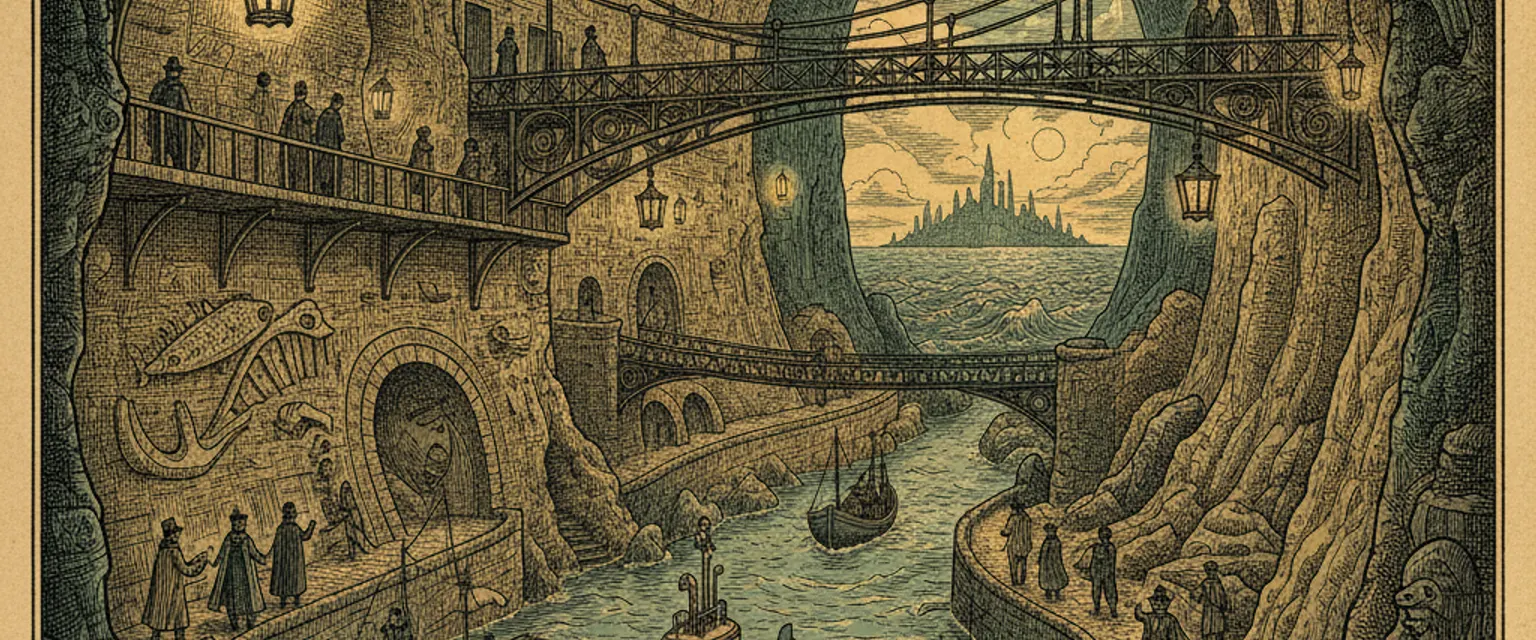
Under the pavement you're standing on, there's usually a second city — older, weirder, and mostly forgotten. Here are the secret tunnels under cities you can actually visit, what they cost, and how to not get scammed at the door.
The first time I went down into the secret tunnels under cities you can visit, I was in Naples, it was August, and the street above me was hitting something like 38 degrees. Down in the Galleria Borbonica it was maybe 16. I stood at the bottom of the stairs for a full minute just… breathing. Cold stone. Dripping somewhere off to the left. A smell I can only describe as wet history.
And I thought: why does nobody talk about this part of travel?
Everybody photographs the cathedral. Nobody mentions that there’s a whole other city forty feet below it.

Naples has a second Naples, and it’s the best one
The Galleria Borbonica was meant to be an escape tunnel for a nervous king in the 1850s. He never finished it. Then in WWII it became an air-raid shelter, and people basically lived down there — you can still see the scrawled names, the rusted bed frames, a child’s shoe. After the war the city used it as a sort of municipal junkyard and dumped confiscated cars and motorbikes into it, which is how you end up walking past a 1940s Fiat slowly being eaten by limestone. It’s surreal. It’s a bit sad. It’s gorgeous in a way that has nothing to do with being pretty.
There’s a standard walking tour (around €12 last time I went, cash easier than card at the booth) and a longer “adventure” route where you wade through old cisterns in waders they hand you. Do the adventure one. Yes it’s more. You’ll thank me.

Edinburgh: the close they sealed up and built over
Mary King’s Close is the one everyone means when they say “Edinburgh underground,” and for once the hype’s earned. It’s not really a tunnel — it’s a whole street, with houses, that got partially demolished, capped, and built on top of when they put the Royal Exchange up in the 1750s. So you walk down into what used to be open-air closes and you’re standing in someone’s 17th-century front room with the ceiling being, literally, the modern building above.
The plague stuff gets laid on thick (Edinburgh loves a grim story, and the guides are basically theatre kids, in the best way) but the genuinely moving part is small and quiet: a corner where people leave little toys for the ghost of a girl called Annie. I’m not a believer. I left a coin anyway. Don’t @ me.
It’s about £22 and you must book ahead — walk-ups get turned away constantly, especially in festival season. And it’s narrow down there, properly narrow, so if tight spaces aren’t your thing, know that going in.
Paris, but the legal bit
Everyone wants the Catacombs. Fine. They’re real, they’re a kilometer-plus of corridors lined with the bones of six million Parisians, stacked into patterns by people who clearly had a flair for the macabre. Tickets are around €29 if you book the official skip-the-line slot, which you should, because the standalone queue can eat two hours of your day and the sun outside doesn’t care about your feelings.
Here’s the thing though. The official route is a fraction of the actual tunnel network — there’s hundreds of kilometers down there, and yes, people sneak into the illegal parts. Don’t. I’m not being a coward, I just watched a guy get a very expensive fine and a very stern lecture, and the unmapped tunnels flood and collapse and there are stories that do not end well. The legal loop is plenty. It’s enough bones for anyone.

The honourable mentions
Seattle has its Underground — a ground-floor city that became a basement when they raised the streets one storey after a fire. The tour’s a bit kitschy and leans hard on dad jokes, but the history’s legit and it’s cheap and indoors, which matters in Seattle.
Brno, in the Czech Republic, has the Labyrinth under the Cabbage Market — old cellars merchants used to keep beer and store food and, occasionally, hide. Barely any tourists. Like four euros. One of the best-value undergrounds in Europe and almost nobody’s heard of it. (That’s the one I’d send you to if you wanted to feel clever.)
And Naples again — sorry — because Napoli Sotterranea is a different underground from the Galleria, ancient Greek-Roman aqueducts and quarries, and if you’ve got two days you can do both and they don’t repeat each other. The the city is basically hollow. It’s wild.
How to actually do this without a bad day
A few hard-won things. Book direct off the official site, not the third-party resellers that pad the price — I got stung once paying nearly double for a “tour” that was the exact same standard ticket with a markup. Bring a layer; it’s cold down there year-round, even in a heatwave, which is half the appeal. Wear shoes with grip because the stone is wet and the steps are old and uneven and definately not built to any modern code. And go on a weekday morning if you possibly can.
One more, and it’s the real tip: read the room when you’re underground. These places are graves and shelters and bits of people’s actual lives. The lad filming a loud video for his followers in the WWII shelter in Naples got a look from the guide that could curdle milk. Be the other kind of visitor.
The street-level city is the postcard. The one underneath is the secret. Go find the stairs.
Do one underground tour per trip and make it the local, weird one — not the famous one. The famous one has a gift shop. The weird one has a guide who actually cares.
This article contains affiliate links marked rel="sponsored". We may earn a commission at no extra cost to you.