
[ DISCOVERY · THE DISPATCH ]
The Walled Old Towns You Can Circle Entirely on Top of the Ramparts
Lap a whole medieval town from the battlements, no ticket gate in sight. Here are the city walls you can walk around in full, and the loop in Croatia where I nearly didn't make it back down before they locked the gate.
The city walls you can walk around, all the way, on top
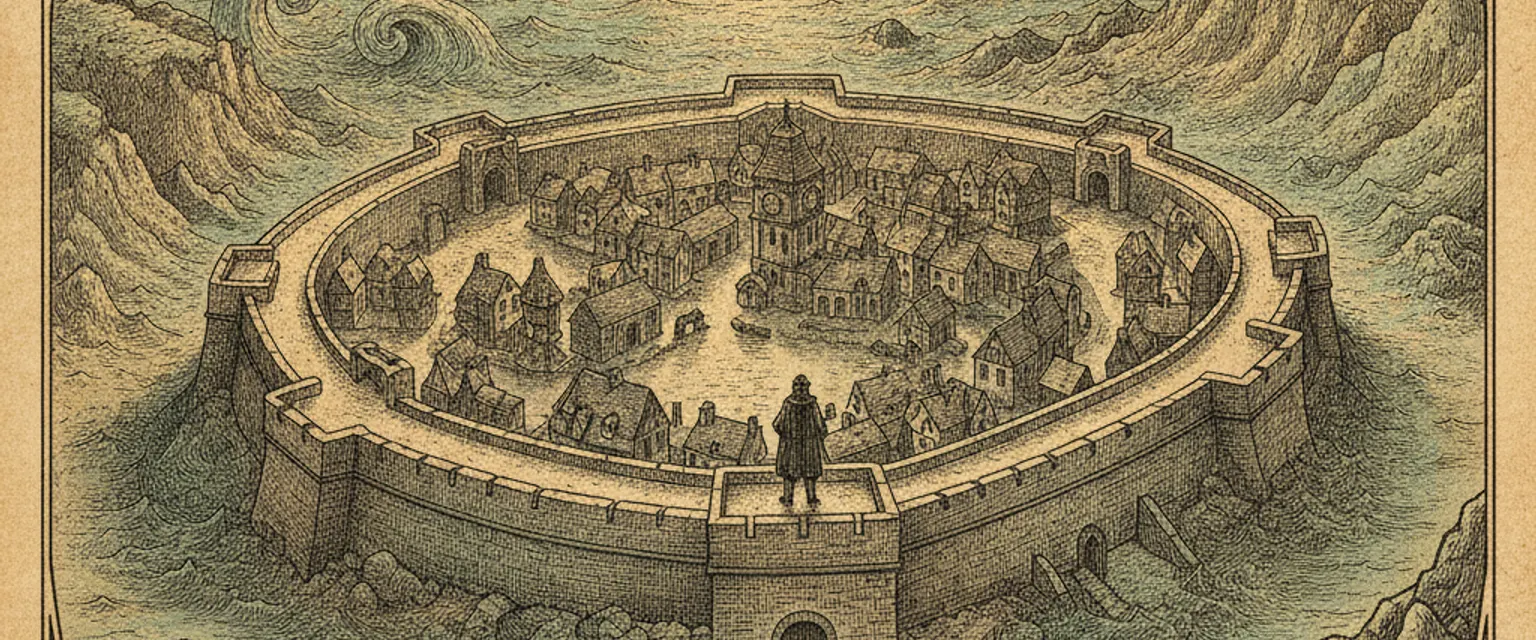
There’s a specific feeling you only get from walking the complete circuit of a medieval wall — that moment about two-thirds of the way round when you can suddenly see where you started, the whole town laid out below like a model, and you realise you’ve literally drawn a closed loop around an entire settlement on foot. I’m a sucker for it. I’ll detour hours for a wall I can walk in full.
Because here’s the thing: lots of towns have a bit of old wall, a fragment, a tower you can climb. Rare are the ones where you can do the complete lap, all the way round, never coming down, looking down into people’s gardens and back-courtyards the whole way. Those are the city walls you can walk around properly, and they are a different category of joy entirely.
Let me take you round my favourites.

Dubrovnik, Croatia — the famous one, and worth it anyway
Yes, it’s the Game of Thrones one. Yes, it’s expensive (around 35 euros now, which made me wince). Yes, in July it’s a hot, slow, sweaty shuffle behind a thousand other people. And I’m still going to tell you to do it, because the 2km circuit of Dubrovnik’s walls, up to 25m high with the Adriatic crashing on one side and a forest of orange rooftops on the other, is one of the genuinely great urban walks on earth.
The trick is timing, which everyone gets wrong. Don’t go at opening like the guidebooks say — everyone reads the same guidebook. Go about 90 minutes before closing instead. The cruise crowds have gone back to their ships, the light goes gold, and I nearly didn’t finish the loop before they started locking up. A guard whistled at me near the Minčeta tower. Worth it.

Lugo, Spain — the only complete Roman walls in the world
Here’s one almost nobody outside Spain knows, and it might be my actual favourite. Lugo, in Galicia, has the only entirely intact circuit of Roman walls left standing anywhere. Third century. Over 2km round, ten metres high, 71 towers, and — this is the best part — it’s completely free and it’s a public walkway. Locals jog it. Walk their dogs on it. Push prams round it. There’s no ticket, no gate, no opening hours.
I did a lap at dawn with a coffee and shared the entire wall with three joggers and a man feeding pigeons. The sense that you’re walking on something Romans built, that’s just… part of the town’s pavement now, is quietly staggering. And then you go down into the old town and eat octopus, because it’s Galicia and that’s the law.

York, England — the medieval bar walls
York’s walls are the most complete in England, about 3.4km, and they wind round the city in sections, dipping down at the old gateways (“bars”) and back up again. It’s not a perfect unbroken loop — there are a couple of gaps where the wall is gone — but you can do nearly the whole thing, and the stretch with York Minster looming over the rooftops is the postcard for good reason. Free, open dawn till dusk. Go in spring when the daffodils on the embankments below are out — somebody plants them every year and it’s gorgeous.
Carcassonne, France — the double-walled fortress
Carcassonne is almost too much, like a child drew a castle. Two full concentric rings of walls, 52 towers, the whole restored medieval cité sitting on a hill in the Languedoc. The outer ramparts and the lists (the grassy gap between the two walls) are free to wander; the inner château and its wall-walk you pay for. Do both. Walking between the two walls, in that strange dead space designed to trap attackers, is a genuinely eerie history lesson. Go off-season — in August it’s a theme park.

A few quicker ones worth the detour
Ávila in Spain has a magnificent complete circuit, golden granite, best seen lit up at night. Óbidos in Portugal lets you walk the walls with absolutely no railing in places, which is thrilling and slightly insane, so watch your footing and don’t do it with small kids or after wine. Rothenburg ob der Tauber in Germany has a covered wooden wall-walk that’s free and cosy in the rain. And the walls of Xi’an in China are so wide you can rent a bike and cycle the entire 14km circuit, which is a completely different and brilliant way to do the same idea.

Doing it right
A couple of honest things. These walls were built to be defended, which means they’re often narrow, uneven, and have steep stairs and few railings — wear proper shoes, watch the worn stone, and don’t film vertical videos while walking backwards (you know who you are). Check closing times and stick to them, because getting locked up top is a real, recurring tourist mishap and the guards have heard every excuse.
And go all the way round. That’s the whole point. The bit most people skip — the back stretch over the unglamorous side of town, the laundry lines and the bins and the cats — is often where you see how the place actually lives. The pretty quarter is for everyone. The full loop is for you.
Do the complete lap. A wall you only walk half of is just a viewpoint with extra steps.
This article contains affiliate links marked rel="sponsored". We may earn a commission at no extra cost to you.