
[ ITINERARY · THE DISPATCH ]
The Slow 5-Day Kyushu Itinerary: Onsen Towns, Volcano Sand Baths, and Empty Trains
Everyone funnels through Tokyo-Kyoto-Osaka and fights for elbow room. Down in Kyushu I rode half-empty trains between hot-spring towns and got buried alive in volcanic sand. Five slow days, the way southern Japan wants to be done.
The best decision I made on my last Japan trip was skipping Japan. Or at least the Japan everybody means — the Tokyo-Kyoto-Osaka conveyor belt where you queue for ramen and get herded past temples. I went south instead. And spending 5 days in Kyushu, the big southern island, felt like I’d found a back door into the country, the one with no line.
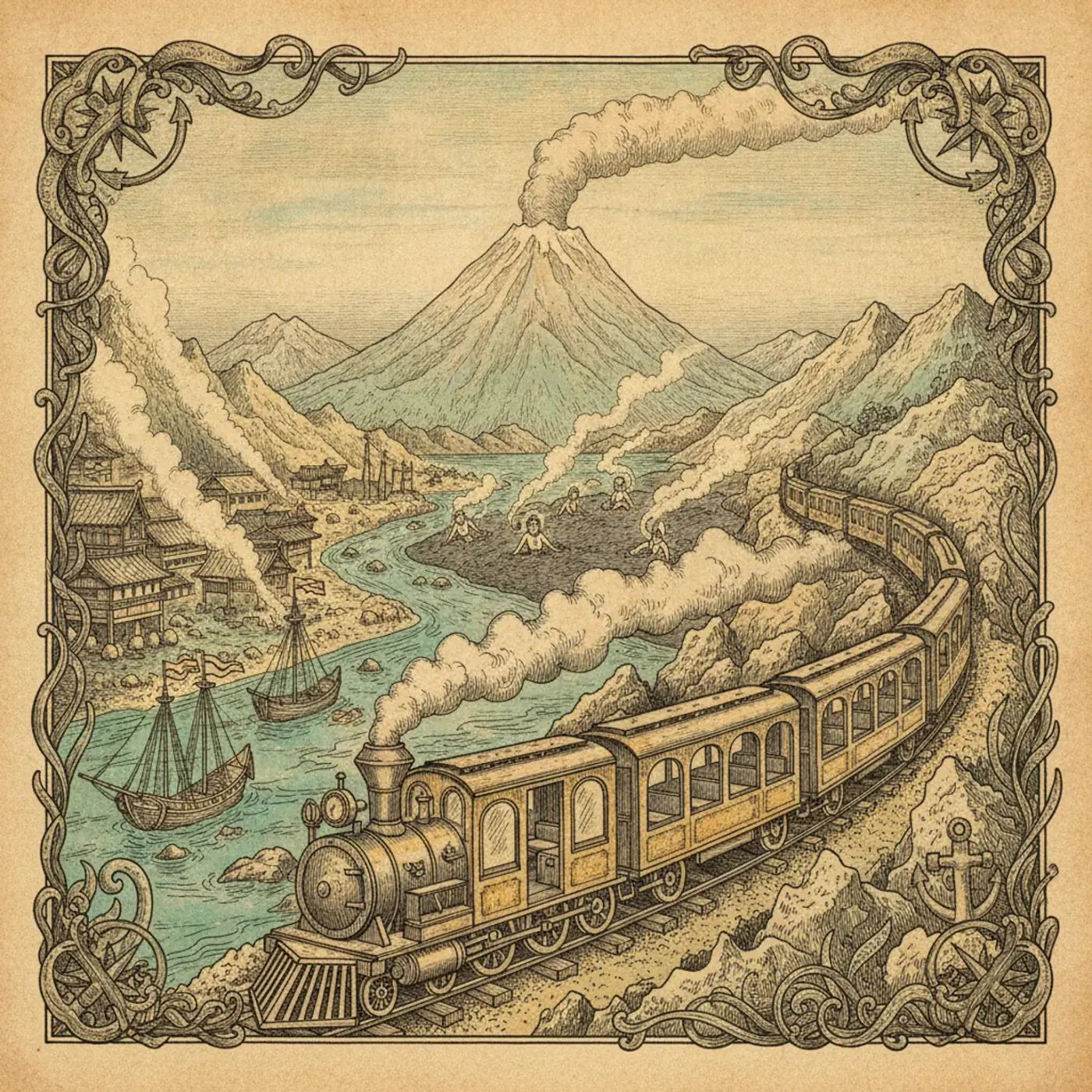
Kyushu is where Japan keeps its hot springs. It’s volcanic, green, steamy, and the trains — the genuinely beautiful JR Kyushu trains, designed by an actual famous designer — run half-empty. I had whole carriages to myself. Coming from the sardine-tin Shinkansen up north, it nearly made me weep.

Day 1: Fukuoka, ramen, and a soft landing
Fly into Fukuoka, the island’s biggest city, and ease in. It’s relaxed, food-mad, and small enough to feel human. The thing to do at night is the yatai — the open-air food stalls that line the river and Nakasu island after dark. You perch on a stool, knee to knee with strangers, and eat Hakata ramen, the local tonkotsu style with thin straight noodles in a milky pork broth. A bowl runs ¥800-1,000. Order a beer, do the “kaedama” thing (an extra noodle refill for about ¥150), and call it a night.

Day 2: Into the steam at Beppu
Take the train down to Beppu, the wildest hot-spring town in the country. The whole place literally steams — vents puff up between houses, and the famous “hells” (jigoku) are a string of bonkers thermal pools you look at rather than bathe in: one’s cobalt blue, one’s blood red, one has crocodiles, which, sure, why not. A combo ticket for the lot is around ¥2,200.
Then actually get in one. Beppu has every kind of bath, but the one to do is the sand bath at Takegawara, a creaky old wooden bathhouse from the 1930s where attendants in white bury you up to the neck in naturally heated black sand. You lie there, slowly cooking, sweating out whatever the ramen did to you. It’s around ¥1,500 and it is one of the strangest, most relaxing ten minutes you’ll have in Japan.
Day 3: Yufuin and the slow afternoon
Hop the gorgeous scenic train over to Yufuin, an hour or so inland, a smaller and prettier onsen village under the twin-peaked Mount Yufu. It’s a bit twee in the main street — souvenir crepes and roll-cake shops — but walk fifteen minutes to Lake Kinrin in the early morning and the mist comes off the water with the mountain behind it and you’ll forget the crepes existed.
Stay in a ryokan here if your budget stretches once on this trip, make it this. A proper ryokan with a private rotenburo (outdoor bath) and a multi-course kaiseki dinner served in your room runs ¥20,000-40,000 a head, and it’s the most quintessentially Japanese night you can buy. I splurged and don’t regret a yen of it.

Day 4: Mount Aso, one of the world’s biggest calderas
Train and bus toward Aso, where one of the largest active volcanic calderas on the planet has a whole patchwork of farms and towns sitting inside the old crater rim. When the volcanic gas levels allow it (check that morning, it closes when it’s venting too hard) you can go right up to the steaming crater of Nakadake. The grassland plateau around it, the Kusasenri, with horses grazing and the volcano huffing in the distance, is a landscape I did not expect to find in Japan at all. Big, raw, empty.
Day 5: South to the sand baths at Ibusuki
Make your way south to Ibusuki, near the bottom of the island, for the grand finale: the natural sand baths on the beach. Unlike Beppu’s indoor version, here the sand is heated by hot springs under the shore, and they bury you on the actual beach with the waves a few meters away. Around ¥1,100, yukata provided. Lying there steaming with the sea right there is, no exaggeration, my single favorite memory of the whole trip.
End in nearby Kagoshima, gazing across the bay at Sakurajima, the very active volcano that occasionally dusts the city in ash like it’s nothing. Locals carry little ash-bags the way other cities carry umbrellas. Eat kurobuta (black pork) shabu-shabu, raise a glass of the local sweet-potato shochu, and feel quietly smug that you saw the Japan everyone else flew over.
Five days barely scratches Kyushu, honestly. You could spend two weeks. But even five slow ones, riding empty trains between steaming towns, beats a frantic week fighting crowds up north.
Skip the Golden Route at least once. Go get buried in volcanic sand and ride the empty trains. The other Japan will still be there next time.
This article contains affiliate links marked rel="sponsored". We may earn a commission at no extra cost to you.