
[ ITINERARY · THE DISPATCH ]
I Spent 4 Days in Tokyo Chasing Kissaten Culture (Old Coffee Shop Tokyo)
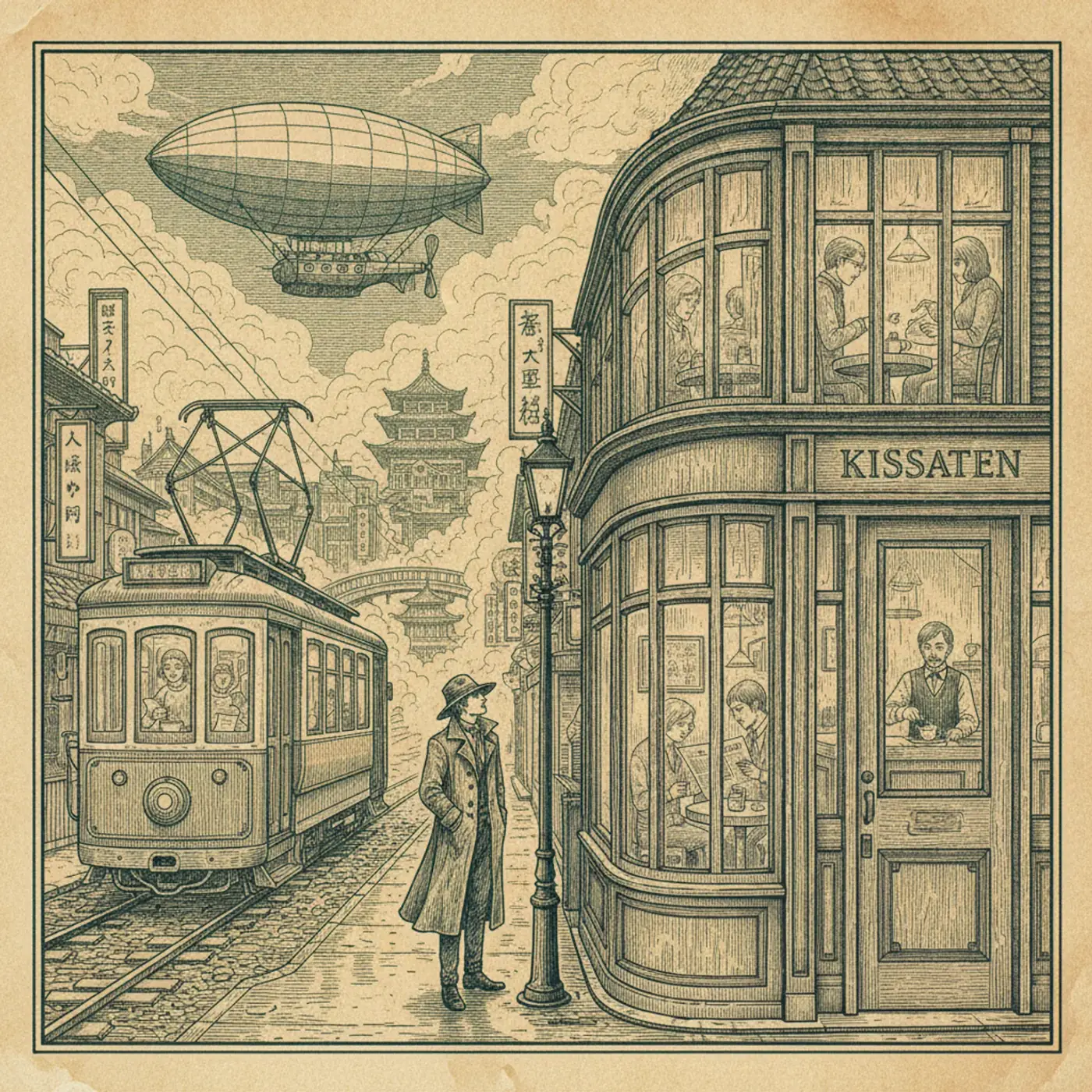
Tokyo's old-school kissaten — the analog, smoky, time-capsule coffee shops — are having a serious moment. Here's how I spent 4 days hunting them down, and what I found.
If you want the whole thing mapped out, see the plan your Tokyo trip day by day.
I almost missed the kissaten entirely.
I’d been to Tokyo twice before — theme parks, ramen shops, the usual itinerary-by-committee stuff. But on this third trip I had four free days, a deliberate plan to go slow, and a recommendation scrawled on a napkin by a barista in Kyoto: “Find Café de l’Ambre in Ginza. Order the iced coffee. Sit there for an hour. Don’t rush.”
That napkin turned into a four-day obsession with Tokyo’s kissaten — the old-school Japanese coffee shops that predate Starbucks by decades, and in some cases by half a century. If you’ve been watching the slow-living, analog-tourism wave building on travel forums since 2024, this is its Tokyo headquarters.
Here’s exactly how I spent those four days, what I ordered, what I paid, and the one mistake I made on day two that you should absolutely avoid.

What Even Is a Kissaten?
Before I get into the itinerary, a quick primer: kissaten (喫茶店) literally means “tea-drinking shop,” but in practice they’re coffee-first. They peaked in the 1960s and 70s, served as neighborhood living rooms for salarymen and students, and played jazz or classical music at volumes just low enough to think in. Many have the exact same furniture, menus, and owners they had fifty years ago.
They are not hip. They are not Instagrammable in the way Tokyo’s pastel dessert cafés are. They’re better.
If you’re building a broader Tokyo trip around this, my complete Tokyo Japan itinerary has the full city context — transport cards, neighborhood breakdowns, where to base yourself. This post assumes you’ve got the logistics sorted and just want the coffee.

Day 1: Ginza — The Original Scene
Café de l’Ambre, Ginza 8-chome. This is the pilgrimage site. Opened in 1948 by Sekiguchi Ichiro, who roasted his own beans and reportedly aged some of them for decades. The man passed away in 2018 at age 103, but the shop carries on. The interior is all dark wood and low lighting. The iced coffee — served in a wine glass — is a genuine revelation. Around 900 yen.
Get there when it opens at 1pm (it’s afternoon-only, which I learned the hard way — see Day 2). Sit at the counter if you can. Don’t rush.
From Ginza, walk ten minutes to Café Paulista, which is older (opened 1908) and louder. It’s more of a lunch spot, good for morning set culture if you arrive early enough another day. A morning set — coffee plus toast and a boiled egg — runs about 600-800 yen and is one of Tokyo’s best budget moves.
Afternoon: Walk the Ginza backstreets and poke into any café with a hand-written chalkboard menu and no wifi password signs. That’s how you find the ones that don’t have English-language write-ups.
Day 2: Koenji — The Hidden Locals’ Scene
Koenji is a 20-minute train ride on the Chuo line from Shinjuku and it has zero of Shibuya’s noise. It’s the neighborhood where musicians, vintage-clothing sellers, and the kind of people who still own record players actually live. It has, as a result, some of the best kissaten in the city.
Jikan (near Koenji Station north exit) is my favorite discovery of the whole trip. The owner plays his own vinyl — I happened to catch a full Coltrane album while drinking a hand-drip Kenya single origin that cost me 750 yen. He speaks almost no English. We communicated entirely through hand gestures and me pointing at things approvingly. It was genuinely one of the better mornings I’ve had traveling anywhere.
Nangoku Shokudo nearby isn’t strictly a kissaten but it edges into the category — a retro curry-and-coffee hybrid that serves thick Nepalese-influenced curry for around 1000 yen. Worth it for the atmosphere alone.
If you’re building a slow-culture trip across Asia, the same analog-obsessive sensibility carries beautifully into Seoul’s hidden café scene — worth reading before or after this one.

Day 3: Shimokitazawa — Neo-Kissaten Meets Record Shops
Shimokitazawa is where the kissaten aesthetic bleeds into the present tense. The neighborhood’s vintage shops and live music venues have always attracted people who care about texture and patina, and a newer generation of café owners has opened spots that honor kissaten traditions while being slightly more approachable for non-Japanese speakers.
Bear Pond Espresso is famous and slightly controversial — the owner has a famously strict no-photography policy, and the espresso is legitimately excellent. I’d call it neo-kissaten: the analog seriousness without the 1960s decor. Around 600 yen for a short black.
Shirabe is the real kissaten in the neighborhood — a tiny shop above a record store, jazz always playing, seating for maybe eight people. The master-drip coffee is slow (ten minutes, no exaggeration) and worth every second. 850 yen.
Budget a full afternoon in Shimokitazawa. Walk between the record shops and come back for a second coffee. This is the point — slow is the whole idea.
Day 4: Shinjuku Golden Gai and Ginza Redux
Golden Gai is best known as a bar district, but several of its 200-odd tiny spaces open in the morning as coffee shops. They don’t advertise this. You just walk down the alleys at 9am and follow the smell of brewing coffee.
I found Albatross open, which is technically a bar that serves drip coffee in the morning — 500 yen, no pretension, a space so small my elbows touched the walls on both sides. Come back after dark and it’s a completely different place.
By day four I’d also figured out that the kissaten scene has a geography that mirrors what slow-living travel looks like across Asia-Pacific — the best stuff is always slightly off the main tourist drag, found by walking and asking rather than searching.
For the afternoon, I went back to Café de l’Ambre. Second visit, same wine-glass iced coffee, same dark wood counter. Different jazz record playing. I was the only non-Japanese person there both times.
Practical Notes
Transport: Suica or Pasmo card loaded at the airport. Chuo line and Keio Inokashira line get you everywhere this itinerary goes.
Budget: Plan 600-1200 yen per coffee stop, 1000-1500 yen for any food. Four days of kissaten-hopping with lunch nearby ran me about 25,000 yen total, not counting accommodation.
Opening hours are unpredictable. Many kissaten close one or two days a week on days that aren’t weekends. Some keep hours that feel personal rather than commercial. Check Google Maps the morning of, not the night before.
Language: Pointing works. Having the kanji for “hand drip” (ハンドドリップ) on your phone works even better. Nobody I met was unfriendly about language barriers — patient and curious is more accurate.
Day trips: If you want a broader regional context — the same slow-travel instinct that pulls you to kissaten also makes places like Portugal’s lesser-known coastal towns and Bali’s quieter inland routes feel magnetic. Tokyo kissaten culture is part of a definately global shift toward travel that doesn’t perform itself on social media.
The Short Version
Go slow. Order whatever the master recommends. Sit longer than you think you should. Don’t check your phone.
Tokyo’s kissaten aren’t a nostalgia trap — they’re proof that the best version of coffee culture was always about the hour you spent there, not the cup.
This article contains affiliate links marked rel="sponsored". We may earn a commission at no extra cost to you.