
[ GUIDE · THE DISPATCH ]
Tokyo's Kissaten Belt: Navigating the Old-School Coffee Shops Locals Still Swear By
Tokyo's kissaten — the old-school, jazz-soaked, vinyl-heavy coffee shops that opened before Starbucks was a word — are having a real moment. Here's how to find the good ones without wandering in circles.
Short on time? The how to spend 3 perfect days in Tokyo turns all of this into a route you can actually walk.
I did not plan to spend three hours in a basement coffee shop in Shinjuku on my first full day in Tokyo. I had temples to see, a train pass to figure out, and exactly the kind of agenda that dissolves the moment you duck into a narrow stairwell because something smells extraordinary.
That basement was a kissaten. It had been there since 1971. The owner was playing a Chet Baker LP on a turntable that probably cost more than my flight. The coffee — a thick, slightly bitter cup poured from a siphon — arrived on a small tray with a single square of dark chocolate. Nobody spoke above a murmur. I paid 700 yen and sat there for two hours like a man who had finally found the thing he didn’t know he was looking for.
If you’ve been feeling the pull toward slower, more analog travel lately, Tokyo’s kissaten scene is worth building actual time around — not just a quick pit stop between shrines.

What Is a Kissaten, Exactly
Kissaten (喫茶店) translates loosely as “tea-drinking shop,” but they’re really Japan’s original coffee house culture — distinct from the newer specialty coffee wave. They peaked in the 1960s and 70s, declined through the Starbucks era, and are now experiencing something of a quiet revival driven partly by younger Japanese customers and partly by travelers who want something real.
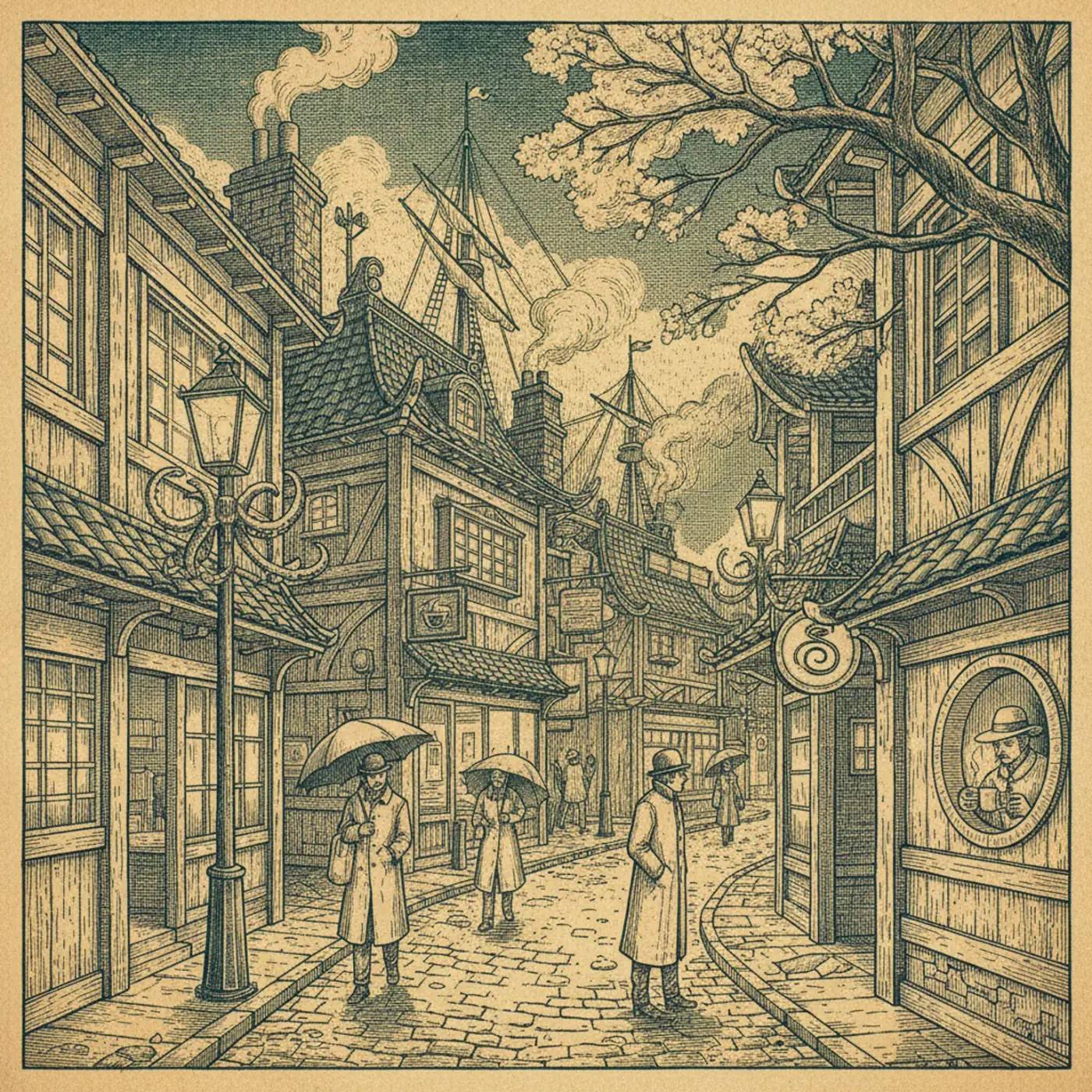
What sets them apart: they are not trying to impress you with pour-over technique. They are trying to give you a quiet place to think. Expect dark paneling, sometimes low lighting, upholstered seats that have absorbed a few decades of cigarette smoke (many older ones are still smoking-friendly — ask before sitting), and music played at a volume that demands attention. Jazz and classical are the most common, but some kissaten specialize so specifically — bebop only, say, or Baroque — that regulars come for the playlist as much as the coffee.
The coffee itself tends toward the older-style deep-roasted, slightly bitter profile. If you’re used to washed Ethiopian single-origins, recalibrate. This is different and worth the adjustment.
The Neighborhoods That Matter
Shinjuku (east side, toward Kabukicho): This is ground zero. The alleys running east from Shinjuku Station — particularly around Kabukicho’s backstreets and the older buildings near Hanazono Shrine — hide multiple kissaten that have been operating continuously for decades. Café de l’Ambre on Chuo-dori in Ginza is the famous one that gets cited everywhere, and it’s worth it, but Shinjuku’s cluster is denser and less tourist-trodden. Look for handwritten signs, steep staircases, and doors with the paint worn thin.
Koenji: My favorite neighborhood in Tokyo for this, honestly. Koenji’s shotengai (covered shopping streets) and the residential alleys around them have a concentration of kissaten that feel completely untouched by tourism. Café Ryo is a local fixture — small, classical music, lace curtains. The coffee set breakfast here (toast, a boiled egg, salad, coffee) runs about 550 yen and is one of the better morning deals in the city.
Shimokitazawa: Heavier on the vinyl-bar crossover. Many Shimokitazawa kissaten blur the line between jazz café and record shop — you can flip through bins while your coffee cools. This neighborhood skews slightly younger and a bit louder than Koenji’s spots, which some people prefer. If you’re planning a longer Tokyo stay and want to compare neighborhoods, the full Tokyo itinerary breaks down how to structure time across areas like these.
Ginza: Yes, it’s expensive, and yes, Café de l’Ambre (open since 1948) is worth the pilgrimage. The owner, now in his 90s, has been roasting and aging beans there since before most of his customers’ parents were born. A cup runs 1,000-1,200 yen. Order the iced coffee — they brew it hot and age it, then serve it over ice in a way that bears no resemblance to American iced coffee.
The Morning Coffee Set: Your Best Bet
One thing Western guides consistently undersell: the morning coffee set (モーニングセット) is a genuine institution. Show up at a kissaten before about 10:30am, order a coffee, and many places will include toast, sometimes an egg, and occasionally a small salad at no extra charge — the coffee price covers everything. It is a wildly good deal and a civilized way to start a day before the city gets going.
Budget roughly 500-800 yen for a full morning set. Most kissaten open around 8am. Some close as early as 5 or 6pm, so these are morning-and-afternoon spots, not evening destinations.

What You Might Get Wrong
A few mistakes I’ve watched other travelers make:
Treating it like a café. Kissaten have a specific social contract: you’re buying time and quiet as much as coffee. Don’t arrive with a laptop, plant yourself for five hours, and expect to take video calls. The owner will not ask you to leave, but the regulars will feel it.
Skipping the classics because they look touristy. Yes, Café de l’Ambre gets written up. Go anyway. The places that survive because they’re genuinely excellent deserve your money.
Only visiting one. The variation is the point — a Baroque-only kissaten in Shinjuku feels nothing like a record-shop hybrid in Shimokitazawa. Give yourself at least three visits spread across the trip.
Arriving after 4pm and finding it closed. More common than you’d think. This is not an evening culture.
A Note on the Analog Travel Trend
There’s a reason this subculture is getting attention right now. After a few years of hyper-optimized itineraries and content-farm travel, a lot of people — myself definately included — are craving places that feel like they pre-date the algorithm. Kissaten have that quality in abundance. They were not designed for Instagram. They were designed for sitting and thinking, which turns out to be remarkably useful when you’re jet-lagged and processing a city as dense as Tokyo.
It’s a feeling I’ve chased in other places — there’s something similar in Seville’s old bar culture, though the case for visiting Seville at its least obvious moment makes a different argument entirely. And if the analog-slow-travel instinct is pulling you toward Southeast Asia next, the Bangkok neighborhoods guide for remote workers has some Shimokitazawa-adjacent spots worth noting.
For the broader Asia planning picture, the Asia-Pacific itineraries hub is a good place to start connecting the dots.
One more thing: if you’re traveling alone with some guilt about the time away — maybe you’re a parent carving out a solo trip — I’d point you toward this honest piece on solo parent travel. Sitting quietly in a Tokyo kissaten for two hours is, in my experience, one of the more restorative things you can do. The guilt doesn’t survive the Chet Baker.
A Short List to Start With
- Café de l’Ambre — Ginza, open since 1948, aged coffee, worth the pilgrimage
- Ladrio — Jinbocho, one of the oldest named kissaten in Tokyo, classical music
- Sarutahiko Coffee — Daikanyama, newer but kissaten in spirit, excellent beans
- Koenji area spots — no single famous name; just walk the side streets after 9am and follow the smell
The best Tokyo coffee experience you’ll have is probably in a basement that has no Google reviews, a menu that hasn’t changed since 1983, and a record playing that you can’t name — and you’ll sit there longer than you planned.
This article contains affiliate links marked rel="sponsored". We may earn a commission at no extra cost to you.