
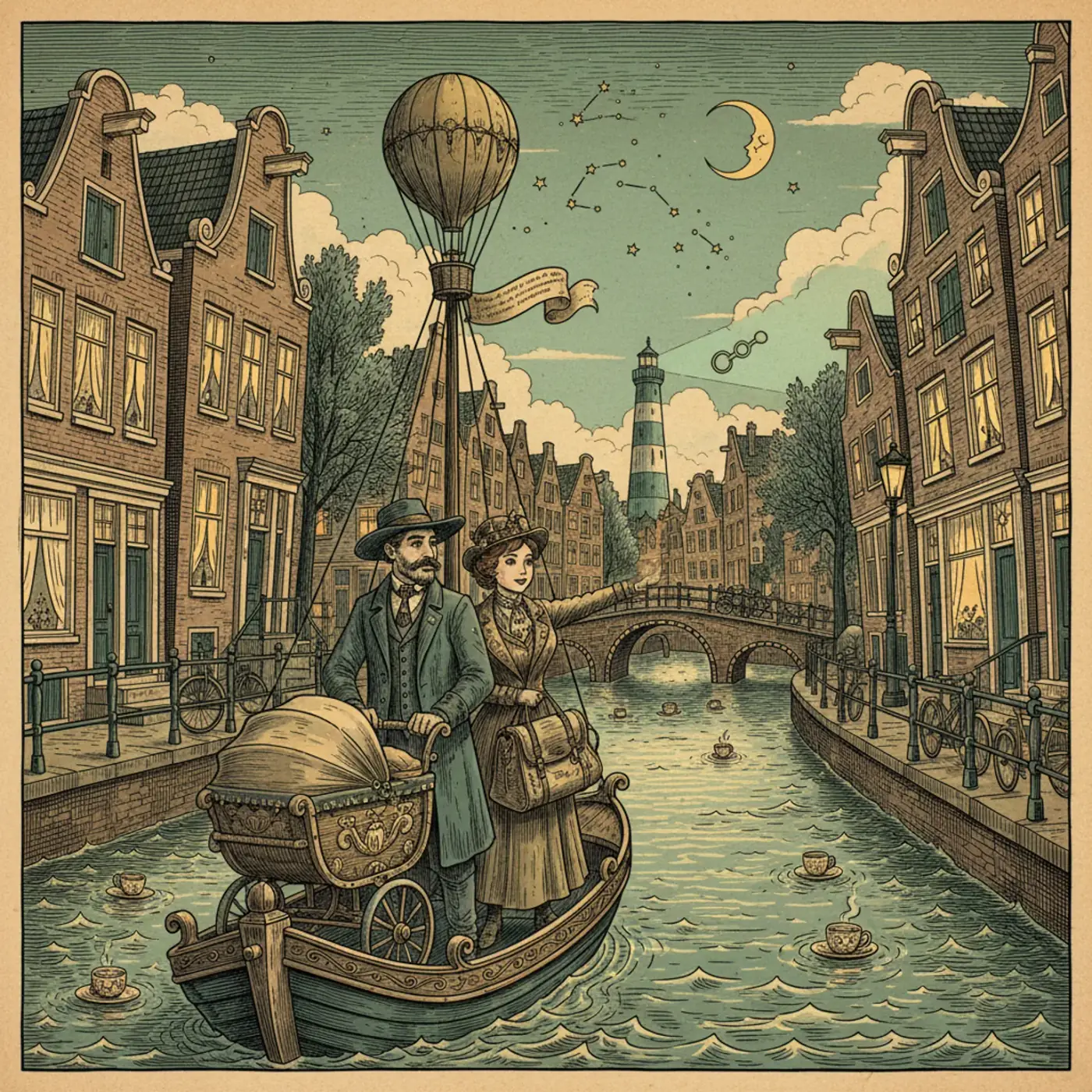
[ ITINERARY · THE DISPATCH ]
New Parent's Survival Guide: 3 Days in Amsterdam with a Baby Under 12 Months
Amsterdam with a baby under 12 months is equal parts magical and terrifying. Here's how we actually survived three days on the canals — naps, stroller logistics, and all.
Short on time? The the day-by-day Amsterdam itinerary turns all of this into a route you can actually walk.
Let me be honest with you: when my partner and I decided to do Amsterdam with our five-month-old, every experienced parent we told looked at us like we’d announced we were going to hike Kilimanjaro in flip-flops.
“The cobblestones,” one friend said, shaking her head slowly. Just that. Just the cobblestones.
She wasn’t wrong. But we went anyway, and it was genuinely one of the best trips we’ve taken — messy, imperfect, and full of moments we’d never have had without the baby in tow. This isn’t a polished travel fantasy. It’s what actually worked, what didn’t, and what I’d do differently if we went back tomorrow.
If you want the broader Amsterdam picture, check out our full Amsterdam city itinerary guide — this post is specifically for the sleep-deprived subset of humanity traveling with a human under one year old.

Before You Go: The Logistics That Will Make or Break You
Amsterdam is not a naturally stroller-friendly city. The canal houses are narrow and tall, with staircases that look like they were designed by someone who hated luggage. Before booking anything, filter hotels by “lift available” and then read the reviews anyway, because Dutch lifts are sometimes comically small.
We stayed at the Sir Adam Hotel in Amsterdam Noord — technically across the IJ river, a free ferry ride from Centraal Station. It sounds inconvenient and it genuinely isn’t. The hotel had a proper elevator, a ground-floor entrance you could actually navigate with a travel system, and we got a room with a bathtub, which matters enormously when you’re bathing a baby in a foreign country.
Packing note: bring a portable white noise machine. Amsterdam at night is not quiet. Canal boats, bike bells, the occasional bachelor party — your baby’s usual sleep environment does not exist here.

Day 1: Jordaan and the Golden Age (Baby Edition)
Start slow. You’re jet-lagged. The baby is confused. Everyone needs grace.
The Jordaan neighbourhood is your Day 1 headquarters. It’s the most walkable, least chaotic part of central Amsterdam, with narrower streets where cars are rare and there’s actually space on the pavement for a stroller. Grab coffee at Lot Sixty One on Kinkerstraat — flat whites that are genuinely excellent, and the staff were completely unfazed by us rolling in with a travel system and a bag of snacks that could have sustained a small army.
From there, walk the Prinsengracht canal south toward the Westerkerk. The tower views are obviously out (stairs), but the square in front is lovely and flat, and there’s a bench situation that’s good for a feed. The Europe itinerary hub has context on how Amsterdam compares to other canal cities if you’re planning a multi-country trip — but honestly, for baby travel, Amsterdam and Bruges are in different leagues in terms of infrastructure.
Afternoon: Vondelpark. This is non-negotiable. It’s Amsterdam’s Central Park, it’s huge, it’s green, and on a weekday it’s full of Dutch parents with prams. You will feel instantly less like a tourist and more like a local, which at five months of parenthood is a deeply underrated feeling. There’s a pancake house at the east entrance — Café Vertigo — with outdoor seating and a menu that works for adults who haven’t eaten a real meal since the flight.
Nap logistics: we timed our Vondelpark visit to overlap with the baby’s longest nap window. Walking the park perimeter twice is about 45 minutes, and the smooth tarmac paths mean you’re not jarring the stroller every ten seconds.

Day 2: Cargo Bikes and the Rijksmuseum Garden
Today is the day you rent a cargo bike.
I know. You’re sleep-deprived. You haven’t cycled in months. You’re carrying a small human. But hear me out: the bakfiets (cargo bike) is specifically designed to carry children, groceries, and apparently the collective soul of Dutch domestic life. Rental shops like MacBike and A-Bike have them, and for babies who aren’t yet sitting independently, you line the front cargo box with a travel blanket and wedge them in. Our daughter slept for two hours in that box. Two hours. We have never moved so quietly and quickly through a city in our lives.
The Rijksmuseum itself is genuinely stroller-friendly — wide corridors, lifts between floors, and a café that doesn’t feel like a school canteen. We didn’t try to do the whole museum (impossible with a baby, don’t attempt it). We went specifically for the Vermeer and Rembrandt rooms on Floor 2, spent about 40 minutes, and left before anyone melted down. The museum garden outside is free, beautiful, and worth 20 minutes regardless.
For lunch, Foodhallen in the Oud-West neighbourhood is a covered food market that’s loud enough that a crying baby doesn’t feel catastrophic, and diverse enough that whoever the hungrier parent is can find something fast.

Day 3: Anne Frank House (Skip the Queue), De Pijp, and the Airport Reality Check
You cannot push a stroller through the Anne Frank House. The interior is the original building — tight, historic, steep. It is not accessible. We booked a timed entry with every intention of going, then on the morning looked at the stroller situation and pivoted: one of us queued and went through (the advance online tickets, booked weeks ahead, skip the multi-hour walk-up line), the other sat with the baby at Café ‘t Smalle two minutes away on the Egelantiersgracht. It worked beautifully. We traded places on something similar in De Pijp later.
De Pijp is the neighbourhood for your final afternoon. The Albert Cuyp Market runs Tuesday through Saturday, and while it’s busy, the street is wide enough for a stroller, and the baby basically had a sensory field trip — smells, sounds, colour. We bought stroopwafels and ate them on a bench near the market’s southern end.
One thing I wish someone had told me about European city trips with babies: you’ll see alot of museums and monuments at half-capacity, and at first that feels like a loss. By Day 3 we’d stopped seeing it that way. You notice different things. You stop in front of a canal for ten minutes because the baby is watching a duck, and you end up talking about it for weeks.
If you enjoy trips that deliberately sidestep the main tourist circuit — your own kind of quiet itinerary — you might appreciate what the author does in pieces like this New Orleans architecture and cemetery tour or this piece on Porto’s quieter alternatives to Ribeira. There’s a whole genre of “actually slow down” travel that parenthood accidentally drops you into.

What We’d Skip Next Time
The Van Gogh Museum has a lift and is technically stroller-accessible, but the crowds made it stressful and the lighting is dim (harder to wrangle a restless baby in a dim, hushed space). We’d skip it for this age.
Canal boat tours: most operators will take a stroller-age baby, but the boats have no shade, limited space, and one very finite exit if things go wrong. We watched one from the bank and felt relieved we hadn’t booked.
Amsterdam is extraordinary with a baby — just a very different Amsterdam than the one you’d see solo. If you’re planning a wider European circuit, our Japan piece on going beyond the obvious cities captures a similar spirit: slow down, go specific, don’t try to do everything.
Pack the cargo bike day, skip the canal tour, and know that the moment your baby grins at a duck on a Dutch canal will be worth every cobblestone.
This article contains affiliate links marked rel="sponsored". We may earn a commission at no extra cost to you.