
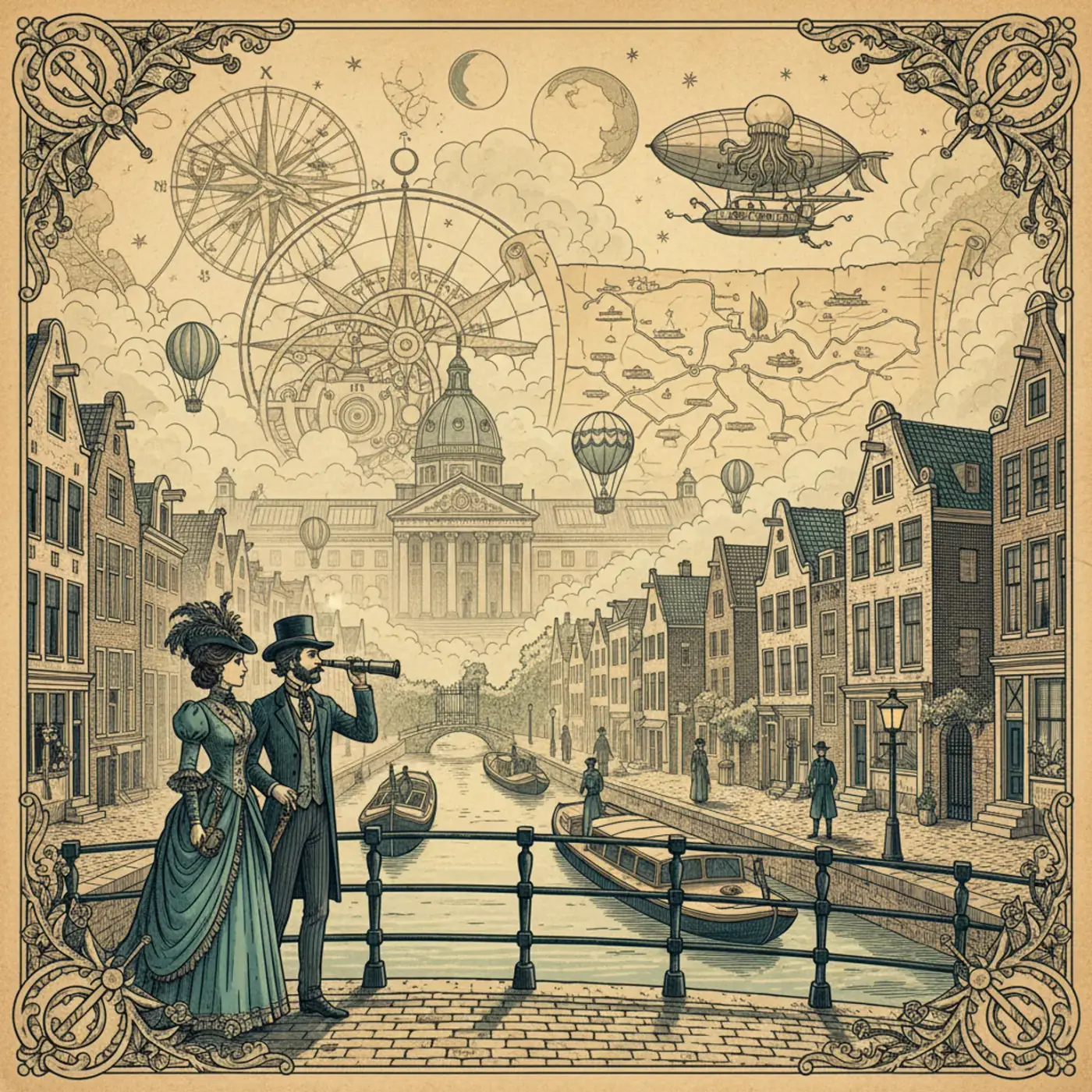
[ ITINERARY · THE DISPATCH ]
A First-Timer's 4-Day Amsterdam Itinerary: Canals, Museums, and Avoiding the Obvious
Your first 4 days in Amsterdam, with the tourist traps named out loud and a route around them. Less queueing, more canal, fewer regretful €18 'Dutch pancakes' in the centre.
If you want the whole thing mapped out, see the our full Amsterdam itinerary, with maps.
Here’s the honest version of 4 days in Amsterdam: it’s a small, beautiful, slightly chaotic city that is very good at separating first-timers from their money in the centre, and absolutely lovely the second you walk five minutes out of it. I’ve been a handful of times and watched friends make the same mistakes on their first visit. So let me route you around them.
First, the big one. Book your museum tickets now, before you read the rest of this. The Anne Frank House and the Van Gogh Museum are timed-entry and they sell out days, sometimes weeks ahead. There’s no walk-up. People fly in and find out too late. Don’t be them.
Day 1: The canals and getting your bearings
Don’t start in Dam Square. It’s the tourist epicentre and it’s a bit of a let-down — pigeons, a department store, men dressed as living statues. Walk west into the Jordaan instead.
The Jordaan is the postcard Amsterdam: narrow streets, leaning gabled houses, little canals, brown cafés. Just wander. Get a coffee, get an appeltaart (apple pie) at Winkel 43 on the Noordermarkt — the slice is huge and famous and genuinly worth the small queue. Then do a canal cruise late afternoon. Yes it’s touristy. Do it anyway, because seeing the city from the water is the thing that makes it click.
For dinner, do NOT eat on the Damrak (the strip from Centraal Station toward Dam). It’s all €18 mediocre pancakes and overpriced “argentinian steakhouse” touts. Head to the Jordaan or De Pijp and eat where Dutch people eat.
Day 2: Museums, the heavy hitters
Morning: Anne Frank House (your pre-booked slot). It’s sobering and small and quiet and you’ll be glad you didn’t skip it. Go early; the morning slots are calmer.
Afternoon: Museumplein, where the Rijksmuseum and the Van Gogh Museum sit basically next to each other. You can’t do both properly in one afternoon, so pick. If you love art history, Rijksmuseum (the Rembrandts, the Vermeers, that vast Night Watch). If you want the emotional gut-punch, Van Gogh. I’d do Van Gogh first visit. It’s an extraordinary, sad, brilliant collection and it’s smaller, so less museum-leg.
There’s a grassy bit between them with the I amsterdam letters— wait, they moved those, never mind. Just sit on the grass with the locals.

Day 3: Markets, neighbourhoods, and slowing down
Today, leave the centre properly. Go to De Pijp, the old working-class district that’s now the city’s best eating-and-drinking patch. The Albert Cuypmarkt is a long street market — get a stroopwafel made fresh in front of you (warm, gooey, €2, infinitely better than the packaged ones) and a herring if you’re brave (raw, with onion, eaten with your fingers — it’s a thing, you’ll either love it or make a face).
In the afternoon, rent a bike and ride to Vondelpark. Cycling here is genuinely the best way to feel the city, but a word of caution: Amsterdam cyclists are fast and merciless, the bike lanes are sacred, and as a tourist you WILL get bell-rung at. Stay right, signal, don’t stop dead. You’ll be fine.
If museums are still your thing, the Moco (small, modern, Banksy-ish) or the Foam photography museum are great low-queue alternatives to the giants.
Day 4: A day trip, or the bits you missed
If you’ve got the legs, take a short train (15-20 min, a few euros) out of the city. Zaanse Schans has the working windmills and is touristy but genuinely lovely. Haarlem is a smaller, calmer almost-mini-Amsterdam with great food and far fewer tourists — that’s my pick.
Or just stay and do the things you couldn’t fit. The floating flower market (Bloemenmarkt) for tulip bulbs to take home. A wander through the Begijnhof, a quiet medieval courtyard hidden right off a busy street that most first-timers walk straight past. The Negen Straatjes (Nine Streets) for browsing little shops.
A word on getting around, since it trips up every first-timer. The trams are excellent — tap your contactless card on the way in AND on the way out (forget the tap-out and you’ll be charged the max fare). The GVB day or multi-day pass is great value if you’re hopping around. And don’t, under any circumstances, walk in the bike lane — it’s the red-paved strip, it’s not a pavement, and cyclists will materialise out of nowhere at speed. I saw a tourist nearly flattened on day one because she stepped into one to take a photo. Stay on the actual footpath.
A couple of last honest tips. Tap water is excellent and free — ask for “kraanwater.” The Red Light District is a real residential neighbourhood, so look, don’t gawk, and absolutely don’t photograph the windows (people will, rightly, get angry). And the weather lies constantly, so pack a layer and a small umbrella even in summer.
Four days is enough to fall for the place and not enough to do it all. That’s how it should be.
Book your museums first, eat anywhere but the Damrak, and ride a bike at least once even if it terrifies you. That’s first-time Amsterdam, sorted.
This article contains affiliate links marked rel="sponsored". We may earn a commission at no extra cost to you.