
[ ITINERARY · THE DISPATCH ]
Four Days in Valencia: Paella's Hometown, a Dead River, and a Space-Age Park
Valencia gave the world paella, then drained its own river and turned the riverbed into a nine-kilometer park. Four days of proper rice, futuristic architecture, and a beach the locals keep quiet about.
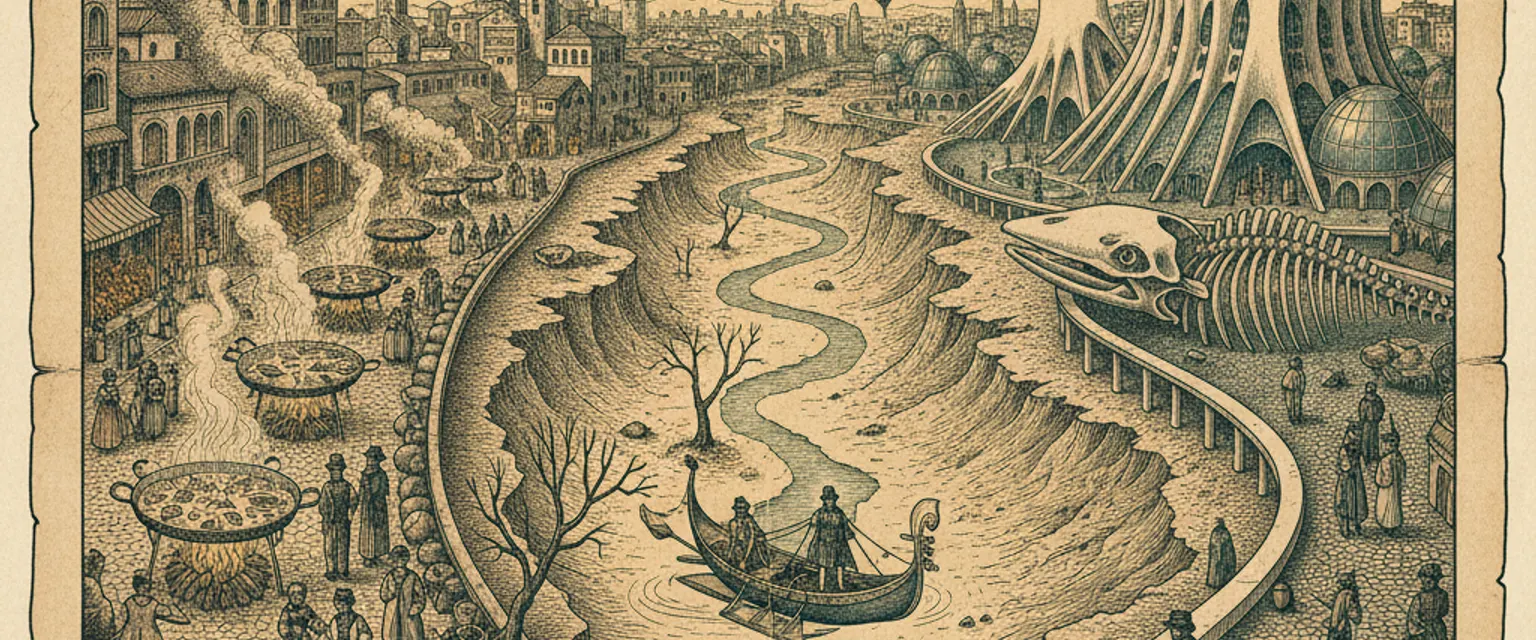
Valencia spends its whole life being compared to Barcelona and Madrid and quietly out-living-standarding both. It’s cheaper, the beach is in the city instead of a train ride away, and it invented paella, which gives it dinner-table bragging rights over the entire country. It also did something genuinely bizarre: after a catastrophic 1957 flood, the city rerouted its river entirely and turned the old bed into a park that loops through the middle of town. You walk and cycle along a riverbed where water used to be. Once you notice it, you can’t stop thinking about it.
Four days is the right length. Here’s how I’d spend them.
Day 1: The old town and the Central Market
Start in Ciutat Vella, the medieval core. Climb the Torres de Serranos, one of the old city gates, for an orientation view, then wind toward the Cathedral, which claims to hold the actual Holy Grail (or a Holy Grail; the debate is eternal). The Plaça de la Reina and the octagonal Miguelete bell tower anchor it all.
Then go to the Mercat Central, a gorgeous modernist food market under a tiled dome, and just graze. Jamón, oranges (Valencia is the orange capital, the trees line the streets), and a glass of horchata — the cold tiger-nut drink that’s a local obsession — paired with fartons, the sugary finger-shaped pastries you dunk in it.
Day 2: The Turia park and the City of Arts
Rent a bike and ride the Turia Gardens end to end. The nine-kilometer green ribbon in the old riverbed is the best way to understand the city’s shape, dotted with fountains, orange trees, and a giant Gulliver-shaped playground kids climb all over.
The riverbed delivers you to the City of Arts and Sciences, Santiago Calatrava’s white, skeletal, faintly alien complex of a science museum, an opera house, and Europe’s largest aquarium, the Oceanogràfic. Photographs don’t do the scale justice; the structures look like the bones of some vast creature half-submerged in turquoise pools. Spend the afternoon in the aquarium or the hands-on science museum, then watch the buildings light up at dusk.
Day 3: The beach and the Albufera
Tram out to Malvarrosa beach, a wide stretch of sand right in the city with a promenade of seafood restaurants behind it. This is where you have your big paella lunch, ideally at one of the old-school arrocerías facing the water.
For the real thing, though, head south in the afternoon to the Albufera, the freshwater lagoon and rice paddies where paella was actually born — farmers’ food cooked over orange wood with rabbit, chicken, and snails, not the seafood version tourists expect. Take a flat-bottomed boat out at sunset; the light over the rice fields is the postcard nobody from Valencia bothers to advertise.
Day 4: Markets, art, and a slow finish
Use your last day to fill gaps. The Mercat de Colón, a restored modernist market, is now full of cafes and a good slow brunch spot. The Museu de Belles Arts is Spain’s second-best art museum and almost always empty. Or just rent the bike again and go back to the riverbed, because four days in, you’ll understand why the locals treat it like the heart of the place.
Valencia doesn’t shout. It just quietly does everything well and lets Barcelona handle the crowds.
When should I visit Valencia? Spring or early autumn for warm sea and few crowds; come in March only if you want the gloriously chaotic Fallas fire festival.
This article contains affiliate links marked rel="sponsored". We may earn a commission at no extra cost to you.