
[ ITINERARY · THE DISPATCH ]
Five Days in the Faroe Islands: Sheep, Sideways Rain, and Cliffs That Don't Quit
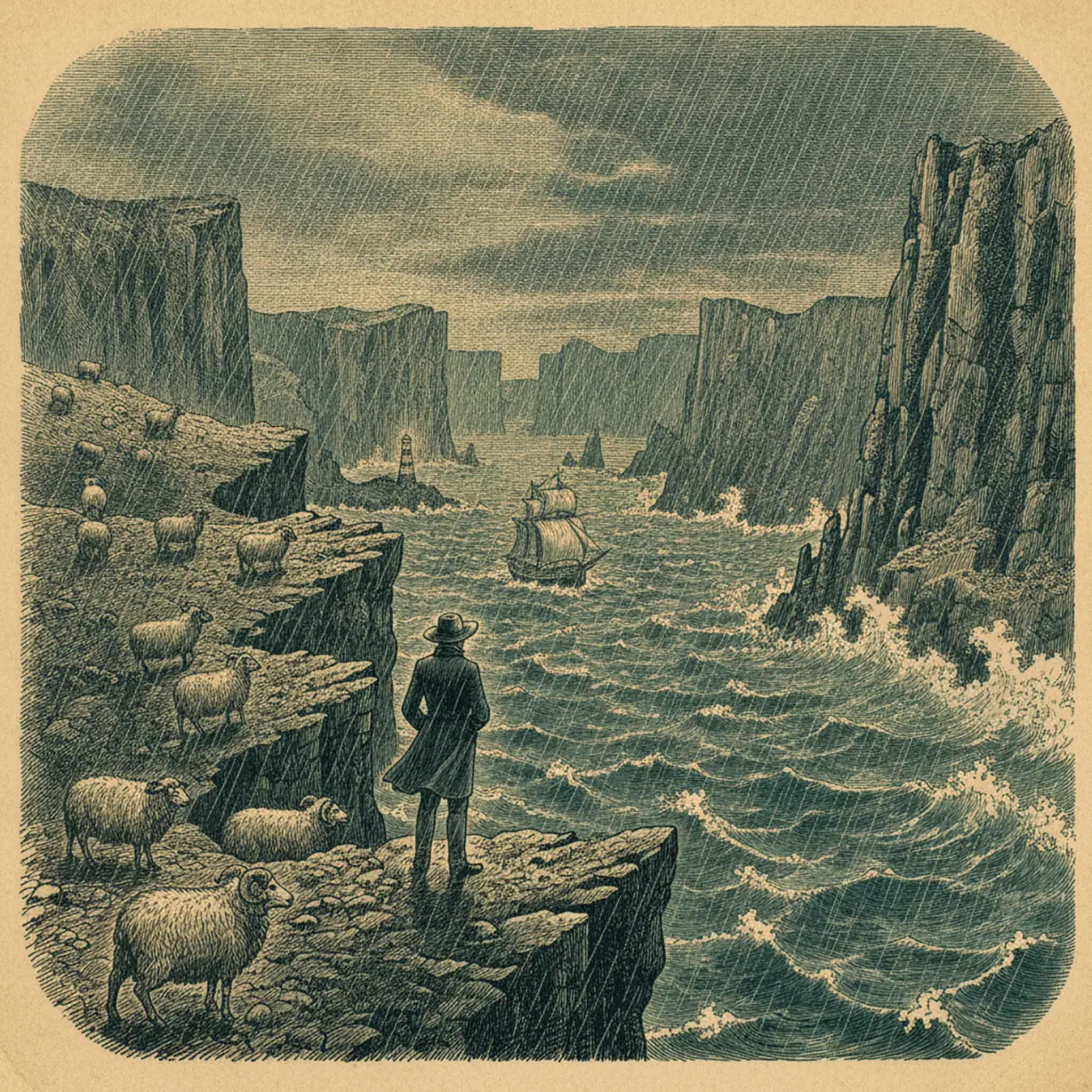
The Faroe Islands are 18 lumps of green rock in the North Atlantic where the weather changes every nine minutes. Here's a five-day self-drive Faroe Islands itinerary for people who like their landscapes moody.
For the full day-by-day version of everything below, read the perfect 3-day Faroe Islands itinerary.
Let me set expectations for this Faroe Islands itinerary right away: it will rain. Sideways. Then the sun will blast through for eleven glorious minutes, then a cloud will swallow the mountain you were photographing, then it’ll rain again. The Faroes don’t have weather so much as a mood disorder, and if you can make peace with that — actually, if you can come to love it — these 18 wind-scoured islands in the middle of the North Atlantic will wreck you in the best way. Empty green cliffs. Waterfalls pouring straight into the sea. More sheep than people (genuinely — the name might even mean “sheep islands”).
You need a car and you need to be flexible. Here’s five days that worked for me.
Day 1: Land, rent the car, ease into Tórshavn
You fly into Vágar airport. First move, before anything else: pick up your rental car. The islands are connected by an impressive network of tunnels (some undersea, one with a roundabout at the bottom of the ocean, lit up like an art installation), and without a car you’re stuck — the buses exist but they’ll strangle this trip. Book the car well ahead; supply is tight.
Drive to Tórshavn, the tiny, charming capital (one of the smallest in the world). Walk Tinganes, the old peninsula of red-painted, turf-roofed government buildings — yes, the grass-roofed houses are the real deal, and the government still works out of them. Have dinner; the food scene here is surprisingly excellent (there’s even a Michelin spot, KOKS, though it’s pricey and books out — book months ahead or skip it). For something normal, Barbara Fish House does great local fish.
Day 2: Vágar — the lake over the ocean and the waterfall
Back near the airport on Vágar island are two of the Faroes’ greatest hits.
Lake Sørvágsvatn (Leitisvatn) is the optical-illusion lake that appears to float high above the ocean — a roughly 2.5-hour return walk gets you to the famous viewpoint where the lake seems to hang over the sea cliffs. It’s a moderate, boggy hike (waterproof boots, non-negotiable) and the payoff is one of the best views on the planet. There’s an access fee now; pay it, it’s worth it.
Then drive to the village of Gásadalur for Múlafossur — the waterfall that drops straight off a cliff into the Atlantic with a green peak behind it. It’s the postcard shot of the Faroes and somehow it’s even better in person, especially when the wind blows the falling water sideways into mist. Five-minute walk from the car park.
Day 3: Streymoy north — Saksun and Tjørnuvík
Spend a day on Streymoy, the main island. Drive north to Saksun, a scatter of turf-roofed farmhouses around a tidal lagoon ringed by mountains and waterfalls. It’s so quiet and so perfect it feels staged. (Be respectful — it’s a working farm and the farmers have had run-ins with tourists trespassing; stick to the paths.)
Then over to Tjørnuvík, a black-sand beach village at the north tip, looking out at the Risin og Kellingin — two sea stacks said to be a giant and a witch turned to stone trying to drag the islands to Iceland. Surfers actually catch waves here, in the freezing Atlantic, which tells you something about the people.

Day 4: Vestmanna cliffs or the village hop
Two ways to play the fourth day depending on weather. If the sea’s calm, take a Vestmanna bird-cliff boat tour — you sail into towering sea caves and under cliffs packed with nesting seabirds. It’s spectacular but absolutely weather-dependent; rough seas cancel it.
If the boats aren’t running, do a village circuit instead — Kvívík, Bøur (turf roofs and a tiny church facing the islet of Tindhólmur), and back roads where you’ll likely have to stop for sheep blocking the road. You will. Just wait. They own the place.
Day 5: Kalsoy and the Kallur lighthouse (the big one)
Save the best hike for the end. Take the ferry to Kalsoy (a long, thin island — book the car ferry ahead, it’s small and fills) and drive through a string of single-lane tunnels to the village of Trøllanes. From there, the walk out to the Kallur lighthouse is maybe 45 minutes each way, ending on a knife-edge ridge with sea cliffs falling away on both sides. It’s the most jaw-dropping spot in the Faroes and, on a clear day, you can see half the archipelago. There’s an access fee here too.
(Bond fans: the cliff above Kallur is where the final scene of “No Time to Die” was filmed. Locals are torn about the attention.)
| Morning | Afternoon | Evening | |
|---|---|---|---|
| Day 1 | Land, rent car | Tórshavn + Tinganes | Local fish dinner |
| Day 2 | Lake Sørvágsvatn hike | Múlafossur waterfall | Back to base |
| Day 3 | Saksun lagoon | Tjørnuvík beach | Quiet night |
| Day 4 | Vestmanna cliffs / villages | Bøur + back roads | Tórshavn |
| Day 5 | Ferry to Kalsoy | Kallur lighthouse hike | Last ferry back |
Hard-won practical truths. Pack like it’s winter even in summer — proper waterproofs, fleece, hat, waterproof boots. The wind is relentless and it’s genuinely cold. Petrol stations and shops keep odd hours and many close Sundays, so fuel up and stock snacks. There’s no real “bad season” but May to September has the long daylight and (slightly) better odds. And build slack into every day — fog can erase a hike entirely, so keep a flexible plan and chase the gaps in the weather.
The thing about the Faroes is they don’t perform for you. There are no crowds to validate the views, no guardrails on half the clifftops, no sense that anyone’s trying to sell you the place. It’s just you, the sheep, the rain, and some of the most staggering scenery in Europe. I came back wind-burned and slightly obsessed.
Rent the car, pack for a storm, stop chasing the perfect forecast — and walk out to Kallur when the clouds finally lift. You’ll think about it for years.
This article contains affiliate links marked rel="sponsored". We may earn a commission at no extra cost to you.