
[ GUIDE · THE DISPATCH ]
Day Trips From Barcelona: Montserrat, Girona, and the Costa Brava Math
The best day trips from Barcelona aren't a mystery — it's the logistics that wreck people. Which train, which bus, which beach is worth two hours each way. Here's the math so you don't waste a day on the wrong one.
Short on time? The perfect 3-day Barcelona itinerary turns all of this into a route you can actually walk.
Everyone wants the best day trips from Barcelona, and everyone makes the same mistake: they pick the prettiest photo, not the trip with the sanest logistics. Then they spend four hours in transit for ninety minutes somewhere, get cranky, and write it off. I’ve done a lot of these, some great, some genuinely not worth getting out of bed for. So let me do the math for you.

Montserrat — just go, honestly
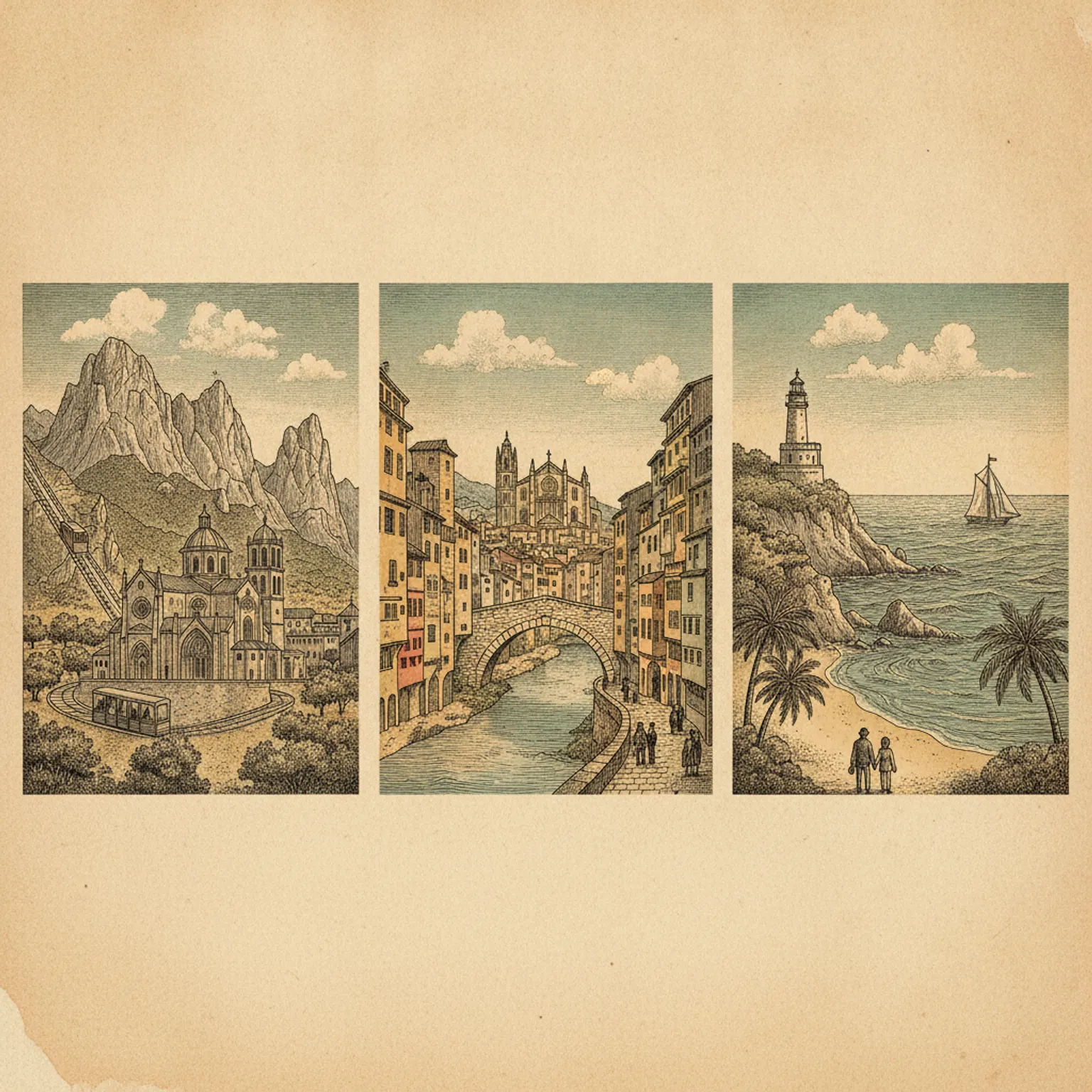
If you do one, do this one. Montserrat is a serrated mountain ridge with a Benedictine monastery wedged into it, about an hour northwest of the city, and it looks like nothing else in Europe — these weird rounded rock fingers like a stone organ. The monastery’s been there since the 11th century and there’s a famous Black Madonna statue people queue to touch.
Getting there is the easy part. Take the R5 train from Plaça Espanya (the FGC line, not the main Renfe station — people mix this up and end up on the wrong platform looking confused, ask me how I know). Buy the combined ticket that includes either the cable car (Aeri) or the rack railway (Cremallera) up the final stretch. The cable car is the dramatic one; the rack railway is steadier if heights make you queasy. Whole round trip’s about 30-something euros and takes roughly 90 minutes each way.
You’re back in Barcelona by mid-afternoon. Perfect half-day. This is the one I’d never skip.

Girona — the sleeper hit
Girona is the trip people don’t expect to love and then love. It’s a small medieval city about 100km north, with a stupidly photogenic old town, a colorful row of riverfront houses, an intact Jewish quarter (the Call, one of the best-preserved in Europe), and a cathedral with the widest Gothic nave in the world. Game of Thrones filmed here, if that’s your thing — the cathedral steps are Braavos.
And the math is great. Take the AVE or Avant high-speed train from Barcelona Sants and you’re there in about 38 minutes. Thirty-eight. Slower regional trains take an hour-plus and cost less, so it’s a budget-versus-time call, but even the fast one isn’t pricey if you book a day or two ahead. Whole place is walkable from the station in fifteen minutes. No cars needed, no tour needed.
Eat: Girona’s home to one of the best restaurants on earth (El Celler de Can Roca, booked out months ahead, forget it), but the city’s normal spots are excellent. Get lunch in the old town, walk the city walls (free, brilliant views), have a coffee by the river. Easy, civilised, gorgeous.
The Costa Brava math — read this before you commit
Here’s where people get burned. The Costa Brava is genuinely gorgeous — pine-covered cliffs dropping into turquoise coves, the kind of coast you fly home dreaming about. But it is not an easy public-transport day trip, and the tours that promise “Costa Brava in a day” mostly mean a lot of bus and three rushed photo stops.
The honest math: the prettiest coves (Tossa de Mar, Calella de Palafrugell, Cadaqués) need either a car or a fiddly train-plus-bus combo, and Cadaqués in particular — Dalí’s town, the most beautiful of the lot — is a long, winding road with no train at all. By bus from Barcelona’s Estació del Nord it’s around 2.5 to 3 hours each way. That’s five-plus hours of travel for a day. For me, that’s an overnight trip, not a day trip.
If you’re set on the coast as a day thing, pick Tossa de Mar. Direct-ish buses from Barcelona run about 75–90 minutes, there’s a medieval walled headland over a swimmable beach, and you can do it and be back for dinner. One cove, done well, beats three coves glimpsed from a coach window.

The honourable mentions
Sitges — the easy beach option, 40 minutes on the regional R2 train, walkable, beautiful, very gay-friendly and lively in summer. Closest proper beach day to the city. Tarragona — Roman ruins, an amphitheatre right on the sea, an hour-ish by train, criminally underrated. And the Penedès wine region for cava tasting, if you’d rather your day trip came with bubbles.
A word on tickets, because this is where people lose money and time. For the Renfe regional trains (the R-lines to Sitges, Tarragona, the Costa Brava connections), buy at the machines or via the app — don’t queue at the manned window unless you enjoy queues, the lines at Sants are biblical in summer. For the high-speed train to Girona, book a day or two ahead online; the price jumps the closer you leave it, same as flights. And for Montserrat, the all-in-one ticket (train + cable car or rack railway + funiculars + entries) is genuinely better value than buying each leg separately, so get that one. Small thing, but it saves you fumbling for change at three different machines on a hot platform.
The thing I’d tattoo on every visitor’s hand: don’t cram. One day trip a day, max. The temptation is to “knock out” Montserrat in the morning and Girona in the afternoon and you’ll just see both badly and ruin your feet. Pick one. Do it slow. Come back another time for the rest — Barcelona’s not going anywhere.
My ranking, if you’re making me choose: Montserrat first, Girona a very close second, and the Costa Brava only if you’ll give it an overnight. Trust the math, not the postcard. Bon viatge.
This article contains affiliate links marked rel="sponsored". We may earn a commission at no extra cost to you.