
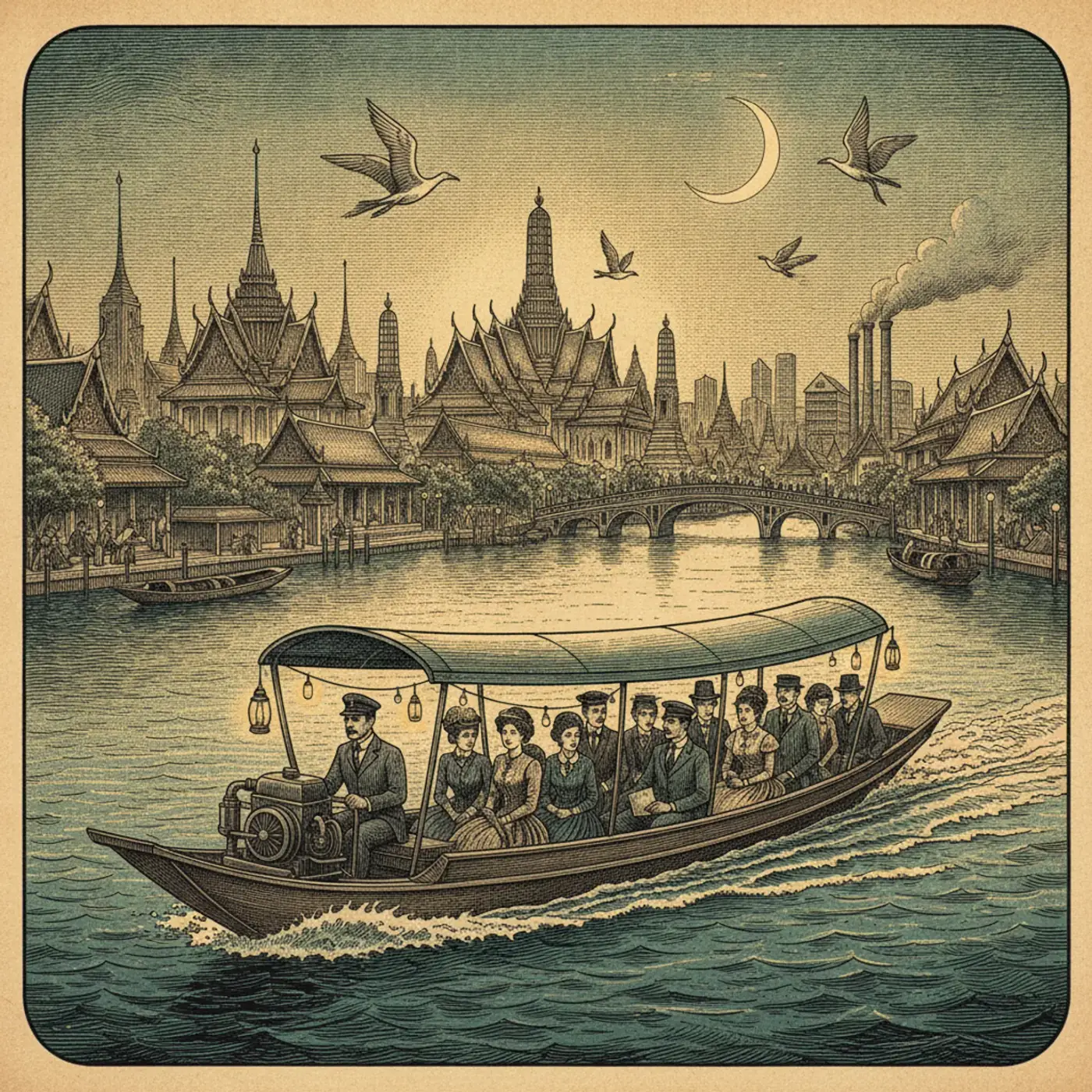
[ GUIDE · THE DISPATCH ]
Bangkok's River Taxi System Explained: The Commuter Route That Beats Every Tuk-Tuk
Forget the tuk-tuks and the meter-less cabs. Bangkok's Chao Phraya express boat is faster, cheaper, and genuinely more fun — once you decode the color flags.
If you want the whole thing mapped out, see the perfect 3-day Bangkok itinerary.
The first time I took a tuk-tuk from Khao San Road to Wat Pho, it cost me 200 baht, twenty minutes of exhaust fumes, and one near-collision with a food cart. The second time I went, I walked to Phra Athit pier, paid 15 baht, and glided there by river in eight minutes flat. I have not voluntarily sat in a tuk-tuk since.
Bangkok’s Chao Phraya Express Boat is the single most underused tool in the tourist toolkit. Locals pack it every morning at 7am. You’ll find maybe six foreigners on board, most of them looking slightly confused — which is fair, because the flag system that governs which boats stop where is explained basically nowhere in English, at least not in any way that’s actually useful.
This guide fixes that.

Why the River Beats Everything Else
Bangkok’s road network is a triumph of ambition over geometry. The BTS Skytrain is excellent but covers a narrow corridor. The MRT is fast but underground and weirdly disconnected from the waterfront. Grab is fine until there’s a protest or a school parade or a Tuesday afternoon, at which point you’re sitting in 40-minute gridlock watching your fare tick up.
The river doesn’t care about any of that. It runs parallel to the tourist spine — Banglamphu, Rattanakosin, the riverside hotels, Asiatique — and connects them faster than surface traffic almost any time of day. For anyone doing a proper Bangkok itinerary, building your first two days around the river corridor isn’t just a money-saving trick, it’s actually the best way to see the city.
And if you’ve already figured out how public transit unlocks neighborhoods that tour buses never reach — like the way Medellín’s Metro Cable opens up hillside barrios — you’ll take to this immediately.
The Flag System, Actually Explained
This is the part that trips everyone up. The Chao Phraya Express Boat (operated by Chao Phraya Express Boat Co.) runs multiple services simultaneously, distinguished by colored flags on the bow. Each flag color means a different stopping pattern.
Here’s what matters:
- Orange flag — The commuter workhorse. Runs from Nonthaburi in the north down to Sathorn/Central Pier in the south, stopping at most major piers. Frequency every 15–20 minutes, fares 15 baht flat. This is your boat.
- Yellow flag — Limited stops express service. Faster in theory, but it skips smaller piers. If your pier isn’t on the yellow list, you’ll watch it sail past you.
- Green flag — Local service, stops everywhere, painfully slow. Good for explorers, bad for people with a schedule.
- No flag / blue flag — Tourist boat operated by the same company but marketed separately. It runs the same river but charges 50–200 baht depending on the pass you buy, has a recorded commentary, and is genuinely lovely if you want a guided experience. If you just want to get somewhere, skip it.
- Thai flag (no colored pennant) — Government-subsidized local service at 10 baht flat. Worth knowing exists.
The practical upshot: get on the orange flag boat, hand the collector (they walk the boat, not a machine) 15 baht, and you’ll reach any major pier without drama.

The Piers You Actually Need
Piers are numbered N1 through N33 north of Central Pier, plus a few south. Here’s the shortlist for tourists:
Sathorn/Central Pier (no number) — Southern terminus for most services. Connects to BTS Saphan Taksin. This is where you catch the ferry to Asiatique night market (the free shuttle runs from here from 4pm–11:30pm).
Tha Tien (N8) — Closest pier to Wat Pho. Also where you catch the cross-river ferry to Wat Arun — a 5-baht, 90-second crossing that’s the cheapest temple entrance in Asia.
Chang Pier (N9) — Grand Palace, Emerald Buddha, Lak Muang shrine. The big one.
Maharaj Pier (N9A) — Slightly quieter than Chang, also near the Grand Palace area and connects to the weekend market neighbourhood. A good alternative when N9 is shoulder-to-shoulder.
Phra Athit (N13) — Khao San Road’s river access point. Takes about 5 minutes on foot. This is how I solved my tuk-tuk problem.
Phra Pinklao Bridge (N12) — Useful for crossing to Thonburi-side attractions; less crowded, good local neighbourhood feel.
Nonthaburi (N30) — Northern terminus. Famous for the fresh market and the weekend durian stalls. Worth a day trip.

Fares and Tickets
No app, no card reader, no QR code. You pay cash to a collector who weaves through the boat while it’s moving. Fares on the orange flag boat are 15 baht regardless of distance, which is definately the best deal on the river. Keep 15–20 baht coins or small bills handy — collectors do have change but prefer you don’t need it.
If you buy a day pass for the tourist boat, it’s around 200 baht for the whole day, unlimited rides. That’s fine for a lazy river afternoon but makes no financial sense if you’re just going pier to pier on errands.

When to Go (and What to Avoid)
Peak hour (7am–9am and 5pm–7:30pm) means the boats get genuinely crammed. Think Tokyo subway energy, minus the white gloves. You can still board, you’ll just be standing shoulder-to-shoulder with commuters. Mid-morning and early afternoon are calm and almost pleasant.
The boats do not run all night. Last orange flag departure from Sathorn is around 7:30pm, from Nonthaburi around 6:30pm. If you’re coming back from Asiatique, you’re catching a Grab or taxi home — the area isn’t near a BTS stop either, so plan for it.

Common Mistakes
Getting on the wrong boat. The tourist blue-flag boat and the local orange-flag boat often share piers at busy times. Check the pennant. The tourist boat has a big sign in English and staff who direct you aboard — which is actually the tell.
Missing the collector. If you’re absorbed in your phone, the collector may walk past and you won’t get a ticket. This isn’t a free ride — at some piers, a checker boards and you’ll need proof of payment. Pay promptly when they come around.
Assuming the boat waits. It does not. Boarding is quick. The gangway goes up with zero ceremony. I’ve watched fellow travellers run the last ten meters and just… not make it. Get to the pier a minute or two early.
Expecting fixed schedules. There are published timetables, but river traffic and pier congestion mean boats run roughly on time, not exactly. Don’t plan tight connections.

Pairing the Boat with Bangkok’s Other Transit
The express boat isn’t a complete network — it’s a corridor. For the east side of the city (Sukhumvit, Silom), you’re using BTS. For the northeast, the MRT. The river slots in as the western spine, and once you understand that mental map, getting around Bangkok becomes much easier.
The Asia-Pacific travel hub has broader context if you’re stringing Bangkok into a longer regional trip — the transit logic shifts considerably once you’re comparing Bangkok to, say, Ho Chi Minh City or Kuala Lumpur.
And if Bangkok opens your appetite for slow, unusual, genuinely local transit — you might find yourself drawn to things like African overland routes that prioritise experience over efficiency, or even the spiritual travel movement reframing why people move at all. The thread connecting them is the same: get off the tourist track, get on the thing locals actually use.

The Honest Case for the River Boat
I’m not going to pretend the express boat is glamorous. The piers are rickety, the boats smell of river and diesel, the orange plastic seats are bolted awkwardly and you’ll hit your knees on the one in front. None of that matters when you’re doing 15 knots past temple spires while the city sits in traffic.
It costs less than a bottle of water at a hotel breakfast. It’s faster than a cab. It passes things that are genuinely beautiful. And it puts you next to Bangkokians going about their actual lives, which is worth more than any curated tour.
Take the orange flag boat at least once — preferably on day one, before you’ve committed to any other transit habits.
This article contains affiliate links marked rel="sponsored". We may earn a commission at no extra cost to you.