
[ TIPS · THE DISPATCH ]
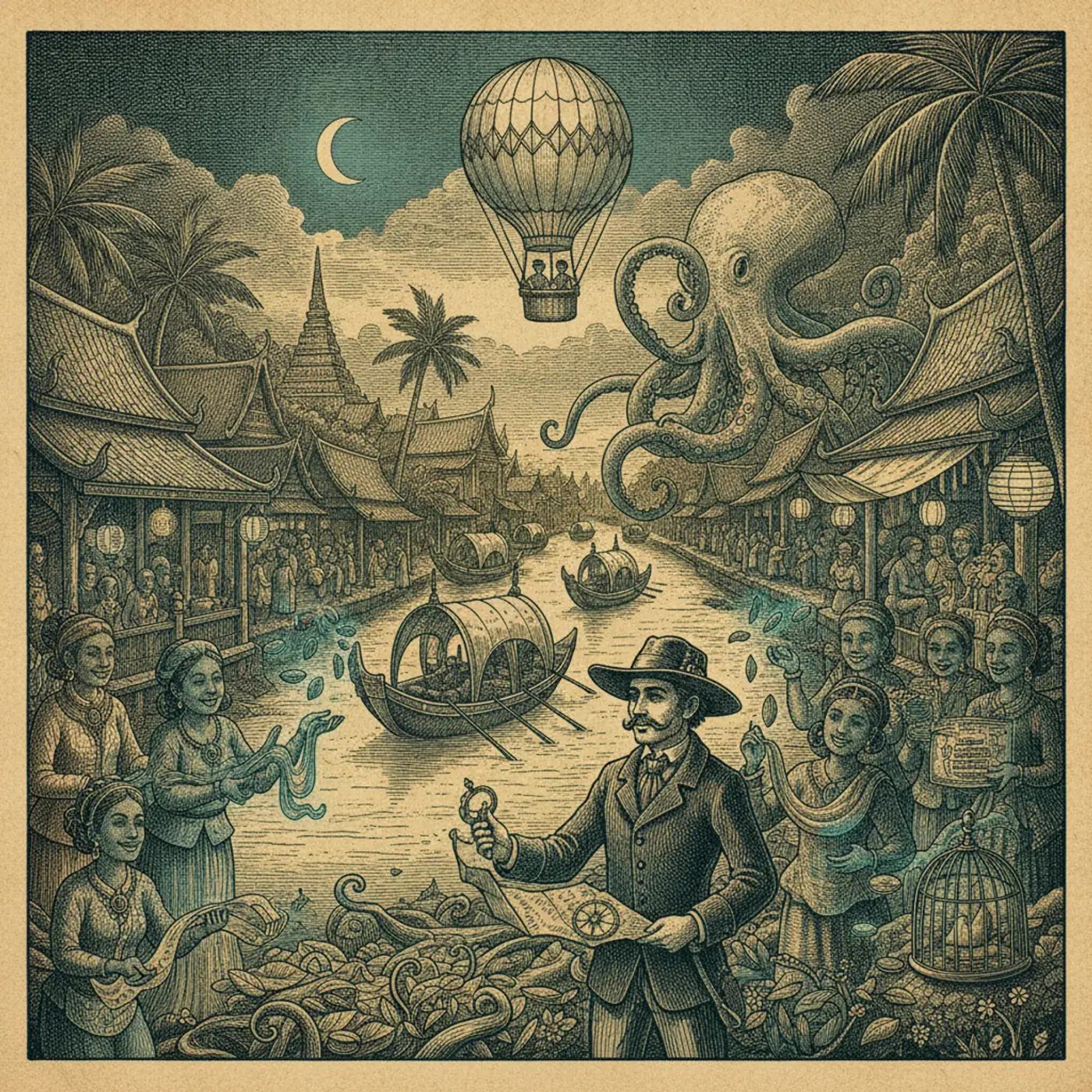
Southeast Asia Without Getting Scammed: The 6 Cons I Fell For and How to Spot Them
I got played in Bangkok. Three times. Here's the exact playbook scammers use on first-timers — and the word-for-word scripts that shut them down cold.
For the full day-by-day version of everything below, read the perfect 3-day Bangkok itinerary.
I’m not a naive traveler. I’d done Central America, Morocco, parts of West Africa. I thought I knew how this worked. Bangkok humbled me inside of 36 hours.
I’m writing this because every “how to avoid scams in Southeast Asia” article I’ve found reads like a Wikipedia stub. Bullet points. Passive voice. No names, no prices, no embarrassment. I’m going to give you all three.
If you’re building a trip and want the logistics first, my full Bangkok itinerary covers the day-by-day. Come back to this when you want to know how not to lose 4,000 baht to a guy in a golf shirt.

Scam 1: The “Temple is Closed Today” Redirect
This is where I got got. First morning, walking toward Wat Phra Kaew. A well-dressed man outside the Grand Palace gate told me, very sincerely, that the temple was closed for a “Buddhist holiday” until 3pm.
It was not closed. I verified this later — it’s open 8:30am to 3:30pm daily, almost without exception. The man was not a monk. He was not a guard. He was a shill.
What happens next: he offers to show you a “nearby temple that’s just as beautiful, actually better for photos.” A tuk-tuk appears within 30 seconds. The tuk-tuk ride is cheap — 20 baht, maybe free. You end up at a gem shop or a tailor shop where the driver earns a fuel voucher for delivering you.
The script: “Thank you, I’ll come back at 3.” Then walk toward the entrance anyway. If the temple is actually closed, you’ll see it. If it isn’t — and it won’t be — you’ll know what just happened.
Scam 2: The Tuk-Tuk Gem Tour
This one deserves its own section because it’s the most elaborate and the most lucrative for scammers. It works like this: a tuk-tuk driver offers you an extremely cheap ride — sometimes 10 or 20 baht to anywhere in the city. The catch is a single “quick stop” at his cousin’s shop. You’re told it’ll take five minutes.
The shop sells gems, silk, or both. The prices are massively inflated. Some shops have accomplices posing as Western tourists who “just made a great deal.” The pressure is soft but sustained. Some people buy thousands of dollars of merchandise that turns out to be near-worthless synthetic stones.
I didn’t buy anything but I lost two hours of my first afternoon in Bangkok being shuttled between three shops before I finally got firm.
The script: When a tuk-tuk offers you a suspiciously cheap fare: “I’m going directly to [destination], no stops. What’s the price for that?” If he says anything about a “friend’s shop” or “very quick stop,” you say “No stops, thank you” and walk. Use Grab for any ride where you’re not 100% sure — the fare is set in-app, the driver can’t redirect you, and you have receipts.

Scam 3: The Taxi Meter Avoidance
You get in an official taxi — yellow-green, looks legitimate. You ask for your hotel. The driver says “meter broken” or “traffic very bad, flat rate better.” The flat rate he quotes is three to five times what the meter would cost.
I paid 350 baht for a ride that later clocked at 90 baht on the meter. Lesson received.
The script: “Meter please.” If he says no, you get out. That’s it. You do not negotiate. Metered taxis are abundant in Bangkok; the next one will have a working meter. If you’re at the airport, the official metered taxis have a queue on Level 1 of arrivals — there’s a 50 baht expressway surcharge on top of the meter, which is legal and normal.

Scam 4: The Friendly Local Who Wants to Practice English
This one triggers my guilt every time because sometimes people genuinely do want to chat. Here’s how to tell the difference.
The scam version: someone approaches you near a major attraction, mentions they’re a student or teacher who “just happens to be here today,” and very quickly pivots to asking where you’re going or what you’ve seen. Within minutes, there’s a suggestion to visit a place you haven’t heard of — a “local restaurant,” a “special market,” or, yes, a gem shop.
Genuine friendliness exists in Thailand. It’s real and it’s common. The tell is the pivot. A genuine conversation about where you’re from doesn’t lead to a logistical suggestion within five minutes. If it does, that’s your cue.
The script: You don’t have to be rude. “Thanks for chatting — I’ve got plans sorted, just enjoying the walk.” That’s enough. Anyone who presses you after that is not practicing English.
Scam 5: The Overpriced Longtail Boat Ride
This one stung me in a different way — not a hard scam, just aggressive pricing. Longtail boats on the Chao Phraya or the klongs (canals) are genuinely great. The problem is that touts near Tha Chang and Tha Maharaj piers quote 1,500 to 2,000 baht for a “private hour tour.”
The Chao Phraya Express Boat costs 15 to 30 baht per leg and covers most of what you’d see on an expensive private tour. The canal boats that run the khlong routes cost 10 to 20 baht and give you an identical view to the tourist longtails.
Definately worth taking a longtail for the experience — but negotiate hard, agree on the price and duration in writing (use your phone’s notes app as a shared record), and use the public boats as your baseline comparison.

Scam 6: The Fake Monk
This one bothers me the most. A man in saffron robes approaches you, presents a laminated card about his temple, and asks for a donation. He may tie a string around your wrist for “good luck.”
Real Buddhist monks in Thailand do not solicit donations from tourists on the street. Real monks have rules about money. If a robed figure approaches you proactively at a tourist site asking for cash, they are not a monk.
You can respectfully decline with a small head bow. You don’t need a script. Just keep walking.

The Region Beyond Bangkok
These patterns repeat — with local variations — across the region. The temple redirect shows up in Siem Reap near Angkor. The friendly student works in Ho Chi Minh City. The meter dodge is universal. If you’re planning a broader swing through Asia-Pacific destinations, mentally pack these scripts alongside your power adapter.
The gem scam specifically follows a pattern I’ve since read described in meticulous detail by other travelers. It’s not unique to Thailand; it’s a franchise model that runs from Cairo to Hanoi. Once you’ve seen it once, you’ll clock it in five seconds anywhere.
And honestly, once you’ve shaken off the paranoia that these early experiences instill, you realize that Southeast Asia is wildly hospitable. The scams are concentrated around major tourist sites, run by a small number of operators, and entirely avoidable once you know the shape of them. The rest of the city — the night markets, the temple interiors, the side-street noodle shops — is just people living their lives and happy to have you around.
For what it’s worth, I got better at it. By day four in Bangkok I was spotting the temple-closed line from across the street. By the time I hit Chiang Mai I was just… traveling. Loose, curious, not scanning every stranger for a pitch.
That’s the goal. If you want to see how I eventually structured my time once I stopped getting hustled, the full Bangkok plan is where I lay it all out.
One more thing: if you’re a cities-and-food person, I’ve written about the Taipei night market circuit and done some hard thinking about US food cities that punch way above their weight — different vibe, same obsession with not wasting a single meal. And if you’re into Detroit’s architecture and revival story, that one scratches a completely different itch.
The only rule you actually need: if someone you didn’t approach offers you something cheaper than it should be, the price is your time, your afternoon, or your money — and they’ve already decided which.
This article contains affiliate links marked rel="sponsored". We may earn a commission at no extra cost to you.