
[ ITINERARY · THE DISPATCH ]
The 3-Day Ronda Itinerary: A Town Split in Half by a Canyon and Still Standing
Ronda sits on a cliff cut in two by a vertigo-inducing gorge, and the famous bridge is just the start. Here's a slow three-day Ronda itinerary with white villages, wine, and the best views in Andalusia.
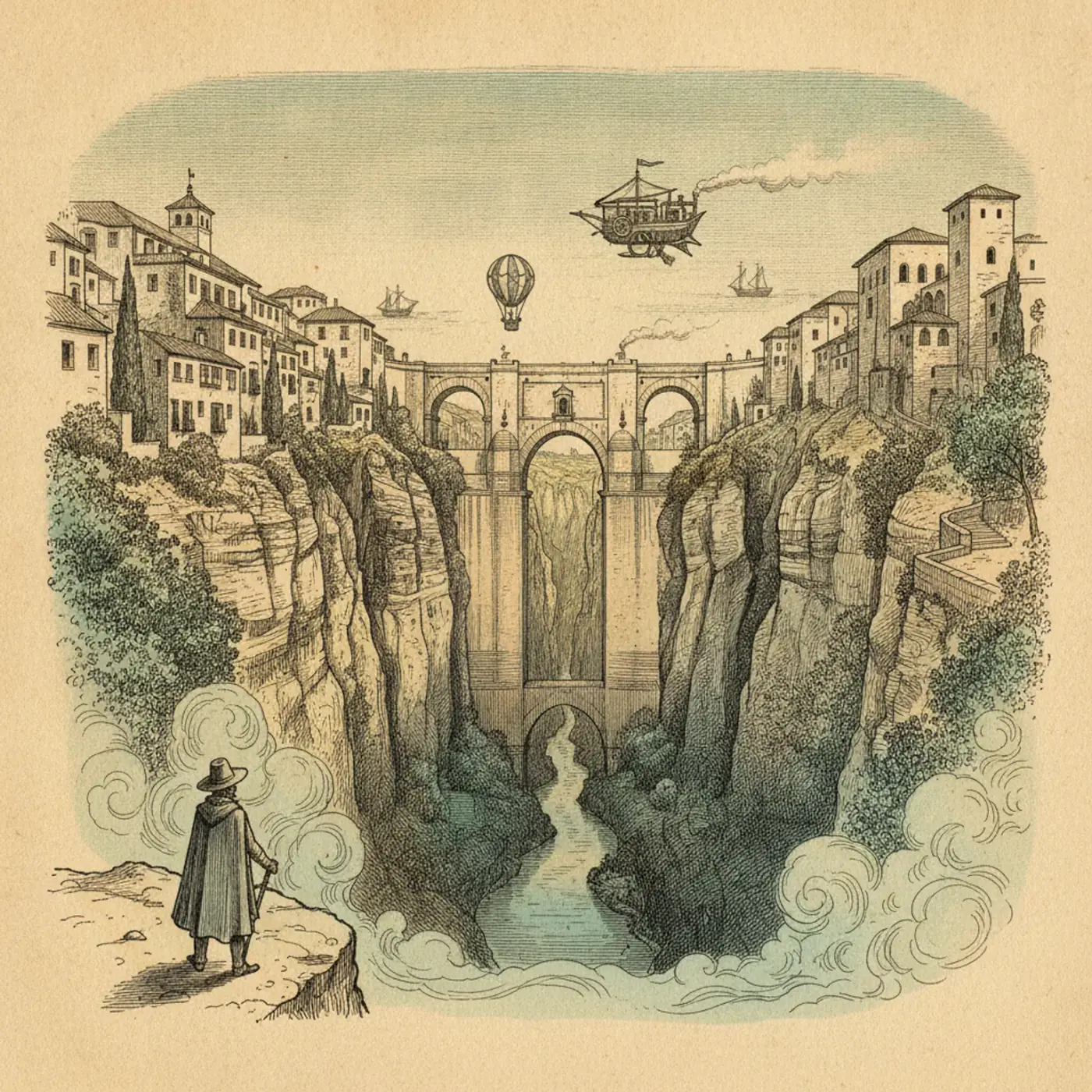
A good Ronda itinerary isn’t really about ticking sights. It’s about a town that someone, at some point, looked at a 100-metre-deep gorge and decided to build a city on both sides of, connected by a bridge that shouldn’t be possible. Ronda is split clean in two by El Tajo, a canyon so dramatic it makes you a little dizzy just standing near the edge. The day-trippers pour in from the Costa del Sol, snap the bridge, and leave by four. Don’t be them. Ronda at night, when it’s quiet and lit up and the swifts are screaming around the cliffs, is a different and far better town.
Three days. Slow ones. Here’s how I’d do it.
Day 1: The bridge, the gorge, and going down
The Puente Nuevo (“New Bridge,” finished 1793) is the icon — a three-arched stone bridge spanning the gorge, with the old town on one side and the newer town on the other. Everyone photographs it from the top. Fine. But the real gut-punch view is from below, on the Camino de los Molinos, a path that switchbacks down into the gorge. It’s a sweaty 20-minute descent (and a sweatier climb back) but you get the bridge towering overhead with the whole cliff dropping away. Do it in the morning before the heat. Worth every step.
Back up top, walk the old Moorish quarter (La Ciudad) — narrow lanes, whitewashed houses, the Casa del Rey Moro with its secret water mine (the “Mina”), a stairway of 200-odd steps cut down through the rock to the river. Your knees will protest. Ignore them.
Watch the sunset from the Mirador de Aldehuela or the gardens near the parador — the cliffs turn gold and the swifts go nuts. It’s one of the best free shows in Spain.

Day 2: White villages — and Setenil, which breaks your brain
Ronda is the gateway to the Pueblos Blancos, the white hill villages of Andalusia, and a car opens them up. The unmissable one is Setenil de las Bodegas, about 20 minutes away. Here, houses are built directly under and into overhanging rock — whole streets where the ceiling is a giant boulder, with bars and homes tucked beneath it. It looks impossible. Have lunch at one of the cave-bars on Calle Cuevas del Sol — grilled meat, a cold beer, the rock literally over your head. Cheap, surreal, brilliant.
If you’ve time, add Zahara de la Sierra (a village wrapped around a Moorish castle ruin above a turquoise reservoir — the climb up to the tower is short and the view is enormous) or Grazalema, deeper into the mountains, all crisp air and hiking trails.
No car? There are day tours from Ronda, but honestly the freedom of driving these roads — empty, winding, gorgeous — is half the pleasure. Drive slow. That’s the whole theme here.

Day 3: Wine, the bullring, and doing nothing on purpose
Ronda has its own wine region (D.O. Sierras de Málaga), and the bodegas in the hills around town do tastings that almost nobody bothers with. Descalzos Viejos, built in an old monastery a short drive out, is a beautiful spot for a tasting and a view back at the town. Reds here are big and good and the prices are gentle.
In town, the Plaza de Toros is one of the oldest bullrings in Spain (1785) — and you can visit it without any bullfighting happening. The architecture is genuinely lovely, all sandy-coloured stone arcades, and the small museum covers Ronda’s outsized role in the history of the sport (and yes, Hemingway and Orson Welles both adored this town — Welles’s ashes are buried on a bullfighter’s estate nearby).
Then spend the back half of the day deliberately doing very little. Sit in Plaza del Socorro with a coffee, watch the town go about itself, eat a long tapas lunch, and let Ronda be slow. That’s the assignment.
| Morning | Afternoon | Evening | |
|---|---|---|---|
| Day 1 | Puente Nuevo + gorge descent | Moorish quarter, water mine | Sunset mirador + tapas |
| Day 2 | Setenil cave streets | Zahara / Grazalema | Dinner back in old town |
| Day 3 | Wine tasting in the hills | Bullring + museum | Slow plaza evening |
A bit of logistics. Ronda is reachable by a famously scenic train from Málaga, Granada, or Algeciras — sit on the right side coming up from the coast for the views. But for Day 2’s villages you really want a car. Summer is brutally hot here (it’s inland Andalusia), so spring and autumn are the move; even then, do the gorge hike early.
What I love about Ronda is that the headline sight — the bridge — somehow doesn’t overshadow everything else. There’s wine and there are villages carved into rock and there’s that particular Andalusian rhythm where lunch takes three hours and nobody’s in a hurry. It rewards staying. The people who give it an afternoon genuinly miss the best of it.
Walk down into the gorge, eat lunch under a boulder in Setenil, stay until the buses leave, and let Ronda set the pace. It knows what it’s doing.
This article contains affiliate links marked rel="sponsored". We may earn a commission at no extra cost to you.