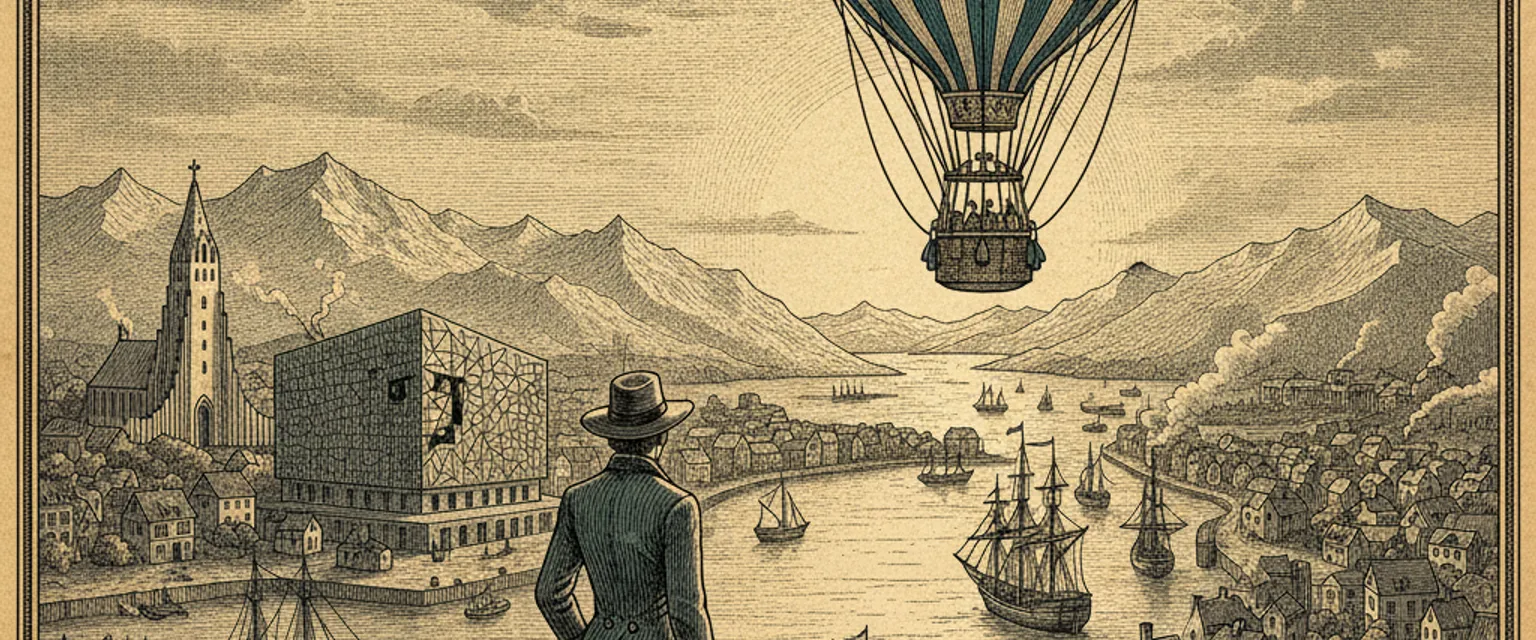
I landed in Reykjavik at 2am in March, exhausted, and the taxi driver pulled over on the lava plain between the airport and town because the whole sky had turned green. Just like that, no warning, ribbons of aurora rolling over a black volcanic desert. I stood on the verge in my flimsy jacket for twenty minutes, freezing and grinning like an idiot. That is Reykjavik in a nutshell: a tiny, snug, oddly cosy city that happens to sit on the edge of the most dramatic landscape in Europe. You come for the nature and end up loving the town.
The Perfect Reykjavik Itinerary (2, 3, 4 & 7 Days)
Two days covers the essentials: a walk through colourful downtown, Hallgrimskirkja's tower view, a soak in a geothermal pool, and the classic Golden Circle loop of Thingvellir, Geysir and Gullfoss. It is the perfect long-weekend taste of Iceland with the capital as your base.
Do this one thing: swim at a neighbourhood pool like Laugardalslaug, not just the Blue Lagoon. It is how Icelanders actually live.
Adding the South Coast
A third day buys you Iceland's greatest hits drive: the waterfalls at Seljalandsfoss and Skogafoss, the black-sand beach at Reynisfjara, and the glacier tongue at Solheimajokull. You trade city time for the country's most photogenic stretch of coast.
City, country, and the Blue Lagoon
Four days lets you slow down: do the Golden Circle and South Coast without rushing, add the Blue Lagoon or the quieter Sky Lagoon, and still have an evening for Reykjavik's terrific restaurants and bars. My recommended length for a first visit.
Reykjavik as a base for all of southern Iceland
A week opens up the big stuff: glacier hiking on Solheimajokull, the Snaefellsnes peninsula's mini-Iceland of volcanoes and cliffs, Jokulsarlon glacier lagoon, and time to chase the aurora or the midnight sun. Seven days is for travellers who want the whole island, not just a postcard.
Estimated budget:$500-$1000
Estimated budget:$750-$1500
Estimated budget:$1000-$2000
Estimated budget:$1900-$3800
Day 1
Downtown Reykjavik
Walk the colourful capital and soak like a local
Hallgrimskirkja
The basalt-column church with the best view in town.
Reykjavik's landmark church looks like a frozen volcanic eruption, designed to echo Iceland's basalt columns. Take the lift up the 73-metre tower first thing for a panorama over the candy-coloured tin rooftops to the sea and Mount Esja. The Leif Erikson statue out front predates the building.
Laugavegur & the Old Harbour
The main street's shops, murals, and waterfront.
Stroll the main shopping street Laugavegur for Icelandic wool, design shops and street art, then wander down to the Old Harbour. Grab a legendary lamb hot dog at Baejarins Beztu Pylsur, a tiny stand that has fed everyone from locals to Bill Clinton since 1937. Order it 'eina med ollu' with everything.
Laugardalslaug Pool
The geothermal pool where Reykjavik actually relaxes.
Skip the tourist queues and do what Icelanders do: head to a neighbourhood geothermal pool. Laugardalslaug is the city's biggest, with hot pots of varying temperatures, a steam room and water slides. Shower naked before entering — it is the law and they are strict about it. Pure bliss in cold weather.
Day 2
The Golden Circle
Iceland's classic loop of rift, geyser and waterfall
Thingvellir National Park
Where two continents pull apart and democracy was born.
This UNESCO site is where the North American and Eurasian tectonic plates visibly split, leaving a dramatic rift valley you can walk through. It is also where the world's oldest parliament met from 930 AD. Snorkellers dive the Silfra fissure between the continents in startlingly clear glacial water.
Geysir & Strokkur
The geyser that named all the others, and its reliable neighbour.
The original Geysir is mostly dormant now, but right beside it Strokkur erupts every five to ten minutes, firing a column of boiling water 20 metres into the air. Stand upwind. The whole geothermal field steams and bubbles around you. There is a decent cafe and shop for a warm-up.
Gullfoss
The 'Golden Falls' thundering into a misty canyon.
Iceland's most famous waterfall drops in two huge tiers into a rugged gorge, kicking up rainbows on sunny days. A footpath leads right out to the edge for a soaking, roaring close-up. It was nearly dammed for hydropower a century ago and saved by a farmer's daughter who threatened to throw herself in.
Day 3
The South Coast
Waterfalls, black sand, and a glacier tongue
Seljalandsfoss & Skogafoss
Two of Iceland's most photogenic waterfalls, an hour apart.
At Seljalandsfoss you can walk behind the curtain of water (you will get wet, bring a raincoat). Twenty minutes on, Skogafoss is a broad 60-metre wall of water you can climb beside for a top-down view. Both sit right off the ring road and make the perfect South Coast double bill.
Reynisfjara Black Sand Beach
Basalt columns, sea stacks and dangerous sneaker waves.
Near the village of Vik, this volcanic beach has jet-black sand, hexagonal basalt columns you can climb, and offshore sea stacks said to be trolls turned to stone. The sneaker waves here are genuinely lethal, so never turn your back on the ocean and stay well up the beach. Stark and unforgettable.
Day 4
Lagoons and Leisure
Soak in milky-blue water, then eat extremely well
Sky Lagoon or Blue Lagoon
An oceanfront infinity pool of warm geothermal water.
The Sky Lagoon, minutes from downtown, has an infinity edge looking over the Atlantic and a seven-step ritual of sauna, cold plunge and scrub. The famous Blue Lagoon, near the airport, is busier and pricier but iconic. Book either well ahead. There is no better cure for a cold, windy day.
Dinner in Grandi
Reykjavik's harbourside food district.
The old fishing-industry quarter of Grandi has become the city's tastiest corner. Eat fresh-caught fish at Matur og Drykkur, slurp lobster soup at the Sea Baron, or grab small plates and natural wine at one of the warehouse-conversion spots. Finish with a scoop at Valdis ice cream nearby.
Day 5
Snaefellsnes Peninsula
All of Iceland packed into one wild peninsula
Kirkjufell
Iceland's most-photographed mountain, with twin falls.
Often called 'Iceland in miniature,' the Snaefellsnes peninsula has a glacier-capped volcano, lava fields, fishing villages and bird cliffs. Kirkjufell, the arrowhead mountain beside the town of Grundarfjordur, is the showstopper, especially framed by the little Kirkjufellsfoss waterfall. Game of Thrones filmed here.
Djupalonssandur Beach
A black pebble cove under Snaefellsjokull glacier.
A dramatic black-pebble beach beneath the Snaefellsjokull volcano, scattered with the rusted ribs of a 1948 shipwreck left as a memorial. Four lifting stones used to test fishermen still sit on the sand. The glacier looming above is the one from Jules Verne's Journey to the Centre of the Earth.
Day 6
Glacier and Ice Lagoon
Walk on a glacier and float past icebergs
Solheimajokull Glacier Hike
Crampons, ice axes, and a tongue of crevassed ice.
Strap on crampons and follow a certified guide onto this accessible glacier tongue off the South Coast, threading between blue crevasses and sinkholes. It is moderately strenuous but suitable for fit beginners. Never go without a guide; the ice is alive and dangerous. Tours run year-round from a car park nearby.
Jokulsarlon Glacier Lagoon
Icebergs drifting to the sea past Diamond Beach.
Iceland's most surreal sight: a lagoon of luminous blue icebergs calving off the Vatnajokull glacier and floating out to sea, with seals bobbing between them. Across the road, Diamond Beach is strewn with stranded ice glittering on black sand. It is a long drive east, so consider an overnight in the area.
Day 7
Aurora and Farewell
Culture, a last soak, and the night sky
Perlan Museum
An ice cave, a planetarium, and a 360-degree city view.
Housed in a glass dome atop the city's hot-water tanks, Perlan packs in a real man-made ice cave, an aurora planetarium show, and a wraparound observation deck over Reykjavik and the mountains. A smart, family-friendly indoor option, and the best primer on Iceland's volcanoes and glaciers before you leave.
Northern Lights Hunt
Chase the aurora away from the city lights.
From September to March, on a clear night with high solar activity, head out of town to escape light pollution: Grotta lighthouse on the city's edge works, or join a guided tour that drives to wherever the sky is clearest. Check the Icelandic Met Office aurora forecast. Patience and warm layers are everything.
People assume Reykjavik is just the door you walk through to reach Iceland’s nature, and they sell it short. Yes, the waterfalls and glaciers are why you fly here, but the city itself is a genuine pleasure: a tiny, walkable, design-obsessed capital of 130,000 people where everyone seems to be a poet, a musician or a fisherman, and sometimes all three. It is cosy in the deepest sense, all wool jumpers and geothermal pools and long candlelit dinners against the cold.
How to use this plan
Use Reykjavik as your base and radiate outward. Two days handles the city and the Golden Circle, the classic loop that bundles a continental rift, an erupting geyser and a roaring waterfall into one easy drive. Three adds the South Coast, which is Iceland’s most photogenic stretch: waterfalls you can walk behind, a lethal-but-beautiful black beach, and glaciers tumbling toward the sea. Four, the length I would suggest, lets you do both without rushing and still soak in a lagoon and eat properly in town.
The 7-day plan turns Reykjavik into a launchpad for the whole south: the Snaefellsnes peninsula, a guided glacier hike, and the otherworldly Jokulsarlon ice lagoon far to the east. With a week you can also build in slack for weather, which in Iceland is not optional.
A few honest notes
Iceland is expensive, so lean into the free and cheap wonders: the neighbourhood pools, the tap water (the best you will ever drink), and the landscape itself. Rent a car if you can drive in winter conditions; if not, the guided day tours are excellent and take the stress out of icy roads. Pack proper waterproof layers whatever the season, and never, ever underestimate the wind or the waves. And do not obsess over the aurora to the point of missing everything else; treat a sighting as a gift, not a guarantee.
This article contains affiliate links marked with rel="sponsored". We may earn a commission at no extra cost to you.