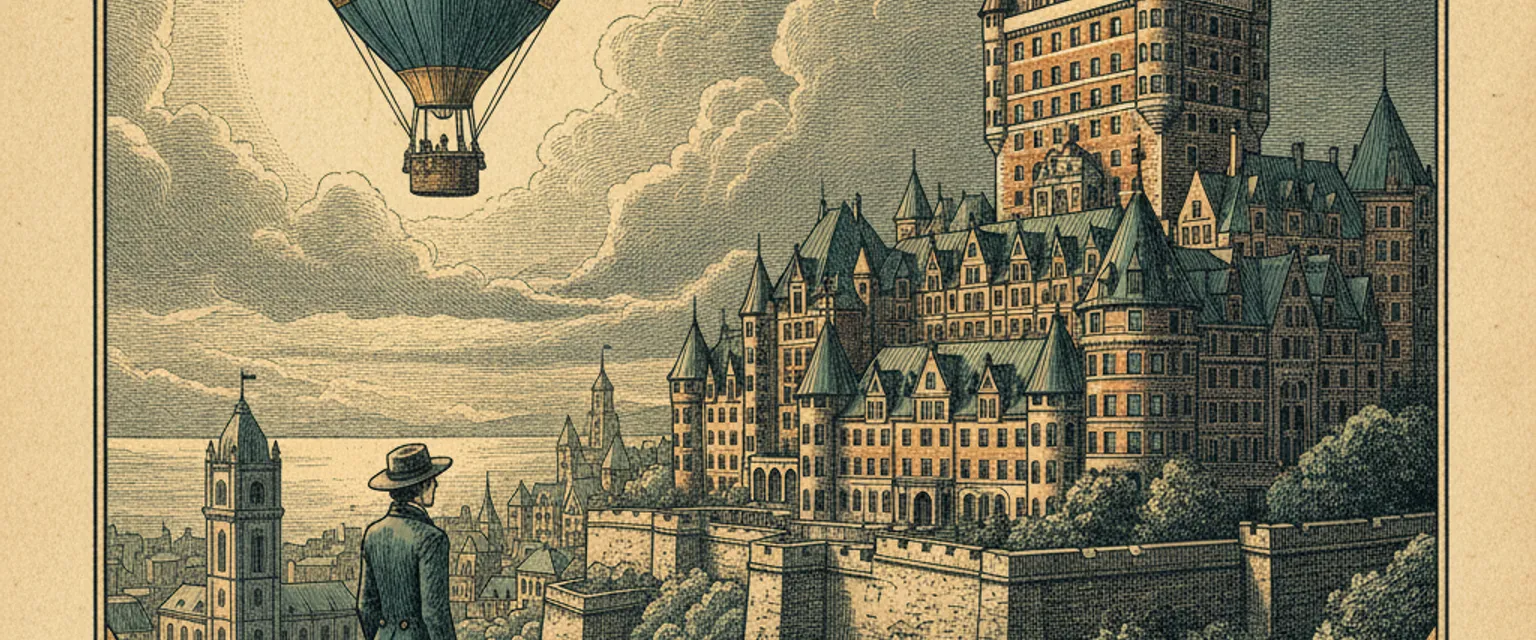
I got hopelessly lost in the Petit-Champlain quarter on my first night, which is impressive given the whole district is roughly the size of a generous parking lot. Every cobbled lane curved back on itself, every stone staircase promised a shortcut and delivered a dead end with a creperie at the bottom. I gave up, sat on the funicular steps, and watched the river go dark behind the Chateau Frontenac. A man selling maple taffy on snow told me, in French, that getting lost here is the point. He was right, and I bought three.
The Perfect Quebec City Itinerary (2, 3, 4 & 7 Days)
Two days handles the walled city on foot. The Chateau Frontenac and Dufferin Terrace, the cobbled Petit-Champlain below, the ramparts and the Plains of Abraham. You eat poutine, you climb a lot of stairs, and you leave understanding why this corner of Canada feels so stubbornly French.
Walk the Dufferin Terrace at blue hour. The boardwalk lights and the river fog do the rest.
72 Hours: Add the Falls and the Plains
Three days buys you Montmorency Falls, taller than Niagara and a short bus ride east, plus a slow morning on the Plains of Abraham and the Musee de la Civilisation. You stop rushing and start noticing the details the day-trippers miss.
4 Days: Ile d'Orleans and the Table
Four days lets you cross to Ile d'Orleans for cider, cheese, and strawberry fields, then spend a long evening eating properly in the Saint-Roch neighbourhood. This is where Quebec City stops being a film set and starts being a place people actually live.
7 Days: The City and Its Region
A week opens up the whole region: a day in Charlevoix's mountains and whale country, the Wendake Indigenous site north of the city, and enough unscheduled afternoons to find your own cafe on a quiet side street. You stop translating menus and start ordering by instinct.
Estimated budget:$300-$520
Estimated budget:$450-$780
Estimated budget:$600-$1040
Estimated budget:$1050-$1850
Day 1
Upper Town and the Chateau
Ramparts, the grand hotel, and the river view
Chateau Frontenac and Dufferin Terrace
The most photographed hotel on earth, looming over a boardwalk above the St Lawrence.
The Chateau Frontenac is a railway hotel from 1893 built to look like a French castle, and it succeeds so thoroughly it has become the city's emblem. You do not need to stay to enjoy it. Walk the Dufferin Terrace boardwalk along its base for the postcard river view, then take the free guided history tour if the hotel is running one.
The Fortifications and Porte Saint-Louis
The only surviving city walls north of Mexico, walkable end to end.
Old Quebec is ringed by 4.6 kilometres of stone fortifications, the only intact city walls in North America outside Mexico. Walk a stretch along the ramparts from Porte Saint-Louis, peer down at the cannons, and trace how a French and then British garrison defended this bluff. The walls are free and largely empty of crowds.
Aux Anciens Canadiens
Hearty Quebecois cooking in a 1675 house, all tourtiere and maple.
Housed in the Jacquet House from 1675, one of the oldest buildings in the city, this restaurant serves traditional Quebecois fare: tourtiere meat pie, maple-glazed ham, and a sugar pie that ends arguments. It is unapologetically touristy and the food holds up. Book the early seating to land a table by the low-beamed windows.
Day 2
Lower Town and the Battlefields
Cobbles below, history above
Quartier Petit-Champlain
The oldest commercial street in North America, all crooked roofs and boutiques.
Petit-Champlain at the foot of the cliff is a tight run of seventeenth-century stone houses now packed with artisan shops and cafes. Take the funicular down from the terrace or brave the Breakneck Stairs, then wander to Place Royale where Quebec was founded in 1608. Come early; by noon the tour groups arrive in waves.
Musee de la Civilisation
A smart, modern museum that explains Quebec without ever being dry.
Down in the Old Port, the Musee de la Civilisation is the city's best museum, with sharp rotating exhibitions and a permanent show on Quebec's people and an Indigenous perspective on the land. It is genuinely engaging rather than dutiful. Allow two hours, more if a major touring exhibit is in.
Plains of Abraham
The battlefield that decided New France, now the city's great green park.
The Plains of Abraham is where the British beat the French in 1759 in a battle that lasted fifteen minutes and changed a continent. Today it is a rolling clifftop park, perfect for a late-afternoon walk with the river below. The on-site museum explains the battle if history is your thing; the picnic spots work even if it is not.
Day 3
Montmorency Falls and Saint-Roch
A waterfall taller than Niagara, then dinner downtown
Montmorency Falls
At 83 metres, a third taller than Niagara, with a suspension bridge across the top.
A fifteen-minute drive or city bus east of Old Quebec, Montmorency Falls plunges 83 metres into the St Lawrence, taller than Niagara if narrower. Take the cable car up, cross the suspension bridge directly over the lip, and climb the stairs along the gorge. In winter the spray builds a giant ice cone at the base that locals climb.
Saint-Roch dining district
The reborn lower neighbourhood where Quebec City's best young chefs cook.
Saint-Roch, once industrial and rough, is now the city's most interesting eating quarter, full of bistros, microbreweries, and third-wave coffee. Skip the tourist menus of Upper Town and come here for a proper modern Quebec dinner. Rue Saint-Joseph is the spine; wander it and follow the room that looks busiest with locals.
Day 4
Ile d'Orleans
Cider, cheese, and farm country across the bridge
Ile d'Orleans farm loop
A rural island ten minutes from the city, ringed by orchards and vineyards.
Ile d'Orleans sits in the St Lawrence just east of the city, a single loop road past strawberry fields, apple orchards, cider houses, and old stone churches. It is where Quebec City buys its produce. Rent a car or join a tour, stop at a cidrerie for ice cider, and buy cheese and bread for a roadside lunch overlooking the water.
Chocolaterie de l'Ile d'Orleans
Island chocolate and blackcurrant ice cream with a river-view terrace.
A long-running family chocolaterie on the island's north shore, known for its dark chocolate and a cassis blackcurrant ice cream that uses fruit grown a few fields away. Sit on the terrace with the St Lawrence in front of you. It is a small, deliberate pleasure and the right way to slow a road-trip afternoon down.
Day 5
Charlevoix Day Trip
Mountains, whales, and the coast road northeast
Baie-Saint-Paul
A coastal artists' town in a glacial crater, birthplace of Cirque du Soleil.
Ninety minutes northeast along the dramatic Charlevoix coast, Baie-Saint-Paul is a small town of art galleries and inns set in a meteor-and-glacier-carved basin where the river meets the mountains. It is where Cirque du Soleil began. Browse the studios on Rue Saint-Jean-Baptiste and lunch on local lamb and cheese.
Whale watching at Tadoussac
Belugas and minke whales where the Saguenay fjord meets the salt river.
Further along, where the Saguenay fjord empties into the St Lawrence, the cold nutrient-rich water draws belugas, minke, and fin whales all summer. Tadoussac is the classic launch point for a zodiac or cruise. It is a long day from the city but among the best wildlife outings in eastern Canada. Book the boat ahead in peak season.
Day 6
Wendake and the City's North
Indigenous history and the river's edge
Wendake and the Huron-Wendat Museum
A living First Nation community fifteen minutes north of the old walls.
Wendake, just north of the city, is the home of the Huron-Wendat Nation, with a strong museum, a reconstructed longhouse, and a hotel built around Indigenous culture. The guided tour gives the side of the region's story the ramparts leave out, and the on-site restaurant serves game and traditional dishes worth ordering.
Kabir Kouba Falls and gorge
A 28-metre waterfall and walking trail beside Wendake, almost always empty.
Right beside Wendake, the Saint-Charles River drops through the Kabir Kouba gorge over a 28-metre fall, with a short interpretive trail along the rim. It is a quiet, local spot that almost no visitors find. Pair it with the morning in Wendake for an easy, uncrowded day close to the city. Wear shoes with grip; the path can be slick.
Day 7
Slow Quebec
Markets, ramparts, and a last long lunch
Grand Marche de Quebec
The city's big public market for Ile d'Orleans produce and Quebec cheese.
The Grand Marche, near the ExpoCite grounds, gathers the region's farmers, cheesemakers, and cider producers under one roof, more local and less touristy than the old market by the port. Graze for a picnic of cheese, charcuterie, and fresh bread, then carry it back to the Plains of Abraham for a final clifftop lunch above the river.
Rue Saint-Jean and the artillery park
The old town's most characterful street, anchored by a historic grocer.
Rue Saint-Jean is Upper Town's liveliest street, running from the walls past J.A. Moisan, billed as North America's oldest grocery store, dating to 1871. Browse it, then walk the Artillery Park national site at the wall's edge for a last quiet hour with the cannons and the river light before you leave.
Quebec City is the closest thing North America has to a walled French town, and unlike most places that make that claim, it actually delivers. Founded in 1608, it runs in French, looks like a film set, and packs four centuries of history into a clifftop the size of a few neighbourhoods. It is also small, which is its secret weapon: you can walk the whole old city in a day and still feel like you are uncovering it.
This itinerary is built around a simple split. Old Quebec, Upper and Lower Town, is the headline act and earns its first two days. But the region around it, Montmorency Falls, Ile d’Orleans, Charlevoix, and Wendake, is where the trip stops being a postcard and becomes a real place. The longer plans push you out of the walls on purpose.
The 2/3/4/7-day versions are genuine choices. Two days is the cobbles, the Chateau, and the river. Three adds the waterfall and the city’s best dinners. Seven gives you whales, mountains, and Indigenous history, plus the unhurried hours that let a place sink in.
How to use this plan
Use the day filter to match your trip length. Each day clusters by area so you climb fewer stairs than you fear and commute less. The old city is entirely walkable; for the falls, the island, and Charlevoix you will want a car or a tour. Come in summer for terrasses and festivals, in autumn for the colour, or in December for the most atmospheric Christmas market in Canada, and pack a warm layer whatever the forecast claims.
This article contains affiliate links marked with rel="sponsored". We may earn a commission at no extra cost to you.