
[ ITINERARY · THE DISPATCH ]
A Cold-Weather Obsessive's 4 Days in Quebec City in January
Most people avoid Quebec City in January. I think they're missing the best version of it — frozen rivers, glowing ice sculptures, and a city that celebrates winter like nowhere else on earth.
For the full day-by-day version of everything below, read the how to spend 3 perfect days in Quebec City.
I have a confession: I plan my vacations around bad weather. Not bad weather as an accident — bad weather as the destination. So when people ask me why I went to Quebec City in January instead of, say, June, I genuinely don’t understand the question.
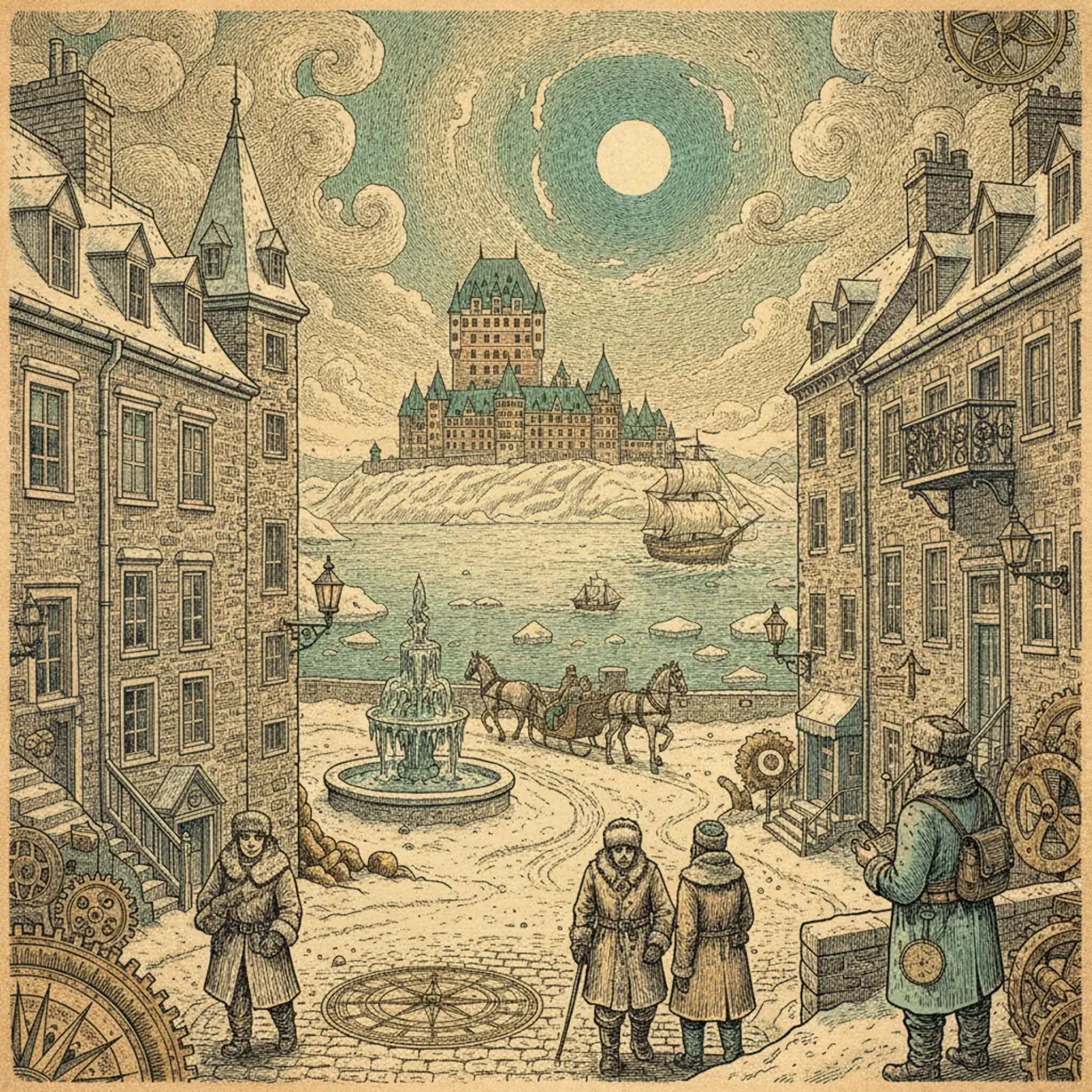
Quebec City in January is the city at its most itself. The Château Frontenac glows against a sky that goes from pale blue to deep violet by 4 p.m. The Plains of Abraham are covered in unbroken snow. The toboggan run on Dufferin Terrace is full of screaming adults. And Hôtel de Glace — a hotel built entirely from ice and snow — sits 15 minutes from downtown, waiting for people brave enough to sleep in it.
This is my Quebec City winter itinerary for January, built for people who want to lean in, not hide inside.
For a broader look at what this city has to offer across seasons, the full Quebec City travel hub is worth bookmarking before you go.

Before You Go: What January Actually Feels Like
Temperatures range from -10°C to -25°C (14°F to -13°F), with wind chill pushing colder. This sounds brutal. It isn’t, if you’re dressed for it. Merino base layer, mid-layer fleece, insulated outer shell, wool socks, waterproof boots rated to -30°C, a hat that covers your ears, and hand warmers in your pockets. That’s the kit. Walk that way and you’ll be fine for hours.
The city does not slow down for cold. Locals walk everywhere. Restaurants are packed. The terrasse bars have heaters and blankets. Quebec City is one of the few places in North America that has genuinely figured out how to live outdoors in winter rather than surrender to it.
Day 1: Arrive, Get Your Bearings in Old Quebec
Fly into Jean Lesage International (YQB) — it’s small, efficient, and 20 minutes from Old Quebec by cab or rideshare (about $30 CAD).
Check into something in or close to Vieux-Québec. I stayed at Auberge Saint-Antoine in the Port district, which is excellent and only slightly guilt-inducing in price (rooms start around $250 CAD/night in January, which is low season for them). If you want charm on a tighter budget, Hôtel Champlain or the smaller B&Bs on Rue Sainte-Ursule work well.
Spend the afternoon walking the Upper Town. The Dufferin Terrace boardwalk along the cliff is the obvious first stop — the view of the St. Lawrence is worth the wind. In January, the famous toboggan slide (La Glissade) operates on weekends; it’s $3 CAD a run and genuinely terrifying in the best way. Families, retirees, and clearly-too-old-for-this adults all queue together.
For dinner on night one, I always go to Aux Anciens Canadiens on Rue Saint-Louis. It’s touristy, yes, but it’s also the best introduction to Québécois cuisine: tourtière, maple-glazed ham, and a cider that tastes like it was made specifically for cold nights. Budget $50-70 CAD per person with drinks.
Day 2: Hôtel de Glace and Village Vacances Valcartier
This is the marquee day. Hôtel de Glace is at Village Vacances Valcartier, about 25 minutes north of Old Quebec by cab ($40 CAD each way, roughly).
The hotel itself is rebuilt every January from 15,000 tons of snow and 500 tons of ice. Rooms are themed and elaborately carved. The chapel gets used for actual weddings. The bar serves cocktails in ice glasses. If you’re going to stay one night in the ice hotel — and you should — book at least 6-8 weeks ahead. Prices run $500-800 CAD for a room, which includes thermal sleeping bags rated to -30°C, access to the Nordic spas, and a strange, quiet pride in having done something most people won’t.
If you don’t stay overnight, day admission is around $35 CAD and includes a guided tour.
Valcartier also has the largest snow tubing park in North America. I spent an embarrassingly long time there and regret nothing.
Back in the city by evening, grab poutine at Le Chic Shack on Rue Saint-Louis. It’s not the cheapest ($18-22 CAD for a full poutine) but the curds are squeaky-fresh and the gravy is properly dark. This is the one.
Day 3: Carnaval de Québec (If Your Dates Overlap)
Carnaval runs from late January through mid-February. If your January trip falls in the last week of the month, congratulations — you get the full show. If you’re going earlier, skip ahead, but try to plan around it on a future trip.
The Carnaval de Québec is the largest winter carnival in the world, and it’s genuinely unlike anything I’ve seen elsewhere. The main site near the Plains of Abraham has ice sculptures, night parades, dogsled demonstrations, and stands selling caribou — the traditional mulled wine-and-whisky punch served in ice cones. It’s sweet and strong and you will have two.
The International Ice Sculpture Competition near Parc de l’Amérique-Française is free to walk through and worth an hour. The sculptures are elaborate and weird: dragons, movie characters, abstract forms. They’re lit at night and genuinely beautiful.
For a mid-day warm-up, duck into Galerie Brousseau on Rue Saint-Louis for Inuit art — serious pieces, not souvenirs. Then coffee at Café Krieghoff in the Montcalm neighborhood, which feels like someone’s living room and has the best pain aux raisins in the city.
I’ll admit: the energy of Carnaval reminded me of how good it feels to be somewhere that celebrates what it is, rather than apologizing for it. It’s something I think about when I read those “best places to go in summer” lists. (For the record, I also love chasing good food in warmth — if you want a contrast read, the Oaxaca food purists guide is one of my favorites on this site.)

Day 4: Lower Town, the Quartier Petit Champlain, and Departure
Rue du Petit-Champlain in Lower Town is the most photographed street in Canada, and in January it’s strung with lights and dusted with snow and almost completely empty of tour groups. Walk down via the funicular ($4 CAD one way) from Dufferin Terrace and take your time.
The Marché du Vieux-Port (Old Port Market) opens year-round. It’s smaller in January but the vendors who show up in winter are locals selling local things: maple products, artisan cheeses, smoked meats. I bought a 540ml tin of amber maple syrup for $18 CAD and carried it home in my carry-on wrapped in a sweater.
Lunch at Le Lapin Sauté in Petit-Champlain — rabbit terrine, duck confit, a glass of Québec cider. $40-55 CAD per person. It’s a small room and it fills up even in January; arrive before noon or after 1:30 p.m.
Spend your last hour at the Musée de la Civilisation if you haven’t been — it’s one of the better history museums in North America and the “This Is Quebec” permanent exhibition gives context to everything you’ve seen. $20 CAD admission.

Quick Logistics
- Getting around: Walk everywhere in Old Quebec (it’s compact). Cab or rideshare for Valcartier. The city bus system works but schedules are less useful for tourists.
- Budget: $150-200 CAD/day per person is comfortable (excluding the ice hotel night). $300+ if you’re doing Valcartier, Carnaval admission, and nicer dinners.
- Language: French first, always. A simple “Bonjour, parlez-vous anglais?” gets you far. Most service industry folks in tourist areas speak excellent English, but the gesture matters.
- Weather app: Check Environment Canada, not your default app. It’s more accurate for Quebec and includes wind chill in the forecast display.
If this kind of off-season, lean-into-the-place travel is your thing, you might also enjoy the Americas itineraries hub — there’s a lot of that energy across Latin America too, from city-local taxi adventures in Medellín to destinations that genuinely work for solo women travelers.
Quebec City in January isn’t a compromise — it’s the whole point.
This article contains affiliate links marked rel="sponsored". We may earn a commission at no extra cost to you.