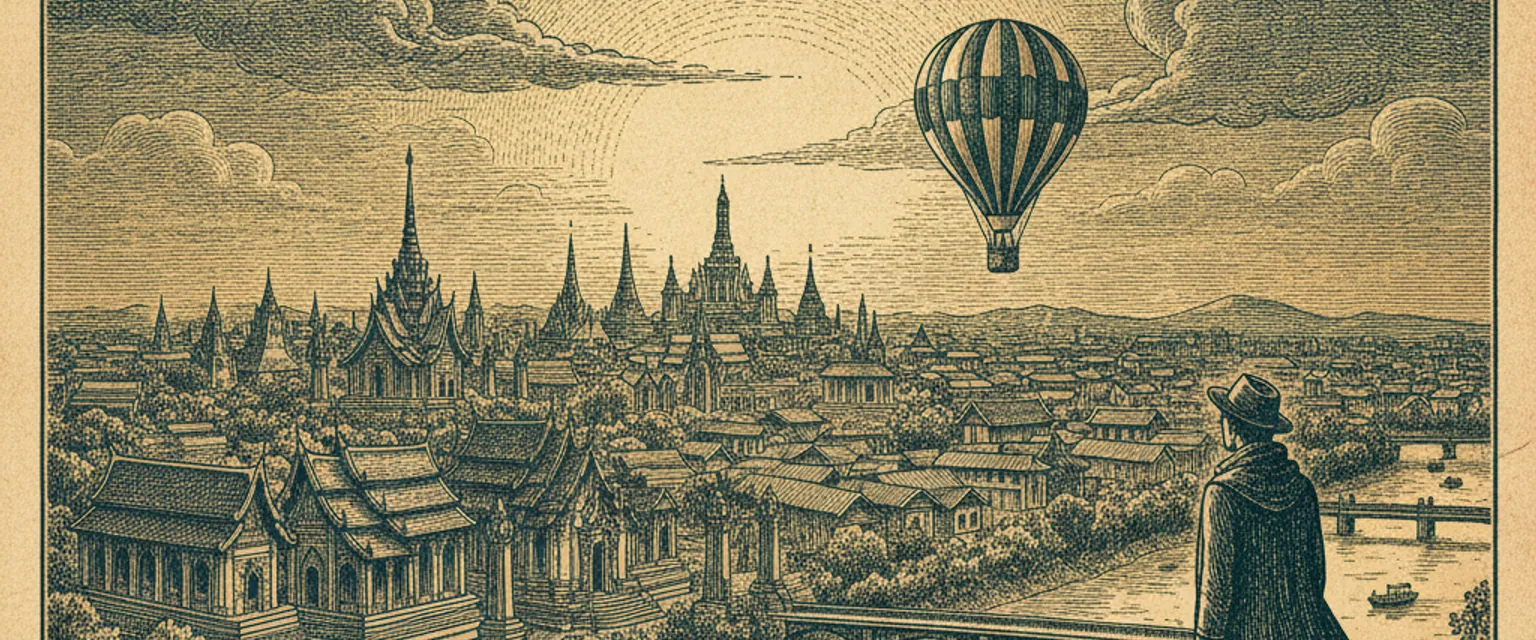
I came to Chiang Mai for three days and stayed eleven, which is the single most predictable thing a traveller can do here. It happened because of a coffee. I sat down at a tiny roaster in Nimman expecting a forgettable flat white and got the best cup I had drunk in Asia, served by a man who roasted his own beans from a farm two hours north. He told me about the farm. I went to the farm. The farm had elephants. You see how this goes. Chiang Mai does not grab you — it just quietly removes every reason you had to leave.
The Perfect Chiang Mai Itinerary (2, 3, 4 & 7 Days)
Two days covers the essentials: the walled old city's great temples on foot, Doi Suthep glowing on the mountain above town, and a night market dinner. Chiang Mai is small and walkable inside the moat, so day one needs no transport at all. Rent a scooter or grab a Grab car for the mountain on day two.
Dress respectfully at temples — shoulders and knees covered. Most have wraps at the entrance, but bringing your own scarf saves the queue.
72 Hours: Add Elephants and the Sunday Walking Street
Three days earns a full day at an ethical elephant sanctuary in the hills — the right ones let you feed and walk with the animals, never ride them. If your trip lands on a Sunday, the Walking Street market that takes over the old city is the best in Thailand. Time it if you can.
4 Days: The Jungle, Waterfalls, and a Cooking Class
Four days lets Chiang Mai breathe. Add a Thai cooking class in a garden outside town, a morning in the jungle at the Mae Sa waterfalls or the Sticky Waterfall you can actually climb, and a slow afternoon in the cafes of Nimmanhaemin. This is where the city stops being a checklist and starts being a place you like.
7 Days: Doi Inthanon, Chiang Dao, and the Slow North
A week opens the wider north: Doi Inthanon, Thailand's highest peak, with its twin royal chedis and misty trails; the limestone caves and quiet of Chiang Dao; and enough unstructured days to find your own coffee shop, your own temple, your own reason to extend the flight. Most people who come for a week leave plotting a return.
Estimated budget:$110-$240
Estimated budget:$170-$380
Estimated budget:$240-$540
Estimated budget:$480-$1100
Day 1
The Old City on Foot
Temples inside the moat, no transport required
Wat Chedi Luang
A half-ruined 15th-century chedi, partly toppled by an earthquake, still towering over the old city.
The most atmospheric temple inside the walls — a massive, weathered brick chedi that once stood 80 metres tall before an earthquake took its top in 1545. The scale is humbling and the elephant carvings at the base are wonderful. There is a monk chat pavilion where you can sit and ask resident monks anything, which is one of the genuine experiences in town.
Wat Phra Singh
The old city's grandest active temple, gleaming gold at the end of the main street.
The spiritual heart of Chiang Mai and a working monastery, Wat Phra Singh houses a revered Buddha image and one of the finest examples of Lanna architecture in the north. The Lai Kham assembly hall, with its gilded woodwork and murals of 19th-century northern Thai life, is the highlight. Go before noon while it is calm.
Chiang Mai Gate Night Market
A local food market at the south gate — khao soi, grilled pork, and mango sticky rice for next to nothing.
Skip the tourist-heavy night bazaar tonight and eat where locals do at the Chiang Mai Gate market. Get khao soi, the northern coconut curry noodle that is the city's signature dish, plus sai ua (northern herb sausage) and a fresh mango sticky rice. A full, excellent dinner here costs a couple of dollars.
Day 2
Doi Suthep and Nimman
The sacred mountain by morning, hip cafes by afternoon
Wat Phra That Doi Suthep
A glittering golden chedi on the mountain above the city, reached by a 306-step naga staircase.
The most important temple in northern Thailand sits on the forested slopes of Doi Suthep, a 30-minute drive up from town. Climb the dragon-flanked staircase to a hilltop terrace of golden chedis and a panorama over the entire Chiang Mai valley. Go early, before the haze and the crowds. The legend involves a white elephant choosing the site, which the monks will happily tell you.
Nimmanhaemin Cafes
Chiang Mai's design district and the best specialty coffee scene in Southeast Asia.
Nimman is where the city's creative class, digital nomads, and serious coffee roasters cluster. Spend the afternoon cafe-hopping — Ristr8to and Graph are local institutions — and browsing the boutiques of One Nimman. The coffee genuinely is world-class, grown in the hills north of here. This is also the best lunch zone in the city.
North Gate Jazz Co-op
A tiny live-jazz bar by the old city's north gate, spilling onto the street every night.
An institution. North Gate Jazz Co-op is a cramped, sweaty, joyful bar where local and travelling musicians jam every night and the crowd overflows onto the pavement with cold Chang beers. Tuesday's open-mic night is legendary. It is the best free night out in the old city and a reliable way to fall in with a crowd.
Day 3
Ethical Elephants and the Walking Street
A day with the elephants, an evening at the market
Ethical Elephant Sanctuary
Feed, walk, and bathe rescued elephants — never ride them — at a genuine no-riding sanctuary.
A full day at a reputable sanctuary in the hills, where rescued elephants roam and you feed, walk alongside, and bathe them. Choose carefully: ethical places never offer rides or circus shows. Elephant Nature Park and its affiliated projects are the gold standard. Pickup from your hotel is included, and the drive into the hills is half the pleasure.
Sunday Walking Street
The old city's main road closes to traffic and becomes Thailand's best craft and food market.
If your trip includes a Sunday, this is unmissable: Ratchadamnoen Road fills with hundreds of stalls selling northern crafts, art, clothing, and a temple-courtyard food hall that is the real reason to come. Eat your way through it slowly. If you are not here on a Sunday, the smaller Saturday Walking Street on Wualai Road is the silver-and-craft version.
Day 4
Cooking Class and the Sticky Waterfall
Learn the food, then climb a waterfall
Thai Cooking Class
Pick your ingredients at a local market, then cook khao soi and curries in a garden kitchen.
A half-day cooking class is one of the best things you can do in Chiang Mai, and there are dozens of excellent ones outside town. The good ones start at a local market to teach you the ingredients, then move to a garden kitchen where you cook khao soi, green curry, and pad thai from scratch — and eat everything. You leave with a recipe book and a new skill.
Bua Tong Sticky Waterfall
A limestone cascade with so much grip you can walk straight up the flowing water.
Bua Tong, an hour north of the city, is a limestone waterfall coated in mineral deposits that make it almost completely non-slip — so you climb up the flowing falls barefoot, which sounds impossible until you do it. It is free, surrounded by jungle, and far less crowded than the tourist waterfalls closer to town. Bring water shoes if you have them.
Day 5
Doi Inthanon — The Roof of Thailand
The highest peak, twin royal chedis, and mountain trails
Doi Inthanon Twin Royal Chedis
Two terraced pagodas in mountaintop gardens, built for the king and queen.
Near the summit of Thailand's highest mountain stand two striking modern chedis surrounded by manicured gardens that bloom in the cool season. The views over the layered mountain ridges are spectacular when the cloud lifts. It is genuinely cold up here, so bring a layer — a sentence you rarely write about Thailand.
Kew Mae Pan Nature Trail
A guided ridge walk through cloud forest with sweeping valley views.
This short, guided loop trail (a local guide is required) winds through mossy cloud forest and opens onto a dramatic ridge overlooking the valley below. It is one of the most beautiful walks in northern Thailand and a complete contrast to the heat of the lowlands. The trail is sometimes closed in rainy season, so check before committing the day.
Day 6
Chiang Dao — Caves and Quiet
Limestone mountains and small-town calm to the north
Chiang Dao Cave
A vast temple-cave complex burrowing into Thailand's third-highest mountain.
Ninety minutes north of the city, the Chiang Dao caves run deep into a dramatic limestone massif, with illuminated Buddha shrines in the front chambers and lantern-lit deeper sections you explore with a local guide. The mountain village above is one of the most peaceful spots in the region, with a handful of lovely small guesthouses and a great Saturday morning market.
Doi Luang Chiang Dao Viewpoint
Sunset over the looming silhouette of the north's most beautiful mountain.
End the day with a sundowner at one of the viewpoint cafes facing Doi Luang Chiang Dao, the jagged limestone peak that dominates the valley. The light on the mountain at dusk is the kind of thing that explains why people move up here. The pace in Chiang Dao is the slow north at its slowest, and that is the point.
Day 7
Slow Chiang Mai and Departure
Last temple, last khao soi, last coffee
Wat Umong
A serene 700-year-old forest temple of ancient brick tunnels and a quiet lake.
On the city's western edge near the university, Wat Umong is a forest monastery built around a network of 14th-century meditation tunnels, with a tranquil lake where monks feed the fish and turtles. It is shaded, calm, and rarely busy — the perfect contemplative last morning before you head to the airport. Look for the tree-hung Buddhist proverbs along the paths.
Khao Soi Mae Sai
A final bowl of the city's defining dish at a beloved local shop.
Have your farewell bowl of khao soi at one of the city's classic spots — Khao Soi Mae Sai or Khao Soi Khun Yai are both small, cheap, and excellent. This northern coconut-curry noodle soup, topped with crispy noodles and a wedge of lime, is the flavour you will chase for years. Order an extra to go for the airport.
Chiang Mai Airport Departure
Ten minutes from the old city — buy mountain coffee beans and head out slowly.
Chiang Mai's airport is refreshingly close to town, a ten-minute Grab from the old city, so there is no need to rush. Buy a bag of locally roasted northern Thai coffee as the souvenir that will actually get used. Then sit, finish your khao soi, and start working out when you can come back for longer.
Chiang Mai is the antidote to Bangkok, and northern Thailand’s whole personality is built around that contrast. Where the capital is heat, scale, and relentless intensity, Chiang Mai is mountains, cool evenings, a compact walled old city you can cross on foot, and a rhythm that talks you down rather than winds you up. It has more temples than anyone can count, the best coffee in the country, and the easiest soft landing into Thailand you will find anywhere.
The shape of a Chiang Mai trip is simple. The moated old city holds the great temples and most of the budget guesthouses, all walkable. Nimmanhaemin to the west is the modern, cafe-and-boutique district. Everything genuinely special, though, is in the hills around the city — Doi Suthep, the elephant sanctuaries, the waterfalls, and Doi Inthanon — which is why even a short trip needs at least one day pointed at the mountains.
How to use this plan
The days nest, so a weekend takes the first two days, three days adds the elephants, and a full week reaches Doi Inthanon and the quiet of Chiang Dao. The single most important ethical note: only book elephant experiences that do not offer rides or shows. The good sanctuaries are clear about this, and they are the ones worth your money.
Come in the cool, dry season from November to February if you possibly can — the air is clear, the evenings are pleasant, and the mountains are at their best. Avoid March and April, when the surrounding agricultural burning chokes the valley in smoke. Time it right, eat your weight in khao soi, drink the coffee, and do not be surprised when three days quietly becomes a week.
This article contains affiliate links marked with rel="sponsored". We may earn a commission at no extra cost to you.