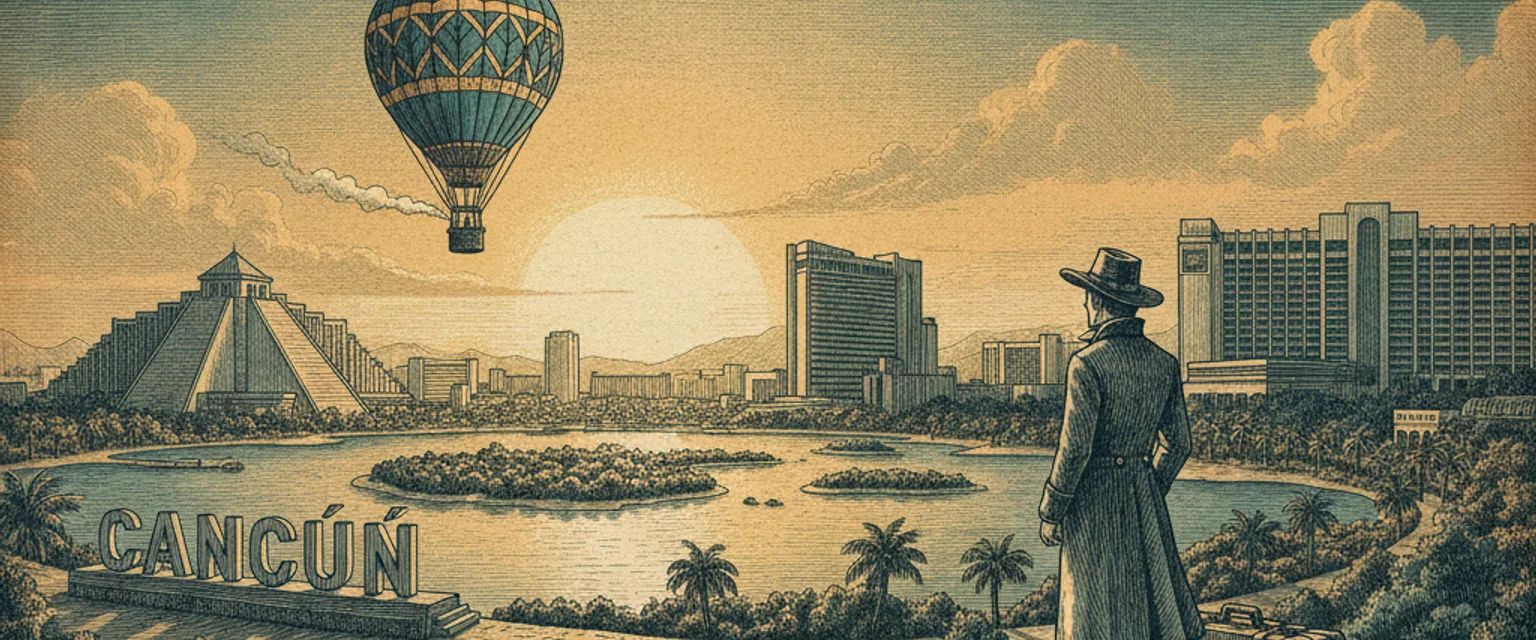
I came to Cancun braced to hate it, a snob fully prepared to write off the wristbands and the swim-up bars. Then on day two I rented a car, drove an hour inland, and lowered myself by a wooden ladder into a cenote, a flooded cave where shafts of light cut the cool water and a swallow flickered overhead. I floated there for an hour, completely alone, twenty minutes from the world's most maligned beach strip. Cancun, it turns out, is a base camp wearing a spring-break costume, and the trick is simply to leave the hotel.
The Perfect Cancun Itinerary (2, 3, 4 & 7 Days)
📅 Planning your dates? See the best time to visit Cancun — season-by-season weather, crowds, and prices.
Two days is the easy postcard version. A morning on the impossibly turquoise Hotel Zone beach, a ferry to Isla Mujeres for a slower, prettier island day, and a downtown dinner away from the resorts. You leave tanned, rested, and with the best of the water under your belt.
Eat at least one dinner in downtown Cancun, not the Hotel Zone. The food is better, cheaper, and actually Mexican.
72 Hours: Add a Cenote and Ruins
Three days lets you leave the coast. Drive or tour inland to a cenote and the small Maya ruins, then return to the beach. This is the day Cancun reveals itself as a gateway to the Yucatan rather than just a wall of hotels.
4 Days: Tulum and the Riviera Maya
Four days adds the Riviera Maya down the coast. The clifftop Tulum ruins above the Caribbean, the eco-park energy of the region, and the laid-back beach-town vibe that Cancun itself lacks. You start to see how varied this coast really is.
7 Days: The Full Yucatan
A week earns you Chichen Itza, the colonial city of Valladolid, a string of cenotes, snorkelling a reef, and proper down time. You learn that the peninsula is one giant limestone sponge full of caves and ruins, and that the beach is only the beginning.
Estimated budget:$280-$620
Estimated budget:$420-$930
Estimated budget:$560-$1240
Estimated budget:$980-$2170
Day 1
The Hotel Zone and the Beach
Settle in, swim, and find a real dinner
Playa Delfines
The free public beach with the famous CANCUN sign and the bluest water in the zone.
Playa Delfines is the best public beach in the Hotel Zone, a wide stretch of white sand with no resort gatekeeping and the giant colourful CANCUN letters everyone photographs. The water shifts through every shade of turquoise here. Go in the morning before the wind picks up, and mind the surf, which can be stronger than it looks.
Hotel Zone and Nichupte Lagoon
The 22-kilometre sandbar of resorts, malls, and a calm lagoon on its inner edge.
The Hotel Zone is a narrow barrier island with the Caribbean on one side and the calm Nichupte Lagoon on the other. Beyond the beach, the lagoon side offers sunset cruises, mangrove tours, and quieter water. Have a relaxed lunch at one of the lagoon-side restaurants, and accept that this strip is built for ease rather than authenticity.
Downtown Cancun dinner
The real city, where locals eat tacos al pastor for a fraction of Hotel Zone prices.
Downtown Cancun, away from the resorts, is where the city actually lives and eats. Head to the Parque de las Palapas area for taco stands, marquesitas, and family-run restaurants serving Yucatecan specialties like cochinita pibil. It is cheaper, livelier, and far more genuine than anything on the Hotel Zone strip. Take a cheap taxi over.
Day 2
Isla Mujeres
A slower, prettier island a short ferry away
Ferry to Isla Mujeres
A fast catamaran from Puerto Juarez to the most charming island off the coast.
The ferry from Puerto Juarez reaches Isla Mujeres in about twenty minutes, trading the resort wall for a small, walkable island of golf-cart streets and pastel houses. Take the cheaper local ferry from Puerto Juarez rather than the pricier Hotel Zone ones. Rent a golf cart on arrival to circle the whole island at your own pace.
Playa Norte
Shallow, glassy, warm water and white sand, regularly rated among the world's best beaches.
Playa Norte at the island's north tip is the headline, a broad beach of powder sand and shallow, bath-warm water with almost no waves. It is consistently ranked among the best beaches in the world and it earns it. Claim a spot, swim, and have lunch at a beachfront palapa. This is the Caribbean at its most postcard-perfect.
Punta Sur
The island's southern tip, with sea-cliff sculptures and a tiny Maya temple to Ixchel.
Punta Sur, the southern point of Isla Mujeres, is the easternmost spot in Mexico, where the open Caribbean crashes against low cliffs dotted with a sculpture garden and the remains of a small Maya temple to the goddess Ixchel. Drive the golf cart down, walk the clifftop path, and catch the views before ferrying back to the mainland.
Day 3
Cenotes and Coba Ruins
Underground rivers and a jungle pyramid
Cenote Ik Kil or Dos Ojos
A flooded limestone sinkhole for swimming in cool, impossibly clear fresh water.
The Yucatan is riddled with cenotes, natural sinkholes filled with crystalline groundwater, sacred to the Maya and gloriously refreshing. Ik Kil near Chichen Itza is the photogenic open well; Dos Ojos near Tulum is a snorkel and dive cavern. Go early before the tour buses, bring biodegradable sunscreen only, and shower off before you enter.
Coba Archaeological Zone
A sprawling jungle Maya city where you can still rent a bike between the temples.
Coba is a vast, partly unexcavated Maya city swallowed by jungle, where paths link the ruins and you can pedal a rented bike or take a pedicab between sites. It is far less crowded than Chichen Itza and feels like genuine exploration. The 42-metre Nohoch Mul pyramid towers over the canopy, though climbing it is now restricted to protect the ruin.
Day 4
Tulum and the Riviera Maya
Clifftop ruins and a bohemian beach town
Tulum Archaeological Zone
The only Maya ruins perched on a cliff above a Caribbean beach, postcard made real.
Tulum is the most scenically sited of all Maya ruins, a walled clifftop city overlooking turquoise water about two hours south of Cancun. The structures are modest compared with the great inland sites, but the setting is unmatched. Arrive at opening to beat the heat and the crowds, and bring swimwear for the beach beneath the cliffs.
Tulum town and beach road
Boho beach clubs, vegan cafes, and a more laid-back coast than Cancun ever manages.
Tulum's beach road is a stretch of barefoot-chic hotels, beach clubs, and yoga studios that long ago became its own scene, while the town inland is cheaper and grittier. Have lunch at a cenote-side cafe or a beach club, and soak up the slower, design-conscious vibe. It is pricey and posey, but a striking contrast to the Hotel Zone.
Day 5
Chichen Itza and Valladolid
A wonder of the world and a colonial gem
Chichen Itza
One of the New Seven Wonders, anchored by the perfect pyramid of El Castillo.
Chichen Itza, about two and a half hours inland, is one of the most important Maya sites and a New Seven Wonders of the World. El Castillo, the stepped pyramid, casts a serpent shadow at the equinoxes and anchors a huge complex of ball courts and temples. Go at opening to beat the fierce midday heat and the tour crush, and hire a guide at the gate.
Valladolid
A pastel colonial town of quiet plazas, a cenote in the centre, and great Yucatecan food.
Valladolid, half an hour from Chichen Itza, is a serene colonial city of candy-coloured facades, a grand church on the plaza, and the Cenote Zaci right in town. It is the perfect lunch and decompression stop after the ruins. Eat Yucatecan food on the square, walk the Calzada de los Frailes, and buy local honey or chocolate before heading back.
Day 6
Snorkelling and the Reef
Underwater museums and the Mesoamerican reef
MUSA Underwater Museum
Hundreds of submerged sculptures forming an artificial reef you snorkel or dive over.
The MUSA underwater museum sits in the shallow water between Cancun and Isla Mujeres, hundreds of concrete human figures slowly colonised by coral into an artificial reef. Snorkel or dive trips run from the Hotel Zone and Isla. It is eerie, beautiful, and a clever way to draw divers away from the fragile natural reef nearby.
Puerto Morelos reef
A sleepy fishing town with a protected reef just offshore and the region's best snorkelling.
Puerto Morelos, a low-key town between Cancun and Playa del Carmen, has a national-park reef barely a few hundred metres offshore and a fraction of the crowds. Local cooperatives run short, well-priced snorkel trips out to the coral. Afterward, eat fresh fish in the small plaza by the leaning lighthouse. It is the antidote to resort Cancun.
Day 7
Beach Day and Sunset Send-Off
Slow down, swim, and toast the trip
A final slow beach morning
No agenda, just the warm Caribbean and a palapa with your name on it.
Spend the last full morning doing nothing in particular on a Hotel Zone beach or back at Playa Delfines, with a book, a swim, and a long lunch. After a week of ruins, cenotes, and reefs, an unstructured beach day is exactly what the trip needs. Reapply sunscreen, float in the warm water, and resist the urge to fill every hour.
Nichupte Lagoon sunset cruise
A mangrove-fringed lagoon that turns gold at dusk, best seen from the water.
End the trip with a sunset on the lagoon side of the Hotel Zone, either on a short cruise or with a drink at a lagoon-front bar. The mangroves glow, the light softens, and the strip looks its best from the calm water. It is a fitting, unhurried close to a week that swung between jungle ruins and Caribbean sand.
Cancun has the worst reputation of any great destination I know, and it does not deserve it. Yes, the Hotel Zone is a 22-kilometre wall of all-inclusive resorts and spring-break bars. But it is also the gateway to the Yucatan Peninsula, a limestone slab honeycombed with cenotes, studded with Maya ruins, and trimmed with some of the clearest Caribbean water on earth. The beach is the cover charge; the peninsula is the show.
This itinerary is built around one fact: the best of Cancun is everything that is not Cancun. The beaches and Isla Mujeres are worth a couple of days. The cenotes, Chichen Itza, Tulum, Valladolid, and the reef are why you rent a car or book a tour and get out.
The 2/3/4/7-day versions are real choices, not padding. Two days is the beach and the island. Three adds your first cenote and ruins. Seven gives you a wonder of the world, a colonial town, a reef, and proper down time on the sand.
How to use this plan
Use the day filter to match your trip length. The beach and Isla Mujeres days run on taxis and ferries; the inland days are far better with a rental car, though guided tours handle the driving and the Spanish for you. Come between November and April for dry, warm weather, drink bottled water, bring only reef-safe sunscreen for the cenotes, and budget in Mexican pesos for anything off the Hotel Zone, where prices drop sharply.
This article contains affiliate links marked with rel="sponsored". We may earn a commission at no extra cost to you.