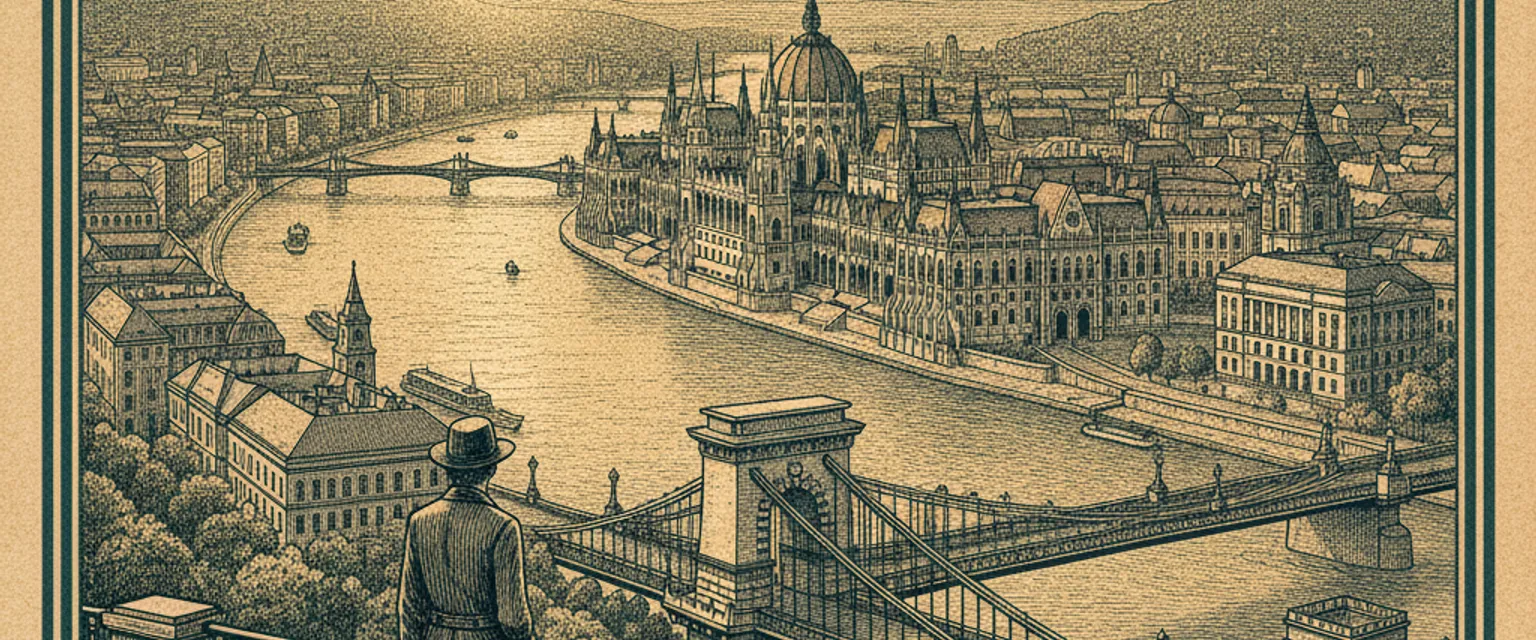
It was eleven at night and snowing lightly when I lowered myself into the outdoor pool at the Szechenyi baths. Steam rolled off the water, the floodlit yellow domes glowed above, and a group of locals were playing chess on a floating board, completely unbothered by the cold air on their bald heads. I had come to Budapest expecting a cheaper Prague. What I found was a city with its own weird, soulful confidence: equal parts faded grandeur and ruin-bar chaos, all of it folded around a river that splits it into two wildly different halves.
Two days covers the essentials: Buda Castle hill and the Fishermen's Bastion for the views, the Parliament and the shoes memorial on the Pest side, a soak at the Szechenyi baths, and a night out in the ruin bars. It is a fast but satisfying first pass at a city that splits cleanly into two halves.
Do the baths in the evening if you can. A floodlit late-night soak after a long day of walking is the single best thing Budapest does.
Add the Jewish Quarter and the market
Day three slows the pace with the Great Market Hall, the moving Dohany Street Synagogue, and a deeper wander through District VII. Three days is the ideal first visit, leaving room for both the headline sights and the city's grittier charm.
Climb the hills and cross the river
A fourth day buys you Gellert Hill at sunset, Margaret Island in the river, and the elegant cafe culture along Andrassy Avenue. You start to feel the two sides of the city as distinct neighbourhoods rather than a checklist.
Budapest in full, plus a Danube Bend day
A week means a day trip to Szentendre or Esztergom up the Danube, the quirky museums, a thermal bath you actually relax in, and unhurried evenings. By day seven you will have a favorite ruin bar and strong opinions on goulash.
Estimated budget:$240-$480
Estimated budget:$350-$700
Estimated budget:$460-$920
Estimated budget:$800-$1600
Day 1
Buda Hill and the Castle District
Views, cobbles, and the city laid out below you
Fishermen's Bastion
Fairytale turrets with the best panorama in the city
Start early on Castle Hill before the tour groups land. The white neo-Romanesque terraces frame a postcard view across the Danube to the Parliament. The upper lookout towers charge a small fee, but the main terrace is free and just as good in morning light.
Matthias Church
A wildly colorful tiled roof and a Gothic interior
Right beside the Bastion, this church's diamond-patterned Zsolnay tile roof is unforgettable. The frescoed interior feels more Byzantine than European. Hungarian kings were crowned here. Worth the ticket for the painted walls alone, and rarely crowded inside.
Ruszwurm Confectionery
Budapest's oldest cafe, tiny and full of cake
A pocket-sized 1827 cafe a few steps from Matthias Church. Order the kremes, a vanilla custard slice, and a coffee in the cramped Biedermeier room. It seats barely a dozen, so go off-peak. A perfect, sweet pause before heading down the hill.
Day 2
Pest, Parliament, and the Baths
Grand boulevards by day, steam by night
Hungarian Parliament Building
Europe's most ornate legislature, best seen from inside
Book the guided interior tour online well ahead; it sells out. The grand staircase, the gilded central hall, and the Holy Crown of Hungary are stunning. Even if you skip the tour, the riverfront facade is the city's defining image, especially lit up at night.
Shoes on the Danube Bank
A quiet, gutting memorial to wartime victims
Sixty pairs of iron shoes line the riverbank, marking where Jewish Hungarians were shot into the Danube in 1944 to 45. It takes ten minutes and stays with you for days. A short, sober walk from the Parliament along the water.
Szechenyi Thermal Baths
Grand yellow palace of steaming outdoor pools
The most famous of Budapest's thermal baths, with vast neo-baroque outdoor pools that stay open late. Bring a towel and flip-flops or rent them. An evening soak under the floodlights, especially in cold weather, is the quintessential Budapest experience.
Day 3
Jewish Quarter and Ruin Bars
History, the market, and a wild night out
Great Market Hall
Cathedral-sized market for paprika and langos
The huge iron-and-glass Vasarcsarnok is the place to buy paprika, salami, and Tokaji wine. Head upstairs for a langos, a deep-fried dough disc loaded with sour cream and cheese. Come early before the cruise crowds arrive. It is touristy but genuinely useful.
Dohany Street Synagogue
Europe's largest synagogue and a powerful memorial
The Moorish-revival Dohany Street Synagogue is the biggest in Europe and seats three thousand. The garden holds a mass grave and the silver weeping-willow Holocaust memorial. The ticket includes the museum and a guided element. Plan for ninety minutes; it is essential context for the quarter.
Szimpla Kert
The original ruin bar in a crumbling courtyard
Budapest invented the ruin bar: derelict buildings stuffed with mismatched junk furniture, bathtub sofas, and string lights. Szimpla Kert is the first and most famous. It is busy and a bit of a circus now, but still a riot. Wander District VII to find quieter ones too.
Day 4
Hills, the River, and Grand Avenues
Sunset views and elegant Pest
Gellert Hill and the Citadella
The best sunset viewpoint over both banks
Climb the wooded paths up Gellert Hill to the Liberty Statue and Citadella for a sweeping view of the whole city and its bridges. Time it for golden hour. The walk up takes about 30 minutes; bring water in summer. The payoff is the finest panorama in Budapest.
Andrassy Avenue and the Opera House
Budapest's grand boulevard of mansions and cafes
This UNESCO-listed avenue runs from the center to Heroes' Square, lined with neo-Renaissance mansions, the lavish Opera House, and the New York Cafe. Stroll it, then ride the historic Millennium underground line, the oldest metro on the continent, beneath it.
Heroes' Square and City Park
Monumental plaza fronting the green of Varosliget
The colonnade of Hungarian chieftains anchors a vast ceremonial square at the top of Andrassy. Behind it spreads City Park with the fairytale Vajdahunyad Castle. The Szechenyi baths sit on the far side, so this pairs well with an afternoon soak.
Day 5
Margaret Island and Slow Pest
Green escape and cafe culture
Margaret Island
A car-free green island in the middle of the Danube
Rent a bike or a pedal-cart and circle this leafy island between Buda and Pest. There is a musical fountain, medieval ruins, a small zoo, and shaded running paths. It is where the city comes to exhale. A perfect low-key morning away from the sights.
New York Cafe
Absurdly opulent gilded coffee house
Often called the most beautiful cafe in the world, all gold, marble, and frescoed ceilings. It is overpriced and packed, but you go for the spectacle, not the coffee. Have a cake, take the photo, and accept that you are paying for the room. Worth doing once.
Day 6
Danube Bend Day Trip
Riverside towns north of the city
Szentendre
A pastel artists' town a short train ride upriver
Hop the suburban HEV train 40 minutes north to this cobbled riverside town of pastel houses, galleries, and a marzipan museum. It is touristy but charming and easy to do solo. Wander the lanes, lunch by the water, and skip the organized bus tours.
Esztergom Basilica
Hungary's largest church, crowning the Danube Bend
If you have the energy, push on to Esztergom, where Hungary's biggest cathedral towers over the river bend at the Slovak border. Climb to the dome for a vast view across two countries. It makes a dramatic, quieter counterpoint to busy Szentendre.
Day 7
One Last Soak and Goodbye
A calmer bath and final bites
Gellert Thermal Baths
Art Nouveau bathing palace, calmer than Szechenyi
Tucked into the grand Gellert Hotel, these Art Nouveau baths trade Szechenyi's party energy for stained glass, mosaic tiles, and a more serene soak. A perfect slow final morning. Bring a cap for the indoor lap pool, which they enforce.
Goulash at Belvarosi Lugas
A proper bowl of paprika-rich Hungarian goulash
End on the national dish at an unpretentious local spot near St. Stephen's Basilica. Real goulash is a soup, not a stew, deep with paprika and tender beef. Pair it with a glass of Hungarian red. A warming, honest last meal before you leave.
Budapest is two cities pretending to be one, and that tension is the whole appeal. Hilly, leafy Buda on the west bank is all castles, viewpoints, and quiet residential streets. Flat, dense Pest on the east is where the energy lives: the grand boulevards, the ruin bars, the markets, the late nights. The Danube between them is not a divider so much as the seam holding two moods together.
I came expecting a budget version of Prague and left with something I liked far more: a city that is gloriously unpolished in places, theatrically grand in others, and never quite as expensive as it should be for what you get. The thermal baths alone justify the trip.
How to use this plan
The days are tagged by trip length so you can stop wherever your time runs out. Two days gives you both banks, the Parliament, an evening at the baths, and a ruin-bar night. A third day adds the Jewish Quarter, the synagogue, and the Great Market Hall, which is the version I would book for a first visit. Four days opens up Gellert Hill at sunset and the grand sweep of Andrassy Avenue. A full week earns a Danube Bend day trip and a calmer, second thermal bath.
Practical notes: the metro, trams, and buses are cheap and efficient, so grab a travel pass. The baths get busy midday but stay magical late, so go in the evening. Carry some cash in forints for markets and smaller bars. And do not over-plan the nights; District VII rewards aimless wandering more than a fixed bar list ever will.
This article contains affiliate links marked with rel="sponsored". We may earn a commission at no extra cost to you.